

Dead Flowers brings humor and reality into its songs, giving listeners a fun way to relate and relax from the daily grind, Chen Nan reports.
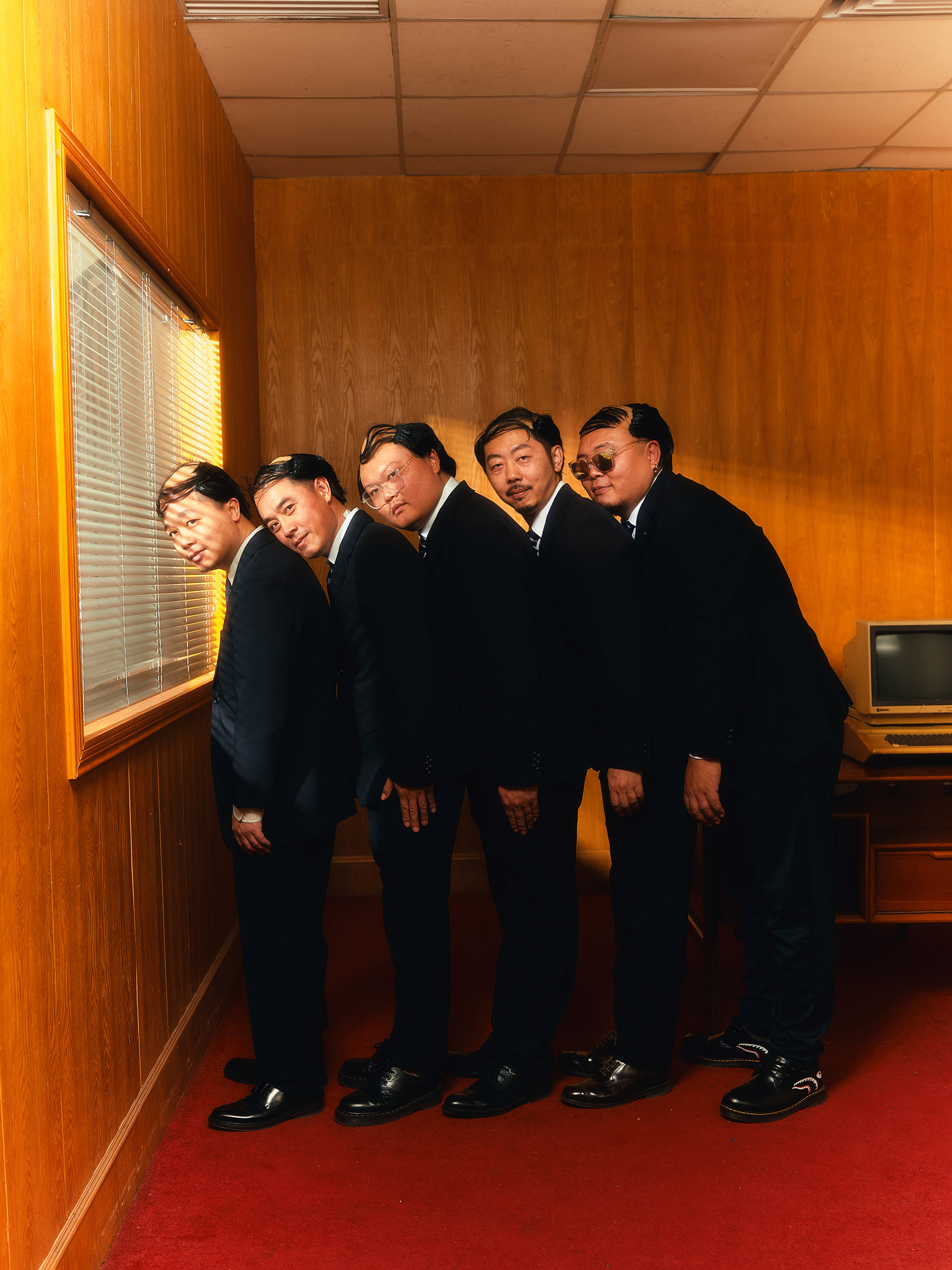
By day, they are a brand founder, an ice-cream factory entrepreneur, an oil painting instructor at an art academy, and a collectible toy designer. By night, they are a rock band, pouring all those daytime emotions into songs about deadlines, burnout, and the quiet absurdities of contemporary working life.
What began as an attempt to reconcile artistic ambition with the realities of adulthood evolved into something more specific and pointed: a long-term musical exploration of what it means to be a modern worker.
This ambition resulted in Dead Flowers, a Guangzhou, Guangdong province-based Chinese rock band founded in 2003.
After more than two decades of starts, stops, and reinvention, the band recently made a pivotal decision to sign with Modern Sky, one of China's leading independent music labels. The move marks a new chapter that provides them with broader visibility and greater resources to expand a vision that has grown steadily clearer with age.
Under this new partnership, the band plans to extend their work beyond conventional formats, blending music with visual art, performance, and more immersive, concept-driven experiences.
ALSO READ: New album unleashes vitality
Lead vocalist Zhao Wei explained in a recent interview with China Daily that the band's most significant change over the past 20 years has been a shift from pure self-expression to something closer to social reflection.
"Hormones and youthful energy drove our early music," Zhao says. "Now it's more like a long-running' workplace survival diary'. We've seen the transition from traditional office culture to an always-online, platform-based working life, which has become our new source material."
Each member, he adds, has spent years as both employees and as their own bosses, giving them a firsthand understanding of the anxieties, compromises, and quiet frustrations that shape today's working lives, especially those of younger people just entering the workplace.
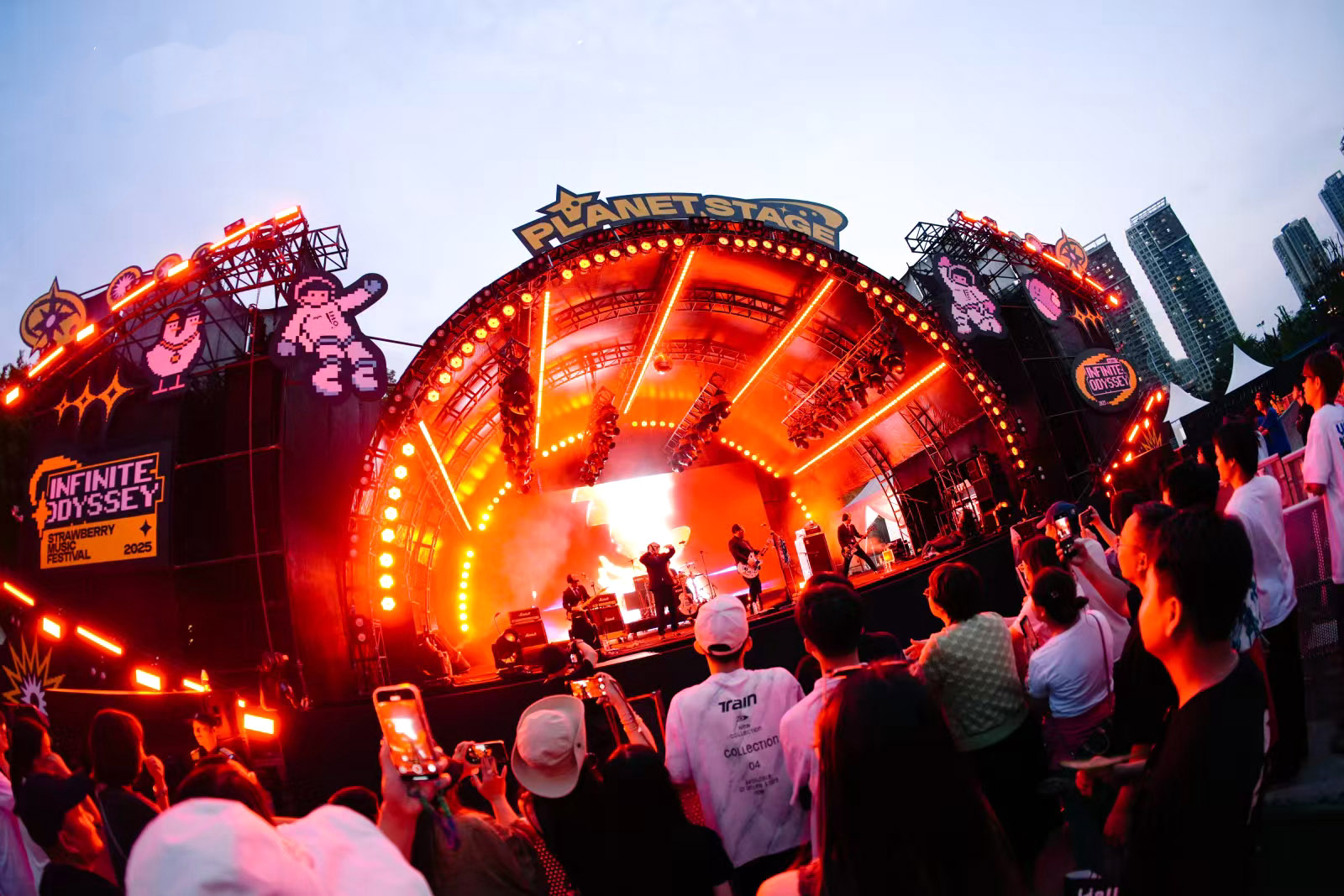
On July 2, the band premiered the song Work, I'm in Love with You, turning the muted grievances of office life into fully voiced slogans.
It's just a job. Do I really have to show up?
Three days without sleep, and still no overtime pay.
These phrases, familiar to anyone who has ever scrolled through late-night group chats or muttered to themselves on the commute home, are lifted out of private exhaustion and recast as collective chants.
For the audience, the effect is immediate and personal. "It feels like someone finally wrote a song using the exact sentences from our office group chat," comments a fan on social media. "You're laughing, but you also realize you're laughing at your own life."
"You come out of their shows feeling strangely relieved," says another fan. "It's like everyone has been complaining together for two hours; somehow, that makes it easier to go back to work the next day."
This mixture of humor, critique, and lived experience has become the band's defining feature. The band is not only making music, Zhao says, but is building a shared emotional space, a kind of communal release that reflects both the comedy and the cruelty of everyday working life.
That sensibility is also visible in their stage image. The band members wear black suits, black ties, and white shirts, topped with bald wigs, forming a deliberately comic tableau that turns the anxiety of hair loss from overwork into visual satire. The effect is both absurd and uncomfortably familiar.
"Most rock bands try to look cool," says bassist Miao Chengbin, who is also the founder of the multi-brand boutiques BadMarket and BadVillage, which have 10 branches across the country. "We want to do the opposite, to make ourselves look ridiculous. If it makes people laugh, that's exactly the point."
Looking back, Miao feels the band's trajectory has come "full circle".
"I'm glad our new songs, which carry both sarcasm and empathy, resonate with young people entering the workforce, which is a world that's very different from the one we first stepped into," he says.
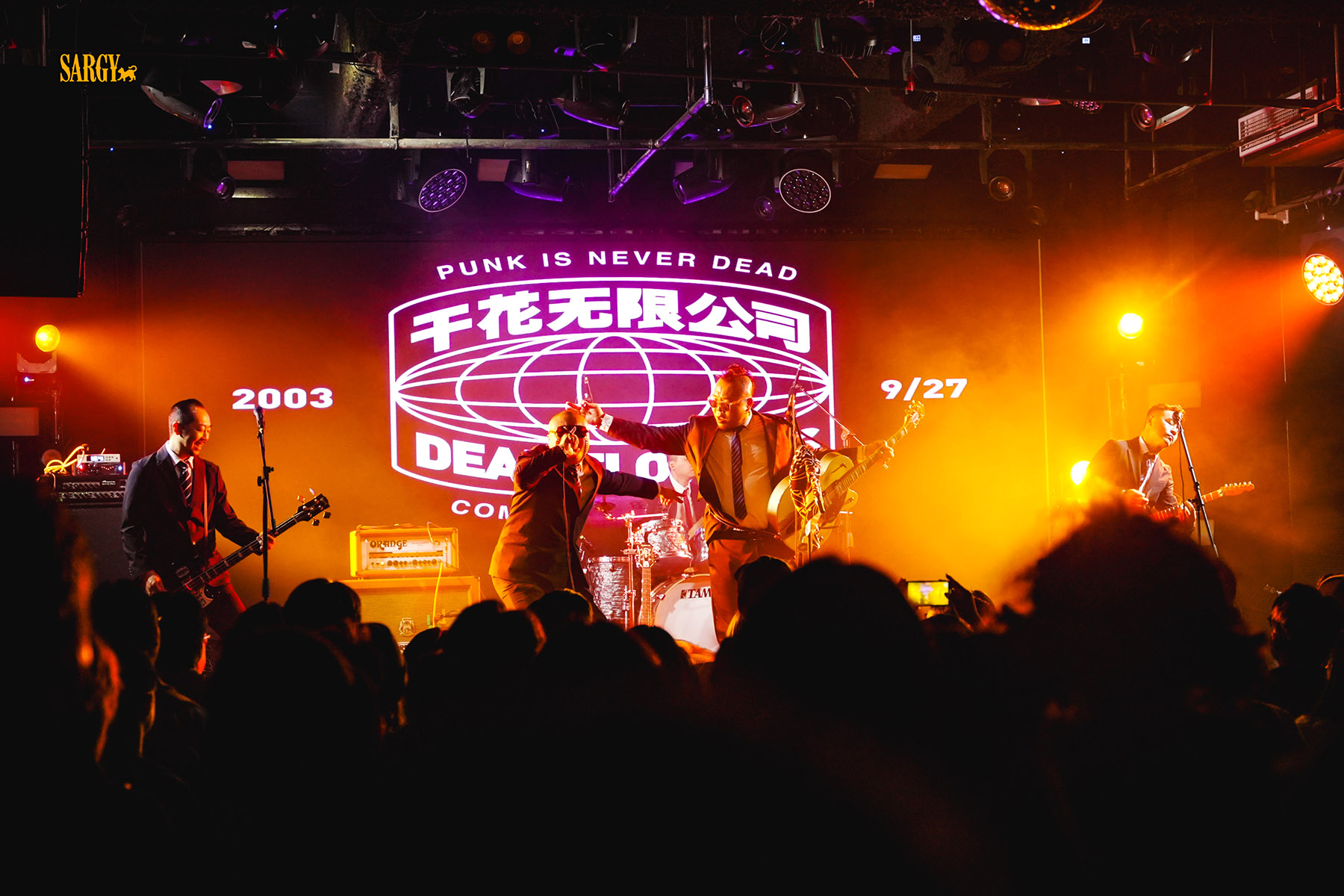
The members of the current lineup were once classmates at the Guangzhou Academy of Fine Arts. In retrospect, their coming together seems almost inevitable. In the early 2000s, that relatively small campus hosted four or five rock bands from different departments simultaneously.
"Art students were already a pretty unconventional group," Miao recalls."And the ones who insisted on playing rock music inside an art academy felt even more out of place."
In 2007, after being built up through the collective efforts of the founding team, Dead Flowers went on hiatus and gradually disappeared from view. What followed was a decade spent drifting between Beijing, Shanghai, Guangzhou, and Shenzhen, also of Guangdong province; a decade of workplace struggles; a decade of marriages, children, and being reshaped by ordinary life.
The turning point came in 2017, when they received an invitation to perform at a rock festival. Zhao and Miao, the band's founders, decided it was time to reunite. In May that year, the band officially reassembled.
This time, however, they did not return simply as a band. They reimagined themselves as "Dead Flowers Punk Unlimited Company", a structure that, half in jest and half in earnest, treats the group as a cultural project rather than just a music act. In recent years, this has led them into the tattoo and designer toy sectors, as well as art exhibitions.
After nearly two decades apart, as they put it, as "undercover agents" in the workplace, their live shows now carry a peculiar mixture of rawness and humor. They feel less like carefully packaged concerts than open-ended, semi-improvised declarations: unpredictable, restless, and charged with the unresolved tensions of contemporary working life.
ALSO READ: Music festival shows spirit of band of brothers
Even during the years the band was inactive, the friendship never ended, Zhao says.
"We went to parks together, went to each other's weddings. I even hosted Wei Lu's wedding as the emcee. We once rented a whole guesthouse by the sea just to re-create our college weekends. We went to karaoke, pretending to play instruments like an air band. We didn't really talk about music much. KTV was our musical exchange."
Now, as the band prepares a new album scheduled for release this year, it plans to dig even deeper into the themes of contemporary life: work, identity and survival. Their performances, described as "immersive" and "ritualistic", aim to push beyond the conventions of rock shows.
At some concerts, audience members are asked to sign "temporary work contracts" and even wear bald caps, stepping directly into the band's world, constructed on the stage.
"We want our shows to be more than concerts," Zhao says. "They're a chance to step into a shared situation to create a collective emotional space that only exists right there and then."
Contact the writer at chennan@chinadaily.com.cn
