

Returnees to courts resolve disputes, raise legal awareness
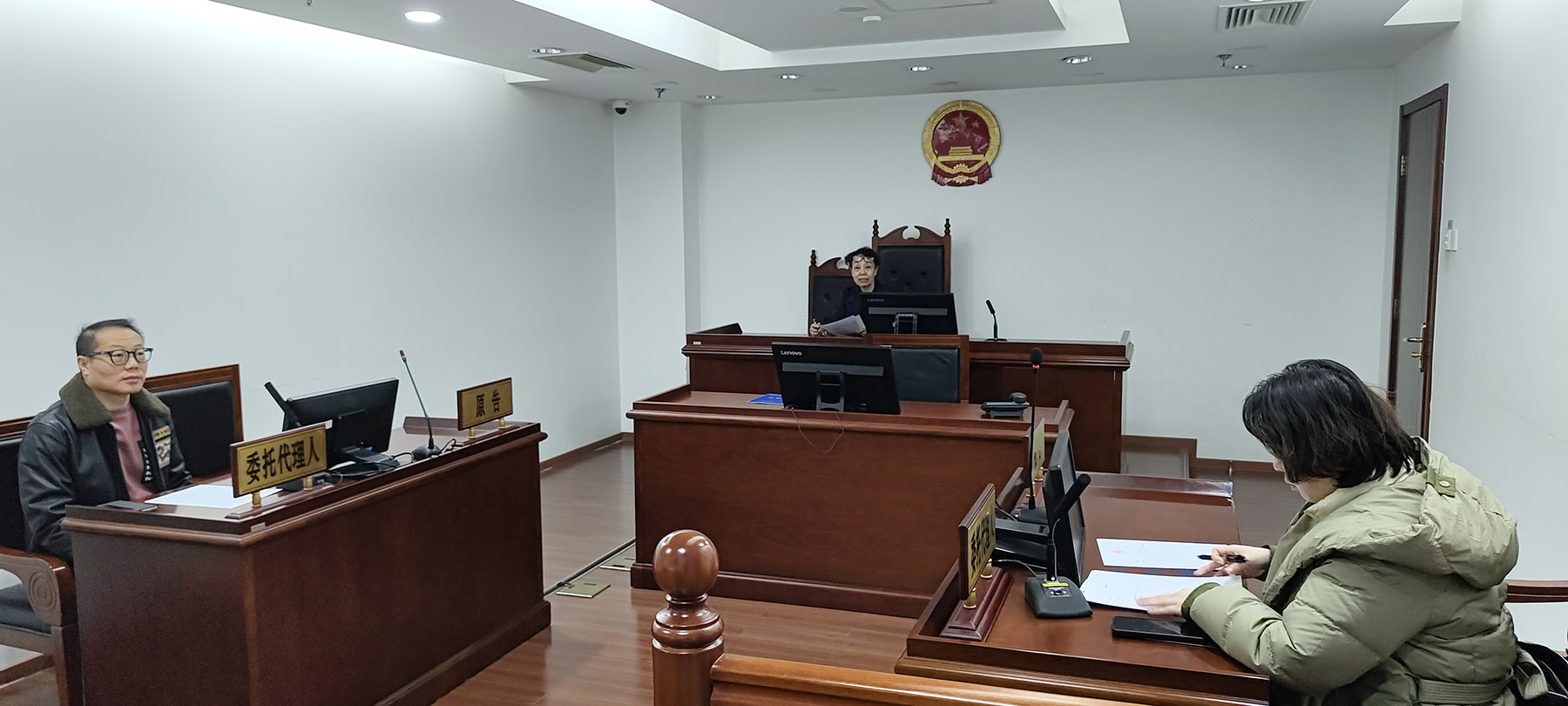
Braving snow and cold in Beijing, two groups of people traveled to the Chaoyang District People's Court in December to thank retired judge Hou Chunying, 71, after she helped them settle a 37-year-old heating fee dispute in just one month of mediation.
The conflict began when a heating center recently took 48 households to court, seeking payment of more than 1 million yuan ($142,000) in overdue heating fees dating back to 1987, along with a 504,000 yuan penalty. All the householders were former radio factory employees who had unpaid bills due to outdated accounting methods, differing opinions, and the company's financial difficulties.
During her discussions with the householders, Hou discovered there was an agreement between the heating provider and the factory. "I felt direct negotiation between the two sides would resolve this historical dispute more efficiently than taking legal action against these residents with different circumstances," she said.
READ MORE: Judiciary role evolves for high-quality development
Hou communicated with both parties separately, calling on the factory to fulfill its social responsibility and suggesting that the heating center reduce the debt due to the factory's financial burdens. Thanks to her efforts, the factory ultimately agreed to make a one-time payment of 700,000 yuan to cover the fees.
With over 30 years on the bench, Hou is part of a rising corps of retired judges who serve as mediators across China. Recognizing them as a valuable legal asset, the Supreme People's Court, the nation's top court, has encouraged their greater involvement in dispute resolution, drawing on their legal expertise and wealth of experience in handling cases.
For Hou and her fellow retired judges, returning to work not only gives them a fresh opportunity to find meaning again, but also helps courts tackle rising caseloads, ease the burden on sitting judges, strengthen grassroots governance, and foster a stronger rule of law culture.
Finding meaning again
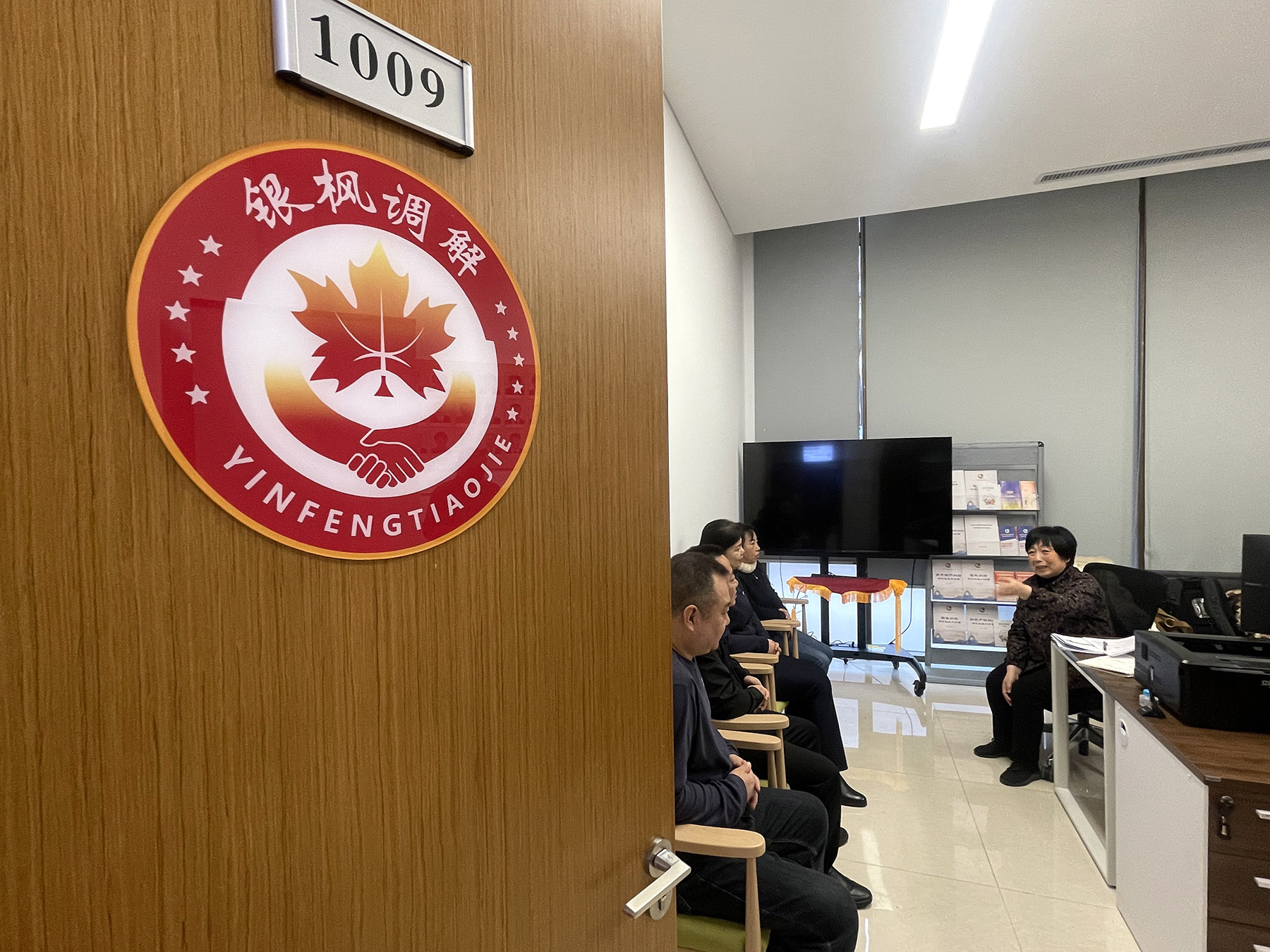
Guo Wenxia, 65, devoted most of her working life to the Huairou District People's Court in Beijing, where she mainly handled domestic cases, including divorce and inheritance issues. The intense pressure took its toll, and in 2002 she accepted early retirement for health issues.
After leaving the bench, she spent time recovering, traveling with her family, and enjoying a quieter life. However, in just a few years, she began to feel a sense of loss and thought she should do something, so she helped review contracts and provided legal consulting. "But I still felt something was missing," she said.
Her professional instincts kept drawing her attention to family cases she saw on television and in newspapers.
"I couldn't help wondering how those disputes were resolved or what the latest laws said. I realized how deeply attached I am to the court, and my desire to keep learning the law never went away," she said.
In 2022, after seeing a recruitment post on a WeChat mini-program for mediators at the Xicheng District People's Court, she submitted her application and returned to work, using her legal expertise to assist judges in mediating family-related disputes.
"Resolving disputes for people gives me a stronger sense of fulfillment and happiness. I'm back in a busy work situation and I've found meaning again," she said.
Guo said rapid social and economic changes have brought new types of cases, and pushed her to keep learning and stay connected so she can tackle legal challenges with confidence.
Hou said she felt much the same in the early years after leaving the bench.
"I knew the stress of handling cases and the anxiety of meeting deadlines all too well. So at first, I had no intention of going back," she explained. It was repeated invitations from the Chaoyang court that persuaded her to drop by, mostly to reconnect with former colleagues.
"When I retired, I closed the final chapter," she said.
"But when I saw my colleagues and heard about the cases they were handling, it was like opening a new book — and once I did it, I couldn't put it down."
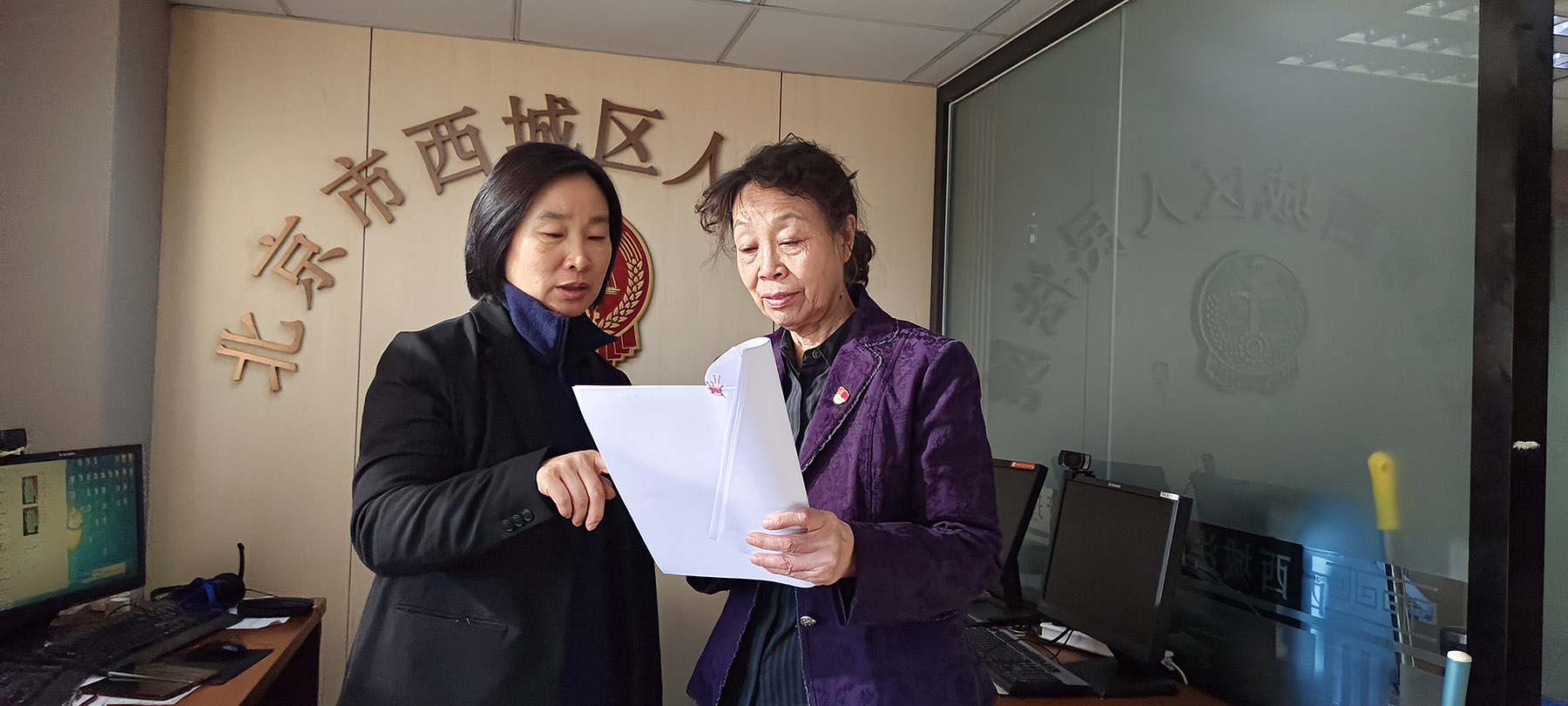
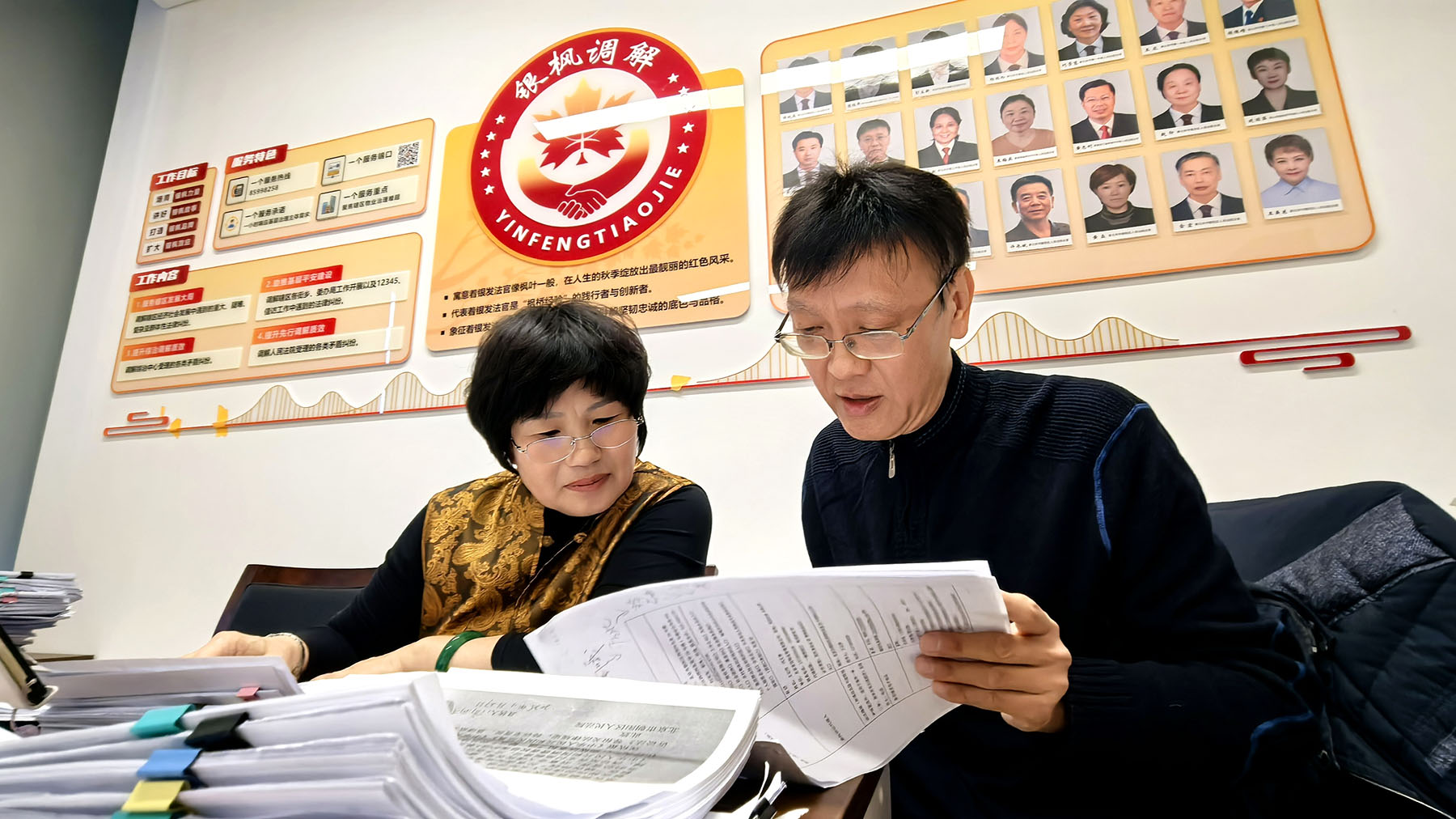
In 2008, she began assisting sitting judges with mediation on community matters such as heating and property management. In December 2025, a "silver-haired" mediation team was established in the court, where she and 20 other retired judges use their decades of experience to help resolve civil disputes.
Valuable legal asset
In China, cases are generally treated as either simple or complex.
If the facts are clear and the evidence is sufficient, judges will ask both parties whether they want mediation — an option that usually costs less and takes less time than a full trial.
If either party refuses or no agreement is reached, the case proceeds to litigation.
Liu Haidong, president of the Chaoyang court, described its team of retired judges as its think tank for dispute resolution. In his view, their involvement boosts the public's trust and reassurance in the legal process.
Wang Yue, an employee involved in the heating fee dispute, expressed her gratitude to Hou.
"The retired judge's legal expertise let us pinpoint the core of the conflict right away, and both sides could accept within the law the solution she offered," Wang said. Because mediation is cheaper and faster than litigation it helped the factory keep running smoothly, she said.
Liu praised the outcome of the case, and emphasized that retired judges bring deep legal knowledge and practical experience, which can promote mediation in areas such as marital and family disputes, labor issues, property management, real estate transactions, financial loans, and intellectual property disputes.
Zhao Hai, a senior judge of the filing division at the Xicheng court, said that the legal background of retired judges makes mediation more professional and can ensure the quality of case handling.
"A successful mediation means a case will not enter later litigation stages, which will ease the workload of sitting judges and free them to have more time to concentrate on complex legal issues and lawsuits," he said.
In Chinese culture elderly people are widely respected, and parties in conflict are often willing to listen to their advice, he added. "So retired judges are a valuable legal asset for both the courts and society," he said.
Data from the court showed that it has 107 mediators, including four retired judges, with the number expected to grow.
Greater interaction
Li Li, a retired judge from the Wujiagang District People's Court in Yichang, Hubei province, started her mediation career in 2024.
Although her role has changed, she said her commitment to justice and her sense of responsibility in handling cases remained unchanged.
"As a judge, under the pressure of a case settlement deadline, I mostly approached litigants with little patience. As a mediator, I have more time to listen to their stories, difficulties and grievances," said Li.
Guo said compared with judges — who are not allowed to give their personal phone numbers to litigants — mediators can make their contact details available to the public.
"That gives me more time to understand more about the litigants and their thoughts, which is helpful to resolve their disputes at the root,"Guo said.
Hou said she replies to text messages or takes calls from parties, even in the evening or on weekends.
"Some people need to talk things through emotionally. Sometimes, once their feelings are expressed and frustrations aired, the disputes are more than halfway resolved," she said.
Hou said when she was a judge, she had back-to-back hearings every day and simply didn't have the patience to sit through lengthy accounts of a party's complaints and thoughts. "Now, without the pressure of court sessions and case conclusion deadlines, I'm willing to get closer to litigants and spend more time helping deal with their problems," she said.
All the retired judges underscored the importance of communicating with litigants, noting that it better enables them to figure out the root cause of their arguments. These exchanges also help enhance their legal awareness.
ALSO READ: Refined legal services streamline border trade
Guo said becoming a mediator has given her more energy to visit residential areas, learn about property management companies and community committees, spot legal risks early, and promptly remind regulators to prevent unnecessary disputes.
Chen Guiping, a deputy to the Beijing People's Congress, said the participation of retired judges in dispute resolution has played a big role in standardizing the management of compounds and the promotion of law-based governance at the grassroots level.
In addition to 21 retired judges, the silver-haired mediation team in Chaoyang has also attracted two retired community regulators to join their work, Chen said.
Liu, the president of the Chaoyang court, said with their judicial credibility and expertise, these silver-haired judges have served as a vital bridge between the courts, the public and community regulators. This innovation in dispute resolution will also strengthen legal education among residents and maintain social stability at grassroots level, Liu added.
Contact the writers at caoyin@chinadaily.com.cn
