

Youngsters attracted by authenticity, tradition, social media photo ops
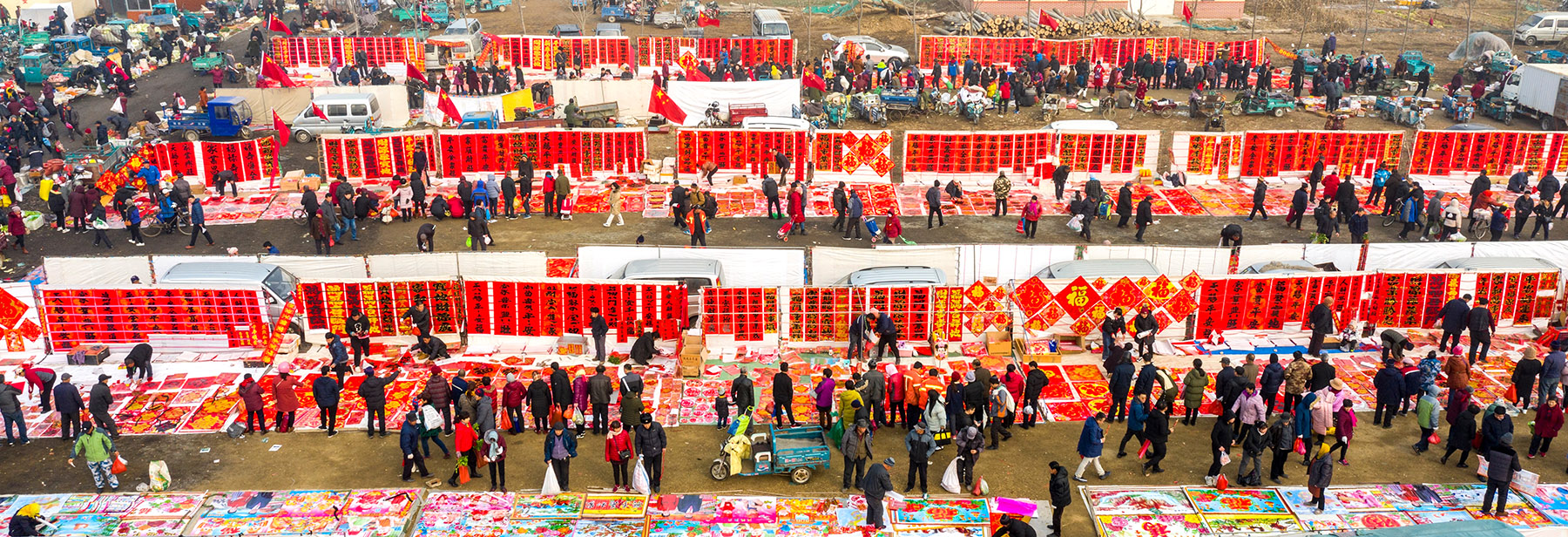
The temperature in Jinan, the capital city of Shandong province, plummeted to — 10 C on Jan 20 — the beginning of the Major Cold solar term.
Residual snow clung to roadsides, and the bitter cold nipped at people's cheeks, turning every breath into a wisp of white mist. It was the coldest day in the city this winter.
Yet by 7 am, the Liubu rural market was sizzling with life. Large iron woks hissed as vendors stir-fried millet flour, a local specialty, and several buyers lined up for niangao glutinous rice cakes.
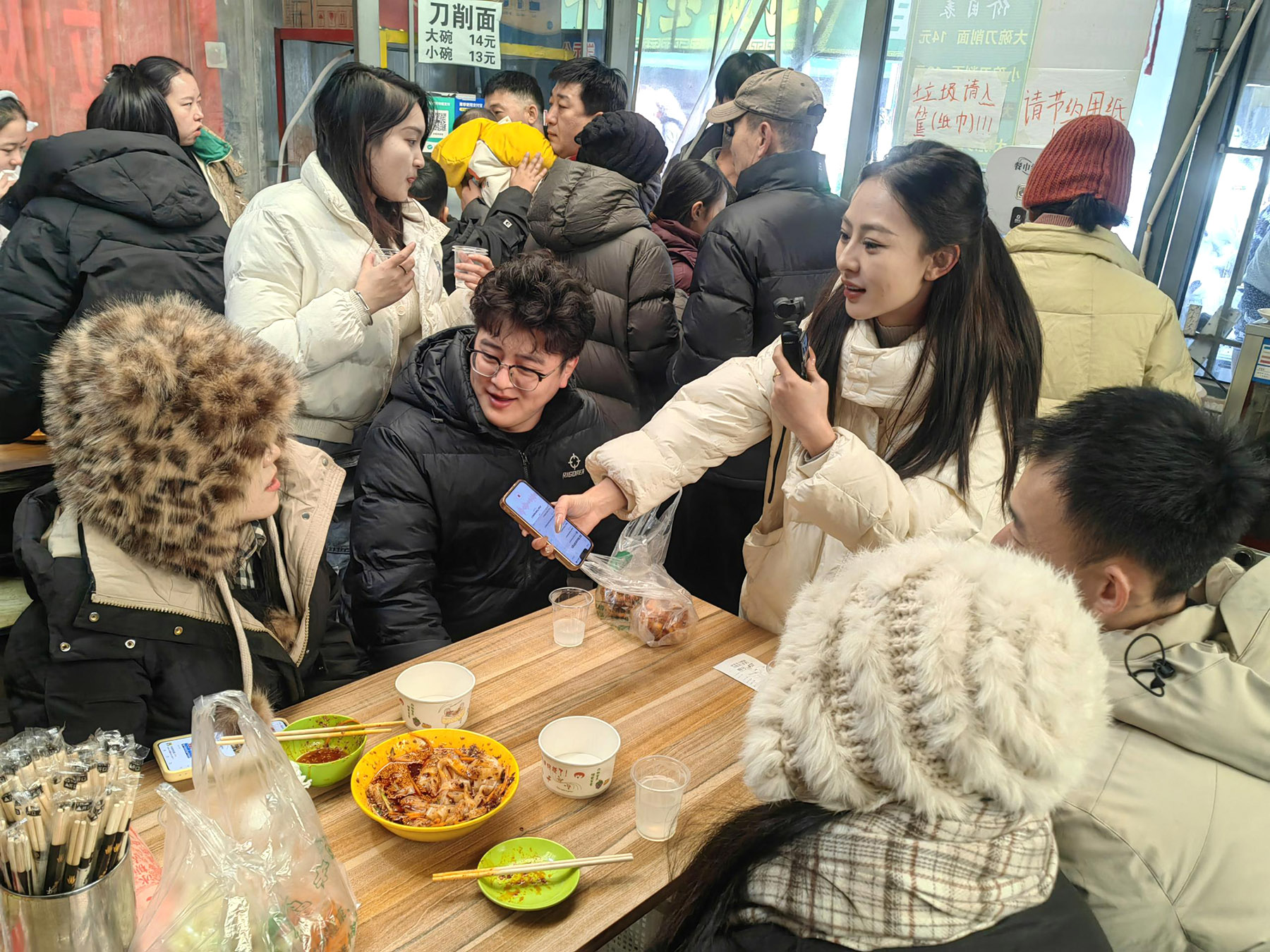
In the crowd, young people in trendy down jackets and armed with cameras cluttered the century-old market.
"I searched which rural market is open today on Douyin and saw Liubu, so I drove over," said Sun, 25, who traveled for over an hour from Jinan's Shizhong district. "It's freezing after the snow, but I wanted to feel this sense of daily vitality,"Sun said.
Experiencing this market vitality — characterized by plumes of steam, strong aromas, and lively banter — is being pursued by more and more young people nationwide.
As Chinese New Year draws near, Liubu has been attracting more than 30,000 visitors on market days, with the number of young people growing, said Wen Xinran, a Liubu subdistrict office staff member.
About 300 kilometers away in Qingdao, a coastal city in Shandong, the Poli rural market was also buzzing early on Jan 22.
At 5 am, vendors were already preparing haixian huibing, or seafood braised with shredded pancake.
"Things have changed drastically," said Miao Peizhi, who has been cooking the dish for 20 years."Before, it was mostly local older people. Now half are young, curious people asking about the recipe and taking videos," he said.
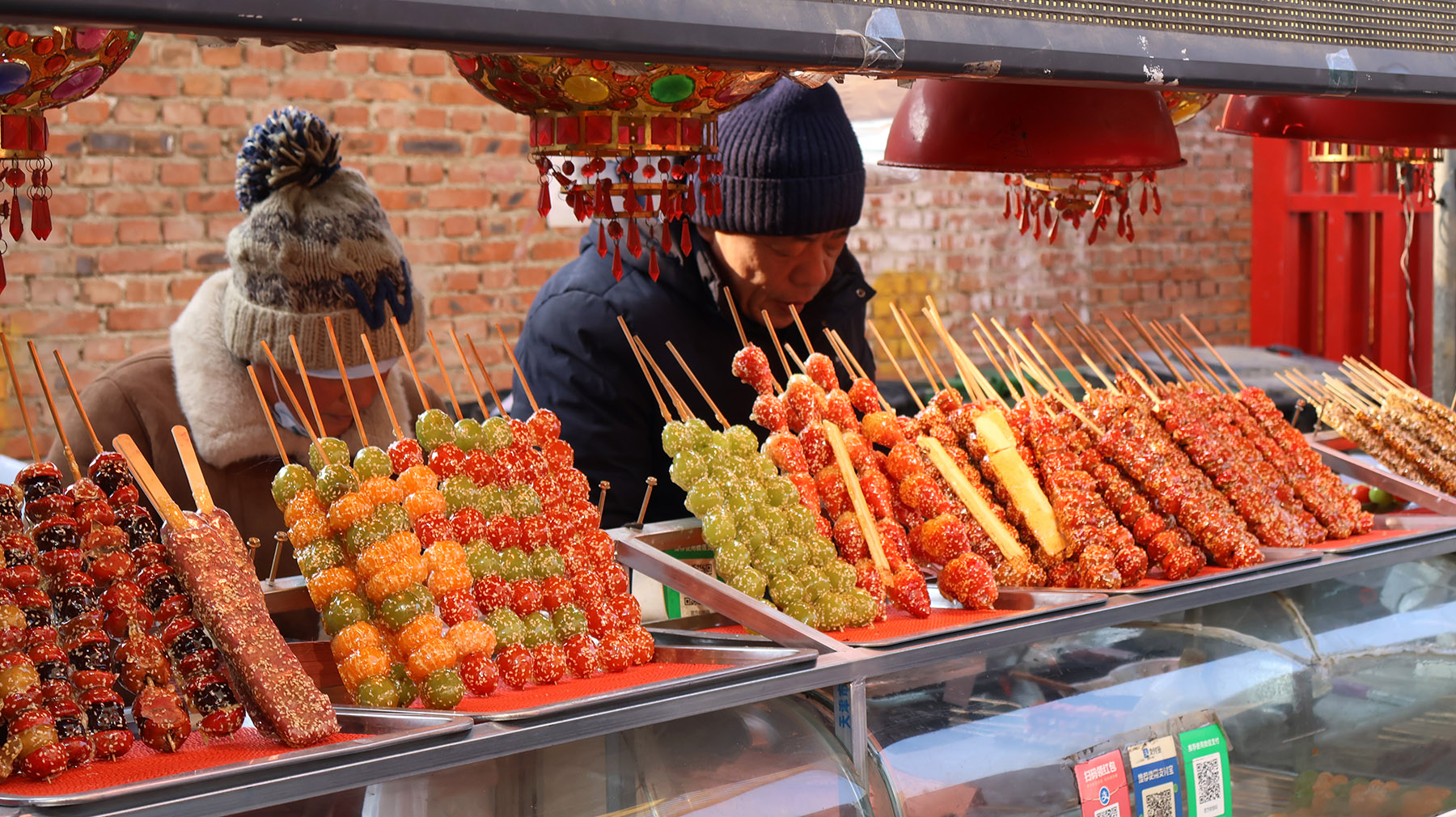
Zhang Xiaojie, who works for the company that operates the market, said that on peak market days before Spring Festival, it has received over 70,000 visitors, with nearly 40 percent aged under 30.
"On ordinary market days, young people's attendance is around 30 percent (of the total). Many drive one or two hours from neighboring districts and cities to the market," said Zhang, adding that vehicles' license plates show they are from Beijing, Tianjin and neighboring Hebei and Jiangsu provinces.
Wang Hongkai, 35, drove four hours from Jiangsu to taste the delicacies at the market.
"Supermarkets have everything, but here we can watch food being made, chat with the person cooking it, and taste something that's not mass-produced," Wang said, adding that rural markets have authentic food specialties to sample.
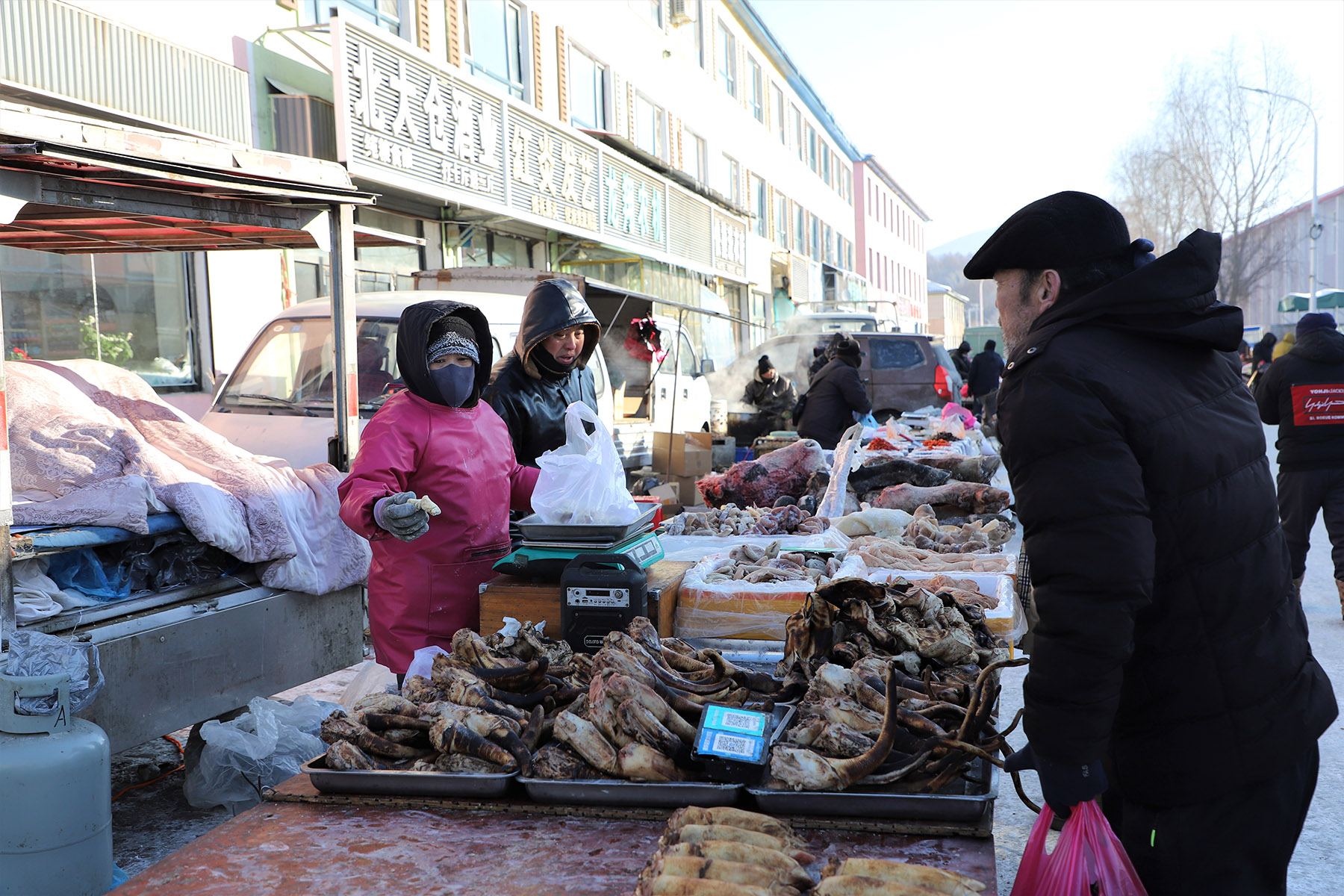
As Spring Festival approaches, the market in Quchaihe town, Jilin province, is attracting more visitors with its local food and produce. The stalls brim with treasures, such as wild mushrooms plucked from nearby mountains and Korean-style pickles.
"Since 2023, the number of customers has started to surge. It's not just locals anymore," said Chen Zhanwen, a vendor who sells Korean-style pickles at the market. "Young people come, take photos, and ask about our traditions. It's like the market has woken up."
At a niangao stall in Jinan, a vendor surnamed Zhang is aware of the benefits of online marketing and easier competition. He travels from Linyi, another city in Shandong, to sell his rice cakes, and wears a camera around his neck to film videos for his Langya Big Brother's Niangao social media account.
"No online views mean no sales," he said. "Back home, 50 to 70 niangao vendors compete for business, so I travel to Jinan's markets."
His social media videos are raw and unpolished. They showcase steaming rice cakes, crowds lining up, and quick chats with customers.
The rough authenticity of the videos has struck a chord with followers. "Young people don't want perfect ads," he said. "They want to see the real thing."
Cultural weight
At the Poli market in Qingdao, the collision of old and new carries deeper cultural weight.
Around Xiao Changquan's stall, several young people hold up phones, filming his hands as he weaves sorghum straw into delicate mats, a provincial intangible cultural heritage.
"I used to worry this craft would die with me," said 75-year-old Xiao."Now I can't keep up with orders."
Five years ago, he sold just 15 mats a year. Today, thanks to offline sales and online orders from his videos, that number has doubled to around 30. He's even creating small decorative items like key chains and wall hangings to meet young people's demands.
Fang Hongfei, a publicity official from the Poli township government, said, "The survival logic of intangible cultural heritage at rural markets is changing."
"It's no longer just about protecting tradition. It's about using it. Young people aren't just admiring sorghum straw mats or seafood stews; they're buying them, sharing them online, and making them part of their own lives," said Fang.
Cheng Huanjuan, 35, an inheritor of haixian huibing, brings that philosophy to her stall. As she stirfries ingredients, a phone mounted on a tripod broadcasts her cooking live to thousands of viewers.
"I'm not just selling food," she said, her voice raised over the wok's clatter. "I'm telling the story behind it, such as how my grandmother taught me; how we've kept the recipe unchanged for decades."
"Livestreaming attracts tourists, but more importantly, it lets young people connect with the craft," Cheng said.
With more and more people visiting rural markets, young people are also seeking business opportunities at them.
Wang Xinyi, 30, who married into a family in Poli town in 2025, saw the Poli market as an opportunity.
"The stall fee at the market is affordable," she said.
Wang uses the market as a showcase to build a following for her coffee through in-person sales and social media. "We're not here for a romantic encounter. Instead, we're here to start businesses," she said.
At the Quchaihe market in Jilin, Song Wenxin, who was born in the 1990s, uses a phone to livestream sales of local specialties including dried fungus and wild honey.
He worked in Tianjin for years, but when he saw videos of his hometown's specialties going viral, he quit his job and returned. "I sell about 60($8.64) to 70 yuan worth a day at the market," he said, adding that online sales bring an extra revenue of 800 to 1,000 yuan a month.
"Young people can accept rough stalls, but they can't accept inconvenience," said Shen Lei, a staff member from the Poli township government's economic development office.
Upgrade efforts
To keep up with the young crowd, Poli market added over 720 parking spaces last year, provided clean mobile toilets, and boosted the 5G signal. "Livestreaming needs good internet," Shen said. "If their videos buffer, they won't come back."
Liubu market's overhaul has been even more comprehensive.
"The government invested in these renovations. For instance, the pavers melt snow quickly and don't hold water," said Wen from the Liubu subdistrict office, pointing to the brick-paved ground of the market.
Since 2017, local authorities have spent over 7 million yuan on greening, paving and dividing Liubu market into separate food, crafts, and fresh produce zones. Last year, they added a basketball court, a football field, and a tennis court next to the market.
"Our goal is to turn the market from a mere trading place into a complex where you can shop for snacks, try traditional crafts, play sports with friends, view nearby scenery and stay at a nearby homestay. It's about integrating food, accommodation, travel, shopping, and entertainment," said Wen.
In Quchaihe town, the results of investment are already clear. The market has seen annual visitor growth of over 35 percent for three consecutive years, with transaction volume in 2025 surpassing 1 million yuan, more than double that of the previous year, said Yuan Xiaoping, deputy Party secretary of the town.
"We're linking the market with nearby ski resorts and red leaf valleys. Visitors can come for the market, stay for the scenery, and learn about our culture," said Yuan.
Visiting rural markets isn't just nostalgia, but a selective return, said observers.
"Young people aren't embracing tradition blindly. Instead, they come with modern consumption concepts. They value experiences, take photos to share on social media, and feel a sense of cultural identity," said Fang, the publicity official. "They're looking for the emotional value of rural markets, such as the warmth of chatting with a vendor, the joy of watching food being made, the connection to something bigger than themselves."
Xu Baofeng, a professor at Beijing Language and Culture University, offered a broader perspective.
These markets aren't a nostalgic utopia. They're an evolving socioeconomic interface, a place where traditional trading collides with livestreaming dynamics, where old crafts meet young tastes, and where rural and urban cultures adapt to each other, he said.
"It is amid these collisions that new possibilities are emerging," said Xu.
Zhang Liying, Fang Yingjie and Han Junhong contributed to this story.
Contact the writers at zhaoruixue@chinadaily.com.cn
