

Wenchang successfully executes 12 launch operations in 2025
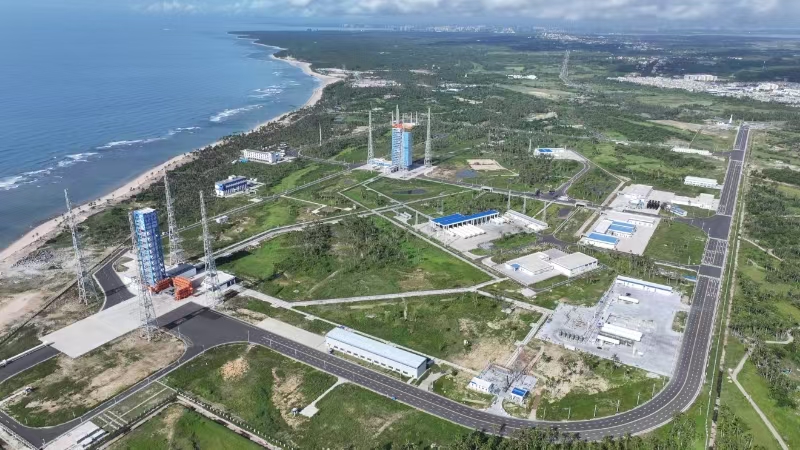
China's primary spaceport for heavy-lift missions set a new annual launch record in 2025, highlighting the country's rapidly advancing high-density launch capabilities and the parallel rise of a commercial space ecosystem.
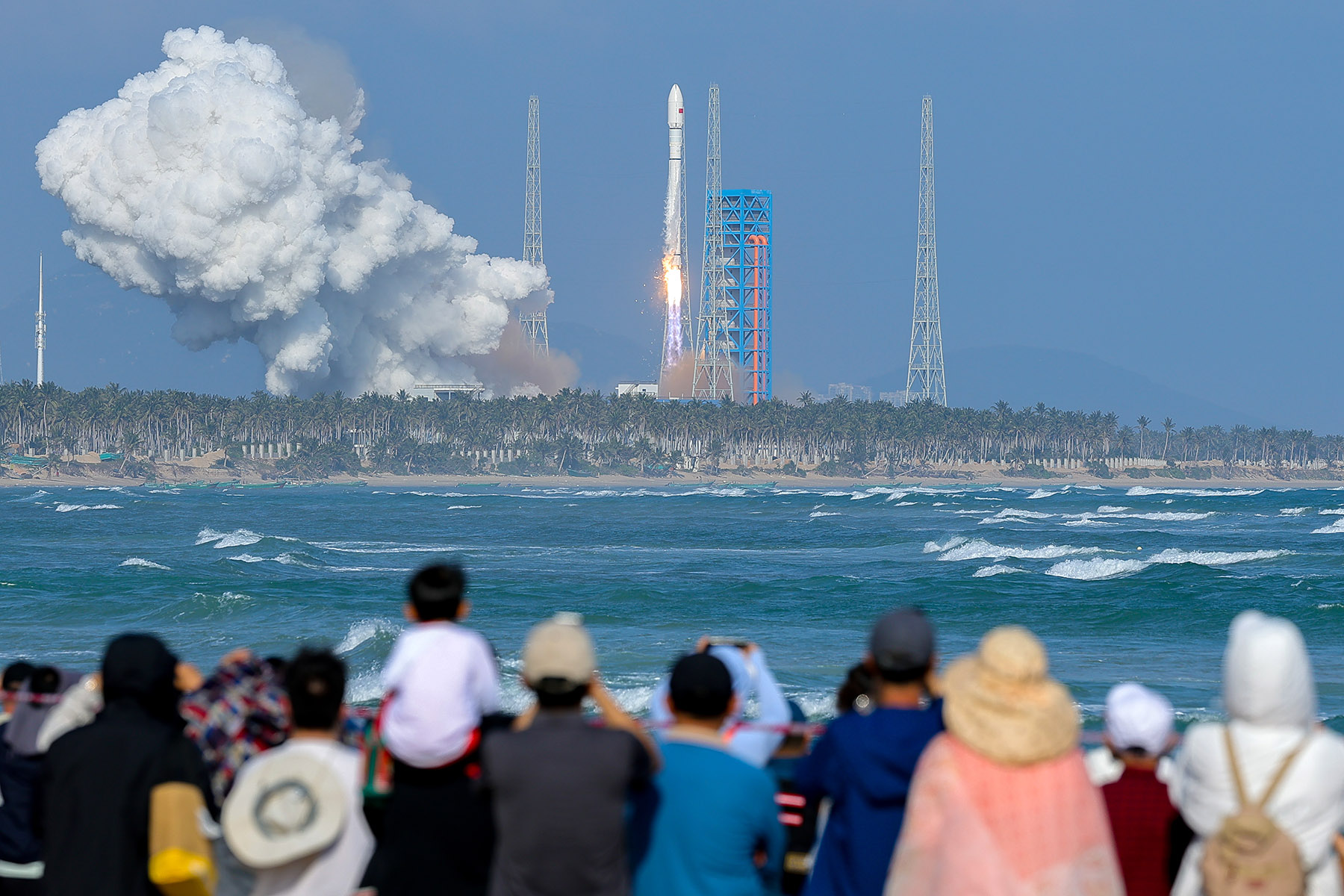
The Wenchang Spacecraft Launch Site in South China's Hainan province conducted its 12th launch of 2025 on Dec 31, using a Long March 7A rocket to send the Shijian 29A and 29B satellites into their preset orbit.
This milestone followed another one reached on Nov 30, when the launch of a modified Long March 7 rocket marked the first time the site's annual launch tally had reached double digits. Since its inaugural mission in 2016,Wenchang has executed 45 launches, with the rate steadily growing.
READ MORE: China's Wenchang spaceport reports double-digit launches in 2025
The site, China's first independently designed green, modern spaceport, operates two all-weather launchpads specializing in medium and large cryogenic-liquid rockets. Officials attribute the increased launch rate to optimized efficiency, achieved primarily by slashing rocket testing cycles on the launchpads.
"Shortening the rocket's on-pad occupation time is critical," said Wang Yuliang, a site official.
The launch cycle for the 2017 Tianzhou 1 mission was roughly 40 days. It was streamlined to more than 30 days for the 2021 Tianzhou 2 launch and cut to about 20 days for Tianzhou 4 in 2022, which also pioneered simultaneous loading of liquid oxygen and kerosene.
Technicians achieved this through innovations in the process, merging tasks, eliminating redundancies and simplifying installations.
Between missions, they also upgraded and maintained equipment to ensure reliability. Propellant handling efficiency has tripled by adding tankers and enabling parallel transfer operations, according to commander Fu Yihang.
Experts said these refinements are key for Wenchang's future role in national projects like crewed moon landings and deep-space exploration, which will demand higher launch rates.
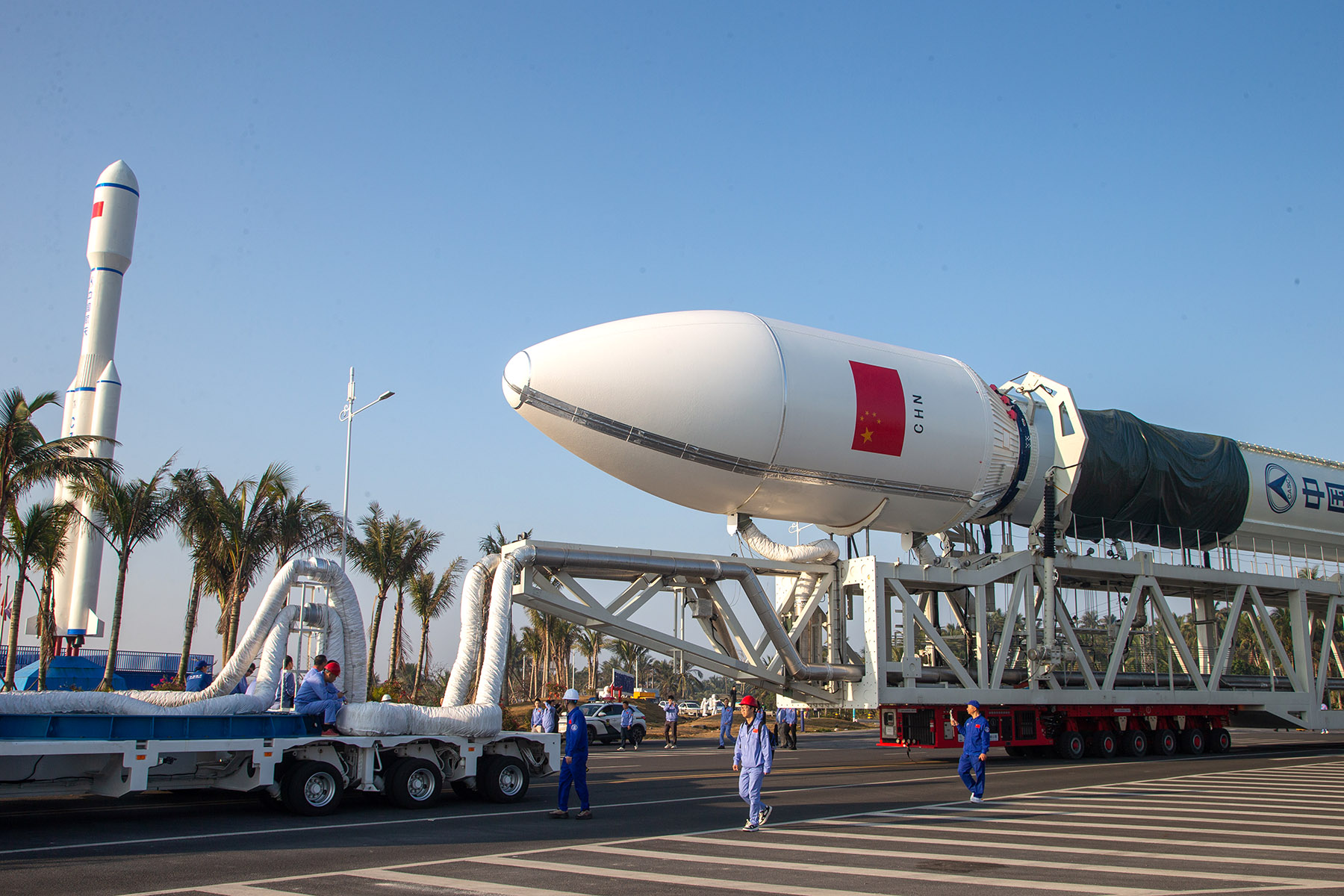
Commercial success
Adjacent to the state site, the Hainan International Commercial Aerospace Launch Center completed its ninth successful launch of 2025 on Dec 26.
It has progressed rapidly from its official debut in late 2024 and achieved two launches within five days last year. Built in 878 days and commencing operations in July 2022, the commercial center pioneers a flexible, cost-effective model.
"Our first phase features a dual-pad configuration with rapid launch and post-launch recovery capabilities. For instance, our No 2 launchpad features a universal design, compatible with over 20 rocket models, which has helped attract additional commercial launch companies," explained Yang Tianliang, chairman of the Hainan International Commercial Aerospace Launch Co.
A key innovation is the "three-level" process in which rockets are assembled, tested, and transported horizontally before being raised upright at the launchpad, cutting preparation time from about 20 days to 10 or fewer.
A second-phase expansion, adding two more pads later this year, aims to boost the commercial site's annual capacity to over 60 launches and further enhance Wenchang's capacity for high-frequency launch missions.
On China's aerospace map, Wenchang has pioneered State and commercial sectors "soaring together with complementary functions", according to Wenchang Release, the official WeChat public account of local authorities.
Industrial ecosystem
This high launch frequency is accelerating the development of a full industrial ecosystem. A large satellite manufacturing facility is under construction nearby, while the Wenchang Aerospace Supercomputing Center is expanding its "aerospace-plus" data services.
More than 700 aerospace companies are now located in Wenchang International Aerospace City, drawn by low-latitude launch benefits, favorable free trade port policies and a growing "rocket-satellite-data" industrial chain.
The provincial 15th Five-Year Plan pledges to advance the commercial aerospace launch site system and grow the rocket, satellite, data and "aerospace-plus" industries.
Interstellar Glory Aerospace Science and Technology Co is one of the companies committed to growth. At its launch-vehicle assembly, testing, and reuse facility, systems are undergoing intensive debugging.
"We are accelerating the construction of supporting facilities. In the future, we will rely on reusable technology to significantly reduce launch costs," said Peng Xiaobo, the company's chairman and general manager.
Yang from the Hainan International Commercial Aerospace Launch Co said: "Aerospace companies all keep a 'cost ledger'. If launch costs are lowered and supporting services are improved, companies will naturally be willing to come."
Hainan Governor Liu Xiaoming said the province is mobilizing all resources to develop Wenchang International Aerospace City, using a "launch site-driven" industry strategy to build a complete industrial ecosystem.
He invited leading global aerospace companies to settle in Hainan to share in the policy benefits and explore new models of international cooperation in launches, data, and application to build the island province into a global benchmark for aerospace connectivity.
Therma Tech Chairman Sun Meng said the Hainan Free Trade Port offers greater freedom and room for innovation.
"Startups in the satellite and data chains can together spark more innovation and provide more development opportunities for new quality productive forces in the aerospace industry," he said.
Beijing Jiutianxingge Aerospace Technology Co Vice-President Chu Guoqiang said as a result of the Hainan Free Trade Port island-wide special customs operations launch on Dec 18, corporate operating costs are expected to be reduced and convenience improved for companies expanding overseas.
Hainan Fengli Gas Co, a high-tech enterprise producing liquid oxygen, nitrogen and carbon dioxide, partnered in 2023 with the Hainan International Commercial Aerospace Launch Co to provide propellant and coolant.
"The supply process for aerospace gases is complex. Shortening the transport distance from the production site to the launch site helps reduce risk, time and cost. Also, launch dates can be uncertain, and a local service team can respond more quickly and flexibly," said Huang Shifeng from Hainan Fengli Gas Co. He said the company plans a 2 billion yuan ($280 million) investment to expand capacity, aiming to double production.

Government boost
Zhang Rusheng, deputy director of the China National Space Administration's commercial space department, said China's commercial space sector has entered a new stage of innovative, scaled development.
The Hainan commercial launch site has achieved a 100 percent success rate in 10 launches and accomplished a dual-pad launch capability. Zhang said the administration will support Hainan in using Free Trade Port preferential policies to pool global innovation resources and turn technological advantages into high-quality development momentum.
Li Zhongbao, chief engineer of China Aerospace Science and Technology Corporation, said the State-owned group is systematically planning the entire satellite, rocket, launch site, and application chain. The group will leverage Hainan's location and policy advantages to focus on core capabilities and expand integrated industries like space tourism, satellite data and the low-altitude economy, working with partners to build a new commercial space hub with global competitiveness, he said.
During the Wenchang International Aviation and Aerospace Forum on Dec 23, the Hainan Aerospace Technology Innovation Center and Hainan Weizi Daokong Technology Co released results from the Haishao series, China's first low-inclination orbit Synthetic Aperture Radar satellite.
Its low-inclination orbit enables the satellite to close the low-latitude data gap in Earth observation and provide a "full-sea-area positioning service" system, showcasing innovation in aerospace and marine technology.
Officials said the Haishao 1/AIRSAT 08 satellite has operated successfully in orbit for a year, calling it the world's first 350-kilometer ultra-low orbit.
They described the Haishao 2/AIRSAT 05 as the world's first integrated "remote sensing-communication-navigation aid" SAR satellite. Once networked, the satellites form an all-weather observation network covering Hainan and the South China Sea.
The Haishao 3 satellite project was initiated recently and will use a low-inclination orbit to enhance observation capability in mid — to low-latitude regions.
The series launch highlights Hainan's progress in building an independent and controllable satellite observation system. This system aims to form a "sky eye" covering both land and sea, providing more precise and real-time integrated sky-land-sea sensing capabilities for the construction of the Hainan FTP and supporting the development of Hainan's digital infrastructure.
Cao Shuyu, mayor of Wenchang and head of the Wenchang International Aerospace City Administration, said the city will focus on four areas: building a closed-loop "launch-recovery-reuse" system; cultivating a new satellite application ecosystem; expanding international application and trade channels for satellite data; and promoting deep integration of aerospace and cultural tourism.
Tourism thriving
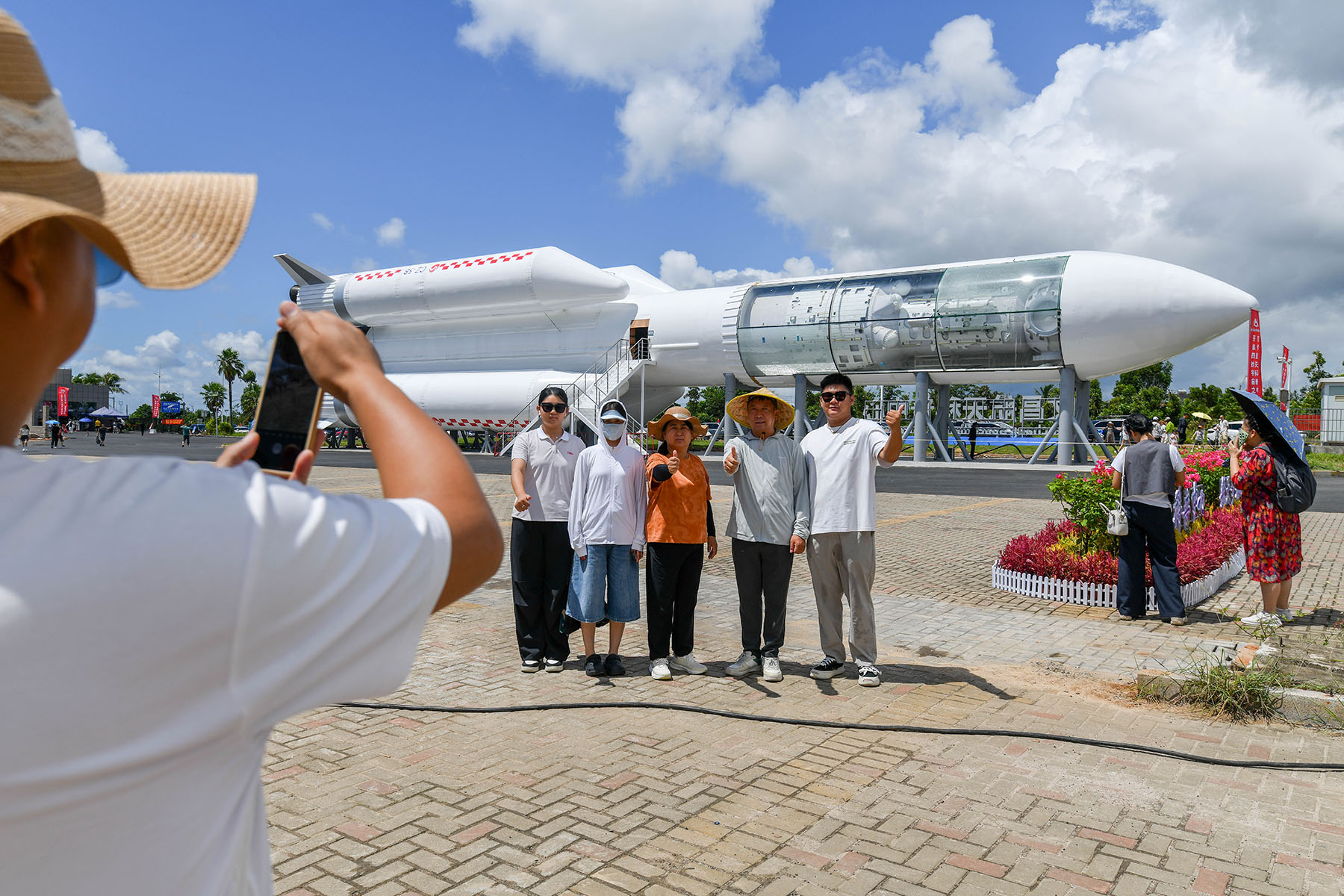
Each launch also helps fuel a vibrant "aerospace tourism" sector, with thousands of spectators flocking to local viewing points. "Hainan has a good natural environment and the country's only low-latitude, coastal rocket launch site. Every launch attracts a large number of tourists," said Xin Guotao, operations manager at the Wenchang Shanhaitian Convention Center.
In surrounding towns, many guesthouses offer rooftop viewing.
The center's roof can accommodate over 300 viewers, providing refreshments, aerospace lectures and video screenings.
Tourists from across China have been enjoying the thrills of the launch experience.
Tang Yutong from Guangdong province has traveled to Wenchang multiple times to "chase rockets", often dressed in traditional moon Goddess Chang'e and Jade Rabbit costumes to blend ancient myth with modern technology.
"A person must come to see a rocket launch by the sea once in their lifetime," said Si Shuxian, a tourist from Henan province. "Bringing my kids here can let them see for themselves our country's strength."
ALSO READ: China's commercial space industry hits high gear, expanding beyond launches
Chen Jiaojiao, from Sanya, Hainan, said watching rocket launches connects people from different regions."Tourists from all over the country, and even the world, gather in Wenchang. We don't know each other but share the same expectation, cheering together for the rocket's ascent."
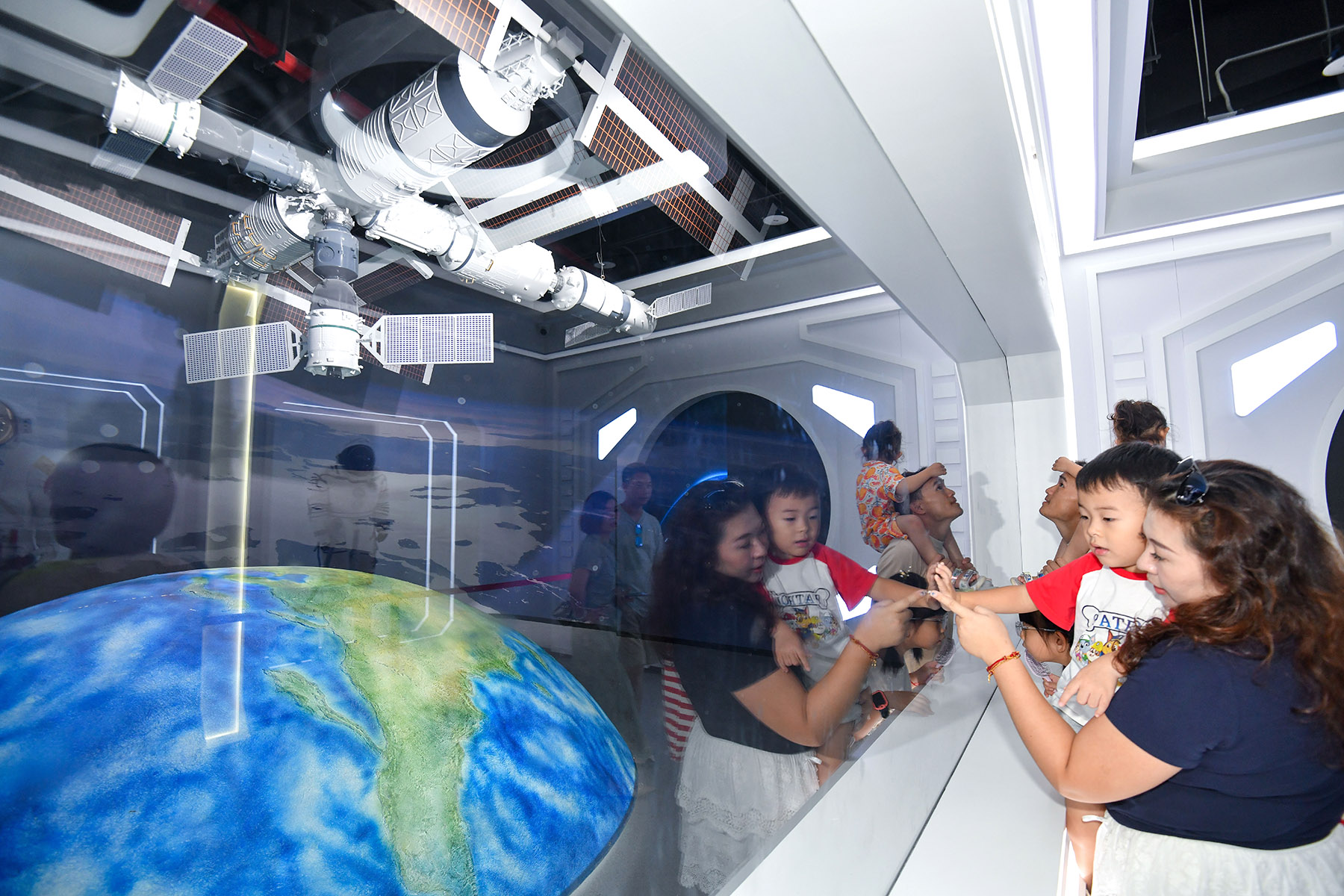
At the Wenchang Space Supercomputing Science and Technology Museum, satellites like the Wenchang Supercomputing 1 are on display.
The Wenchang Jixing Meteorite Museum integrates aerospace technology with cultural tourism innovation. It showcases over 400 celestial specimens, and invites visitors to view the mysteries of the universe.
Through artificial intelligence interactions, virtual reality tours and other technology, it offers an immersive space exploration experience. This "tech-infused tourism" model reflects the Hainan Free Trade Port's broader strategy to diversify and modernize its tourism and technology sectors, officials said.
"Parent-child and family trips are the main visits during holidays, with foot traffic significantly higher than usual," said a representative from the Wenchang Jixing Meteorite Museum. Combining aerospace with cultural tourism has strong appeal, with science popularization classes and interactive experiments making aerospace charm tangible.
Chen Jian'ge, secretary-general of the Wenchang Tourism Association, said the future of aerospace tourism requires breaking boundaries for greater integration, suggesting further developing iconic aerospace tourism IPs and more diverse, professional tourism formats.
Contact the writers at chenbowen@chinadaily.com.cn
