

Monstrous, unfathomable creatures — from mythological beasts of both Eastern and Western antiquity to man-made bogeymen — have laid the foundation for horror for literally centuries. What makes monsters such horror mainstays is their ability to stand in for our deepest fears, biggest crimes and rawest emotions.
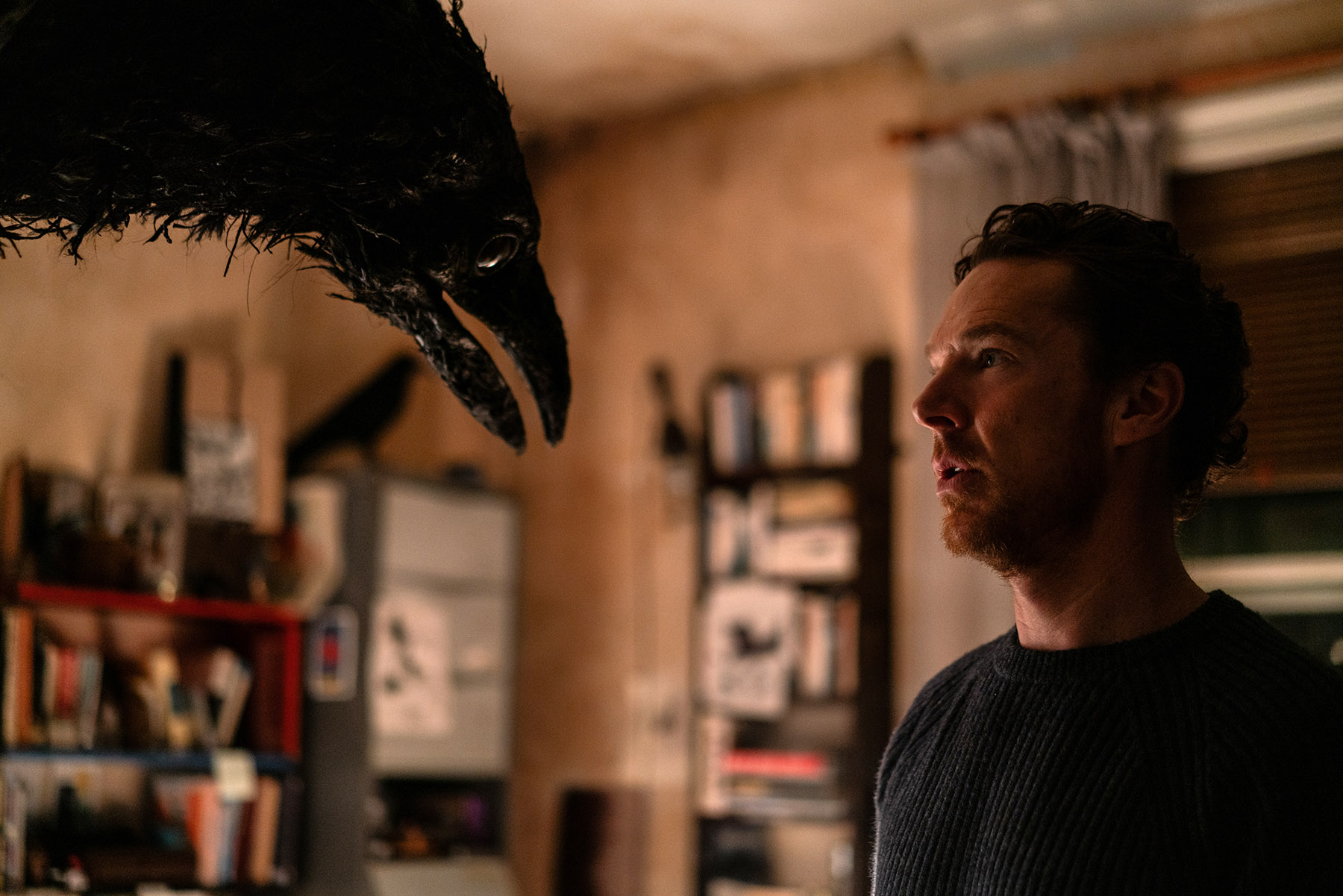
Such is the case in music video and documentary director Dylan Southern’s first foray into feature filmmaking — The Thing with Feathers, based on Max Porter’s acclaimed debut novel Grief Is the Thing with Feathers. The spare narrative follows a man and his young sons, identified only as Dad (Benedict Cumberbatch), Boy 1, and Boy 2, through the grieving process after the sudden death of his wife and their mother. Dad is an artist, and across the span of weeks or months he conjures an enormous, brutally honest talking crow (voiced by David Thewlis, recalling his break-out performance in Naked) that becomes his babysitter, counselor and conscience as he comes to terms with his loss.
ALSO READ: We’ve been there before
The crow is the looming, pitch-black metaphor for Dad’s regrets and realizations, and ultimately his road through trauma, and it pushes The Thing with Feathers toward what’s been labeled elevated horror, which involves a close examination of grief, trauma and psychological fragility. Southern is clever with his subtle horror imaging, which never leans on cheap jump scares but does exploit hard light and shadow to turn the house where the action unfolds into a mindscape of sorts, alternately warm and welcoming, and bleakly unkempt.
But it’s the combination of Cumberbatch’s haggard performance and Thewlis’s biting monologues that force more reflection into the script than may be on the page. Cumberbatch keeps Dad sympathetic, when the character could easily teeter over into unlikeable. Dad and his crow make sorrow palpable in the littlest of details, like Dad being unable to even muster the strength to get out of bed, and the crow’s scathing deconstruction of his feelings. It’s a shame that Mum, seen only partially in flashback, remains a cypher throughout. We’re left to guess the importance of the impact and presence of the specter that she is.
At the other end of the spectrum, far from emotional metaphors and meditations on death, is Johannes Roberts’ Primate, an exemplar of the kind of inexpensive, throwaway January filler that studios dump in cinemas after the holiday rush — but which occasionally strikes gold (M3GAN, Split, Paddington). Primate may not be gold, but it’s the kind of diversion that knows what it is, how it should function, and delivers the chills and gore that audiences heading to see it expect.
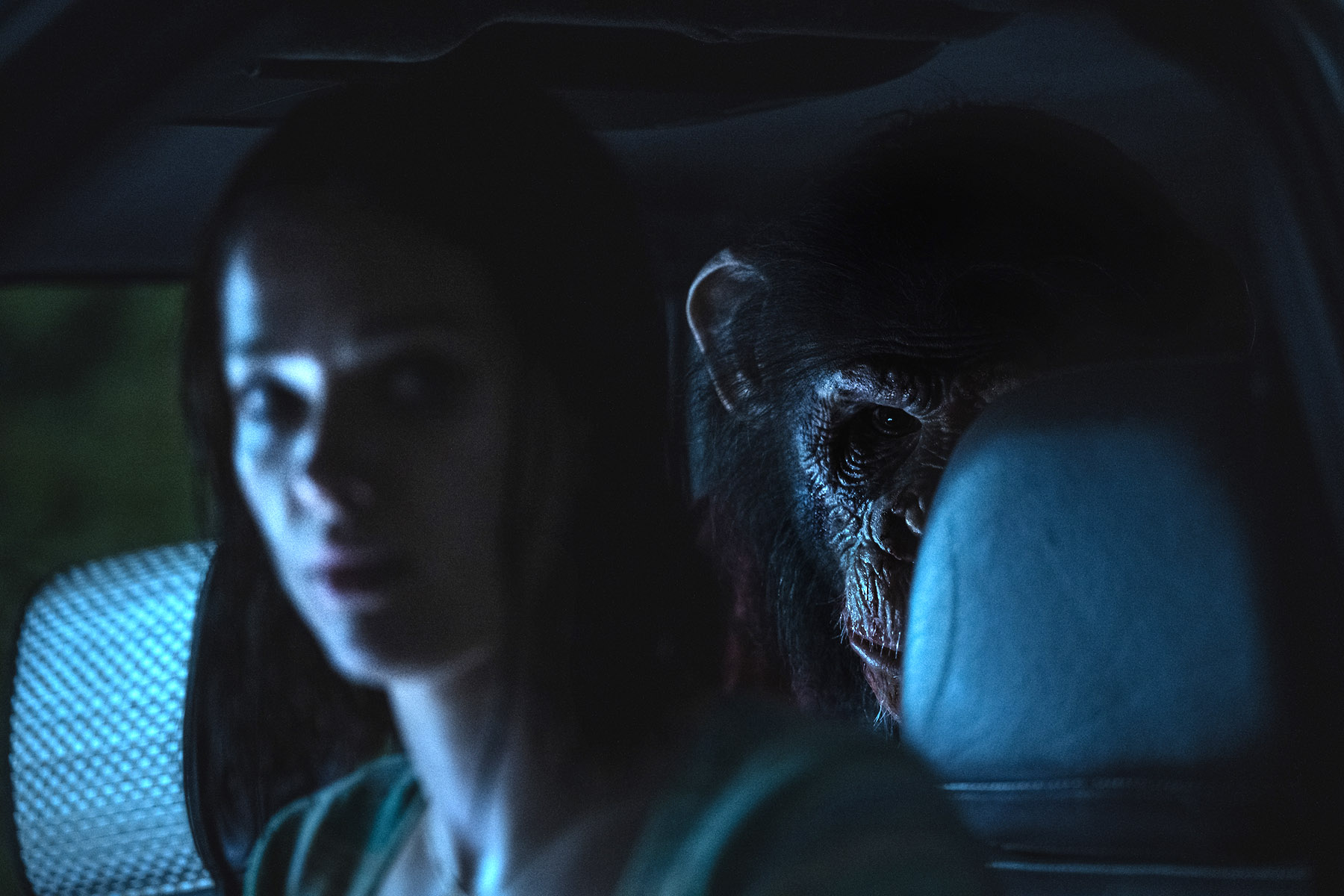
College student Lucy (Johnny Sequoyah) heads to her family’s palatial Hawaii home for summer vacation. Her linguist mother has recently died, and her younger sister resents her long absence. Nonetheless, she shows up with some school friends in tow, only one of whom is aware that Ben, a chimpanzee Lucy’s dead mother was experimenting with, lives in the house like one of the family. He’s cute and amusing, until he contracts rabies.
Roberts has flirted with angry wild animals before, primarily in 47 Meters Down (2017), and he brings some of the fraught family dynamic of The Strangers: Prey at Night (2018) to bear in Primate. However, anyone looking for a measured examination of our collective relationship with nature or the ethics of scientific research on our closest biological cousins, best look elsewhere. Roberts and co-writer Ernest Riera are laser-focused on the requisite creature feature antics, and to their credit do a solid job with conventional material. It helps that the nearly flawless combination of CGI, puppetry and animatronics makes Ben a real threat, and Primate a midwinter delight.
