

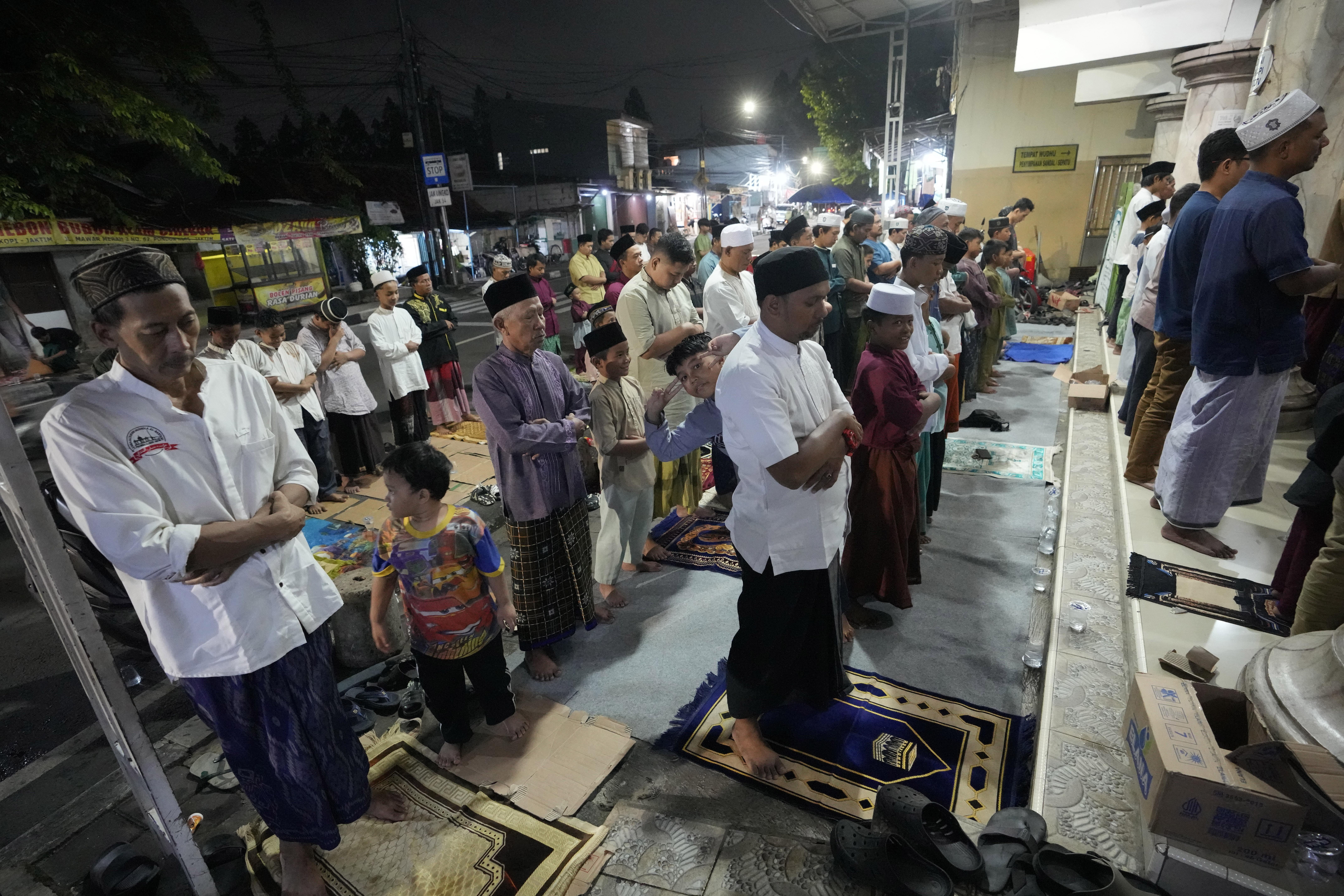
 Indonesian Muslims perform an evening prayer called 'tarawih' marking the first eve of the holy fasting month of Ramadan, at a Mosque in Jakarta, Indonesia, March 11, 2024. (PHOTO / AP)
For Fazal Bahardeen, founder and chief executive of CrescentRating, a Singapore-based travel consultancy, observing Ramadan this year marked by the live-streamed suffering of Muslims in the Middle East is a “profoundly painful experience”.
“Ramadan's essence -- fasting, prayer, and charity -- becomes even more meaningful in this context. It encourages us to look beyond our personal needs and comforts, fostering a sense of community,” Fazal told China Daily.
Fazal is among the over 270 million Muslims in the Southeast Asian region who will be observing this year’s Ramadan with prayers and community work dedicated to the attainment of lasting peace in the Middle East.
At the conclusion of a special summit in Melbourne on March 6, the Association of Southeast Asian Nations (ASEAN) and the Australian government have issued a joint statement calling for “an immediate and durable humanitarian ceasefire”.
READ MORE: Palestinians prepare for Ramadan in the shadow of Gaza war
Mustafa Izzuddin, senior international affairs analyst at Solaris Strategies Singapore, said ASEAN’s call for a ceasefire is a “right and humane decision” and is aligned with the regional bloc’s way of fostering peace and stability through the practice of dialogue and diplomacy.
Sudarnoto Abdul Hakim, MUI’s chairman in charge of international relations said that MUI and its partners in Indonesia would do their best to mobilize resources from Indonesia for Palestine
Mustafa said he’s observing this year’s Ramadan in a “solemn and somber way in light of the atrocities being committed in Gaza and the plight of the Palestinians”.
“I am remembering the Palestinians in my prayers that they are protected as civilians, provided with humanitarian relief and secure a homeland of their own,” Mustafa told China Daily.
In Indonesia, the world’s largest Muslim-majority country, the Indonesian Ulema Council or MUI, held a meeting on March 10 in the capital city of Jakarta to discuss the observance of Ramadan amid the Middle East crisis.
ALSO READ: OIC presses for Gaza Ramadan truce
The MUI is among Indonesia’s top Muslim scholars’ organizations and Sunday’s meeting has gathered both Indonesian and Palestine scholars, preachers and development workers. The meeting ended with plans to raise funds in support of the Palestinians and with a call to boycott products from Israel and those produced by companies related to Israel and supporting Israel.
“We call on the Muslim people that from the start of Ramadan Month no longer use products from companies that are affiliated to Israel and those companies that support Israel,” the declaration says.
Sudarnoto Abdul Hakim, MUI’s chairman in charge of international relations said that MUI and its partners in Indonesia would do their best to mobilize resources from Indonesia for Palestine. He said Ramadan, which involves fasting from dawn to sunset, is the time for Muslims to practice self-control.
Understanding, tolerance, and cooperation are crucial in navigating the current situation and working toward solutions that respect the dignity and rights of all individuals involved.
Fazal Bahardeen, Founder and Chief Executive of CrescentRating
“Without self-control people could destroy other people, which could even lead to genocide,” Abdul Hakim told China Daily.
READ MORE: Netanyahu: 13,000 'terrorists' among Palestinians killed
Syaik Ahmad Mukhallalati from Amman, Jordan, who hails from the city of Yafa in Palestine, said he was impressed by MUI’s support and the support given by Indonesia as a whole.
“This is my first visit to Indonesia. I know little about Indonesia, but I am touched by the spirit given by the Indonesian people to us,” he told China Daily in Arabic, which was translated into English by an interpreter.
Muslim Filipina Zarah Kathleen Alih welcomed the start of Ramadan by planning a pilgrimage, praying and advocating for peace and humanitarian aid efforts in Gaza.
Alih, a congressional staff at the Bangsamoro Transition Authority, the interim government of the Muslim-majority region in southern Philippines, said that going on a pilgrimage or umrah during Ramadan while being aware of the Israel-Palestine conflict can spark “feelings of empathy and solidarity towards those affected by the conflict”.
ALSO READ: Israel says it struck tunnel housing Hamas' military No. 2
For Fazal of CrescentRating, the Israel-Palestine conflict has “catalyzed a renewed sense of urgency and responsibility among humanity to support peace, justice, and recovery efforts, irrespective of geographical boundaries”.
“These challenges have also underscored the importance of dialogue within the Muslim community and the wider world. Understanding, tolerance, and cooperation are crucial in navigating the current situation and working toward solutions that respect the dignity and rights of all individuals involved,” he said.
Contact the writers at prime@chinadailyapac.com
