

Demand for recycled plastic soars amid conflict in the Middle East
Editor's note: In this weekly feature China Daily gives voice to Asia and its people. The stories presented come mainly from the Asia News Network (ANN), of which China Daily is among its 20 leading titles.
Under a cloudy sky in early April, five workers feed discarded Cookie Monster nappies into a machine to shred and recycle them.
"This is the warm 'popcorn' for low-density polyethylene, or LDPE, as a base material for industrial packaging, tarpaulin and drip tape," said G. Aushal, managing director of Sannanda Rika.
His company sources discarded plastic waste from the European Union and Japan to recycle it into up to 500 metric tons of LDPE materials every month. On the floor of the recycling plant, located 50 kilometers west of Kuala Lumpur, are hundreds of pallets of 25 kg packs of LDPE that are wrapped and stacked.
READ MORE: Toll on environment
The Iran war has affected not only the flow of oil but also plastic supply. Aushal's recycled plastic firm, along with others in the industry, has seen increased demand.
He said: "A Singapore-based customer could not secure plastic supply, so he asked me to ship up to three 40-foot containers of recycled plastic resin per week instead of per month previously." One container typically carries 27 to 28 tons.
Will Low, vice-president of the Malaysia Plastic Recyclers Association, said the demand for recycled materials has risen an estimated 20 to 30 percent since the US and Israel launched airstrikes against Iran in end-February. "At the same time, prices of some virgin materials have increased more than 50 to 60 percent. That is why some manufacturers have brought forward plans to increase the percentage of recycled materials in their product," he said.
In a blog post on April 12, Malaysia's Deputy Finance Minister Liew Chin Tong said now is the best time to scale up the plastic recycling industry amid a shortage of imported plastic resin in Malaysia.
Given the shortage, Low said recycled plastic is a strategic alternative.
"Typically, the price of recycled resin final product is 10 to 20 percent lower than virgin resin, which is produced directly from crude oil. We are pushing hard for the government to implement Extended Producer Responsibility (EPR) to drive the demand for recycled resin," he said.
EPR makes producers responsible for products across their life cycle to reduce plastic waste. The Malaysia Plastics Sustainability Roadmap aims to increase recycled content in packaging from 10 percent in 2023 to 15 percent in 2030 to stimulate investments in the "collection, sorting and recycling industries".
Malaysia's Housing and Local Government Ministry plans to make some manufacturers — depending on their size — report the recycled content of plastics, paper, metal, used beverage cartons and glass in their products by 2030.
While there is increased demand for recycled resin, it cannot always replace virgin resin. The usage of recycled resin is limited to certain categories of plastic products.
Mike Tan, chairman of the Malaysian Plastics Manufacturers Association's Johor branch, said: "High-precision electronic components and medical devices, including some personal protective equipment, often require virgin resin due to its superior heat resistance and robust insulating properties."
An industry veteran said the toughness of plastic resin is reduced each time it is recycled.
"Household products can use more recycled plastic resin, as at most it affects the color with a lower risk of breaking. But automotive products need higher-quality material, as recycled resin may not provide long-lasting durability," said the 41-year-old, who wanted to be known only as Chia.
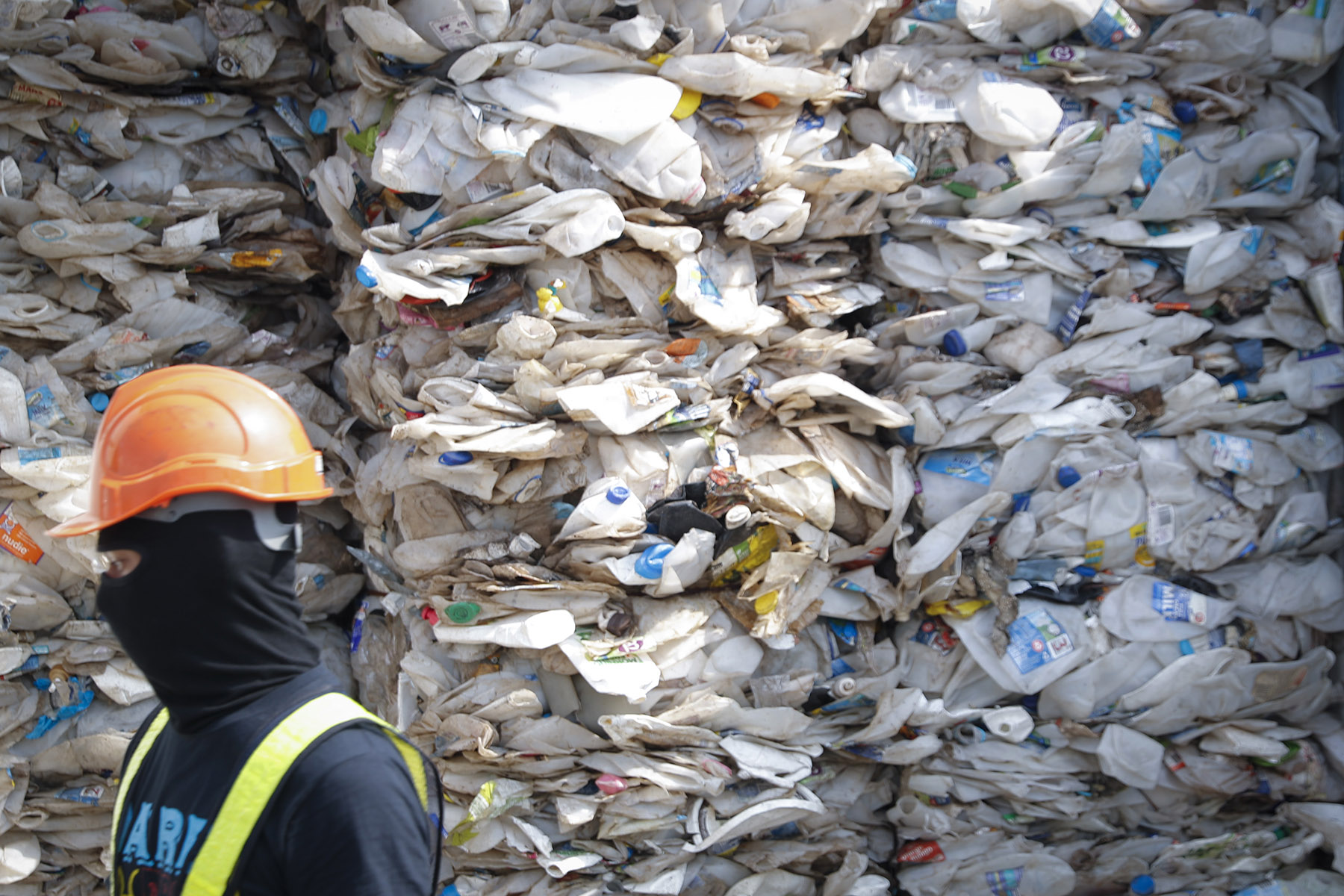
Before its recent uplift in prospects, Malaysia's plastic recycling industry had been under scrutiny over contaminated plastic scrap imports.
In 2019, then Environment Minister Yeo Bee Yin vowed that Malaysia would not become a dumping ground for overseas plastic waste and pledged to return illegal shipments to their countries of origin.
According to 2025 data from the United Nations Commodity Trade Statistics Database, Malaysia imported $162 million worth of plastic scrap weighing nearly 460,000 tons, making it the third-largest in the world behind only the Netherlands and the US. This value has tripled from a decade ago.
To clamp down on the smuggling of plastic waste, Malaysian officials in February proposed a three-month moratorium on plastic imports before making a final decision on whether or not to import plastic waste at all.
The United Nations Development Programme estimated Malaysia produces over 1 million tons of plastic waste annually, of which a mere 10 percent is recycled.
"If you ask me, there may be no need to import plastic waste at all," outgoing Malaysian Anti-Corruption Commission Chief Azam Baki, who is leading the clampdown on illegal e-waste and plastic waste, said on April 2. He said that improving domestic waste management systems could eliminate the need for imports altogether.
In July 2025, Malaysia further restricted the import of plastic waste by insisting on pre-shipment inspections in exporting countries to address the health and environmental risks linked to illegal or poorly managed plastic waste practices.
But two researchers at Monash University Malaysia — Associate Professor Saman Ilankoon and his PhD student Shafeeq Ahmed Syed Ali — said if domestic plastic waste is not separated at its source, "it does not produce enough good quality and uncontaminated feedstock for the local industry".
"Meanwhile, imported homogeneous plastic sources offer higher-quality feedstock for producing high-value resin and generating sustainable profit margins."
ALSO READ: Hovering danger
In March, Malaysian Plastics Manufacturers Association President Cheah Chee Choon made the same point when appealing against a proposed moratorium on plastic waste imports — imported plastic waste is generally pricier but of higher quality than local waste.
Aushal's company imports 70 to 80 percent of its feedstock, with the remainder sourced locally.
The two-decade veteran in plastic recycling said imports remain essential, as they are consistently supplied and largely derived from postindustrial production, whereas local feedstock consists mainly of more contaminated post-consumer waste.
In the long term, Aushal is optimistic about the prospects of the recycled plastics industry.
"The shortage of virgin resin has pushed many to increase the use of recycled materials in their products. As a result, the future demand for recycled materials is expected to grow, with manufacturers better understanding their composition," he said.
