

Mideast conflict accelerates the region's nuclear energy ambitions
Editor's note: In this weekly feature China Daily gives voice to Asia and its people. The stories presented come mainly from the Asia News Network (ANN), of which China Daily is among its 20 leading titles.
The war in Iran could accelerate Southeast Asia's plans to tap nuclear energy as it seeks to wean itself off its dependence on Middle Eastern oil and gas, experts told The Straits Times.
The closure of the Strait of Hormuz — a major global shipping route responsible for 20 percent of the global oil trade — has exposed the region's heavy reliance on imported oil and gas, leaving it vulnerable to volatile fuel prices, economic disruption, and strain on energy systems.
It has underscored the need to diversify energy mixes, strengthening the case for nuclear energy to shore up energy security in the region, experts said.
READ MORE: Asia-Pacific scrambles amid oil shock
This is particularly so in Southeast Asia, which is largely dependent on oil and gas from the Middle East, said Arkady Gevorkyan, commodity strategist of Citibank.
He said the disruptions in oil and gas have driven up electricity generation costs and increased the price of baseload power, making nuclear energy an attractive alternative for secure power generation. Baseload power is the minimum amount of electricity a grid needs at any given time.
The conflict has also renewed interest in renewable energy, but sources like solar and wind are weather-dependent, which can mean inconsistent energy production.
Increasingly, nuclear energy has emerged as a potential energy source for countries, as nuclear reactions do not emit any greenhouse gases and use fewer natural resources to produce large amounts of energy.
It can also run around the clock, has a smaller land footprint, and can support energy-intensive sectors like heavy industries and data centers.
Tan-Soo Jie-Sheng from the National University of Singapore's Lee Kuan Yew School of Public Policy, noted that even before the war, interest in nuclear energy was growing due to rapid electricity demand, the need to decarbonize, land constraints, and the intermittency of renewables.
While the conflict has "reinforced and accelerated" the underlying rationale for nuclear energy, such a strategy hinges on long-term commitment and resolve, he said.
Countries that have had nuclear energy plans on the back-burner may now take a harder look at moving on with them.
"What the conflict has done is sharpen the energy security argument by highlighting how exposed the region remains to imported fossil fuels and geopolitical risks," he added.
Gevorkyan said that in the wake of the Russia-Ukraine conflict, Europe's reliance on imported gas, combined with periods of weak renewable output, strengthened the region's push for energy independence and security.
Europe has since scaled up its solar and wind power sectors and diversified its fuel imports, among other measures.
"Markets that rely on one source or two sources of energy for power generation are not immune to any sort of cataclysms or events when there is a power disruption," Gevorkyan said.
An alternative source
Having an alternative source of baseload power reduces reliance on other countries and shields countries from price swings, he said.
He said that Asia's dependence on gas imports, which are rising in price, could also make nuclear energy a more competitive energy source.
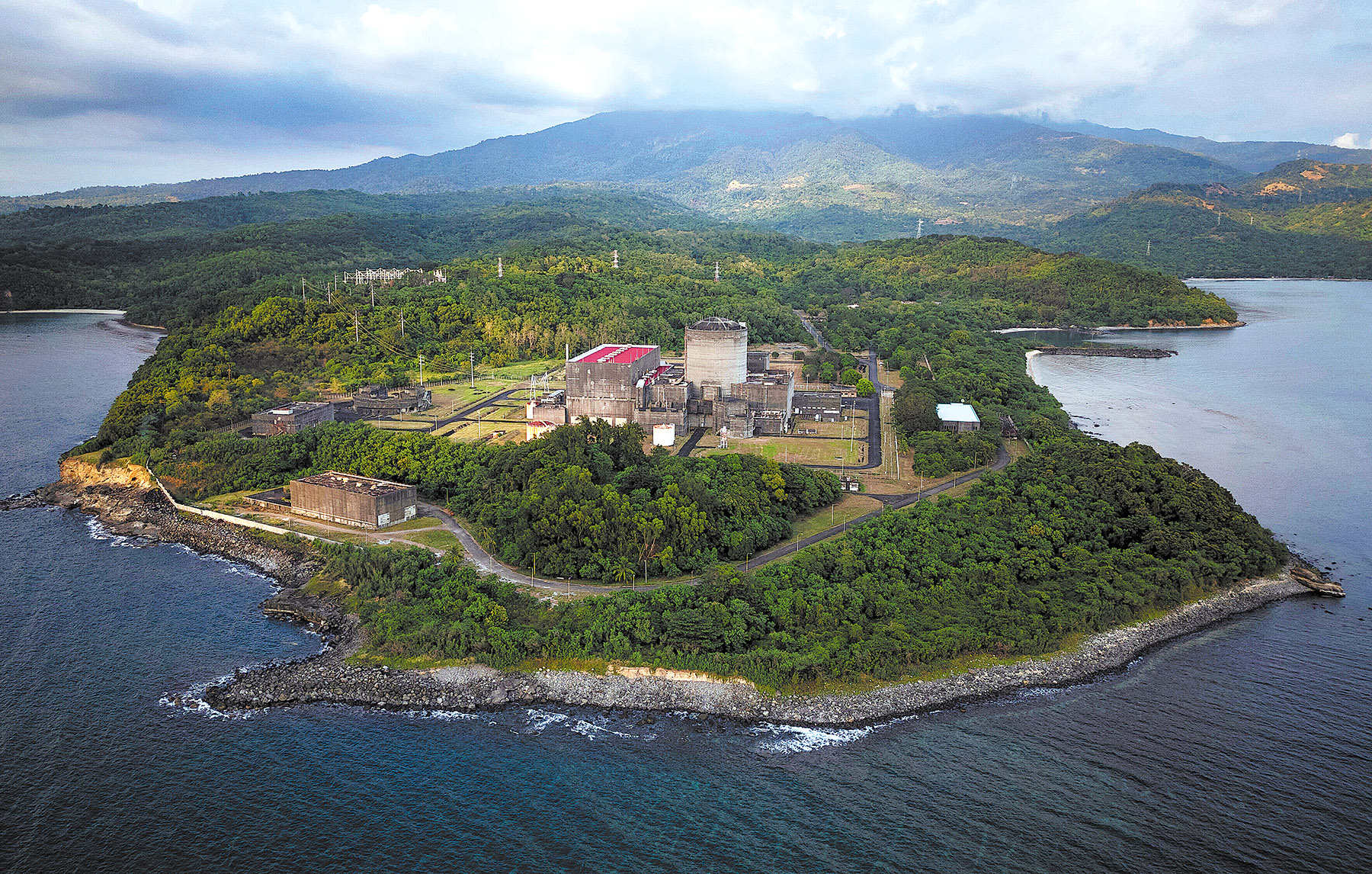
Interest in nuclear energy has been surging in the region. Countries including Vietnam, Indonesia, Thailand and the Philippines have included nuclear in their power development plans and are advancing feasibility studies, preparatory work and international cooperation, said an International Energy Agency spokesperson.
Among recent developments, Vietnam signed an agreement on March 23 with Russia to construct a power plant featuring two reactors with a combined capacity of 2,400 megawatts. Vietnam aims to bring its first nuclear power plant online as early as 2030.
Malaysia said on March 27 that it is undertaking a comprehensive assessment of its potential nuclear energy program after embedding nuclear energy into its 13th Malaysia Plan in July 2025.
Malaysian Deputy Prime Minister Fadillah Yusof said that the need to evaluate the feasibility of nuclear energy is increasingly relevant amid a changing global energy landscape shaped by geopolitical uncertainties and fluctuations in fuel supply and prices, national news agency Bernama reported.
Singapore has been studying the deployment of nuclear energy through commissioned studies on various fronts, including advanced nuclear technology, and has inked international partnerships with other countries to learn more about the latest nuclear technologies and scientific research.
Indonesia and Japan in March agreed to collaborate on nuclear energy, including possibly building a nuclear power plant in Indonesia's West Kalimantan Province on the island of Borneo.
"Taken together, the region is not yet building nuclear plants, but it is clearly moving from initial interest toward institutionalization, with policies, targets and international agreements beginning to take shape," said Tan-Soo.
Victor Nian, founding cochair of independent think tank Centre for Strategic Energy and Resources, said the conflict is a "wake-up call" for many countries to rethink their heavy reliance on fossil fuels, particularly imports from the Middle East.
"In the short term, there is nothing much we can do but to ride out the storm," he said.
"When looking long term, I'm sure nuclear energy and potentially even coal are among the top strategic options being seriously considered by ASEAN countries … Energy transition of the future might not be solely focused on decarbonization, but energy security and economic security."
Some countries, such as Thailand, Indonesia and Vietnam, have pivoted to coal as a fallback.
For example, plans are being made to revive the retired Mae Moh coal-fired power plant in Thailand, while Indonesia has decided to ramp up coal output.
Although coal offers a cheaper and more accessible alternative that can help make up for fuel shortages, it is the most-polluting fossil fuel.
Long-term commitment
While some experts said the war may have accelerated plans to diversify countries' energy mix, nuclear power requires long-term commitment and project development.
It would take years, even decades of investment, to train skilled personnel, establish robust regulatory and safety institutions, and identify suitable sites based on geological, environmental and social criteria, said Dinita Setyawati, a senior energy analyst at energy think tank Ember.
Yao Lixia, a research fellow at the Energy Studies Institute of the National University of Singapore, said that high upfront costs, long construction timelines, regulatory and institutional gaps, as well as public concerns, mean that nuclear energy remains a long-term strategic consideration rather than an immediate solution.
ALSO READ: Transition to EVs picks up pace in SE Asia amid concerns over surging oil prices
"While the crisis has revived interest in nuclear as a secure, low-carbon baseload option, it is unlikely to lead to meaningful deployment in the short to medium term," she added.
She said that while governments in the region are increasingly looking at nuclear energy as a reliable power source, it would be part of a preexisting long-term strategy rather than a direct response to the Middle East crisis.
"The current crisis may reinforce the strategic rationale, but most initiatives remain at the level of policy planning and institutional preparation," she said.
A more realistic interpretation, said Tan-Soo, is that the conflict has shifted nuclear from a peripheral option to a more central part of long-term energy planning.
"It strengthens the case for diversification, but does not shorten the timeline required to develop nuclear safely and responsibly," he said.
