

As Mideast conflict chokes energy supplies, nations take emergency steps to contain fallout
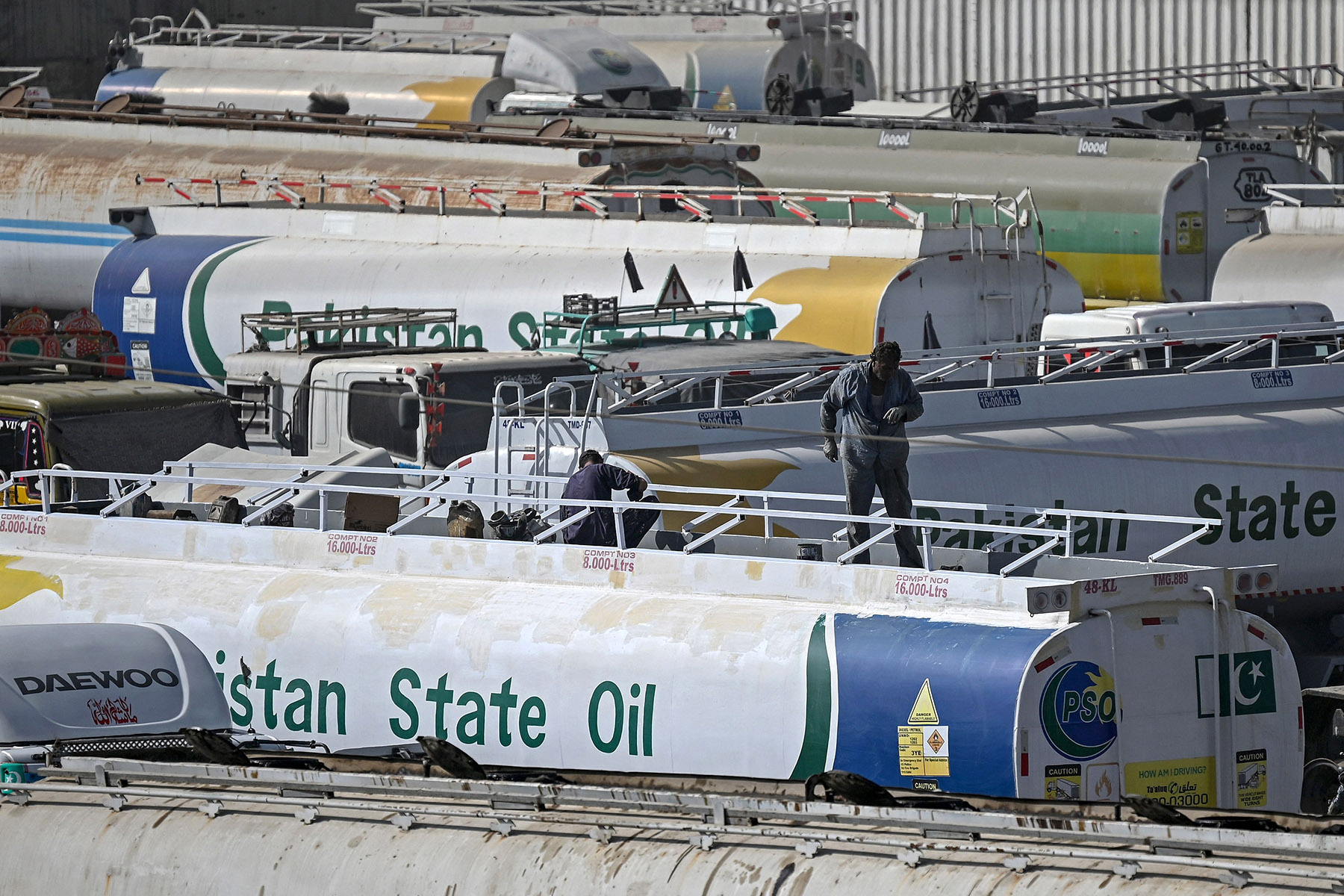
Nugrah Wisnu Adi, a computer repair shop owner in Jakarta, usually spends Eid al-Fitr going back to Yogyakarta in south-central Java to celebrate the traditional Muslim festival with his parents. This year, however, with the holy month of Ramadan ending this Friday, Adi and his wife and children decided to stay put in Jakarta.
Adi said he is worried about the prolonged crisis in the Middle East, the rising oil prices and how this would eventually lead to increased prices of basic commodities in Indonesia. He said his family would rather save the money usually earmarked for the annual Eid holiday in their hometown and use it for other more important expenses like his children's education.
Murniati, a vegetable vendor in Jakarta, has also decided to cancel the trip to her home village in Karanganyar, Central Java, owing to the high prices of bus tickets.
READ MORE: Japan begins oil reserve release amid Mideast conflict
Adi and Murniati are among the thousands of Indonesians skipping this year's mudik — the annual Eid exodus, mostly of migrant workers in cities and towns returning home for the festival in the country. Indonesia's transportation ministry and the national police have estimated that the number of people going for this year's mudik might decrease by nearly 2 percent to 143.9 million amid fears of rising oil and consumer prices.
This year's more somber Eid celebrations in Indonesia, the world's most populous Muslim-majority country, offer a glimpse of how the Middle East crisis has dampened consumer sentiment and the economic outlook across the Asia-Pacific.
Most of the countries in the region import crude oil and liquefied natural gas, or LNG, from the Middle East, whose supply has been disrupted since the joint attacks by the United States and Israel against Iran started on Feb 28.
Crude oil prices neared $120 per barrel on March 9, the first time they crossed the $100 level since July 2022. Oil prices jumped soon after Gulf oil producers — including Kuwait, the United Arab Emirates, and Iraq — announced that they were cutting output amid the escalating crisis in the region and the closure of the Strait of Hormuz shipping lane.
"Fuel and transport costs roughly account for 10 to 15 percent of consumer price indices in several Asian economies. This means oil spikes quickly ripple through food distribution and manufacturing supply chains," Nawazish Mirza, professor of finance at Excelia Business School in France, told China Daily.
On Tuesday, Brent crude was trading at more than $100 per barrel during Asian trading hours.
Prices remain firm despite an announcement from the International Energy Agency, or IEA, on March 11 that its members would be releasing 400 million barrels of oil from their emergency reserves.
IEA members hold emergency stockpiles of over 1.2 billion barrels, with a further 600 million barrels of industry stocks held under government obligation.
The Japanese government started releasing its oil reserves on Monday. Japan plans to release oil from reserves equivalent to 45 days of domestic demand — an all-time high for the country.
South Korea will release a record 22.46 million barrels of strategic oil reserves. Australia has pledged to release six days' worth of petrol and five days of diesel from its emergency stockpile. Japan, South Korea and Australia are all members of the IEA.
Japanese investment bank Nomura said Asia is facing a "stagflationary shock", and that its severity will depend on the duration of the energy supply disruption. Stagflation refers to the phenomenon of high inflation and stagnant economy.
The bank said in its latest research notes that prolonged supply disruption could have an 'asymmetric impact' on the Asia-Pacific region owing to uneven oil buffers and diversity in energy import volumes.
The more developed Asian economies — Japan and South Korea — have the largest buffers, with crude oil reserves covering at least 200 days of demand. That stands in contrast to the situation in emerging economies such as Indonesia and the Philippines — Indonesia has a 25-day stockpile while the Philippines has about 60 days' worth of oil reserves.
Emerging Asian economies, where the share of spending on energy goods also tends to be higher, are also more vulnerable to a lasting supply crunch, according to Nomura.
But even Japan and South Korea, with their huge stockpiles, are not immune to domestic inflation spikes and consumer fears that can lead to panic buying and hoarding.
Nomura said Thailand, South Korea and India are most vulnerable to an energy shock, both via price and volume effects, due to their high net energy imports and concentration risk in the Middle East. Malaysia and Australia are less vulnerable, as they are energy exporters.
Immediate actions
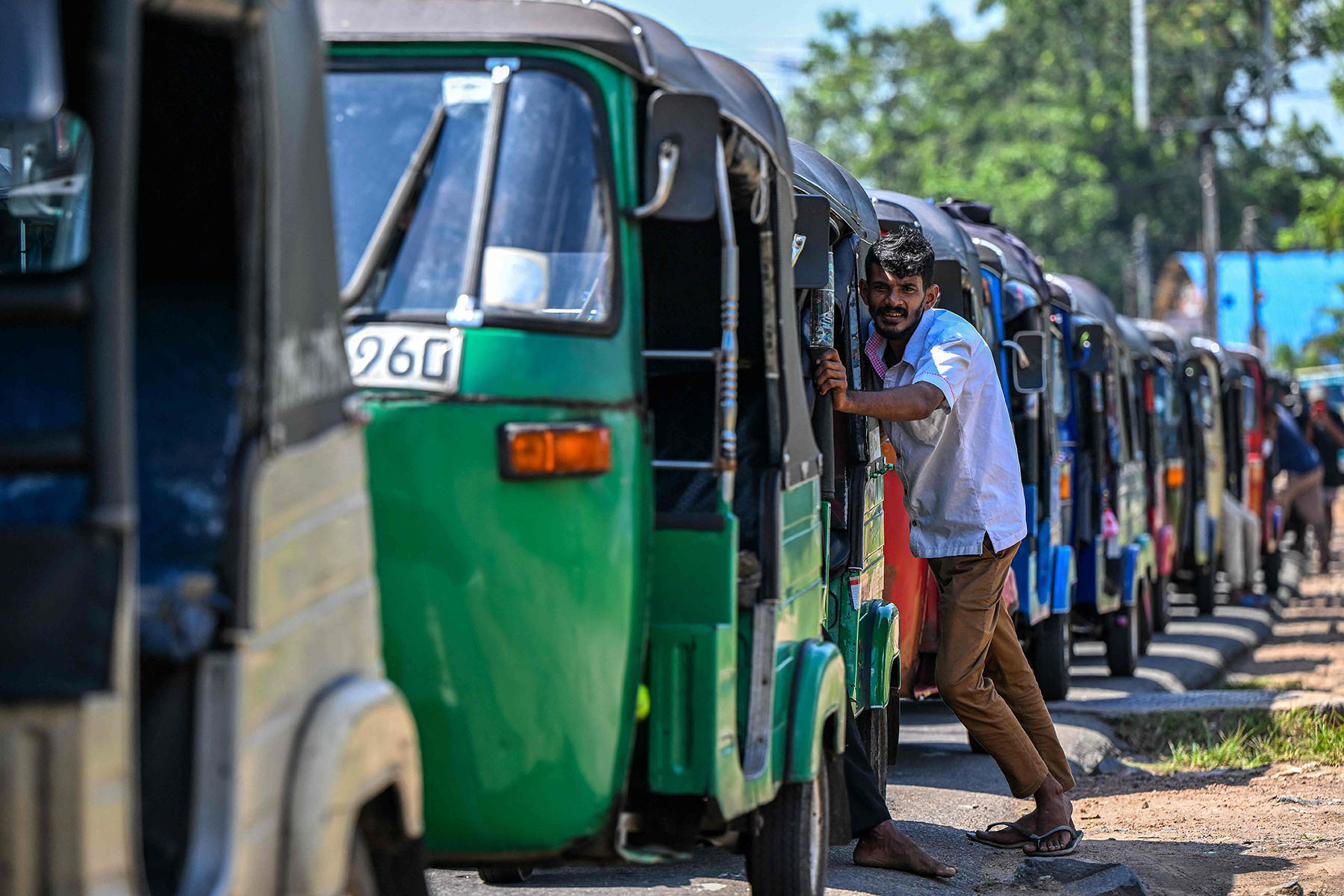
Governments across the Asia-Pacific have implemented several measures — from encouraging work-from-home arrangements to enforcing a temporary cap on domestic fuel prices — to save on energy consumption and keep inflation under control as the Middle East conflict drags on.
A joint statement issued on Friday by the economic ministers of the Association of Southeast Asian Nations, or ASEAN, has stressed the importance of strengthening regional energy security and resilience, as it cited ASEAN's exposure to global oil and LNG supply routes.
The ministers emphasized the need to manage energy consumption, diversify energy sources and supply routes, particularly through biofuels and renewable energy. They also urged regional cooperation on energy preparedness and reserves and accelerating the energy transition.
Philippine Trade Undersecretary Allan Gepty said in a press briefing that the ongoing conflict in the Middle East may accelerate the completion of the ASEAN Petroleum Security Agreement, or APSA. APSA allows ASEAN members to provide petroleum supplies to neighbors facing shortages.
In Indonesia, ASEAN's biggest economy, President Prabowo Subianto has called on coal and palm oil producers to prioritize domestic needs. Indonesia is the world's biggest exporter of palm oil and coal.
Indonesian officials have also assured that the government will not raise subsidized fuel prices leading up to the Eid holiday.
But Airlangga Hartarto, Indonesia's coordinating minister for economic affairs, said it would be difficult for Indonesia to keep its fiscal deficit under a legal mandate of 3 percent of the gross domestic product if global oil prices continue to go up.
Tauhid Ahmad, executive director of the Jakarta-based Institute for Development of Economics and Finance, said a wider deficit might lead to higher domestic fuel prices in the end as the government will not have the fiscal space to raise the current subsidy on local fuel.
In other parts of Asia, Philippine government offices have adopted a four-day work week, while Pakistan, Thailand and Vietnam pushed for remote work to save on energy consumption.
Malaysia has stepped up enforcement and monitoring to curb fuel smuggling.
South Korea and Thailand have capped local fuel prices while Vietnam tapped its price stabilization fund to reduce local petrol prices.
India has diversified sources of imported energy, including boosting oil imports from Russia. Indian oil refineries were directed to prioritize households over businesses in the supply of liquefied petroleum gas.
Pakistan and Bangladesh have closed universities to conserve electricity and ease a looming energy crunch.
"If this oil and gas powered volatility keeps going on for a prolonged period of time, there might be a widening of disparity between the more developed Asia and emerging economies in the region," said Dinita Setyawati, senior analyst at energy policy think tank Ember, in a webinar on March 12.
The changes in energy prices might not capture the full extent of inflation, but reducing import dependence could really make the countries stabilize their economic growth, she said.
Green transition
Gaspar Escobar Jr, grid modernization advisor at the Manila-based Institute for Climate and Sustainable Cities, said energy independence and energy security can be strengthened by using indigenous renewable energy resources.
"The World Bank already identified a lot of wind corridors in the Philippines, putting potential offshore wind capacity at 60 gigawatts all over the country. That would power not only the whole country, we can also become an exporter of power to our neighboring ASEAN countries," Escobar said.
The US-based Institute for Energy Economics and Financial Analysis, or IEEFA, noted in its latest report that subsidies and monetary tightening may lead to short-term inflation relief but they can also weigh on capital markets and affect national priorities.
The IEEFA said that unless Asia-Pacific countries accelerate transition to renewable energy, volatile oil prices will continue to undermine energy and economic plans, elevate borrowing costs, and cloud investor returns.
"The most financially sustainable, long-term solution is to reduce exposure to global market volatility altogether by rapidly deploying renewable energy," the IEEFA said.
Ramnath Iyer, the IEEFA's sustainable finance lead for Asia, said Asian policymakers "have every incentive at this point in time to accelerate the move toward renewables, to bring forward their plans, and to make more ambitious plans, to switch to renewables".
ALSO READ: Energy shocks from Mideast tensions to reshape global market outlook
The Japan-Korea Marker, Asia's LNG spot benchmark, rose by 50 percent between Feb 27 and March 9, according to calculations made by the IEEFA.
The IEEFA has also estimated that the fuel costs alone of operating a 1-gigawatt gas-fired power plant at baseload levels would amount to nearly $800 million.
Given the current LNG prices, this translates to the levelized cost of energy, or LCOE, of about $130 per megawatt-hour, according to Iyer. But the global average LCOE for solar and for wind is only $40.
Iyer said the LCOE for solar and storage is also competitively priced compared with the LCOE of natural gas.
"When we look at renewables as the alternative, we realized that a lot of these problems could have been avoided if many Asian countries had switched faster to renewables."
Leonardus Jegho in Jakarta contributed to this story.
Contact the writers at prime@chinadailyapac.com
