

Through his efforts in health education and promotion, Chinese gynecologist Tian Qi aims to create a solid foundation for prosperous societies at home and abroad, Chen Xue reports.
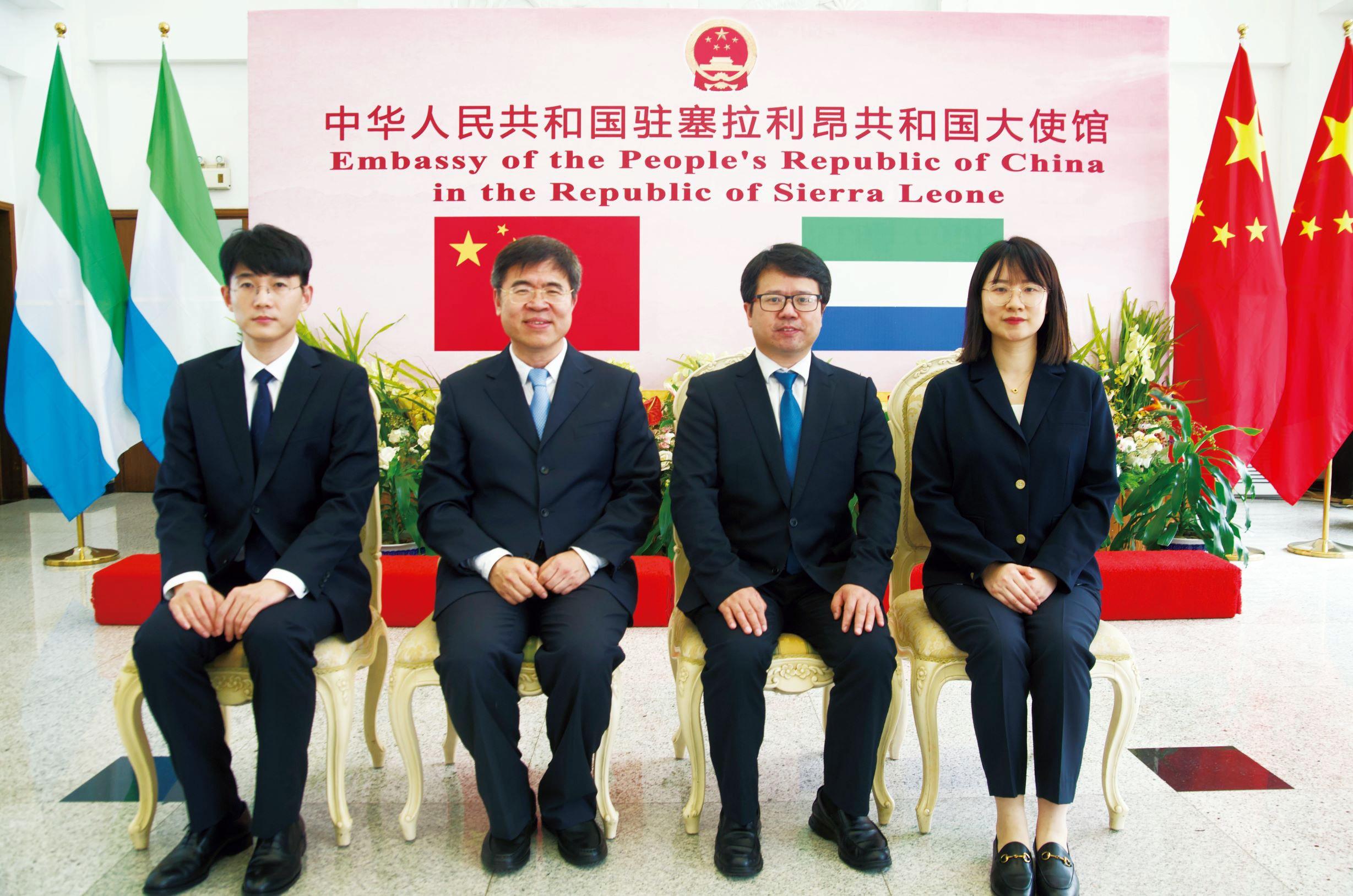 Tian Qi (first from left) attends the Launching Ceremony of the Global Development and South-South Cooperation Fund's Medical Exchange Training Project at the Chinese Embassy in Sierra Leone on July 24. (PHOTO PROVIDED TO CHINA DAILY)
From July 23 to Aug 12, Tian Qi joined a team of three Chinese doctors on a trip to Freetown, the capital city of The Republic of Sierra Leone in West Africa. This was China's 24th medical mission to the country, with the objective of supporting local doctors in conducting cervical cancer examinations.
Tian, 35, witnessed the stark medical challenges that Sierra Leone faces. He said they experienced a sudden power outage during a medical examination, which lasted more than a day. Medical workers there have a poor concept of sterilization: they would simply wash their tools with water and proceed with the next patient, not to mention the acute shortage of gynecologists in Freetown, with no more than five available to serve a populous city.
If you only treat patients who are already sick, you can help a limited number of people. But if you share information about health with a larger group, they can learn how to prevent problems early on. This is actually more valuable for society.
Tian Qi, a gynecologist at Hunan Provincial Maternal and Child Health Care Hospital
"If this is the situation in the capital city. I can hardly imagine how things must be in smaller towns and in the countryside," said Tian.
However, what struck him even more was the absence of fundamental health awareness among local women, leading them to overlook early signs of cervical cancer. He remembered a case where a woman had a tumor that had reached the advanced stages due to delayed seeking of medical attention.
"Premature sex and sexually transmitted diseases are also very common here," said Tian.
Aug 19 every year is Chinese Doctors' Day, a tribute to medical professionals like Tian, who holds a PhD and is a gynecologist at Hunan Provincial Maternal and Child Health Care Hospital in Changsha, Hunan province.
His day typically begins with the morning rounds, followed by conducting various surgeries that often last three to four hours each. In his role as a surgeon, standing for 10 hours a day is part of his daily routine and is occasionally followed by 24-hour shifts.
But Tian still finds the time to read research papers and engage in academic pursuits, even during brief intervals between surgeries. His driving force is simple yet profound: "For me, publishing research is not for career advancement but to share knowledge with fellow doctors, enabling them to enhance patient care."
This is also why Tian's mission transcends the hospital walls. In 2015, he delivered a lecture on women's health at the Graduate School of Hunan Agricultural University, emphasizing the power of prevention through education.
"If you only treat patients who are already sick, you can help a limited number of people. But if you share information about health with a larger group, they can learn how to prevent problems early on. This is actually more valuable for society," he said.
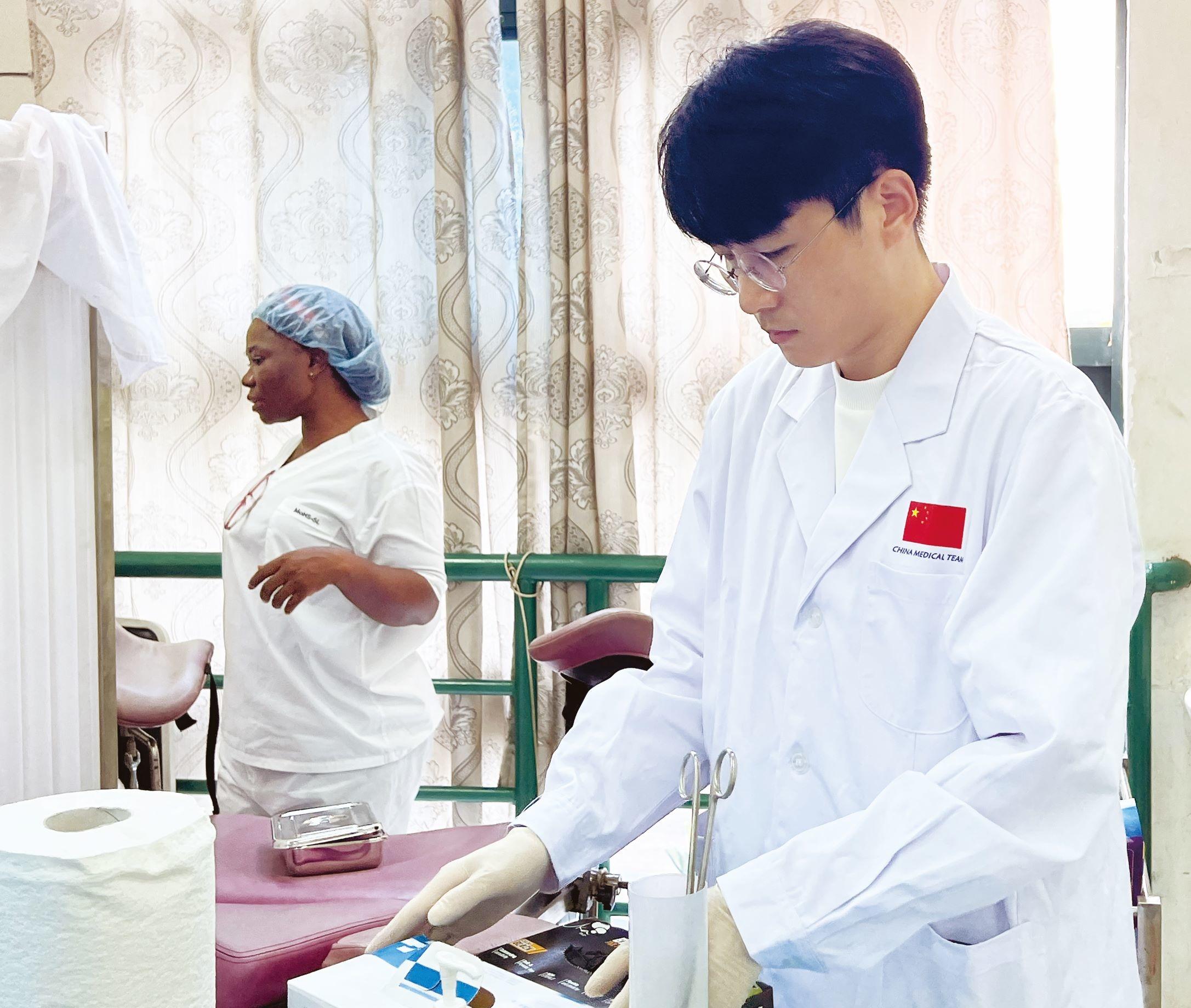 Tian provides colposcopy training to local medical staff in Sierra Leone on Aug 3. (PHOTO PROVIDED TO CHINA DAILY)
The lack of comprehensive sex education in Chinese schools is also a concern for Tian. As our society still sees sex-related topics as taboo, he noted, many young people neither have sufficient scientific knowledge to protect themselves from sexually transmitted diseases nor know the differences between various birth control methods.
"Often, it's not having the right information that causes problems," said Tian. "People need to be aware that there is a difference between sex education and eroticism."
Before his journey to Sierra Leone, Tian had just returned from a medical mission to rural areas of Zhangjiajie, Hunan province, where he was part of a team of 17 doctors.
The medical situation in Zhangjiajie is much better than that of Sierra Leone, but local people's limited medical understanding still prevents them from seeking professional help when facing health problems. Too busy with agricultural work and raising children, women there often overlook their own well-being, which unfortunately results in delays for timely treatment.
"It's important for people to deepen their understanding of healthcare and make their health a priority. Otherwise, there could be serious consequences," said Tian.
The medical team dispatchment to Zhangjiajie was, in fact, part of China's poverty alleviation initiative. Some people may view poverty alleviation as mainly focusing on economic development and having little to do with medical issues, but Tian doesn't see it that way.
"A healthy population is crucial for rural development," he said. "In these villages, if someone faces a serious disease like cervical cancer, it can quickly devastate the whole family. And there will be no point in talking about prosperity."
In 2020, the World Health Organization set a target to eliminate cervical cancer by 2030. As an active advocate and practitioner of South-South cooperation, China is dedicated not only to achieving this goal domestically but also to aiding other countries in achieving it.
This year marks the 60th anniversary of China dispatching medical teams to other parts of the world. Since the first medical team was sent to Algeria in 1963, China has so far sent 30,000 medical professionals to 76 countries and regions, treating 290 million patients worldwide.
However, sending medical practitioners alone is not enough. According to Tian, their efforts in Sierra Leone were more than just providing direct medical care for patients. They were equally dedicated to knowledge transfer, training local healthcare workers in the latest techniques so that they could conduct cervical cancer screenings independently. Tian's team is also arranging for local doctors to visit China for brief training sessions.
"Teaching someone to fish is better than simply giving them a fish. This is precisely what we've been doing," said Tian.
Contact the writer at chenxue@i21st.cn
