

Professionals fill understanding gap between Taiwan and mainland
Editor's note: The Taiwan question is a key focus for China and the international community. China Daily is publishing a series of reports to track hot Taiwan-related topics and address disinformation from the Democratic Progressive Party administration.
A growing number of Taiwan professionals are choosing to move to the Chinese mainland and act as a bridge for compatriots across the Taiwan Strait, drawing on their strengths to foster mutual understanding and promote Chinese culture.
"I don't want to remain a small fish in a pond," said Hsueh Ying-tung, a Taiwan animation director who moved to the mainland around 2018."The mainland is like an ocean. I want to swim out to it and experience a broader world."
Although the island's Democratic Progressive Party authorities have been pursuing the severance of cultural ties with the Chinese nation and restricting exchanges and communication across the Taiwan Strait, statistics show that the number of first-time visitors from Taiwan to the mainland has been rising in recent years.
READ MORE: 10 measures aim to advance cross-Strait ties
According to the National Immigration Administration, in the second half of last year, the number of first-time visitors from Taiwan to the Chinese mainland increased by 32.9 percent month-on-month and 40.9 percent year-on-year.
Many who have stepped beyond the island's "information cocoon" are working to narrow the communication gap between the two sides of the Taiwan Strait. They have also come to realize that such exchanges not only broaden their horizons but also create new opportunities to promote shared Chinese cultural heritage.
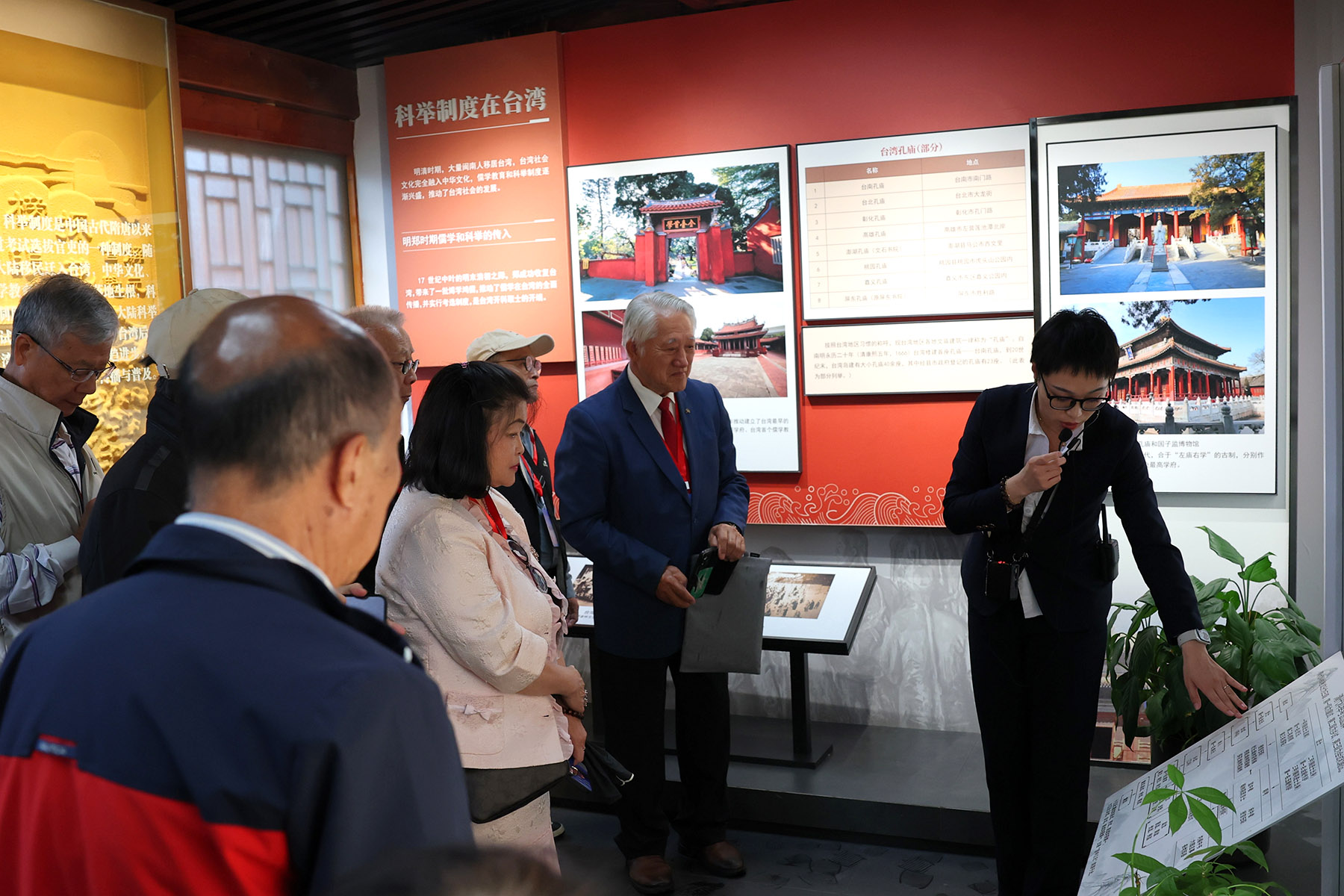
Filling gaps in history
Lan Li, who moved to the mainland to study in 2017, is a postdoctoral researcher in the Department of History at Jinan University in Guangzhou, Guangdong province.
Lan chose the major out of a strong personal interest. However, after beginning her studies on the mainland, she realized there was a great deal of history she had never learned in Taiwan.
Born in 1992, Lan went through the adjustment of high school history textbooks on the island when the "education authorities" separated Taiwan's history from Chinese history.
She said that many historical events were simplified in those textbooks. Take the Chinese People's War of Resistance Against Japanese Aggression (1931-45), for example, its details, she said, were largely glossed over.
Now a history researcher, Lan is committed to promoting a more comprehensive understanding of Chinese history, including the part of Taiwan.
She likens her role to that of the first group of government-sponsored students from Taiwan who studied at mainland universities in the 1940s. They are also the focus of her research.
After Taiwan's restoration to China in 1945, 92 students sponsored by the Chinese Kuomintang authorities were sent to the mainland to pursue higher education in 1946, Lan said.
"The 50-year forced separation across the Taiwan Strait following the signing of the Treaty of Shimonoseki left many Taiwan youth who grew up under Japanese colonial rule largely unfamiliar with the motherland," she said.
These young scholars became pioneers of cross-Strait cultural exchange. They introduced conditions in Taiwan to people on the mainland, and during summer breaks returned to the island to give lectures, helping foster a more accurate understanding of the mainland's development, according to Lan.
Today, a trend of "de-Sinicization" is also being promoted on the island by the ruling party. While the narrative is prominent, it may not reflect mainstream public opinion, Lan said. However, she noted that young people who lack the ability to make independent judgments can be easily influenced by such narratives.
Having studied and lived on the mainland for a long time, Lan said she is well-positioned to remain unaffected by the "Taiwan independence" historical narratives. "Young people like me should learn from those earlier sponsored students and serve as a bridge connecting the two sides of the Taiwan Strait," she added.
Revival through exchange
Despite revisions to history textbooks on the island, cross-Strait cultural ties remain deeply embedded in everyday life in Taiwan, from traditional architecture and craftsmanship to the arts. These intangibles are not so easily erased.
Liang Chih-chung, chairperson of the cultural heritage association in Nantou county, Taiwan, said many traditional arts and crafts on the island were introduced by craftsmen from Quanzhou, Fujian province, during the late Qing Dynasty (1644-1911).
Craft traditions such as wood carving and painted decoration are integral to Taiwan's historical architecture. Liang said that restoration efforts on the island have faced challenges, as some of these skills have been lost or were not passed down to younger generations.
Having devoted nearly two decades to cross-Strait cultural exchange, Liang said he found the answers he was seeking during visits to the mainland. "In many places on the mainland, especially at heritage sites, traditional architectural techniques are still well documented, and skilled craftsmen are available to carry out restoration," he said.
Technological development cannot replace the sophistication of handicraft, Liang said, adding that exchange between craftsmen on both sides remains essential to preserve the skills.
Beyond helping address restoration challenges, these exchanges have also inspired Taiwan craftsmen and artists. Liang said that artistic creation depends on inspiration, which can be sparked by the mainland's cultural landscape.
During the past two decades, he has led many artists and craftsmen from Taiwan to hold exhibitions on the mainland, where they have also found new markets for their work.
In recent years, a range of cross-Strait cultural exchange activities have been organized on both sides of the Taiwan Strait to promote interaction and mutual learning in Chinese culture.
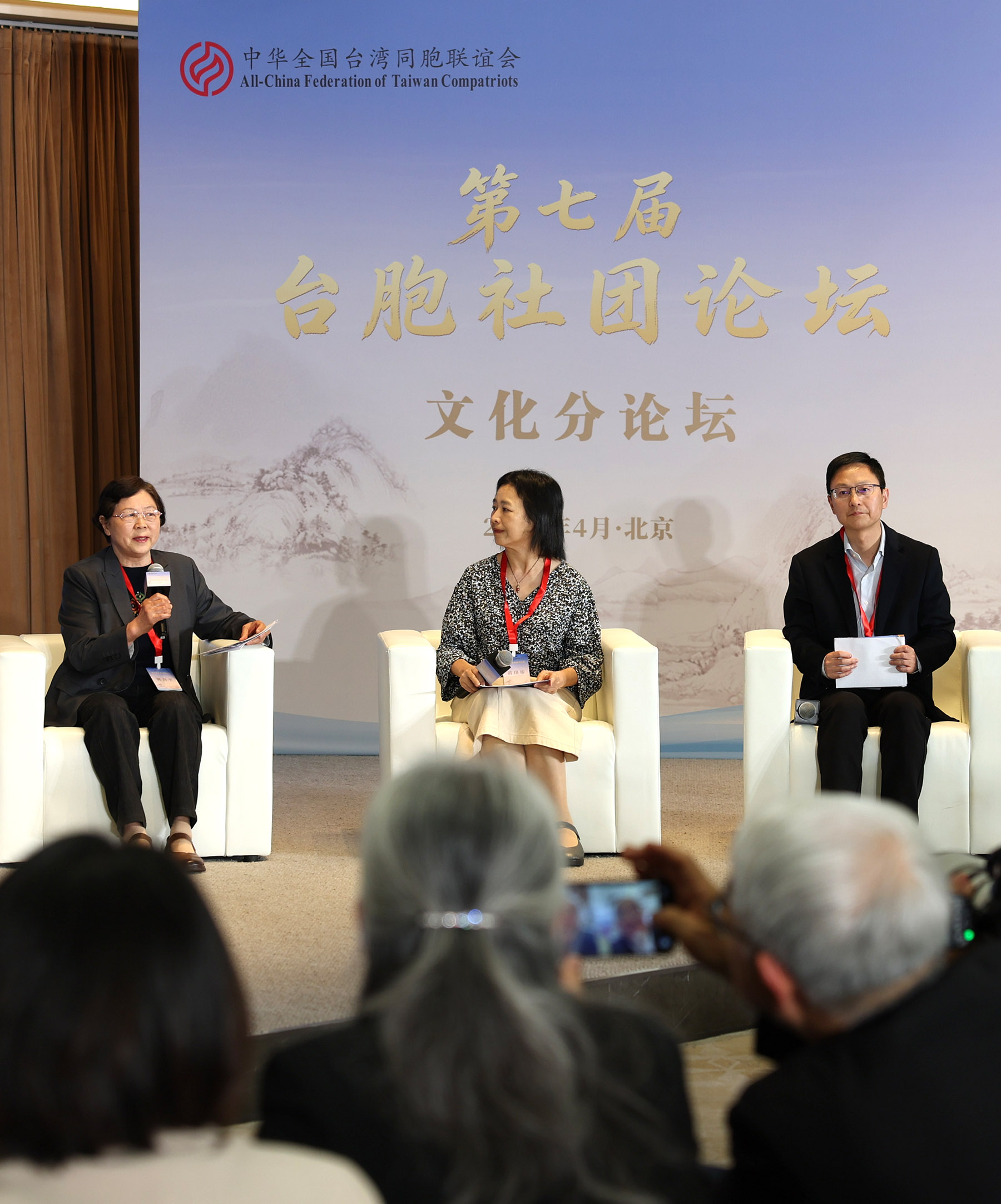
Most recently, the cultural forum hosted by the All-China Federation of Taiwan Compatriots was held in Beijing from Friday to Saturday as part of the seventh forum of social groups of Taiwan compatriots. Practitioners from Taiwan and the mainland exchanged views on intangible cultural heritage practices, including seal carving art, traditional cross-talk and the revitalization of imperial court techniques.
Zou Zhenqiu, vice-president of the federation, said at the forum that cross-Strait exchanges and mutual learning help revitalize traditional culture, foster deeper emotional bonds between people on both sides of the Strait, and enable Chinese culture to reach the world and the future through preservation and innovation.
Joint innovative efforts
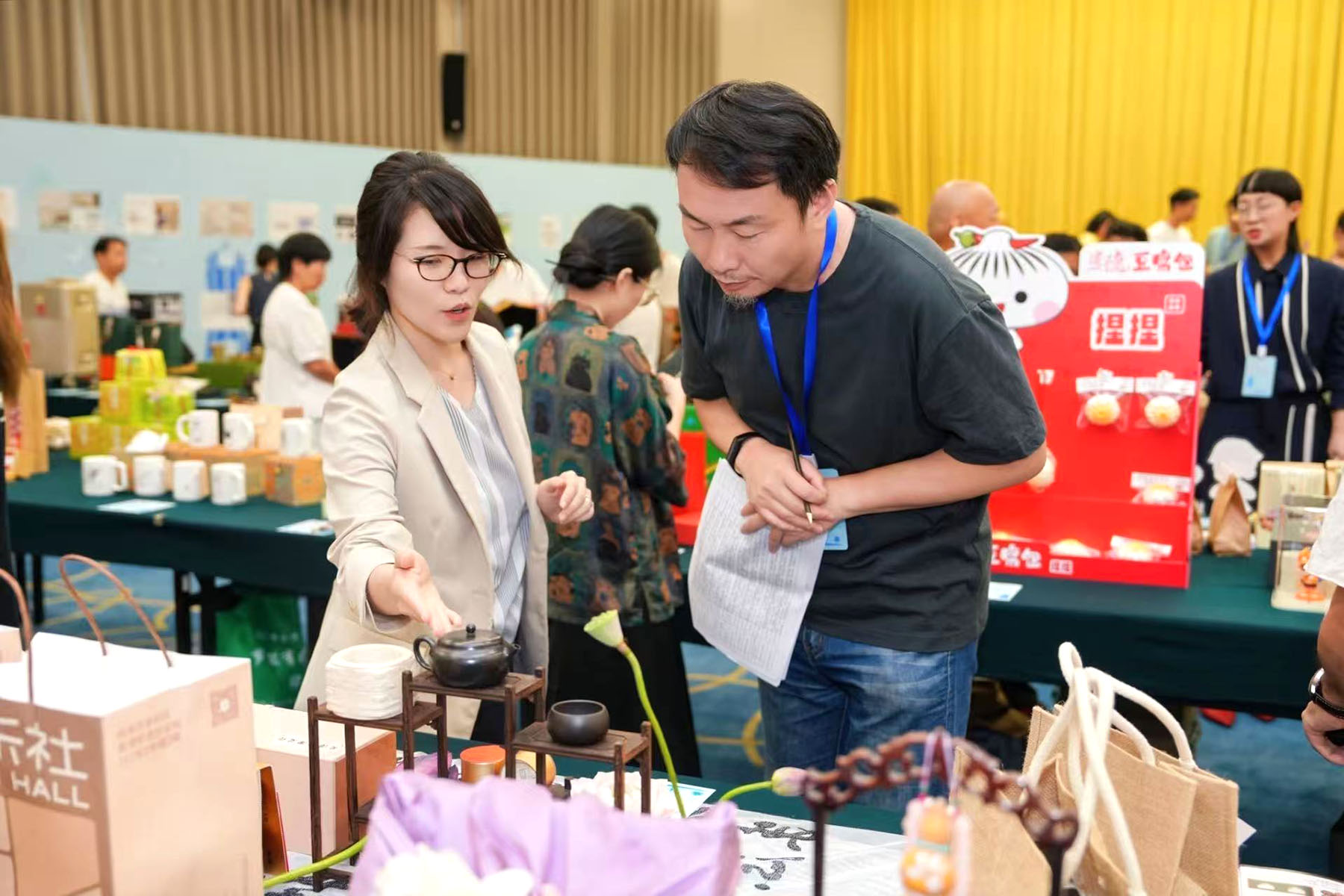
The shared Chinese cultural heritage across the Taiwan Strait also resonated with Yu Chi-hsuan, who moved to Hangzhou, Zhejiang province, in 2019.
Yu, deputy general manager of Hangzhou Jingshan Resort, has been exploring the millennium-old tea culture of Jingshan Mountain in Yuhang, Hangzhou.
In 2022, the Jingshan Tea Ceremony, which has a history of more than 1,200 years, was inscribed on the UNESCO Representative List of the Intangible Cultural Heritage of Humanity.
Tea culture is an important part of Chinese culture, Yu said, noting that her hometown of Hsinchu in Taiwan is well known for its Oriental Beauty Tea.
"Fine traditional Chinese culture is a shared root connecting compatriots and young people on both sides of the Taiwan Strait," she said.
Drawing on her research into Jingshan tea culture, Yu participated in the creation of the "Lu Yu and Tea Monk" cultural and tourism intellectual property, integrating traditional Jingshan tea culture with modern creative concepts.
Before moving to the mainland, Yu said her friends in Taiwan were concerned about her decision. Over the past seven years, each time she returned to Taiwan, she shared her experiences in Hangzhou and invited friends to visit the mainland. "Misunderstandings shaped by one-sided media coverage can be dispelled through exchanges," she said.
Animation director Hsueh, emphasized the importance of cultural exchange, which he described as vital to the preservation and transmission of heritage.
ALSO READ: Taiwan compatriots fought to liberate nation
Born in 1973, Hsueh now lives in Wuhan, Hubei province, and his company is developing animated characters inspired by the Three Kingdoms (220-280) period and a board game based on the historical background of the Ming Dynasty (1368-1644).
"When I work with colleagues on the mainland, we often come up with better ideas together," he said, noting that the mainland's profound cultural heritage, combined with the lively and dynamic creativity of Taiwan creators, has produced widely popular cultural and creative products.
Recently, the mainland released a package of 10 policy measures aimed at promoting cross-Strait exchanges, which includes encouraging joint media production and exchange of film and television works to promote Chinese culture.
Reflecting on his own experience on the mainland, which he described as broadening and enriching, Hsueh encouraged young people from Taiwan to seize the opportunities.
"Let us move forward shoulder to shoulder across the Strait in deeper cooperation," he said.
Contact the writers at lishangyi@chinadaily.com.cn
