

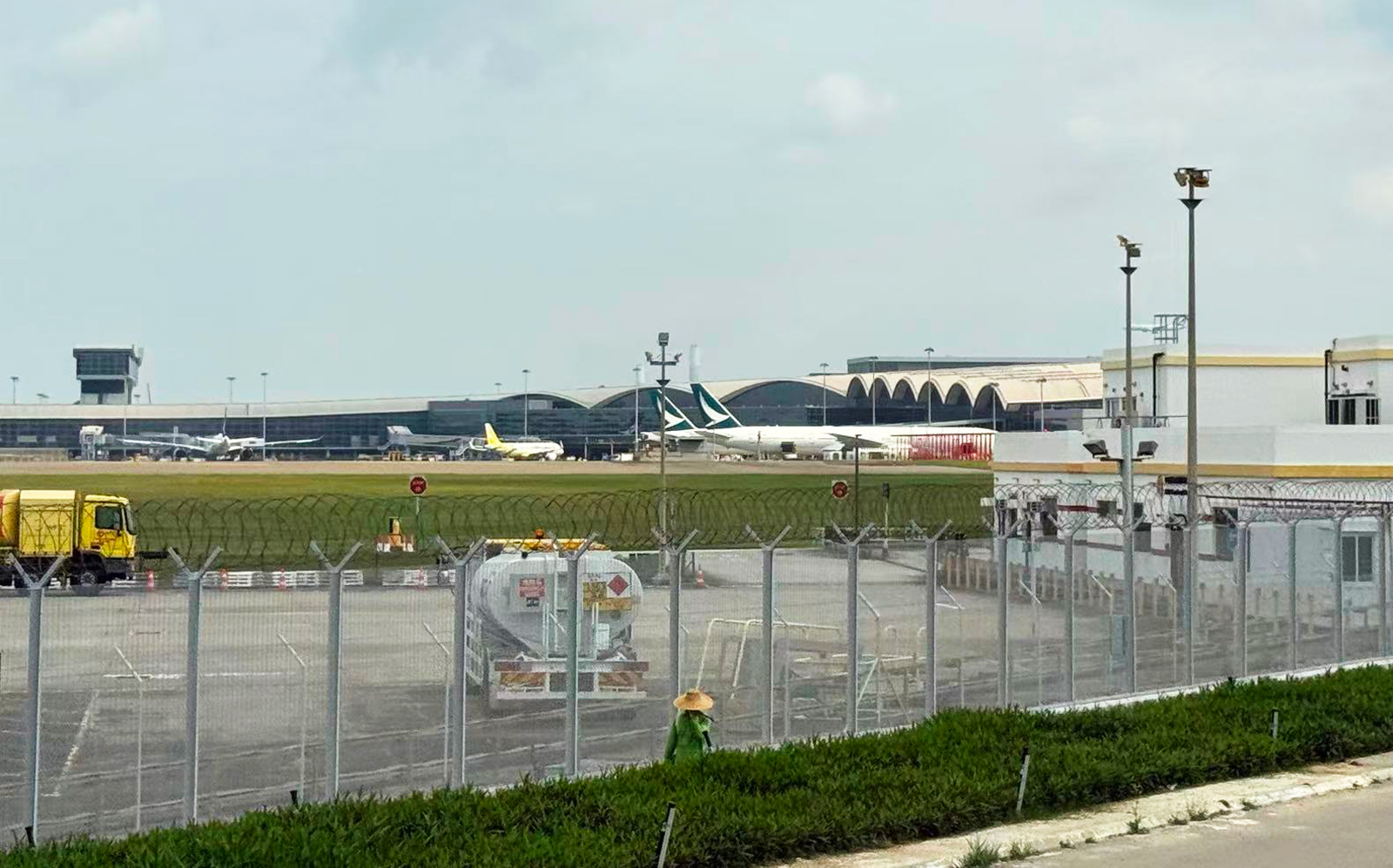
The fuel crisis across the global airline market is not only influencing passengers’ summer travel choices, but may also reshape the aviation industry’s international landscape, which is facing mounting challenges amid global turbulence.
The Guangdong-Hong Kong-Macao Greater Bay Area, which boasts multiple major airports, including an international air hub in Hong Kong, is also feeling the pinch. But the region’s relatively stable fuel supplies may help it fill the gap caused by international flight reductions and accelerate its development of a world-class airport cluster, experts say.
The soaring oil prices caused by conflict in the Middle East have driven up global jet fuel prices and led to supply shortages in many regions, resulting in widespread flight cancellations across international routes and increased fuel surcharges on airline tickets.
Jet fuel prices have reached a ten-year high. The domestic settlement price for jet fuel rose from 5,600 yuan ($821) per ton in March to about 9,800 yuan per ton in April, marking a monthly increase of 75 percent. International jet fuel prices have surged by more than 100 percent over the past two months, far outpacing the rise in crude oil prices.
READ MORE: Cathay Pacific to cut flights from mid-May to end-June as jet fuel prices surge
The surge in prices is rapidly eroding profit margins, leading to the widespread cancellation of unprofitable routes. In April and May, which covers the Labor Day Golden Week, a large number of flights from Chinese mainland cities to Southeast Asia and Australia were canceled, including those to tourist hotspots such as Phuket, Bangkok, and Sydney.
In Hong Kong, Cathay Pacific and its subsidiary Hong Kong Express have canceled approximately 2 percent and 6 percent of their passenger flights, respectively, from mid-May through the end of June. Greater Bay Airlines has also canceled flights to Bangkok from May through September, as well as some flights to Taipei.
Zhou Shunbo, executive director of the New Economy Institute at the Shenzhen-based China Development Institute, said the fuel price surge has had a major impact on the operations of low-cost airlines, with larger airlines also being hit. Coupled with the Russia–Ukraine conflict, these geographic tensions have dealt another blow to the international aviation industry, which has been slowly recovering from the COVID-19 pandemic.
READ MORE: Asia-Pacific reels from soaring energy prices
He believes that while some domestic travel demand may shift to high-speed rail, the uncertainty surrounding international flights and short-term price fluctuations will dent people’s willingness to travel abroad in the near term, particularly among budget travelers.
Reduced passenger flights will also cut cargo capacity in aircraft holds, which may drive up the shipping costs for goods that rely on air transport — such as precision electronic components and high-value seafood. This could further affect the development of core industries and everyday life in the Greater Bay Area, Zhou said.
If the situation persists, it may prompt national and local authorities to examine the long-term impact of rising fuel costs on urban development and to introduce policies to aid the aviation industry and its shift to sustainable energy.
He cautioned that flight slots at key international hubs — such as London Heathrow Airport — are highly valuable. If a carrier reduces its flights and gives up certain slots, they may be auctioned off to other airlines, making it difficult to re-enter that market.
Given the current ample supply of jet fuel in China, he believes the Greater Bay Area can seize this opportunity to capture market share from affected international markets and further the goal of developing its local airports into international aviation hubs.
READ MORE: HK stocks get boost from Chinese EV sales boom amid geopolitical tensions
Timothy Chui Ting-pong, executive director of the Hong Kong Tourism Association, said that in addition to the Labor Day holiday, the entire summer season from June to August is the peak season for tourism. Many students planning to study abroad will choose to fly from Hong Kong, and these plans will also be affected under the current circumstances, he added.
He said flight reductions would impact Hong Kong International Airport’s high-frequency, dense transit network as well as its cargo services — which rank first globally in terms of throughput — potentially weakening the city’s competitiveness as an international aviation hub in the long run. However, he emphasized that this is an industry-wide challenge troubling global airports.
Chui urged local airlines to maintain strategic routes connecting Hong Kong to Europe, Japan, the Chinese mainland and Australia, ensure a stable local fuel supply, and provide appropriate compensation to affected passengers to maintain their confidence in local services.
If the fuel crisis continues, the government should consider introducing support measures — for example, reducing fees for aircraft parking and airport operations, and providing subsidies for key trunk routes, he said.
As the Labor Day holiday approaches, many travelers have taken to social media to share their experiences of flight cancellations and discuss how to recoup their losses. Chen Xueqing, a traveler from Chongqing, booked a China Southern Airlines flight two months in advance to enjoy a vacation in Vietnam, which was subsequently canceled.
She had “carefully selected” the flight as it did not require her to take any extra leave. Like her, many people assumed that the wave of flight cancellations would only affect overseas aviation companies and did not expect domestic carriers to be affected as well.
Although she will receive a full refund, other flights on the same day had risen to 5,000 yuan, far exceeding the original cost of her ticket. Furthermore, she had already booked domestic flights and hotels in Vietnam, which were non-refundable, meaning she would incur a loss regardless of whether she went or not. She later negotiated with China Southern Airlines and managed to rebook onto an Air China flight on the same day.
To minimize potential losses, travelers are recommended to prioritize major airlines with a wide selection of routes and flights, carefully review the terms and conditions before purchasing international tickets, and opt for hotels and other travel products that offer free cancellation whenever possible.
Contact the writer at bingcun@chinadailyhk.com
