

Vocational colleges meet demands of business, local economies
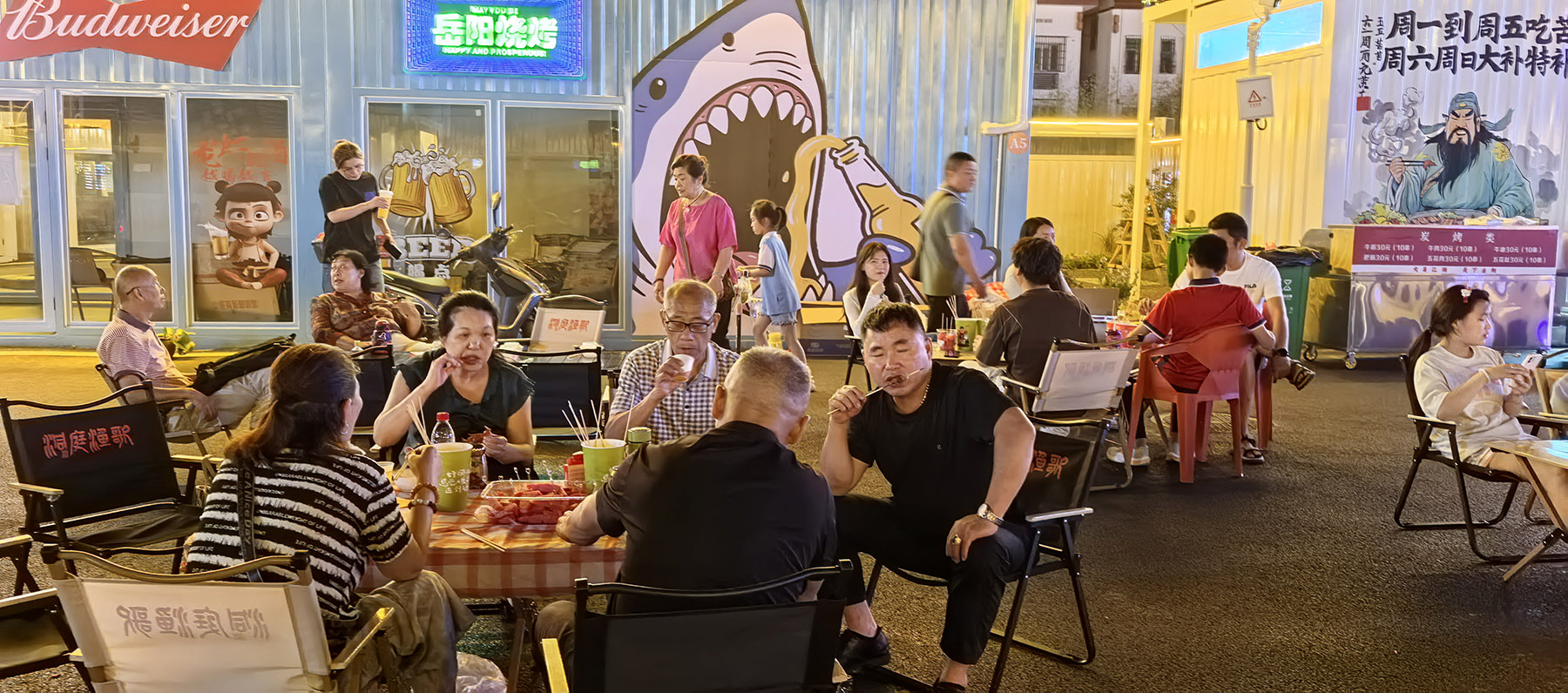
From barbecuing, making spicy snail noodles and improving the professional skills of delivery riders, China's vocational colleges are undergoing major changes to meet new job demands.
The niche study areas highlight a major overhaul of the world's largest vocational training system to better align employees' skills with the requirements of industry and local economies.
Xu Shuai, 25, is one of those planning to improve his job skills and future employability. For two years, he worked in the restaurant industry in Changsha, Hunan province, focusing on marketing and building his customer base.
But his career soon hit a ceiling. "Without control over the product itself, growth is hard to sustain," he said.
To close that gap, Xu plans to enroll in Yueyang Barbecue College later this year. What draws him to the college is not just mastering grilling, but the promise of comprehensive training — from supply chain management and cost control to branding and customer experience.
"This is more than teaching students how to grill," said Qiao Binbin, secretary-general of the Yueyang Barbecue Association, one of the major operators of this college. "We aim to train students to understand the entire business ecosystem."
In Yueyang, the barbecue industry is a pillar of the local economy with more than 2,000 outlets and an annual output exceeding 2 billion yuan ($293.4 million), data from the association showed.
Jiang Zongfu, vice-president of Yueyang Open University, said the college was jointly initiated in July 2025 by the university, the local barbecue association, and industry partners. Choosing the barbecue sector was deliberate: it not only anchors the city's nighttime economy and tourism, but also has an urgent need for improved professionalism.
"Many practitioners want to expand beyond Hunan, even overseas," Jiang said."But to do that, they need to transform hands-on experience into systematic knowledge to move from ordinary workers to professionals."
Prospective students range from job seekers and freelance workers to employees sponsored by barbecue businesses across China. Most of them are newcomers to the industry.
The college combines academic study with hands-on training, offering both degree-linked programs and short-term technical courses. The curriculum goes beyond grilling to cover business operations, from cost control and food safety to marketing, with a strong focus on preparing students for employment or entrepreneurship, he said.
Across China, a growing number of specialty vocational institutions have emerged in response to both local businesses' needs and national policy guidance. They include a crayfish industry college in Qianjiang, Hubei province, a spicy noodle college in Yibin, Sichuan province, and a luosifen, or spicy snail noodles, college in Liuzhou, Guangxi Zhuang autonomous region. More niche examples, such as teaching institutions focused on bathing services or food delivery, have also materialized.
China's first "rider academy" — officially the Modern Grassroots Workers Academy — was launched at Guangzhou Polytechnic University in Guangdong province in December. Designed to support the professionalization of delivery workers, it offers training in areas such as food safety and basic skills, while also preparing riders for career advancement into logistics management and emerging technology-related positions.
Clawing ahead
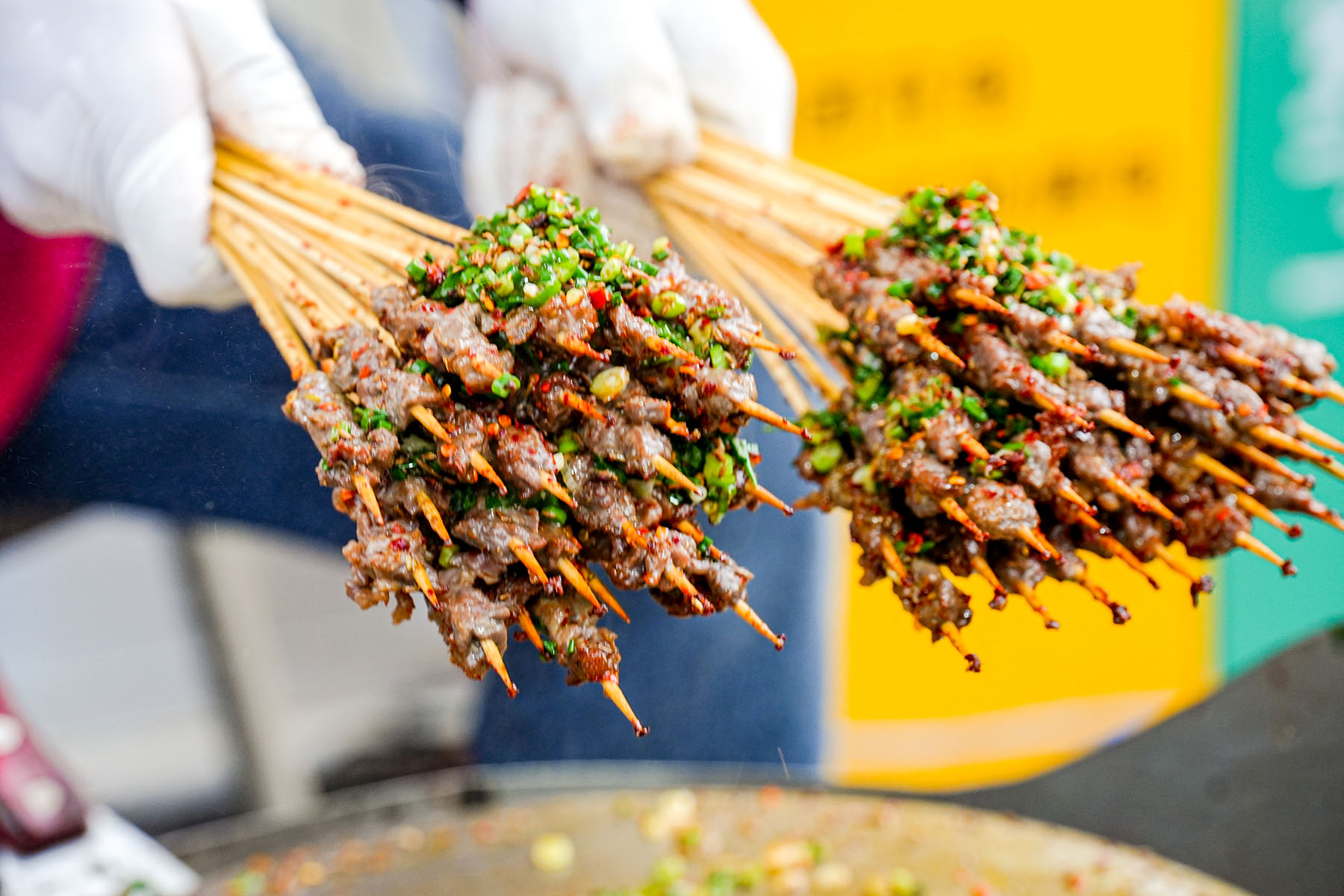
Located in Qianjiang, a city known as China's "crayfish capital", the crayfish industry college was founded as the local industry surged in recent decades.
By 2017, the city's crayfish sector exceeded 10 billion yuan in total output value, employing over 100,000 workers and creating strong demand for skilled employees.
However, the idea of a crayfish college was initially met with widespread skepticism, with critics dismissing it as gimmicky, said Xu Jiangeng, the college's dean.
That perception shifted quickly.
"The turning point came with our first graduating class," he said. "Employment rates were near 100 percent, and graduates were immediately absorbed across the industry."
Today, graduates work across the supply chain, including restaurant chains, aquaculture cooperatives, and related businesses, he added.
He Yanjun, who enrolled in the crayfish college in 2022 and graduated in 2025, said the program's immersive approach is appealing. "The most interesting part is turning a live crayfish into a signature dish, and then building a menu around it," he said. "You're involved in the entire process, from (the cooking) technique to the business end."
The college rotates students through all aspects of the industry. They spend time in aquaculture ponds, restaurant kitchens, and front-of-house operations. "The best way to understand the industry is to see it end-to-end," He said.
After graduating, he initially earned around 6,000 yuan per month, with seasonal bonuses bringing his annual income to about 80,000 yuan. He has since opened his own restaurant and now earns more than 200,000 yuan a year.
"What helped me most was learning how to think about the industry as a whole," he said. "The college doesn't just teach you how to cook — it teaches you how to run a business."
The strong employment outcomes of such programs have been a key driver of their expansion and helped reshape public perception about the worth of vocational education.
"The biggest difference is that these industry colleges teach exactly what the industry needs," said Hao Yanliang, director of the employment and entrepreneurship guidance center at Jianghan Art Vocational College, which is home to the crayfish industry college.
"Students graduate as 'ready workers' who can immediately create value," Hao said.
Beyond the grill
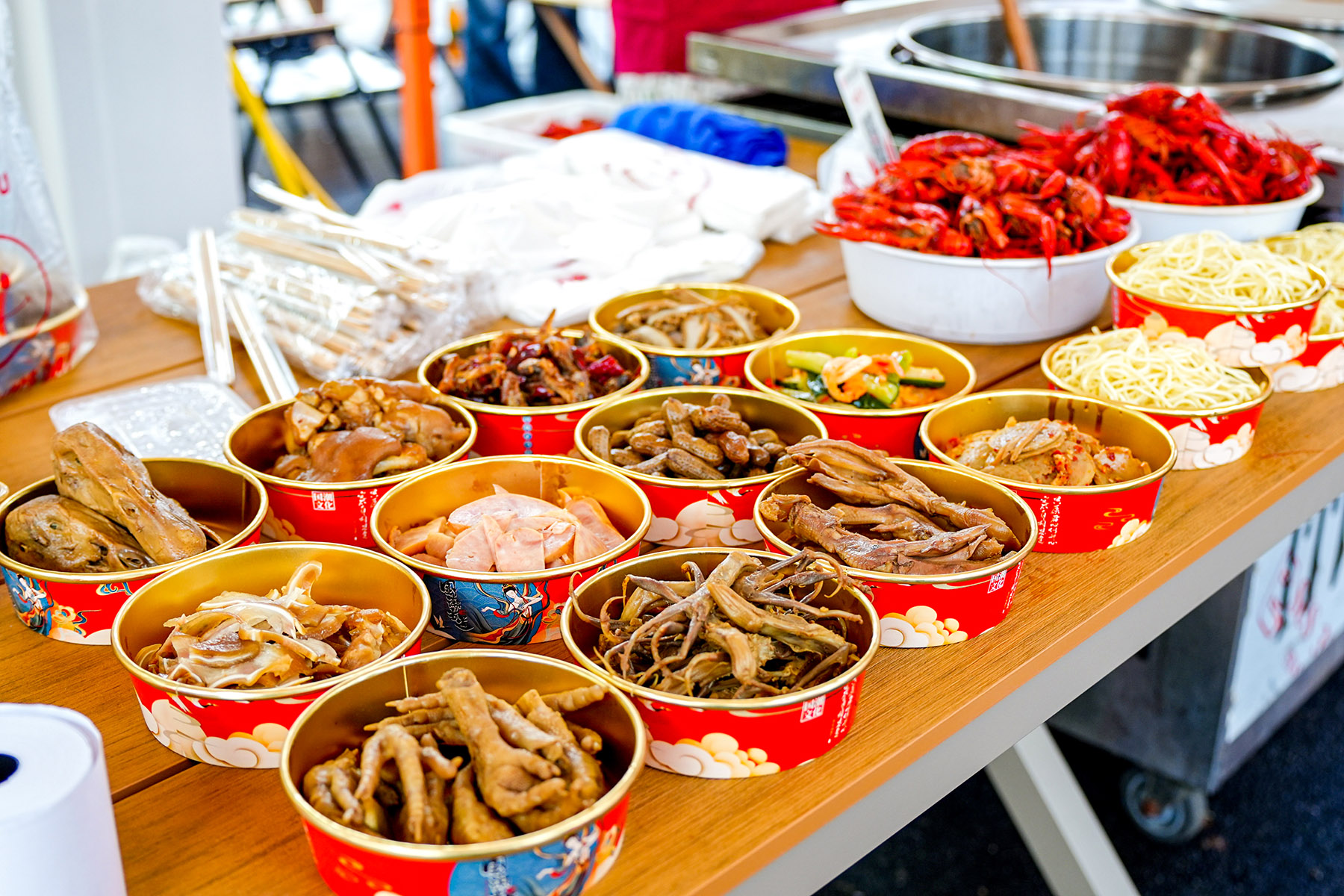
Yueyang Barbecue College has adopted a similar comprehensive approach to training. Students work in kitchens, various supply chain jobs and service roles.
"We're not just training grill masters," Qiao, secretary-general of the Yueyang Barbecue Association, said. "We're training future entrepreneurs and managers."
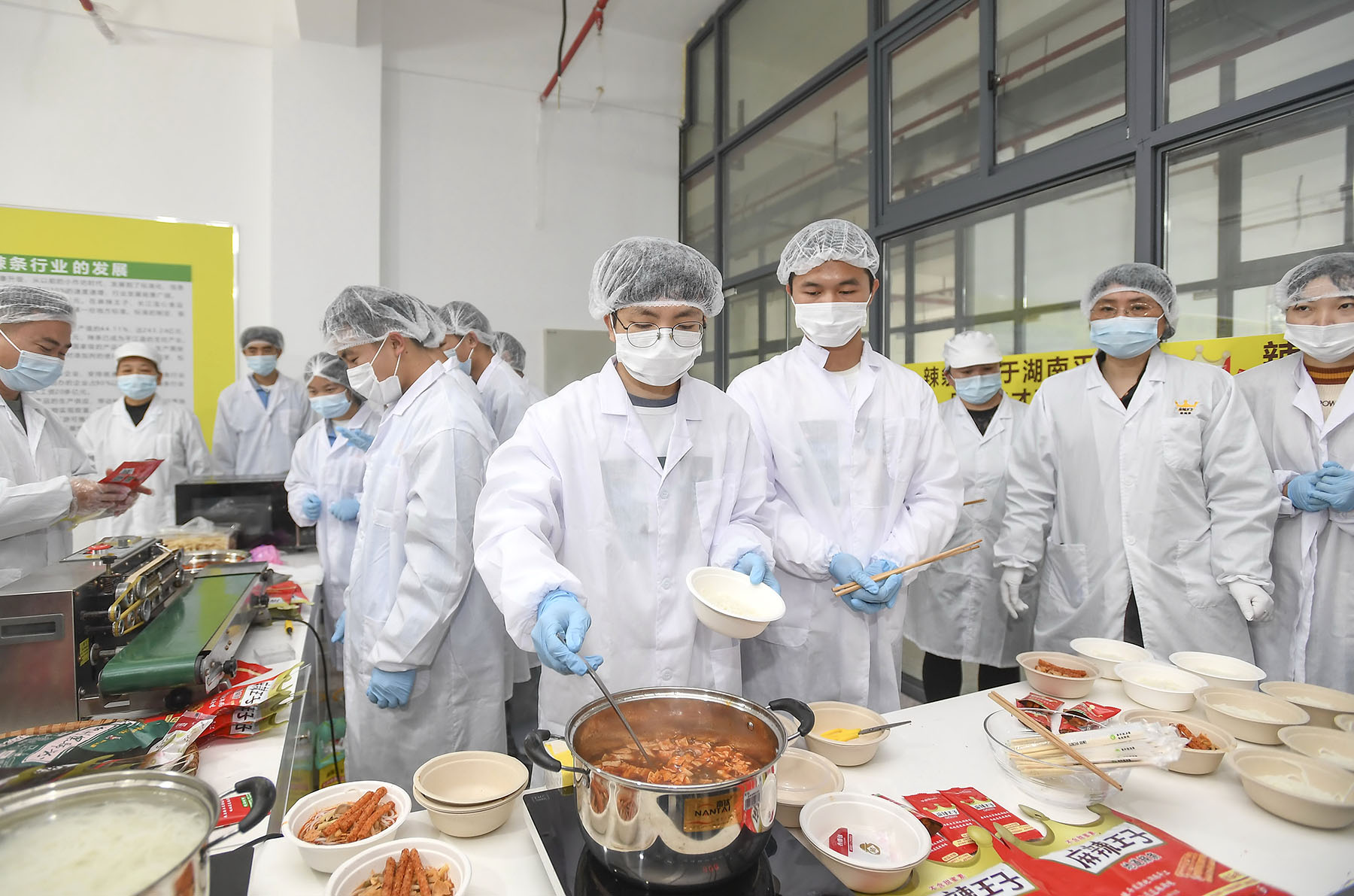
The spicy noodle college in Yibin has developed courses covering the full production and the marketing of its signature dish — from culinary techniques to store operations and brand management. The program, done in collaboration with local factories and restaurants, integrates learning, training, and employment.
According to the college, more than 3,000 trainees had completed its programs by the end of 2025, with around 2,000 going on to find employment or start their own businesses.
Spicy noodles have also evolved from a local snack into a defining Yibin brand, driving tourism through campaigns centered on food experiences.
Since 2025, promotional events have attracted more than 1.5 million visits, while new spaces combining dining, retail, and cultural experiences have been opened.
For students, this diversification creates new career pathways, from product development to branding and cultural tourism, according to the college.
Yueyang is pursuing a similar strategy. The barbecue college plans to train 1,000 skilled workers over the next three years, encouraging graduates to open businesses across China and overseas, said Jiang, the vice-president of Yueyang Open University.
System expansion
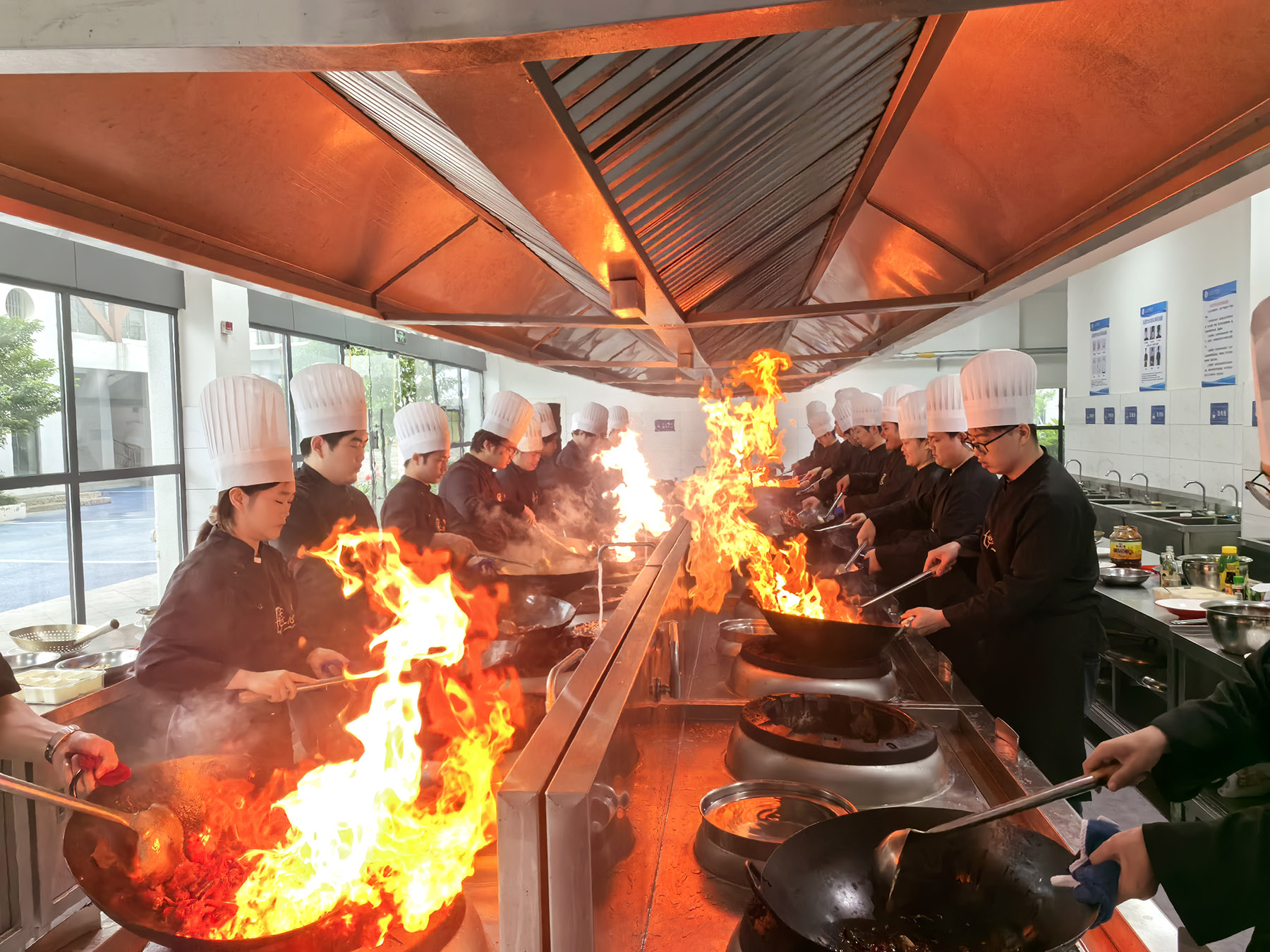
The rise of specialty vocational colleges is closely tied to the expansion and restructuring of China's vocational education system during the 14th Five-Year Plan (2021-25) period.
Speaking at a State Council Information Office briefing in September 2025, Xiong Sihao, vice-minister of education, said China has built the world's largest vocational education system, with more than 34 million students enrolled in over 10,000 vocational institutions — including secondary vocational schools, higher vocational colleges, and undergraduate-level institutions — spanning nearly all sectors of the economy.
Over the same period, authorities have adjusted program structures to better align with industrial upgrading. About half of the newly added majors are now concentrated in engineering and technical fields, while new programs are continuously introduced or updated to reflect shifting market demand.
At the same time, new forms of industry-education collaboration — including regional alliances and sector-based training networks — have been developed to better connect talent training with local economic priorities.
Experts see the rise of specialty vocational colleges as part of a broader transformation.
Li Jiujun, a professor at vocational education and regional development at Sichuan Normal University, said the trend reflects both policy guidance and practical evolution.
"These colleges represent a structural transformation," Li said. "They are moving from simple cooperation to integrated ecosystems of production, education, research, and innovation."
Cai Zhenhua, an associate professor at Xiangtan University in Hunan, highlighted the importance of the "degree + skill" model.
"It allows for small-scale, precise, and specialized training," he said. "Graduates are not only technically competent, but also capable of managing operations and leading businesses."
Enterprises, he added, are increasingly acting as co-educators, participating in curriculum design and training delivery.
Challenges, constraints
These institutions also face significant challenges.
One key issue is the shortage of "dual-qualified" instructors — teachers who combine academic knowledge with hands-on industry experience. While many institutions recruit skilled practitioners, they often require further training in teaching methods and curriculum development.
Experts also warn against superficial collaboration between schools and enterprises.
"If integration remains at the level of formal agreements without deep engagement, it will not meet the needs of industrial upgrading," Li said.
Cai noted that rapid expansion could lead to homogenization, weakening institutional identity. Public perceptions of certain industries may also affect student recruitment.
"Long-term success depends on depth, not hype," he said.
ALSO READ: Vocational program bridges nations
Despite these challenges, the changes have strong potential.
"With increasing specialization in the workforce, integrating education with industry is a clear direction," Li said.
Applications are already expanding into sectors such as modern agriculture, intelligent manufacturing, digital commerce, and eldercare.
At its core, the model creates a feedback loop: education responds to industry demand, industry shapes educational content, and students bridge the two.
"We will build a vocational education system that integrates general and vocational pathways and further strengthens industry–education integration," Xiong, the vice-minister of education, said. "This will continuously cultivate master craftsmen, skilled artisans, and high-level technical professionals to support China's modernization drive."
Contact the writers at hechun@chinadaily.com.cn
