

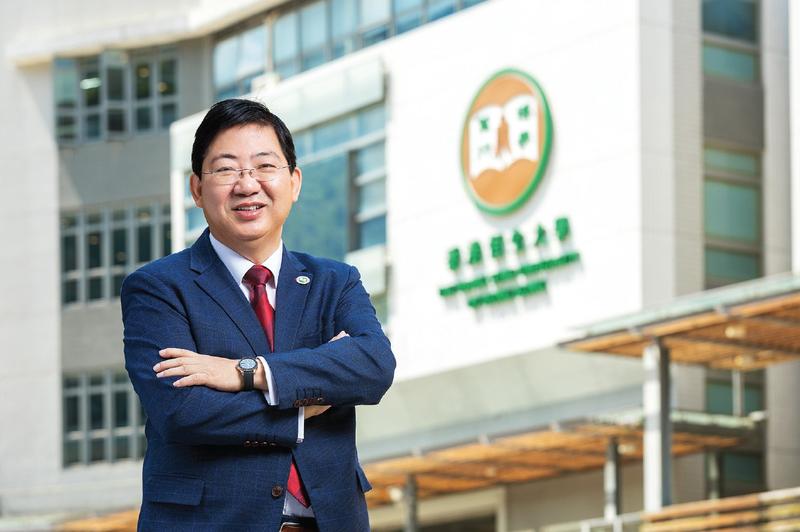
 Professor Simon Ho Shun-man, president of the Hang Seng University of Hong Kong. (PHOTO PROVIDED TO CHINA DAILY)
Habitat to many leading financial companies and research institutions, Hong Kong has a long-held reputation for its elite talent pool and world-class universities and colleges, among which the Hang Seng University of Hong Kong (HSUHK) sets a standard of its own for its unique “Liberal + Professional” education model.
“What the Hang Seng University does here is that we try to combine the beauty of both liberal and professional education,” said Simon Ho Shun-man, president of the HSUHK.
Tracing back to the medieval concept of liberalism, the liberal education focuses primarily on the liberal arts, providing students with a broad cultural background as opposed to professional skills training. “We have been seeing their limitations of this kind of model (liberal education). It’s very expensive, very costly. Many middle-class parents are hesitating to send their kids to these institutions,” he said, adding that it’s hard for fresh graduates to find jobs due to the education they receive being “too broad, too general”.
Those people who fit in with Hong Kong’s blueprint, Ho said, are the ones with all-round capacities for both transferable competency and professional knowledge. “The world is changing so fast, you need to know the basic theories, but the theory must be able to help you pick up new knowledge for the whole life,” Ho said.
“Our training is not just in factual knowledge, but (in) training them to think on their own, to learn on their own and inspire them to innovate, even in the future,” said the president.
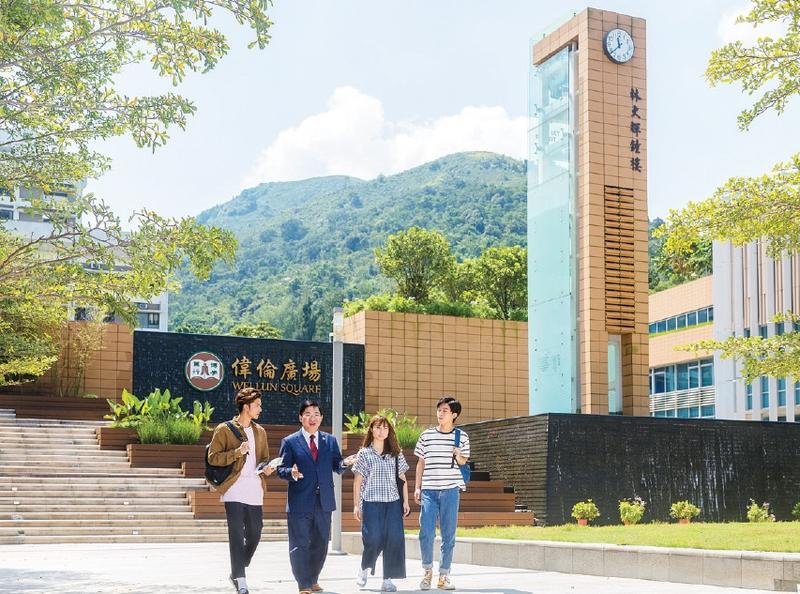 The HSUHK combines the beauty of liberal and professional education. (PHOTO PROVIDED TO CHINA DAILY)
Unlike in the Chinese mainland and the United States where a large proportion of the undergraduates would further their studies in the graduate school, around 97 percent of the fresh graduates in Hong Kong would turn to the job market, said Ho. On the other hand, while many universities claim a liberal education approach, such aspirations tend to be hard to achieve, he added. “It’s not a lip service,” Ho said, “you have to actualize it by doing something real that people can see, can do, can engage,” he said.
“The Hang Seng University is quite unique in Hong Kong,” said the university head, attributing its strengths in autonomy, flexibility and responsiveness to its nature as a self-financing institution. “It’s very important to become a private university because you can assure the needed autonomy and flexibility, you (can) always stick to the original ideals, we should not defy this and the culture of the institution,” Ho said.
In its liberal arts education, the HSUHK has a primary focus on undergraduate education, a residential college system that combines living with learning and small-class teaching.
“We are primarily an undergraduate institution, we intentionally try to put the graduate training on a very small part, so the faculty member wholeheartedly just puts the effort, resources and time mainly into undergraduate education,” said Ho. “This is unusual in Hong Kong”, he added, noting that most of the public universities have larger postgraduates size than undergraduates.
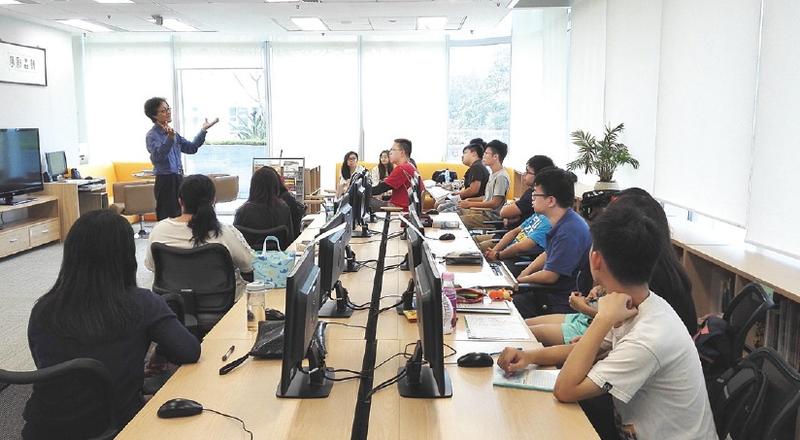 Through small class teaching, HSUHK professors interact closely with students. (PHOTO PROVIDED TO CHINA DAILY)
Catering to its undergraduates, the HSUHK also makes the utmost effort to provide students with on-campus accommodation facilities which allow every student to spend two years living on campus, at their will. “We are a residential college, not a hostel, not a dormitory, it’s really a second family where you put learning and living together,” said Ho. Benefiting from interactions with their peers and teachers cohabiting in the college, students can practice their leadership and interpersonal skills, said the president.
The interaction between students and teachers gets further enhanced through its small-class size averaging 22 people. “We have the luxury in a Hong Kong environment, if not, we are not much different from other big universities,” Ho said, adding the class size at the latter are often 100.
“Some people may misunderstand, they may think we are not doing as well as other older and bigger public institutions, but this is not true,” Ho said. “We make our priorities,” he emphasized, naming the highest among them being teaching and student development. “Even if you do top research publication, if your teachings are not good enough, you cannot stay. We make it very clear to our members,” he added.
The HSUHK is currently operating five schools (Business, Communication, Decision Sciences, Humanities and Social Science, and Translation and Foreign Languages) with more than 6,000 full-time students. Featuring in an undergraduate- focused education, the university provides 26 undergraduate programs and seven postgraduate ones. It will launch two new bachelor’s programs and three new master’s programs in the coming two academic years.
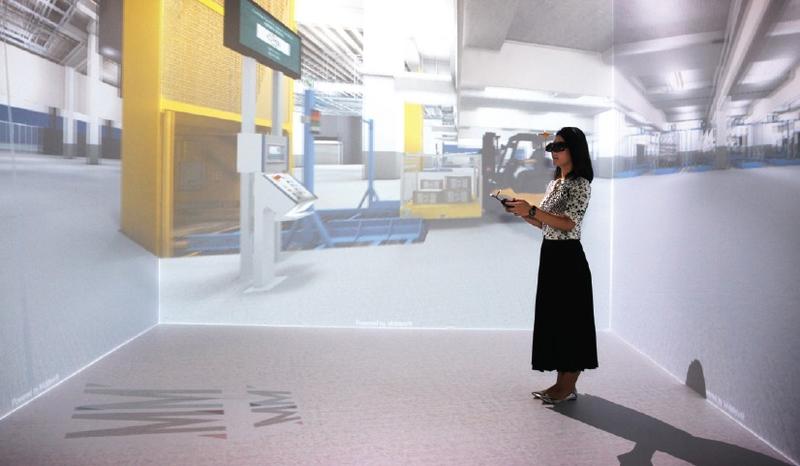 The Virtual Reality Centre aims to enhance the developments in teaching and research. (PHOTO PROVIDED TO CHINA DAILY)
The university links with industry and professions to equip students for the fast-paced workplace and society. Each undergraduate student, if interested, is guaranteed at least one internship opportunity, with a minimum 1.5 months fulltime commitment over the four years. “Compared with other institutions, on average, students (at the HSUHK) have more chances to get engaged in international exchanges and global internships,” said Ho, adding that the smaller size of the student body has enabled the faculty staff to locate such opportunities more efficiently.
The university provides students internships globally with a financial subsidy, including Asian countries such as Singapore, the United States, the European Union as well as Australia, Ho said. “We allow them (the students) not to stay in Hong Kong, they can go to anywhere,” he said.
Integrating into the Guangdong- Hong Kong-Macao Greater Bay Area development, the HSUHK also has a blueprint for its presence in the most expected market. The university in 2019 launched the “HSUHK Greater Bay Area Innogration Hub”, a one-stop platform that helps students set up business and find jobs in the Greater Bay Area supported by professionals, industry experts as well as investors.
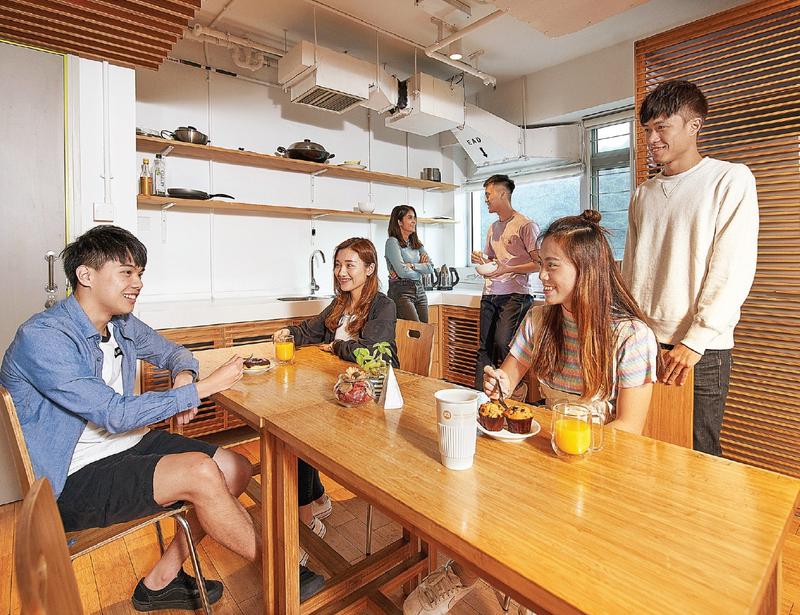 Residential life is a crucial part of the whole personal education at the HSUHK. (PHOTO PROVIDED TO CHINA DAILY)
In Panyu district, Guangdong province, the university has signed an agreement with the Guangdong Hong Kong and Macao Youth Entrepreneurship Incubator in 2019 in the Guangzhou Higher Education Mega Center, also known as the universities town, which is home to 10 universities and around 200,000 students. The agreement enables students to set up an office and start a business in the Greater Bay Area. “It (the project) helps youngsters from Hong Kong and Macao meet with the people in Guangzhou and start the business in the Greater Bay Area,” said Ho. “We have been seeing our students more and more interested in planning for small start-ups,” he added.
“We still try to give our best support to have this interflow between Hong Kong and all these cities and institutions,” said Ho.
Aspiring to be a leading private liberal-arts-oriented university, the president said the HSUHK wants to do something different. “Here at the Hang Seng University, we do many things in a different way,” the university head said, “(We) supplement what they (other universities) are not doing or doing enough, allowing parents, students and teachers to have a different model to choose.”
