

Chinese nonfiction author Liang Hong draws on her experiences in rural Henan and her latest book on youth mental health to examine social change, family relationships and the struggles often hidden beneath the surface, Yang Yang reports.
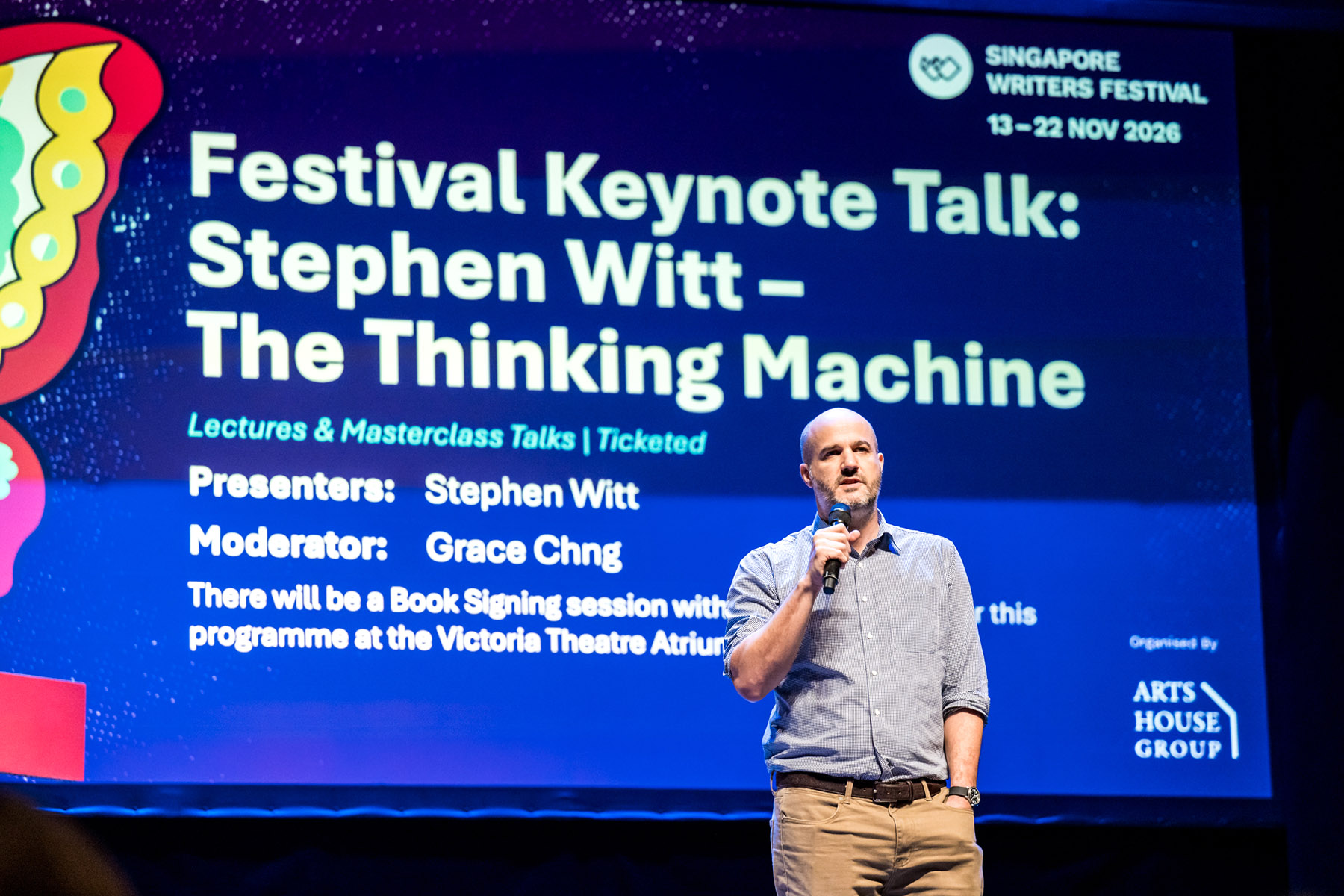
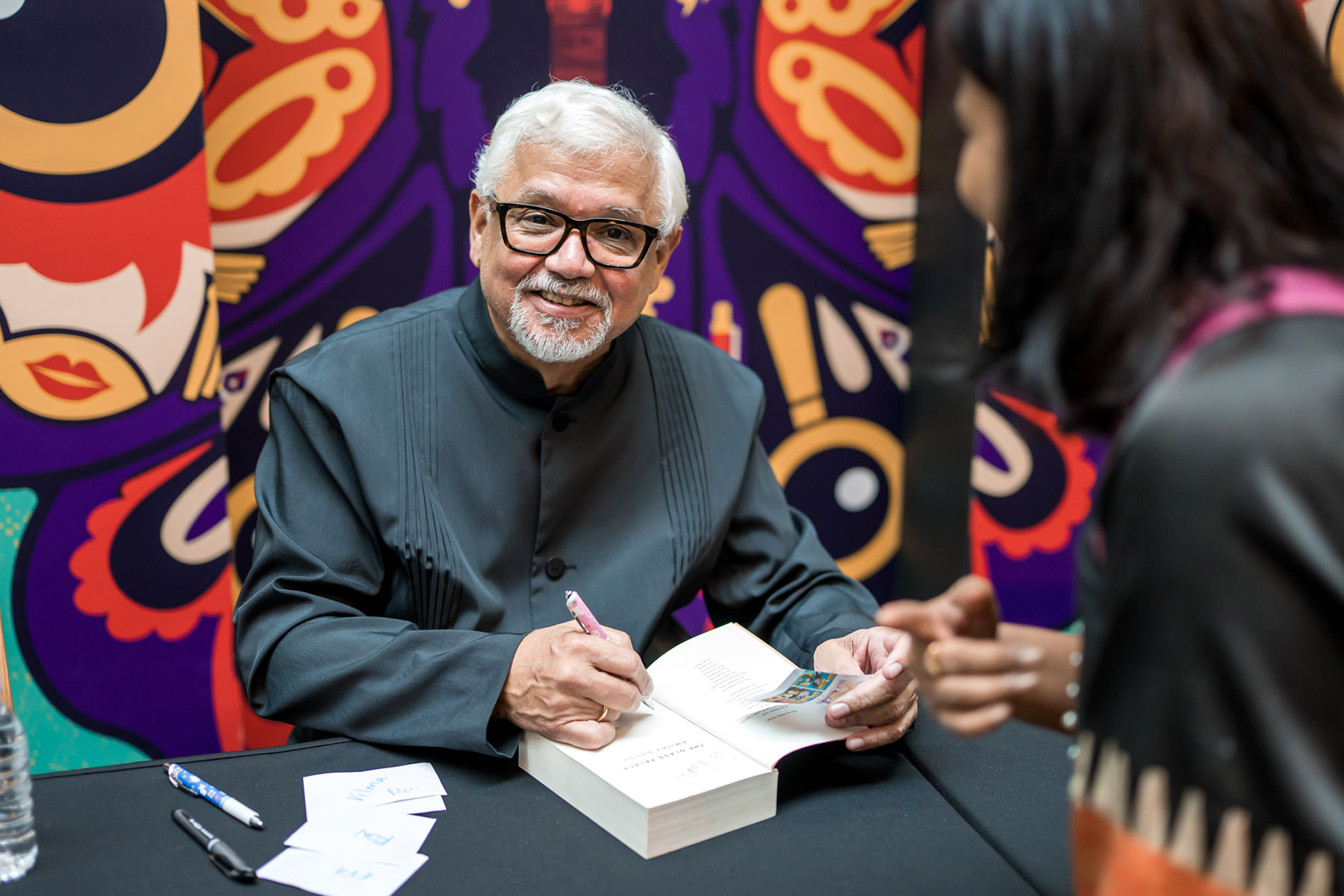
The Singapore Writers Festival 2026 brings authors from different cultures to provide a platform for readers to exchange ideas and opinions with writers such as Stephen Witt (left) from the United States, author of The Thinking Machine: Jensen Huang, Nvidia, and the World's Most Coveted Microchip, and Indian-born Amitav Ghosh (right), the 2018 winner of the Jnanpith Award, India's highest literary honor. (PROVIDED TO CHINA DAILY)
Chinese writer Liang Hong has just returned from the 29th Singapore Writers Festival where, on Nov 14 and 15, she discussed the stories behind her Liangzhuang Village trilogy and her latest multiaward-winning title Yao You Guang (Seeking the Light).
In the nonfiction trilogy — China in One Village: The Story of One Town and the Changing World (2010), Leaving Liang Village (2013) and 2021's Liangzhuang Shinian (Liangzhuang Village in a Decade) — Liang explores the challenges and issues faced by rural areas in China during urbanization by using her home village, Liangzhuang, located in Central China's Henan province, as a case study.
READ MORE: A celebration of literary excellence
Born in Liangzhuang in 1973, a village once home to around 2,000 people, Liang had always had a passion for literature. After graduating from a secondary normal school at the age of 18, she spent three years teaching at a village primary school. Following years of further study, Liang was admitted to Zhengzhou University in 1997 to pursue a master's degree in Chinese language and literature. Three years later, she began her doctoral studies at Beijing Normal University.
In 2003, she began her academic career as a teacher at China Youth University of Political Studies. Teaching and writing academic essays, Liang found her career diverging from her original passion for literature.
Feeling lost, she headed back to the one place where she found comfort, her home village.
On July 3, 2008, a day she remembers vividly, she took her little son back to Liangzhuang. Standing on a road leading to the village, she saw weeds growing everywhere and realized that the village's population had been hollowed out as people headed to the cities for job opportunities, leaving only the elderly and children behind.
During the two months she spent with her family over the summer vacation, Liang realized she wanted to write about topics that were familiar and had real meaning to her, but not in the form of fiction or an academic paper.
That was the starting point of the Liangzhuang trilogy, she told the festival audience at The Arts House at the Old Parliament in Singapore.
After its publication, China in One Village inspired widespread discussion in society about the challenges that villages across China were facing. One taxi driver even went to great lengths to find Liang's phone number so he could call to thank her for bringing the lives of people in rural communities to public attention.
The multi-award-winning book has since been translated into languages including English, French, German, Russian, Japanese, Korean and Czech.
Liang said that writing about Liangzhuang had been a journey of spiritual growth.
"During the prime of my life, I did something truly fortunate: I returned to Liangzhuang to reflect, do interviews, and immerse myself in the community. That experience was immensely important to me because, through writing about Liangzhuang, I feel that my thoughts and inner spirit have expanded," she explained.
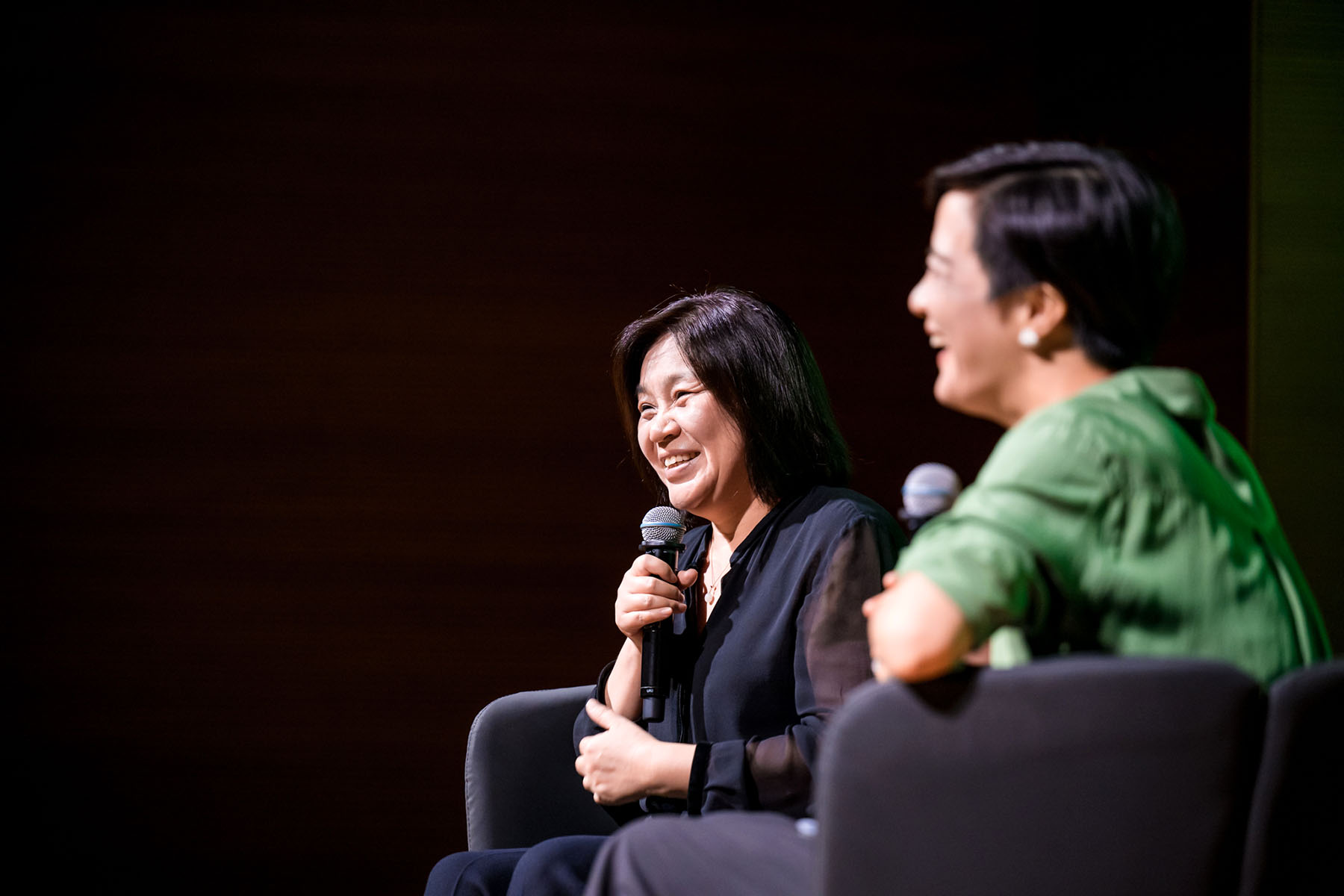
Reflecting on the past and the starting point "enables us to embark on a new path, exploring the depths within and reimagining what lies ahead", she said, responding to a reader's question about the book's influence on her and her village.
In her latest nonfiction book Yao You Guang (Seeking the Light), which won the 9th Lu Xun Literature Prize in August, Liang questions the reasons why many teenagers suffer from psychological problems in a materially affluent society.
Liang told audiences at the National Gallery Singapore that after publishing Yao You Guang, she feels it is her responsibility to raise awareness of the pressures faced by children.
"Honestly, my back isn't in great condition, and taking this long flight (from China to Singapore) is quite a challenge. However, I still wanted to come because I believe that if even one listener can benefit from what I say, it would be truly worthwhile," she said earnestly.
The book, Liang said, tries to answer the question: What is love? What many parents call love is simply doing what they think is best for their children without respecting them. "If parents' love is not seen as love by their children, can you call it love?" she asked.
The book has been well-received in China. Liang recalled that at a book event in Shenzhen, Guangdong province, a middle-aged woman approached her and took her hands. Before speaking a word, tears welled up in her eyes. The woman's son, a second-year high school student, had stopped talking to her for a whole year. After reading the book herself, she placed a copy outside the door to his bedroom where she usually put his meals.
One month later, the son opened his door and came out, willing to eat with his parents and talk to them. The mother came to see Liang to thank her.
"The book may be able to bring a little light to a family, a new chance, which I think is very important," she said.
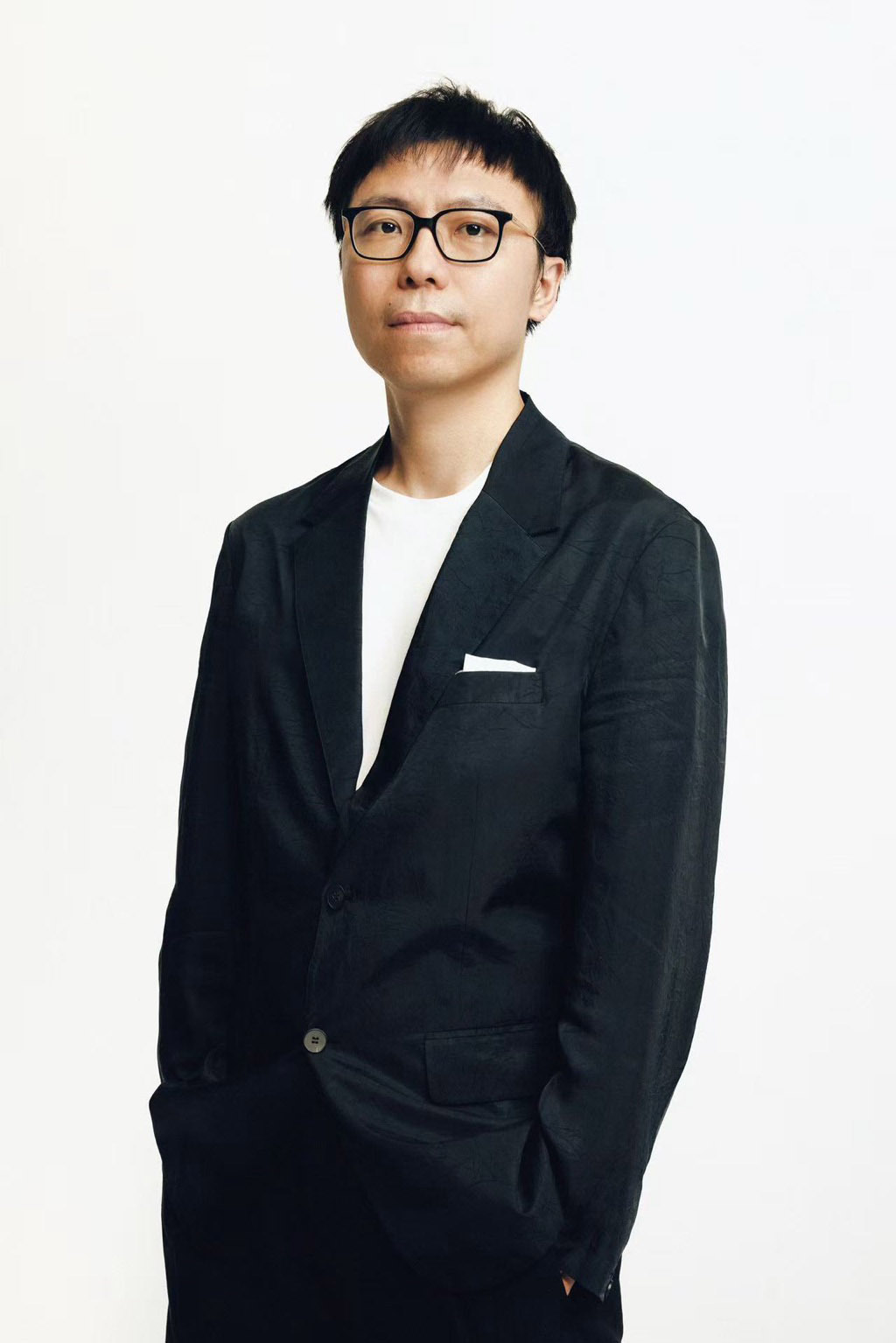
Asked by a reader from Taiwan about whether she would ever write about something she had no prior knowledge of, Liang replied, "I wrote about Liangzhuang and Yao You Guang because I'm very interested in those topics. I write what I really care about."
"When I started working on Yao You Guang, I actually didn't know what I was going to face," she said.
"I started simply because my teenage child was encountering a lot of difficulties at that time and I sensed it was a big issue, so I wanted to know what was going on. Today, China is getting richer and richer, and society is advancing, so why do children get sick? I didn't understand, so I decided to write about it."
From Nov 13-22, the Singapore Writers Festival, organized by the Arts House Group of Singapore, held more than 200 programs with over 300 writers, speakers, and moderators from countries and regions including Singapore, the Chinese mainland, the Hong Kong Special Administrative Region, India, the United States, the United Kingdom, New Zealand, Indonesia, and Malaysia. Delegates included Indian-born novelist Amitav Ghosh, US journalist and writer Stephen Witt, British author Faridah Abike-Iyimide and South Korean mystery and thriller novelist Seo Mi-ae.
In addition to Liang Hong, the festival also featured two other writers from the Chinese mainland, Shuang Xuetao and Wang Zhanhei.
"This year's Chinese programs were shaped by our guest curator Chan Cheow Thia. Liang Hong, Shuang Xuetao and Wang Zhanhei each bring a distinct way of looking beneath the surface of contemporary life, which speaks to our theme, 'Hidden in Plain Sight'," said festival director Yong Shu Hoong.
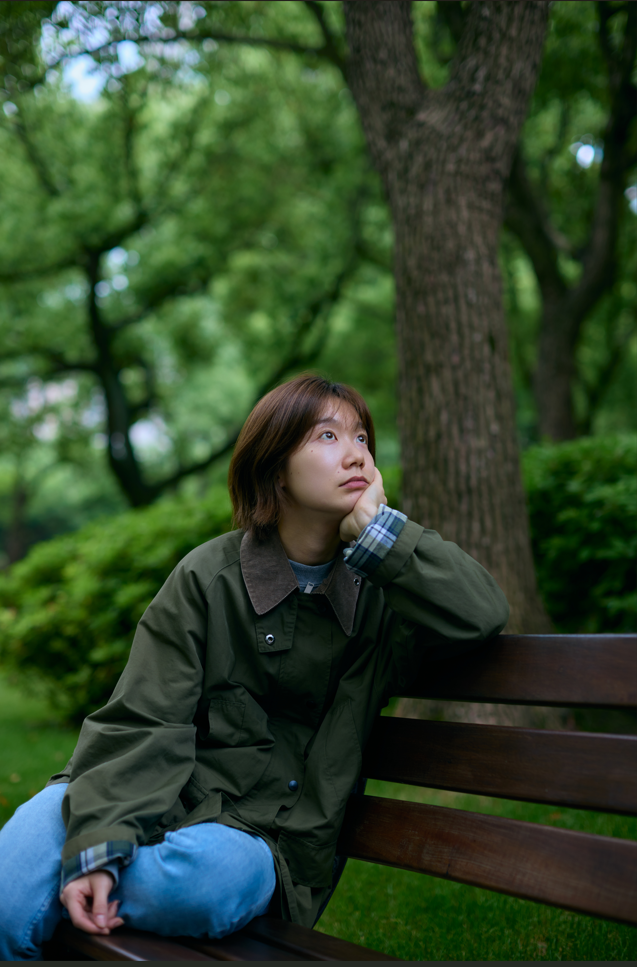
He explained that as one of China's leading nonfiction writers, Liang, in her keynote talk at the festival, drew on years of fieldwork for her latest book Seeking the Light to reveal the hidden struggles beneath society's normalized view of emotional distress in young people.
Shuang Xuetao uses the conventions of crime and thriller fiction to explore memory, precarity and moral ambiguity, "which made him a natural fit for our new Crime &Mystery Spotlight", while Wang Zhanhei offers nuanced and little-known depictions of how ordinary people forged connections despite social distancing requirements during the COVID-19 pandemic, he said.
"Across nonfiction, crime fiction and general fiction, and across generations, together they offer our audiences a richer picture of contemporary China, and the conversations they have with Singaporean writers are exactly the kind of exchange that SWF hopes to create," he said.
Yong said that there was a strong interest in the festival's Chinese programs and "we hope to keep growing them".
ALSO READ: The long memory of solitude
"With live interpretation and digital translation available for selected sessions, we hope that even readers who may not be familiar with Chinese literature or speak Chinese can discover these writers," he said.
Yong, who is a poet himself, said that for him, a book from another culture can offer readers a fresh perspective on something familiar.
"A story about a family, for example, may remind you of your own while making you think differently about what gets said at home and what goes unspoken," he said.
"In a place like Singapore, where many languages are spoken side by side, that experience can change how we listen to people we live alongside as well as how we understand places further away," he added.
Contact the writer at yangyangs@chinadaily.com.cn
