

'I Miss You' hits a nerve with young people dealing with relationship struggles, self-expression
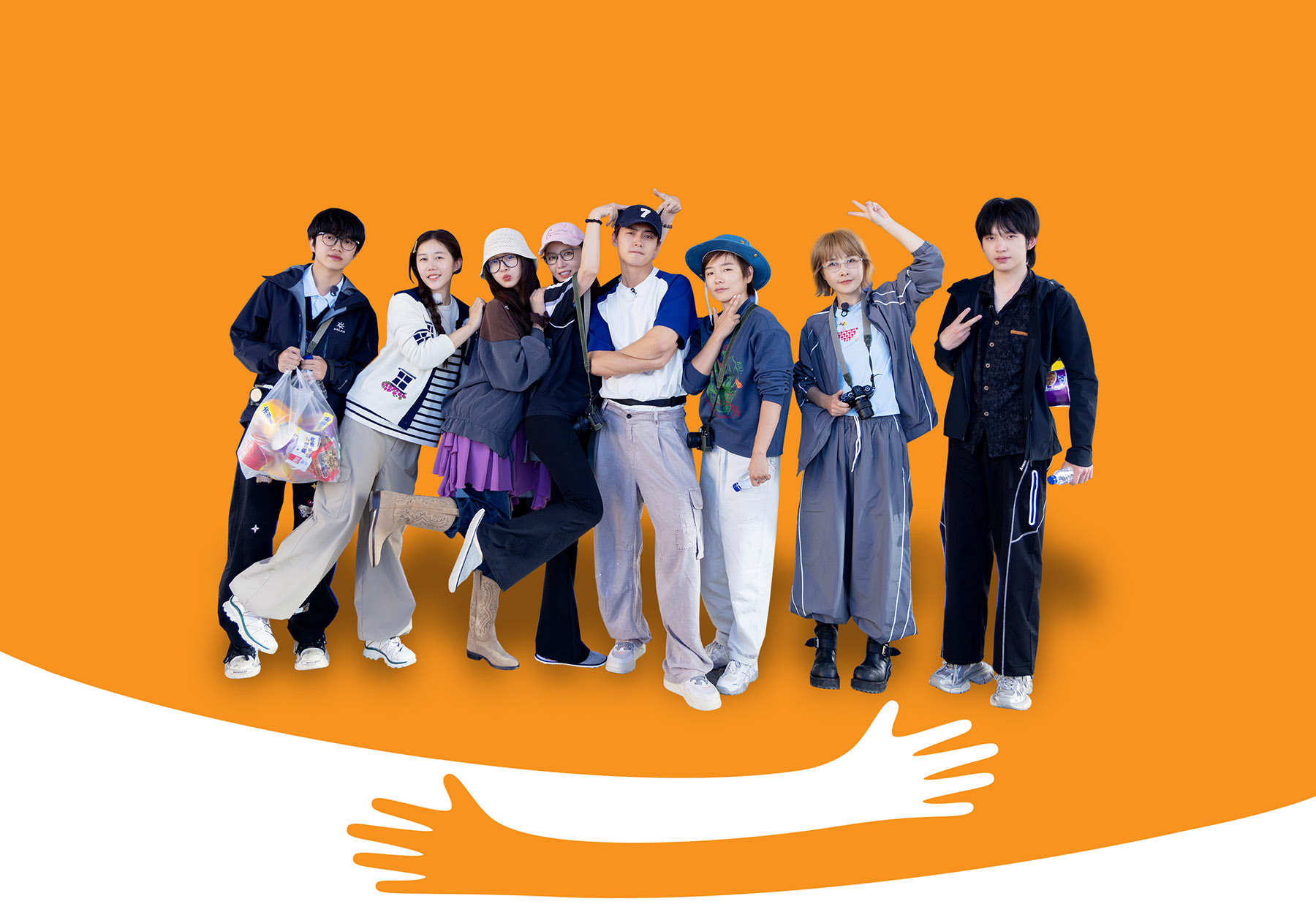
When Xue Siyuan finished his final class one Thursday afternoon in early November, he did not head to the library or meet friends for dinner. Instead, the 24-year-old master's student at Renmin University of China set aside an entire evening for a single purpose: to watch the latest episode of I Miss You, a reality show about estranged friends attempting to reconnect.
"I started counting down the night before," Xue said. "I've been watching clips and fan edits all week. By the time the full episode dropped, I'd already seen the viral moments dozens of times — but I still wanted to watch the whole thing properly without interruption."
Xue said the show has become a hot conversation topic among his peers. "Almost everyone in my social circle has heard of it, and most can engage with the memes. It's rare for a variety show to generate this kind of collective conversation about something as personal as friendship."
ALSO READ: With just a map and curiosity in hand
He is not alone. Since its premiere in late October on Mango TV, the friendship-themed reality show has become a genuine cultural phenomenon, dominating social media discourse and drawing audiences across generational lines. The numbers bear this out.
According to data released by the program's producer Mango TV, as of Nov 10, the show had been viewed 910 million times on the platform. Its hashtag had garnered 860 million views on Weibo, 10.4 billion plays on Douyin, and 3.87 billion views on Xiaohongshu. Daily discussions on Xiaohongshu were 23 times higher than the second-most-discussed topic.
On Bilibili, fan-generated content related to the show has accumulated over 170 million views. Enlightent, a Chinese entertainment data analytics platform, reported that the program captured a staggering 92.7 percent share of effective plays among new variety shows.
'Lina-style' meme
In a society where friendship has long lacked the institutional weight afforded to marriage and family, the show has done something remarkable: it has given adult friendship a public language, a shared vocabulary, and perhaps most importantly, permission to mourn what has been lost — and to hope for what might yet be reclaimed.
The show's premise is simple: four pairs of former close friends — some separated by misunderstandings, others by circumstance — are brought together in a secluded setting to confront their shared past.
Among the most talked-about pairs are singer Xu Fei and her former friend Li Na, whose 15-year estrangement culminated in an emotional cliffside conversation that has since become one of the most memed and discussed moments on Chinese social media.
At one point of the show, Xu, her voice breaking, told Li: "I am the one who was sentenced. Where could I go? I drew a circle around myself, Li Na."
The line, expressing 15 years of self-imposed emotional imprisonment over a friendship that fell apart amid allegations of betrayal, struck an immediate chord.
Within days, drawing a circle on the ground as a prison became a linguistic phenomenon. Netizens began filling social media with variations: "I drew a circle around myself, my workstation." "I drew a circle around myself, my ex." Even celebrities joined in — actress Yang Mi referenced the phrase during a livestream, and official media accounts offered bilingual explanations of the idiom.
But the more enduring meme was what became known as "Linastyle": appending "Lina" to the end of any mundane sentence to lend it a sudden, inexplicable weight. "I got off work, Lina." "I'm hungry, Lina." "I don't want to get up early, Lina." The name, repeated at the end of Xu Fei's every utterance like a full stop made of longing, had become a universal punctuation mark for unspoken regret.

A mirror for friendships
The show's resonance, however, runs deeper than memes. For many viewers, the Xu Fei-Li Na dynamic — a friendship fractured by a murky betrayal, sustained by mutual resentment, and now laid bare on national television — mirrors their own unfinished business.
Liang Lixing, a 33-year-old professional in Nanchang, Jiangxi province, said the program reminded him of a childhood friend he has not spoken to in years.
"We were best friends from primary school. We practiced English together, improved together. Then in middle school, a small misunderstanding — relayed through a mutual friend — ended everything. We attended the same high school but never reconnected," Liang said.
"When I learned he got married a couple of years ago and didn't tell me, I felt genuinely sad. If he had invited me, I would have gone."
Liu Shutian, a Beijing-based professional, said watching the show prompted her to recommend it to her closest friend, who quickly became equally obsessed.
"We joke that we've accumulated enough material to go on the show ourselves," she said. "Everyone has friends they've lost touch with — sometimes because of unresolved conflict, sometimes just because life pulled us in different directions."
Li Ying, a 24-year-old office worker in Changsha, Hunan province, described the shift in her own relationships.
"In high school, friendships were intense — full of drama, loyalty, declarations that we'd be friends forever. Now, friendships are more restrained, more polite. They're still valuable — perhaps even more stable — but the emotional intensity is different."
Yu Feng, a professor of psychology at Wuhan University, said friendship occupies a unique and precarious position in human relationships.
Marriage is protected by institutions. Family relationships are bound by blood and legal obligation. But friendship has no institutional guarantee — it exists purely through freewill, he said. "That's precisely why it's both precious and fragile."
Yu noted that psychological surveys in recent years had recorded a decline in the number of close friends people report having.
Online society allows people to maintain connections without physical presence, but these connections are often wide and shallow. They can substitute for some emotional needs, but not for the deep, intimate bonds that define genuine friendship, he said.
Wang Wenda, director of psychological health education at Xinhua College of Ningxia University, pointed to the erosion of opportunities for friendship formation after graduation.
When people are in school, they are surrounded by peers. Interests are simpler, conflicts are more straightforward. Once they enter the workforce, work hours lengthen, social circles shrink, and workplace culture often discourages genuine openness with colleagues, Wang said.
"Friendship becomes harder to obtain and harder to maintain — yet the need for it remains."
The show's emotional climaxes — particularly the conversation between Xu Fei and Li Na — have been interpreted by many viewers as what Wang calls "unfinished business".
He explained: "When a relationship ends without resolution — a sudden cut-off, a slow drift, a conflict that's never addressed — the lack of closure keeps the memory alive. It resurfaces whenever something reminds you of it. The show offers a kind of symbolic completion that many viewers crave in their own lives."
The show's public value, experts suggest, lies precisely in this capacity to translate private struggles into shared discourse.
"Many people carry unresolved feelings about lost friendships — guilt, regret, confusion," Wang said. "Seeing these emotions dramatized and discussed publicly can be therapeutic. It normalizes the experience and may even give people the courage or the language to address their own situations."
Changing social priorities
The show's success also speaks to a broader cultural shift. Experts said in a society increasingly characterized by high-pressure competition and the instrumentalization of relationships, the longing for genuine connection appears to be intensifying.
"Modern society emphasizes usefulness — what can this person do for me, what can I get from this relationship," Yu observed.
"Friendship gets evaluated through this utilitarian lens. But friendship's real value is emotional — it's about companionship, support, being seen and understood. That kind of 'soft usefulness' is harder to quantify but no less essential."
Wang agreed. There's a term now — dazi, meaning activity partners, like a meal buddy or a gym buddy. These relationships are functional and limited, he said.
They can alleviate loneliness in the moment, but they don't provide deep emotional connection. If someone's entire social life consists of dazi, something important is missing, he added.
For Xue, the show's most lasting impact has been a renewed appreciation for the friendships he already has. "I've been thinking about which of my friends I'd want to go on this show with — and I realized I'm lucky to have several," he said.
"But it also made me think about how I maintain those relationships. Friendship isn't automatic. It requires effort, honesty, and sometimes the courage to have difficult conversations."
Reaching out?
Viewers describe the show as prompting reflection and, in some cases, action — or at least the intention of action.
"I thought about reaching out to a high school friend I had a falling-out with," Li, the Changsha office worker, said. "Looking back, it was probably immature — we were both too proud. I've felt the urge to contact her, but I haven't actually done it yet."
Liang said reaching out "takes enormous courage", and carries the fear that "the other person may have long forgotten you, or may never have regarded you as a friend at all". In real life, he said, repair usually requires something like the show's setup — being thrown together for a few days or a week.
Liang said he still thinks about his childhood friend. "Maybe someday I'll reach out. Maybe not. But at least now I know I'm not the only one who wonders what might have been."
Yu said the show provides a reason to reach out. He said the phrase "I saw this program and thought of you" can be a powerful icebreaker.
"But I would advise against immediately revisiting old grievances. Sometimes the best approach is to start fresh, to rebuild from the present rather than litigating the past."
Forgiveness does not necessarily mean resuming the friendship. It can simply mean letting go — releasing the emotional hold that the past has on them, he said.
That craving also explains the show's appeal as an antidote to faster, emptier forms of entertainment. Several viewers described it as a counterweight to the AI-generated short dramas and clips that increasingly fill their screens.
Li said she used to watch Hongguo — a popular platform for short, often AI-assisted dramas — every morning while doing her makeup, "just for the feeling of the moment, without thinking", and would finish a 30 — or 40-episode series at double speed before forgetting all of it.
By contrast, she said, the long show demands something else: "With a long show like this, you think more deeply about the topics. I do not do anything else while watching the show and I need full attention and time alone in my own thoughts."
Liu, the Beijing professional, said she had deliberately avoided downloading Hongguo for fear of getting hooked, and that she and her friends had been seeking out older, slower series to "offset this fast-food style of consumption".
This show isn't a classic old drama, but it's a slow variety show — a way of neutralizing that kind of fastfood cultural product, she said.
Contact the writers at zoushuo@chinadaily.com.cn
