

Enthusiast filmmakers draw on school texts to reignite interest in history, fiction
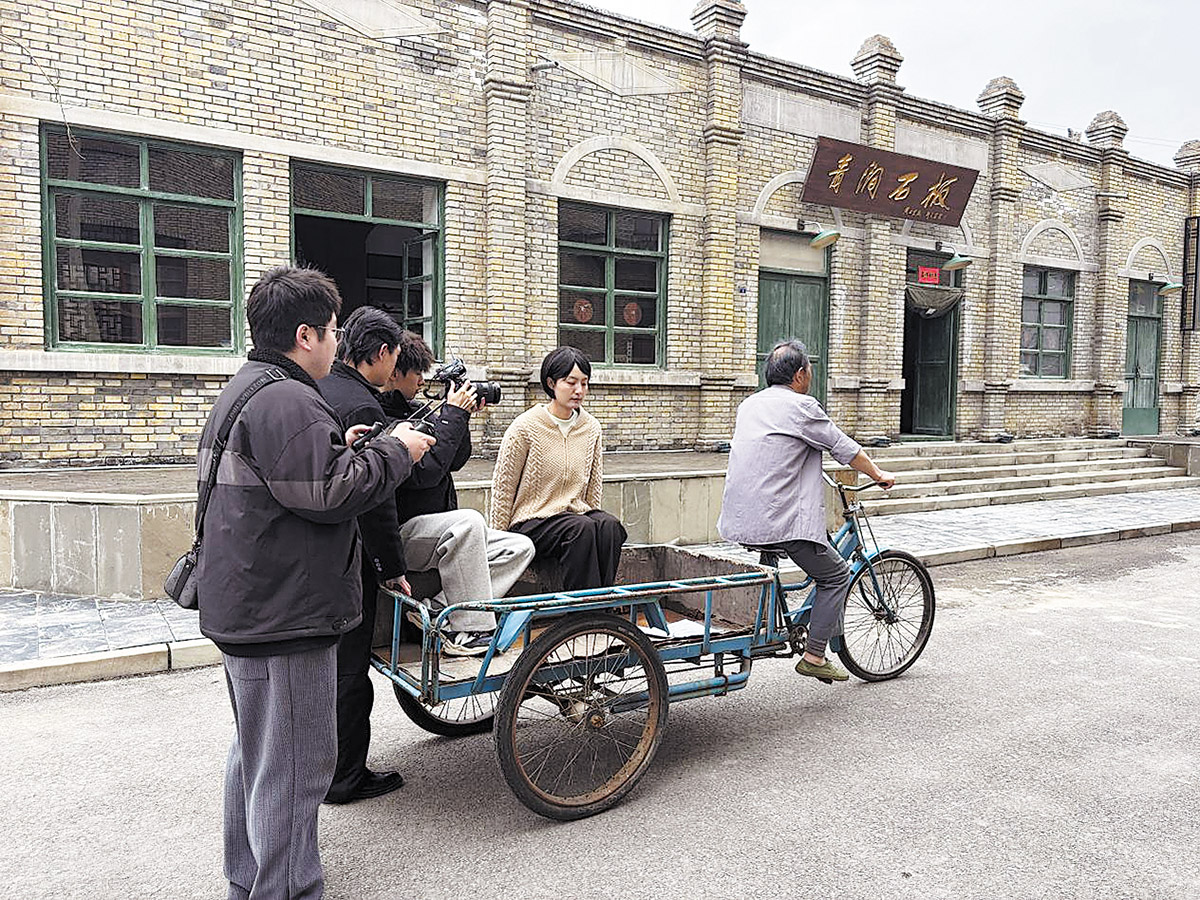
As AI-generated short videos proliferate online, a self-described "shoestring crew" in Xi'an, Shaanxi province, has taken a different path, adapting stories from Chinese-language textbooks into live-action short dramas.
Its Douyin account, @Haojiahuo, has more than 5.06 million followers, and some of its videos are now shown in primary and secondary school classrooms.
The team started in mid-2024 with four young novices and 30,000 yuan ($4,470) in startup capital.
None of them knew how a production crew should operate, nor did they have formal film or television training. But they studied historical material for content, polished scripts and insisted on shooting on location.
The word "haojiahuo" is a homophone of a Shaanxi dialect expression roughly meaning "good heavens" or "wow". It is a plain and down-to-earth expression.
"At first, we just hoped that after watching our videos, viewers would say, 'Good heavens! Well made!'" said Zhang Shuaipeng, the director and writer.
The inspiration for their productions came from his favorite China Central Television program China in the Classics. "I realized historical stories could be performed with powerful details," said Zhang, who studied marketing.
Over a meal, he recruited Zhang Zhiyuan as the lead actor because he had taken a half-year acting elective in university. Also joining the team were a producer nicknamed "Big Beard", who prefers not to give his real name, and cinematographer Tang Dekai, a new graduate.
The four hit it off and decided to start turning Chinese-language textbooks into live-action dramas. The subject matter varied, but some of the stories were based on real historical events or characters.
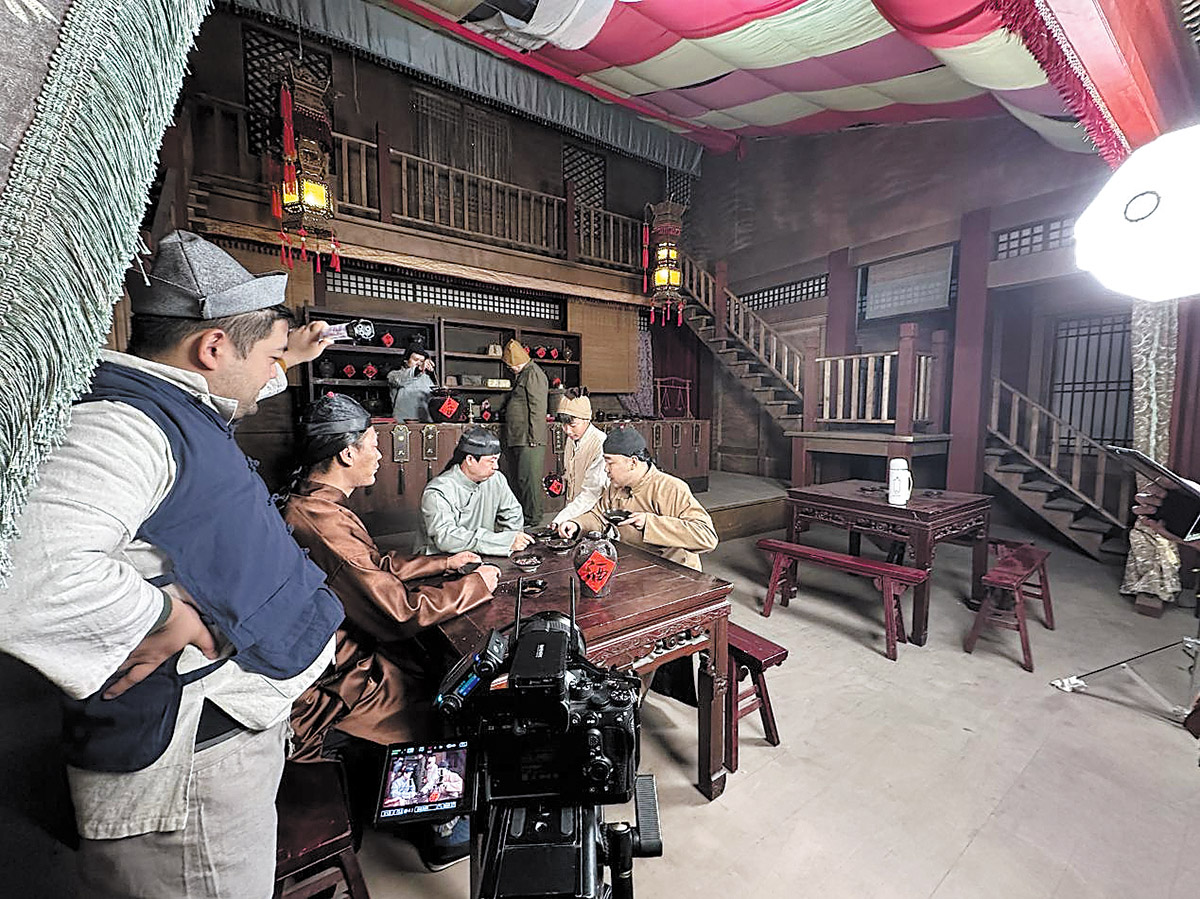
In November 2024, their first adaptation, Kong Yiji, the story of a failed scholar, was released. The response was lukewarm.
Viewers were blunt in pointing out the problems. Zhang still remembers comments such as: "Makeup and costumes look like an old-fashioned stage play", "Stiff acting", "Continuity errors".
At the time, the team lacked video-making experience and had rudimentary equipment. Looking back, Zhang concedes the result was rough.
The shoot was completed at a restaurant in Xi'an, with nearby villagers used as extras. The story by the famous writer Lu Xun takes place in a small town in Jiangnan, the region south of the Yangtze River. But the people in their video spoke with strong Shaanxi accents.
There was, however, some positive feedback. Many viewers said they saw their own lives in the video and shared the protagonists' emotions such as helplessness and self-mockery. Some teachers and parents told the team they had played the video for their students and children.
Change of direction
After that, the team decided to base their videos on Chinese-language textbooks.
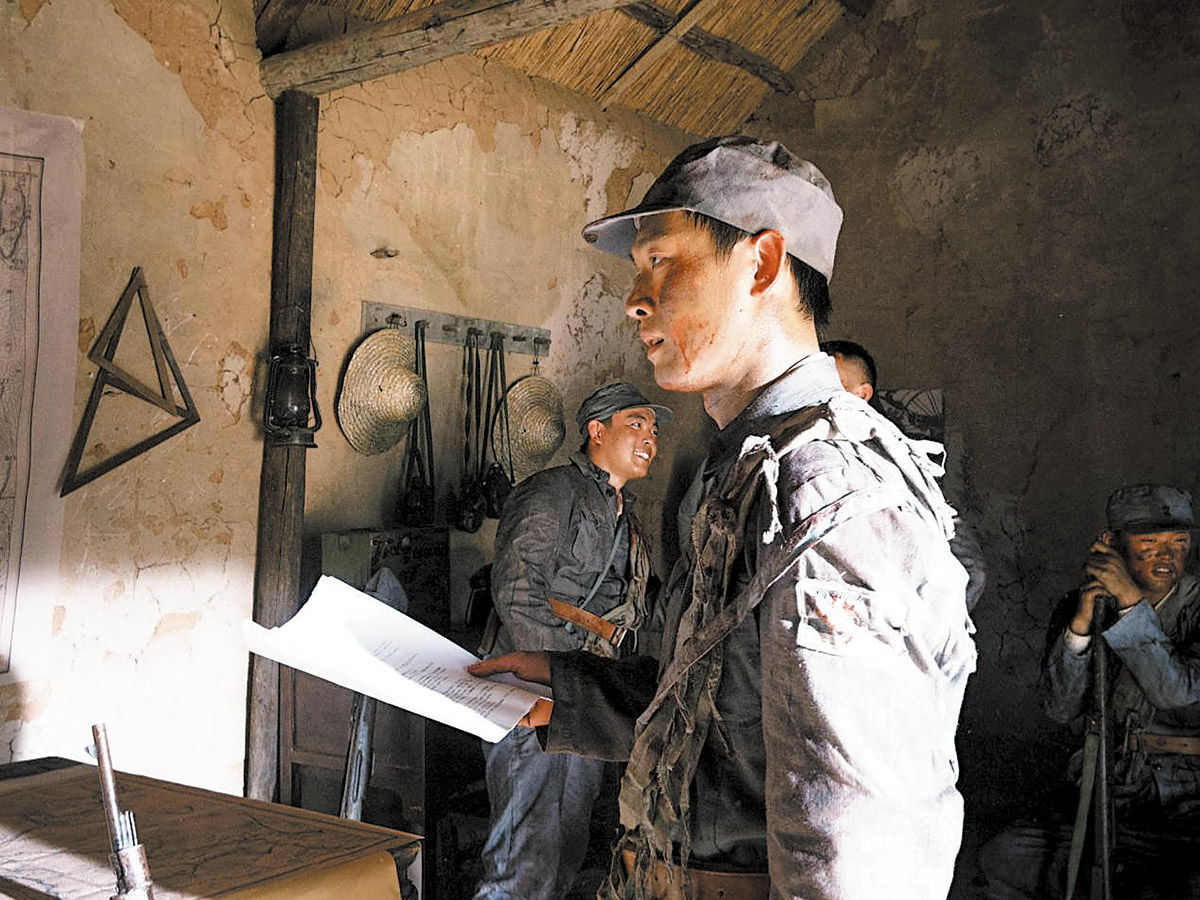
Their second adaptation, The Monument, involved a great deal of effort but the final product was as unpolished as the first.
The story draws on the Red Army's crossing of snowy mountains as part of the Long March (1934-36). Their version was a dramatized account of the true story of a courageous soldier found frozen by a poorly equipped unit trying to cross the icy landscape.
To recreate the key scene, the team rented a greenhouse, put up a backdrop, moved in a large tree and used a snow machine to make artificial snow.
However, dogs next door kept barking and could be heard in the background of the video.
After the two videos were shot, only 10,000 yuan remained of the startup capital.
The crew weighed up throwing in the towel; however, a private message changed their minds.
A Chinese-language teacher said she had played The Monument in class, and a boy who rarely sat still cried after watching it. He sent a voice message through the teacher's account: "Grandpa, (the) Red Army had such a hard life. I want to study hard."
Zhang said he was deeply touched and that message became the motivation for the team to keep going.
For the first time he felt that their videos, though still rough, had the ability to reach people. The team members began to push themselves harder, paying closer attention to video quality. After shooting several more episodes, the number of comments on their videos increased noticeably.
"If we were not in such a hurry to rush through life, the Chinese language would be the most beautiful subject," one netizen wrote.
Fight against forgetting
The team's office holds many editions of Chinese-language textbooks. Some are yellowed and worn, and the pages are annotated with ideas and observations.
Zhang peruses the books every day and writes down ideas on a whiteboard. If the content overlaps with viewers' recommendations, the project is given priority.
The director admitted that when he first read the textbooks as a student he didn't fully understand their meaning. Now he studies the historical background behind almost every sentence.
"We just want to present things we could not understand in a very realistic way, so that students today easily understand what the text and story are about," he said.
Today, the Haojiahuo team has 10 members. They have turned more than 30 textbook lessons into video stories and sometimes take liberties with the content to get across the essence of a work. A textbook might only account for about 20 percent of a video.
"We want viewers to see what kind of life, choices, and era gave birth to those words," said Zhang.
When shooting A Letter to My Wife, he felt they should not just make it a love story.
The letter was written in 1911 by revolutionary martyr Lin Juemin to his wife, Chen Yiying. Behind the letter was a farewell in which he indicated he was willing to die to save the nation from peril.
So the team added an interrogation scene not in the textbook to express Lin's resolve. Viewers said the production helped them better understand Lin's sacrifice.
As of today, the video had more than 4.66 million likes on Douyin alone, making it one of Haojiahuo's most popular works.
After that, their short videos were played in more and more classrooms. Teachers keep sending photos and messages to the team, and some schools now use the videos as teaching tools.
The team also realized that few of their followers remembered the name Haojiahuo. Many viewers found them through typing in phrases such as "an account that remakes Chinese-language textbooks".
At the same time, production costs were rising and the team was uncertain about the financial viability of the venture. From December 2025 to early February 2026, the members discussed changing direction. During the hiatus, however, students, teachers and parents kept sending messages asking when the next video would come out.
In February, Haojiahuo resumed shooting.
Zhang said he had worked out viewers did not necessarily have to remember the video creator's name. "As long as they remember a textbook lesson, a character or a period of history, the work has value," he said.
The team's hope now is that their content inspires audiences and helps viewers remember and understand history.
Zhang wrote on their Douyin homepage that, "history is not a thin sheet of text" and "resisting forgetting" itself is the greatest value of their work.
Gao Wen, an associate professor of psychology at Liaoning Normal University, noted that from a psychological perspective, video content can help motivate children and adolescents to learn, while also triggering emotional experiences that make memories more profound.
"Text is abstract. A large body of research shows that extensive reading of texts helps children and adolescents develop cognitive abilities such as abstract thinking and imagination," she said.
Video-assisted learning, meanwhile, may also limit the development of abstract thinking and active imagination, she warned.
'Handcrafted' videos
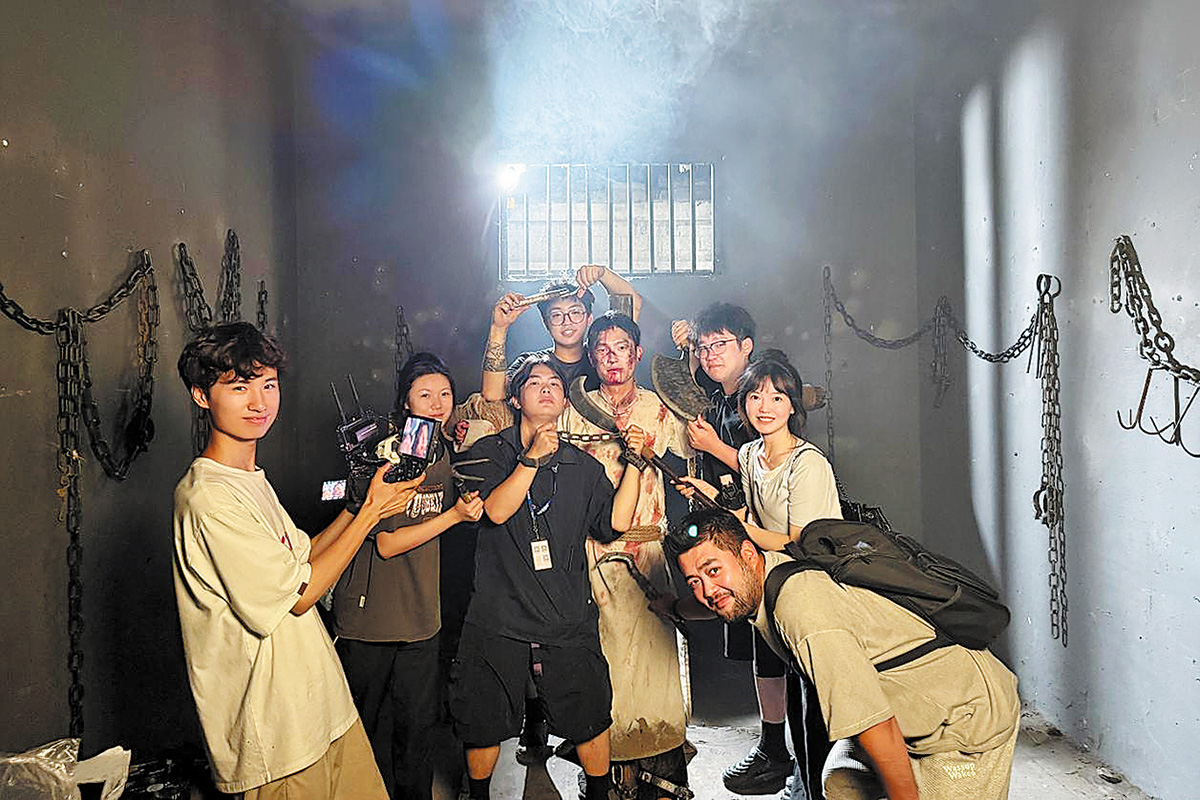
Real shooting is something Haojiahuo insists on. While artificial intelligence can quickly generate digital scenes, they prefer shooting in a studio setting if an appropriate live location can't be found.
For one production, when they failed to find a suitable spot in Xi'an to film muddy marshes and pools, they went to Hengdian World Studios, the country's largest film and television production base, in Zhejiang province.
The costs were five or six times higher than AI-generated videos. They take a painstaking, old-fashioned approach. If there is no suitable setting, they build one themselves. If a shot is not good enough, they shoot it repeatedly until they are satisfied.
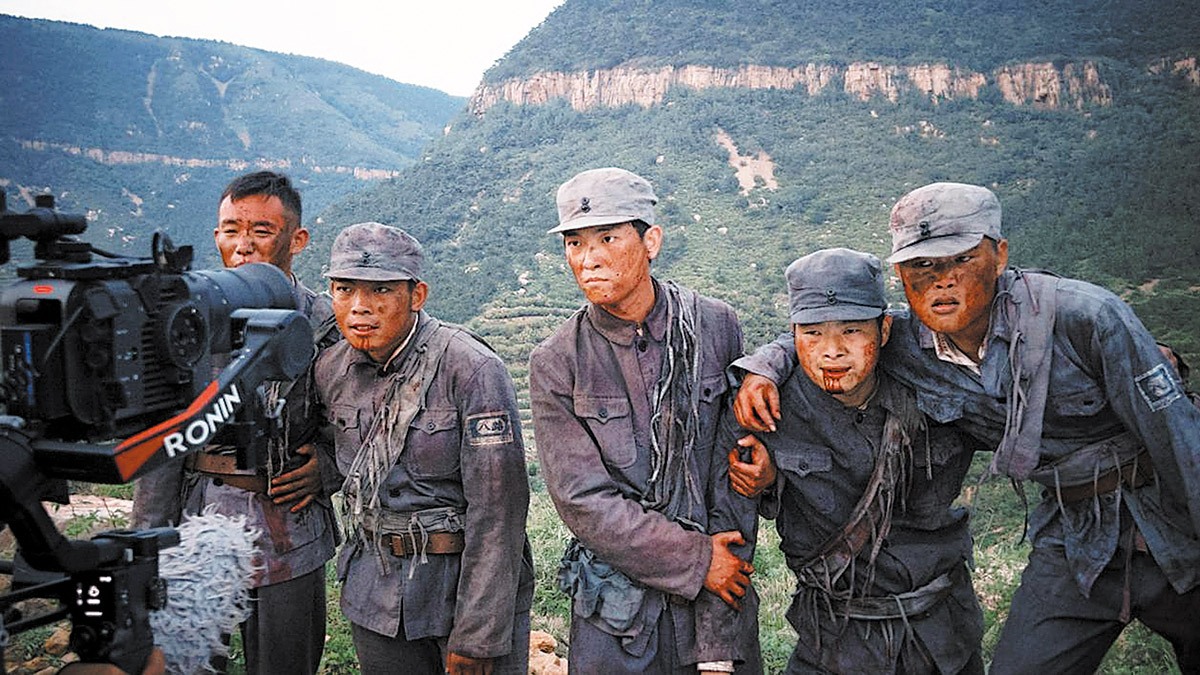
In August 2025, the team shot two videos in the mountains of Shandong province. Temperatures exceeded 40 C, but the stories were set in autumn and winter.
To make the shoot appear authentic, the actors insisted on wearing thick military uniforms and ran repeatedly up a mountainside for some scenes.
The crew prepared 20 boxes of Huoxiang Zhengqi Shui, a traditional Chinese herbal tonic used to prevent heatstroke and maintain energy, and finished all of them in one afternoon.
Some performers collapsed from heat exhaustion. A total of about 60 extras dwindled to 13 by the end. Even some local extras found the conditions too harsh and left.
This attention to detail can be seen in Nanjing 1937.
The team spent 11 months polishing the script, studied a large amount of historical material, and verified details such as gun-holding postures, striving for an authentic replication of the era.
The heavy subject matter also posed an enormous psychological strain. While studying historical material and during shooting, members often found it difficult to keep their emotions in check.
Almost the entire film uses real people and real scenes. Post-production special effects were used for aircraft flyovers, wire removal and some burning shots, which could not be safely filmed live.
Zhang said someone once asked why he paid such high production costs when AI is capable of generating similar war scenes.
In fact, AI tools have indeed proved popular for textbook adaptations. Accounts like@haizide yitangke (A Lesson with Yitang) on Douyin — created by father Wang Chuang for his third-grade daughter — have garnered millions of followers by placing the daughter into AI-generated scroll paintings to interact with historical figures.
"I found that adults' language is too heavy for children. Instead, this AI format makes her more able to listen and take it in," Wang said, adding that every video is a message he wants to tell his daughter.
"When she later encounters failure, loneliness, gains and losses, and choices, perhaps I will not be by her side. She need not be afraid, because the people and things she learned from Chinese language textbooks will still be there," Wang said.
However, for Zhang and the @Haojiahuo team, digital generation falls short when depicting deep human experience. Zhang noted that in some situations, such as an explosion, the human body naturally feels fear and tries to evade the danger. "That look and subtle movement are the reality we want to preserve, and something AI finds very difficult to simulate," he said.
In depictions of real suffering, AI images can appear distorted and stiff. This can easily mislead young audiences, and runs counter to the original intention of remembering history.
Their videos typically run from 10 to 40 minutes, and viewers watch them in full. "Quality content has its own appeal to audiences," said lead actor Zhang Zhiyuan.
The videos seek to present historical facts as objectively as possible, avoiding plots designed for entertainment purposes and not imposing subjective conclusions. The audience is given room for judgment and reflection.
While insisting on realism, the team is not immune to the problems of copyright infringement, including AI-assisted copying. Many accounts steal their real-life footage and mass-produce imitation content.
Even so, they believe creators who follow the rules also enrich classroom material.
The team will expand their content to include more historical subjects and try to uncover more stories and characters unfamiliar to the public.
Meanwhile, they are planning to widen their reach to overseas audiences, hoping to connect with them through shared human emotions. "Cultures differ, but emotions are universal," Zhang Shuaipeng said.
Contact the writers at qinfeng@chinadaily.com.cn
