

Interactive performances are offering a new perspective on history, Wang Ru in Beijing and Yang Jun in Guiyang report.
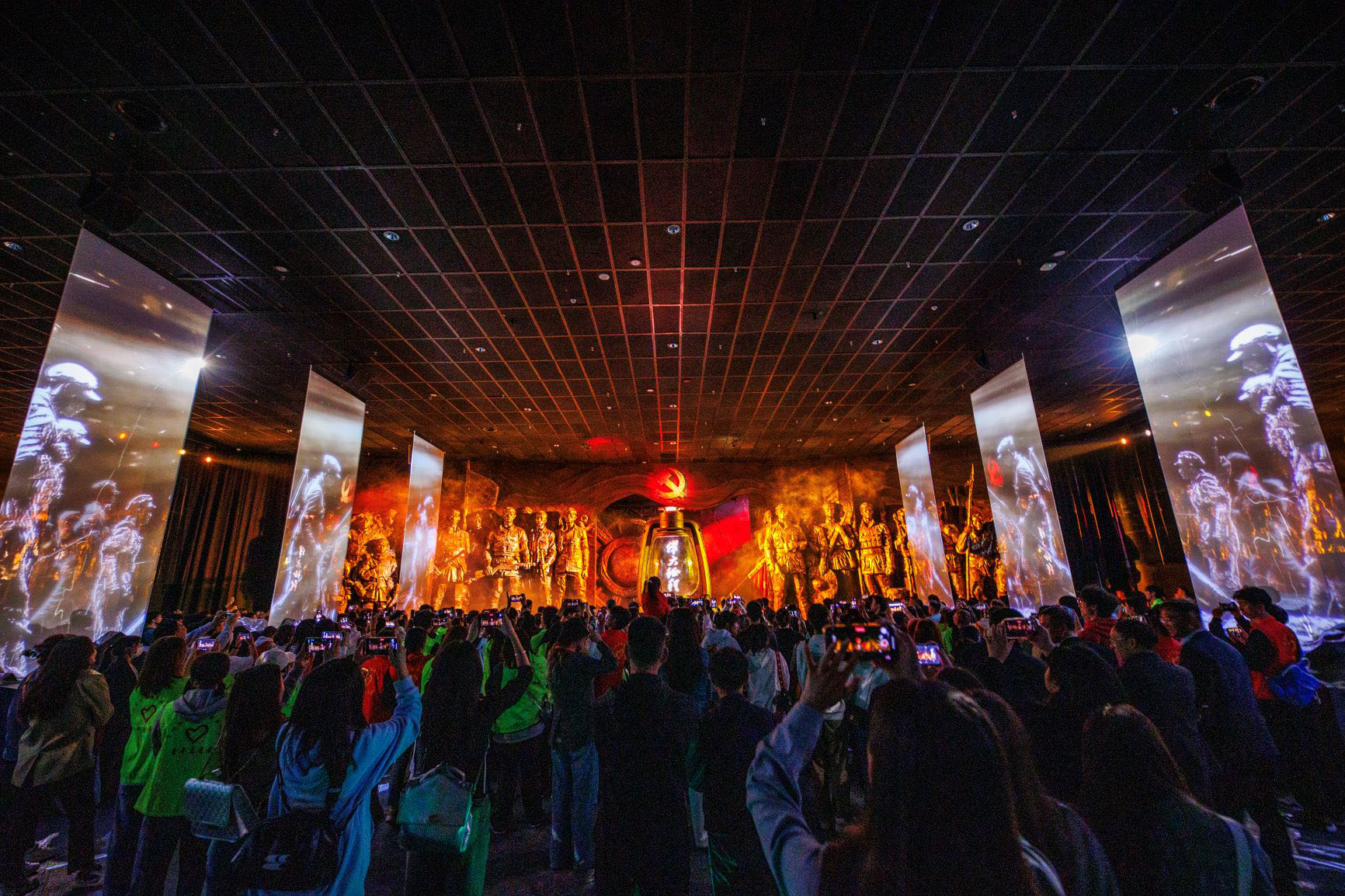
In the spring of 1935, today's Guizhou province was at the center of China's revolution. Red Army soldiers, led by the Communist Party of China, poured almost all their strength into the life-and-death struggles that would shape the nation's destiny.
During the four months the Central Red Army spent in the province during the Long March (1934-36), a pivotal and thrilling chapter unfolded, paving the way for its ultimate success.
Today, in Guizhou, people remember this history not only through lessons, but also through experience. As one of the key construction areas in the nationwide Long March National Cultural Park project launched in 2019, Guizhou has rich historical and cultural resources.
READ MORE: A red thread runs through it
From true-to-life battlefields to immersive stagecraft, technology is turning the history of the Long March from something merely read about into a lived experience.
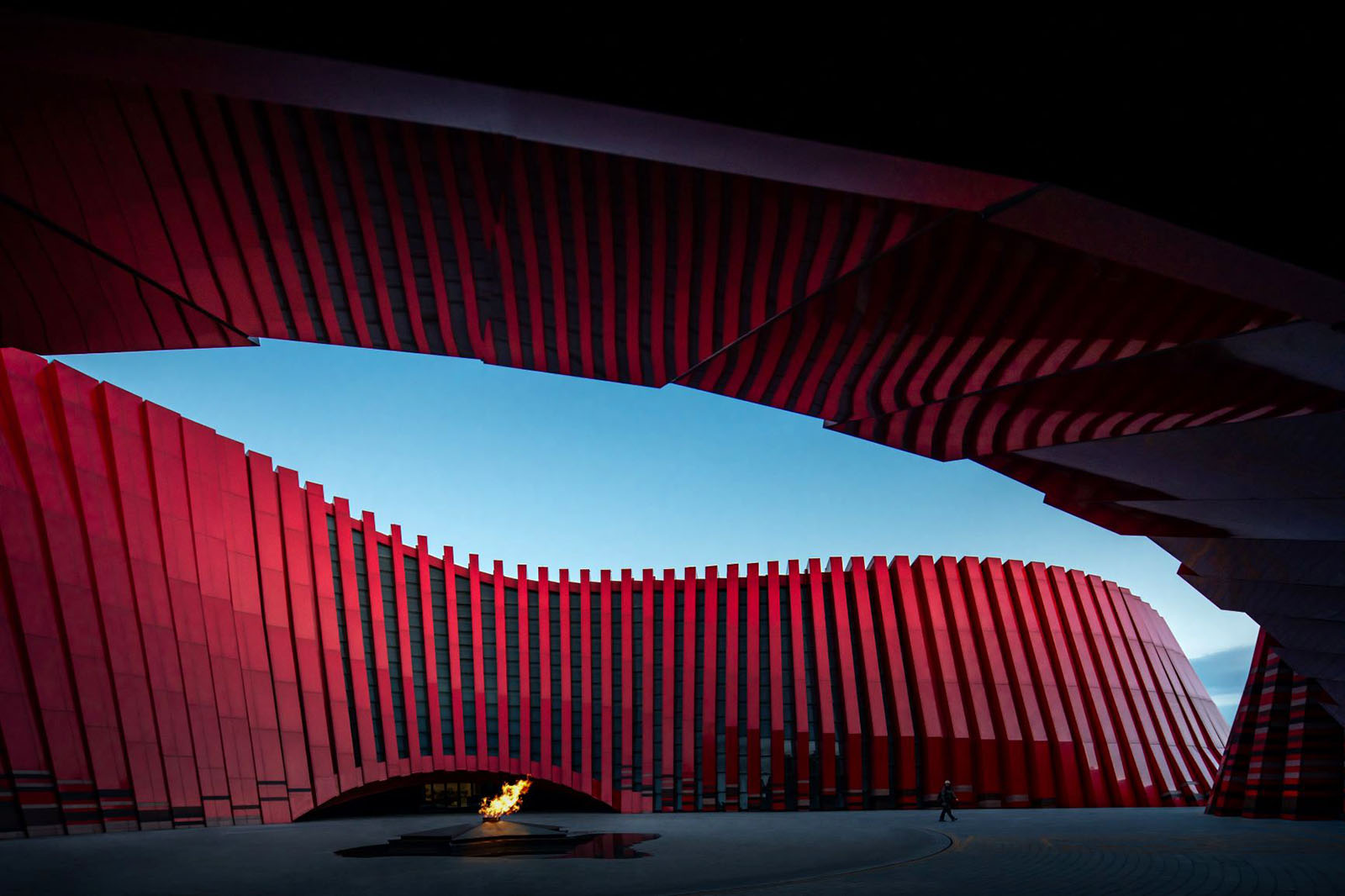
One striking example is the Guizhou Long March Culture Digital Art Museum. Known as the "Red Banderole" for its red ribbon-like appearance when seen from the sky, the digital experience center for the Long March has become many tourists' first stop in Guiyang, Guizhou.
Less than a 10-minute drive from Guiyang Longdongbao International Airport, the venue welcomes crowds of people, sometimes more than 20,000 in a single day.
Since its trial opening in October 2023, the museum has received more than 2.4 million visits as of July this year, about 60 percent of which are by young people.
"More than nine decades on, how do people today, especially the young, connect with this part of history? Our goal is to create cultural expressions for this era, not simply to digitize history, but to reconnect modern people with the Long March through digital technology, spatial art and immersive storytelling," says Wang Zhi'ou, the general director and designer of the museum.
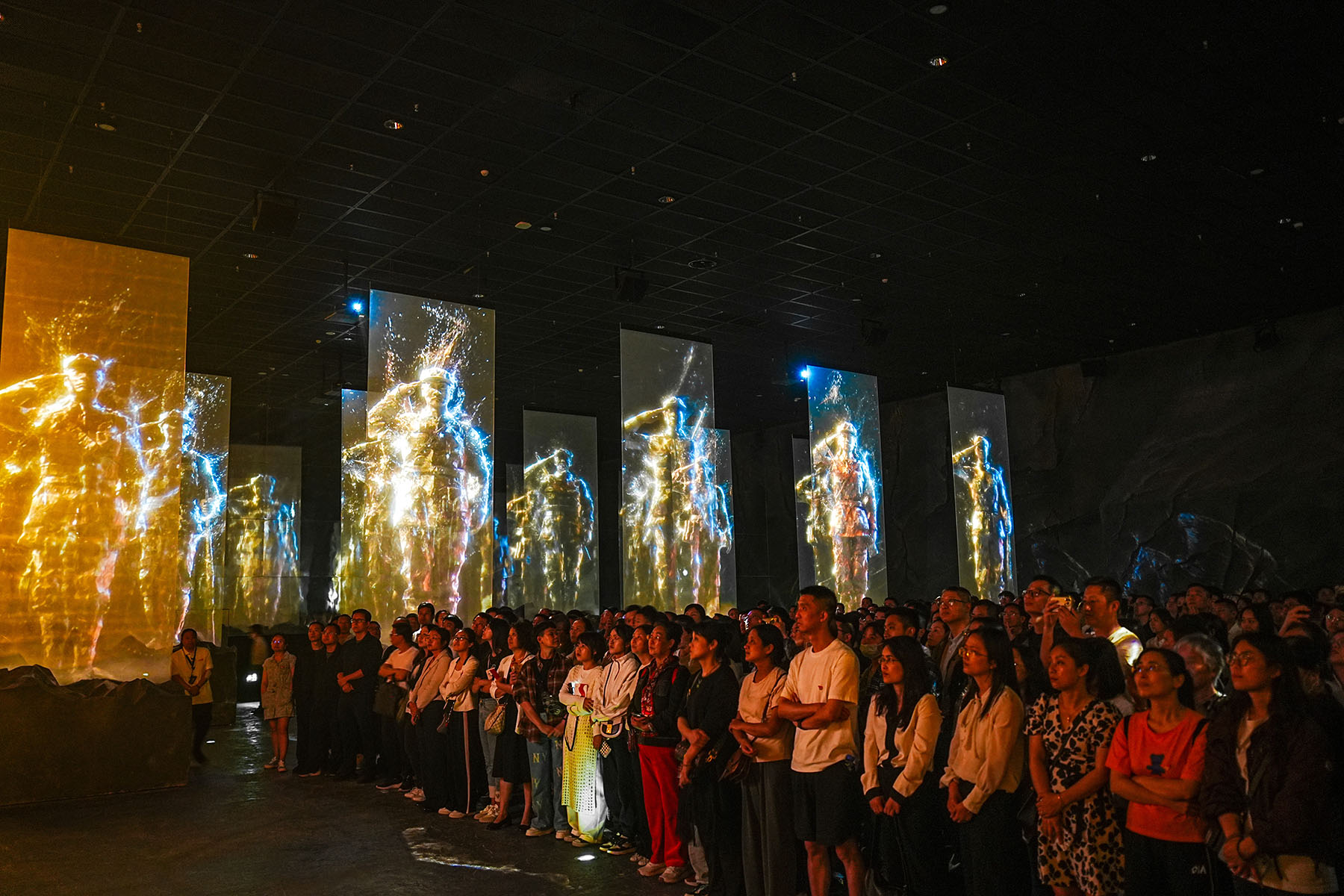
This reconnection is first reflected in the change in how people visit places. Rather than looking at exhibits and reading the words and pictures on display boards, in this museum visitors walk forward through different historical scenes.
In one chapter, they see the fierce Battle of the Xiangjiang River in present-day Guangxi Zhuang autonomous region. Although Red Army soldiers managed to break through the Kuomintang's blockade lines, they suffered massive losses, with their blood dyeing the river red.
In another, they see how Mao Zedong led troops across the Chishui River four times to break through and shake off the enemy's encirclement and pursuit. Sitting on moving seats, the audience rises and falls with them to experience the thrills and dangers of the Red Army's river crossing.
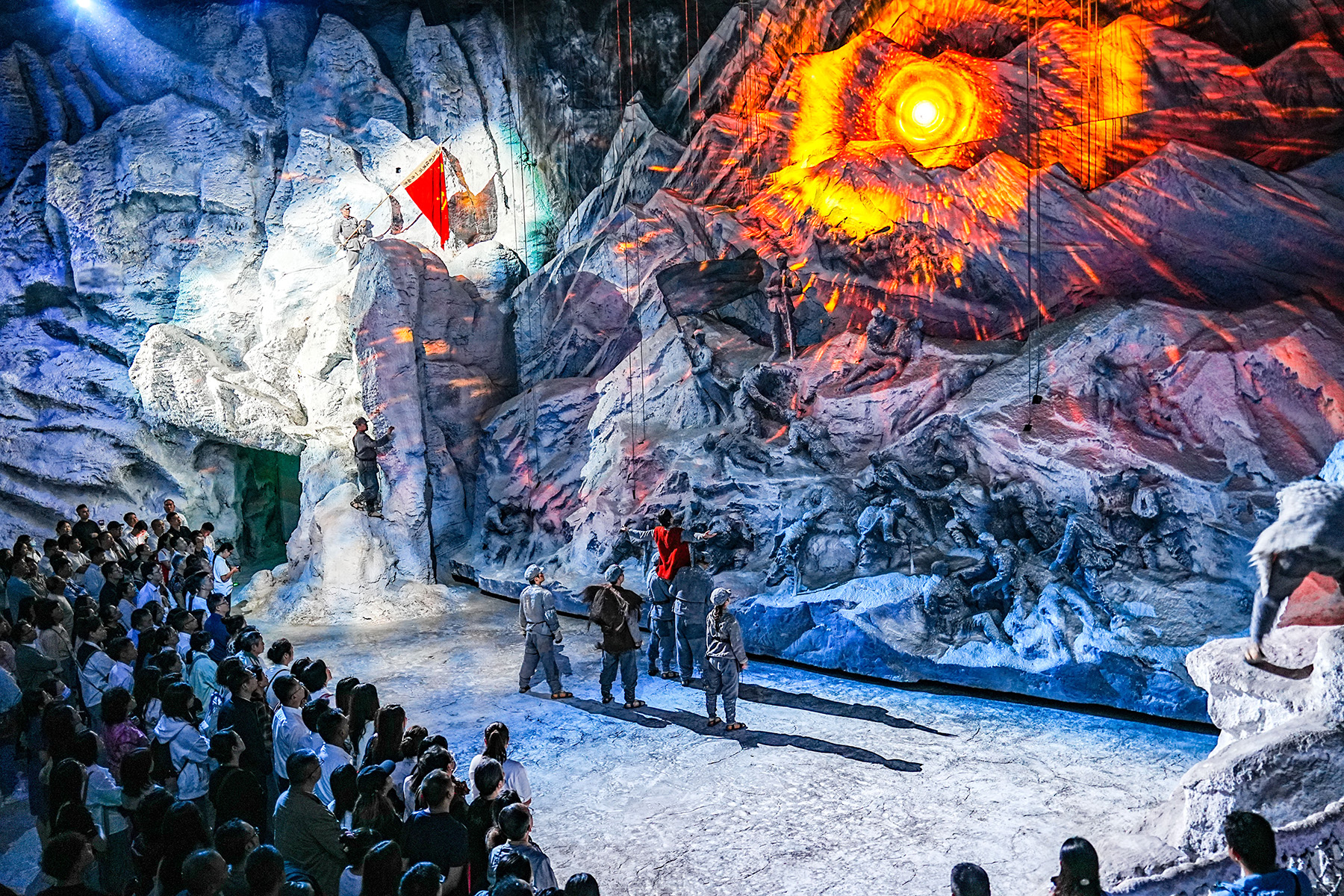
"We combine a real-scene, irregularly shaped display system, mechanical motion, digital imaging and 3D sound-field technologies. In this way, battle trenches, mountains, firearms and flames are turned from two-dimensional scenes into spaces that can be physically felt," says Wang.
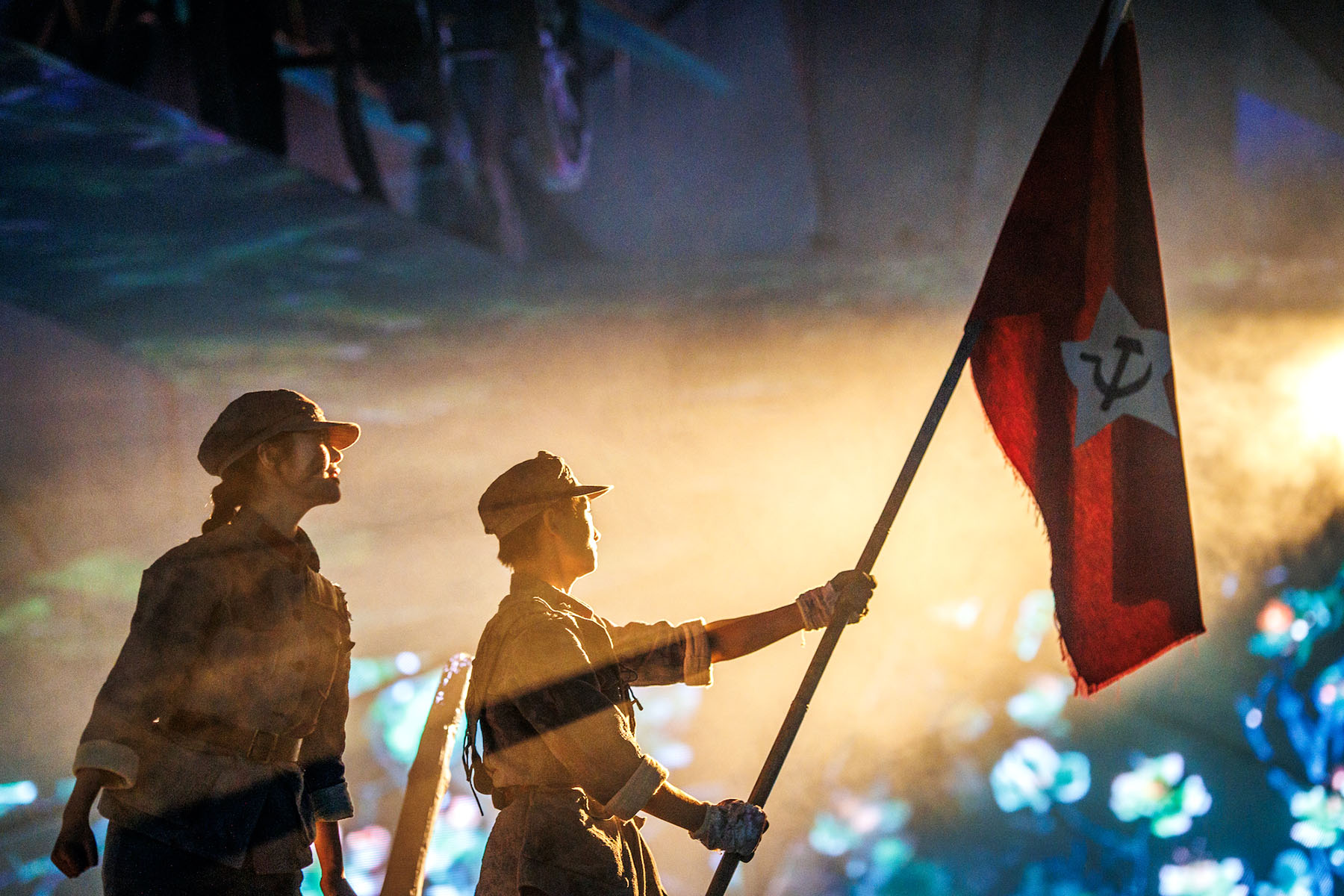
In one section about Red Army soldiers climbing the snowcapped Jiajin Mountain in Sichuan province, visitors feel wind, snow and cold. They also hear the sound of footsteps and distant cries. At the same time, the soldiers' shadows can be seen on the "cliff".
"Through visuals, sound, environmental special effects, and spatial structure, the audience's sight, hearing, and even physical sensations can all be aroused," says Wang.
"Physical participation will bring spiritual presence. When both your body and spirit are truly engaged with a historical scene, history can turn from something 'I know' to something 'I feel'."
Immersive journey
To understand why Guizhou has become a hub for red tourism, people need to look back in time.
Li Jun, a professor specializing in the history of the Long March at Guizhou Normal University, notes that the Red Army spent the longest time in Guizhou, operated across the widest area — covering 68 of the province's 88 counties — and witnessed many major events there.
"Such a rich concentration of Long March heritage provides fertile ground for Guizhou's creative red-culture productions," Li says.
Among the landmark events was the Zunyi Conference held in Zunyi in January 1935. At the beginning of the Long March, errors resulted in enormous losses to revolutionary forces. The Zunyi Conference corrected key errors and marked the beginning of Mao's leading role in the CPC Central Committee and the Red Army.
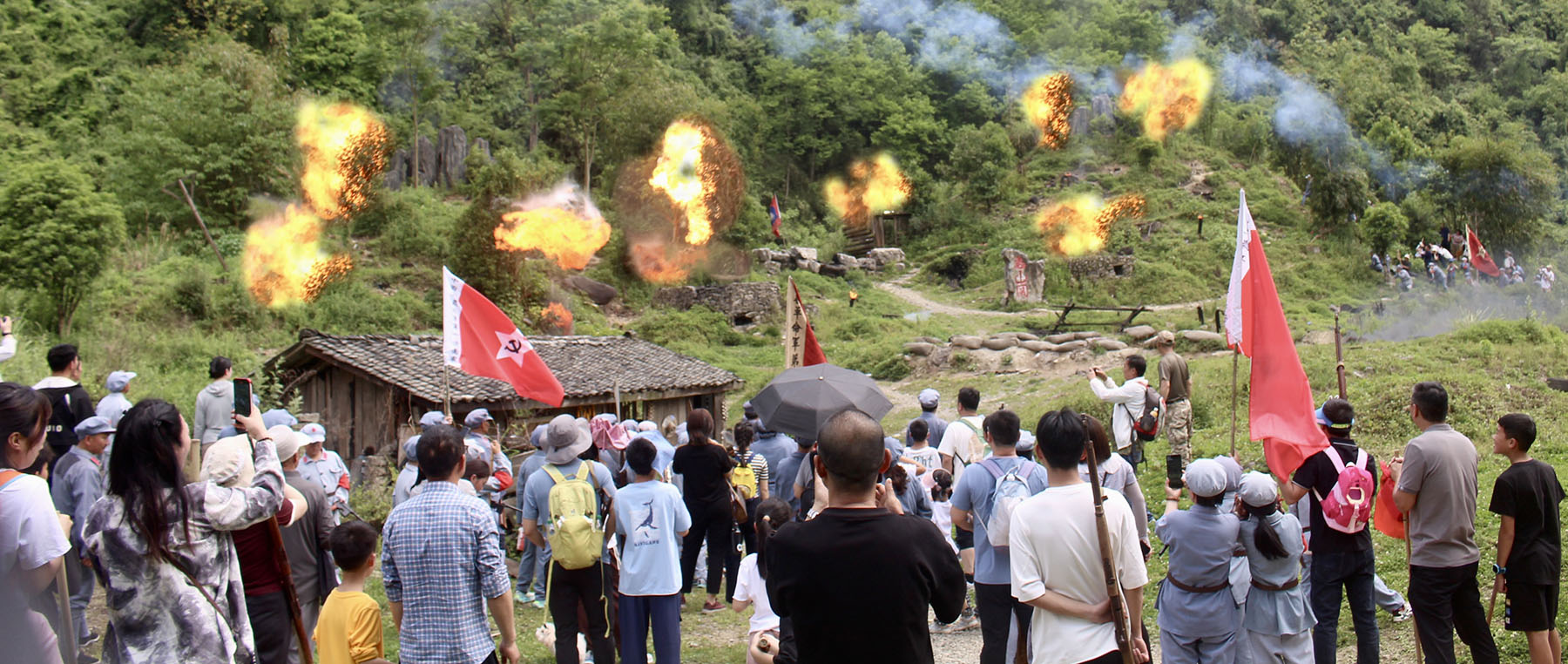
Today, this part of history is being told in innovative ways. The Great Turning Point, a large-scale immersive play about the Red Army, which is mainly set in Guizhou, has been performed at a theater near the original site of the conference since 2024. Audiences learn about the causes and effects of the conference and gain insights into the viewpoints of ordinary soldiers.
"Zunyi was a turning point in the history of the Long March, and we wanted to adopt a new way to showcase red culture to visitors," says Wang Liming, director of the marketing department of the company responsible for the play.
Wang Liming says the show adopts advanced theater technologies to create sound and visual effects. Its 360-degree rotating stage shifts between different historical settings, while one million liters of water beneath the stage is used to re-create iconic scenes including the Battle of the Xiangjiang River, the Four Crossings of the Chishui River, and the Crossing of the Jinsha River.
Yuan Dongtao, head of the tourism development department at Zunyi's culture and tourism bureau, says technology doesn't change the nature of red culture, but reconstructs the way it is showcased and enhances its attractiveness.
The performance has been staged more than 2,000 times, attracting over 800,000 visits, says Yuan.
Battle scenes
Besides immersion indoors, some experience programs extend to real historical sites. About 50 kilometers from the site of the Zunyi Conference, Loushanguan Pass witnessed two major battles during the Long March.
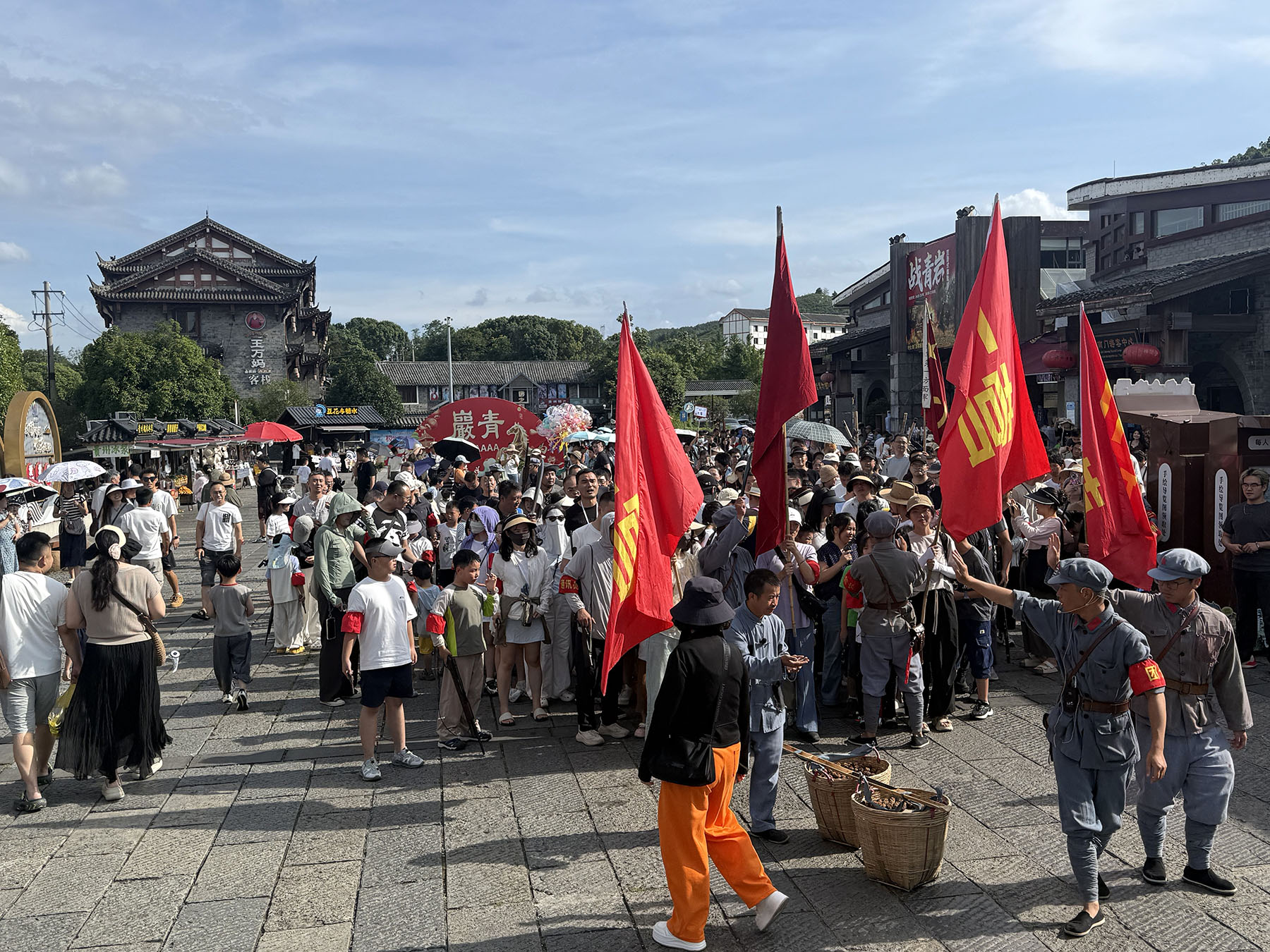
Today, visitors wait in line to get a ticket to "join" the battle through a large-scale performance depicting the Battle of Loushanguan Pass. The production originally featured more than 1,000 performers and later evolved into an interactive experience in which audiences can step into the shoes of soldiers who fought decades ago.
Yao Dihua, the operations manager of the Loushanguan scenic spot, says the original site of the Loushanguan battle was on the mountain, while the performance is carried out outdoors at the base. Wearing army uniforms and taking up rifles, tourists can experience up close the battlefield scene of flying bullets and billowing gunpowder smoke while following their "commanders" in pursuit of victory.
"It is far more absorbing than reading history textbooks. Dressed in the uniform and amid simulated gunfire, I could almost imagine what the Red Army soldiers went through decades ago," Jiang Jun, a 40-year-old visitor, says after joining the performance.
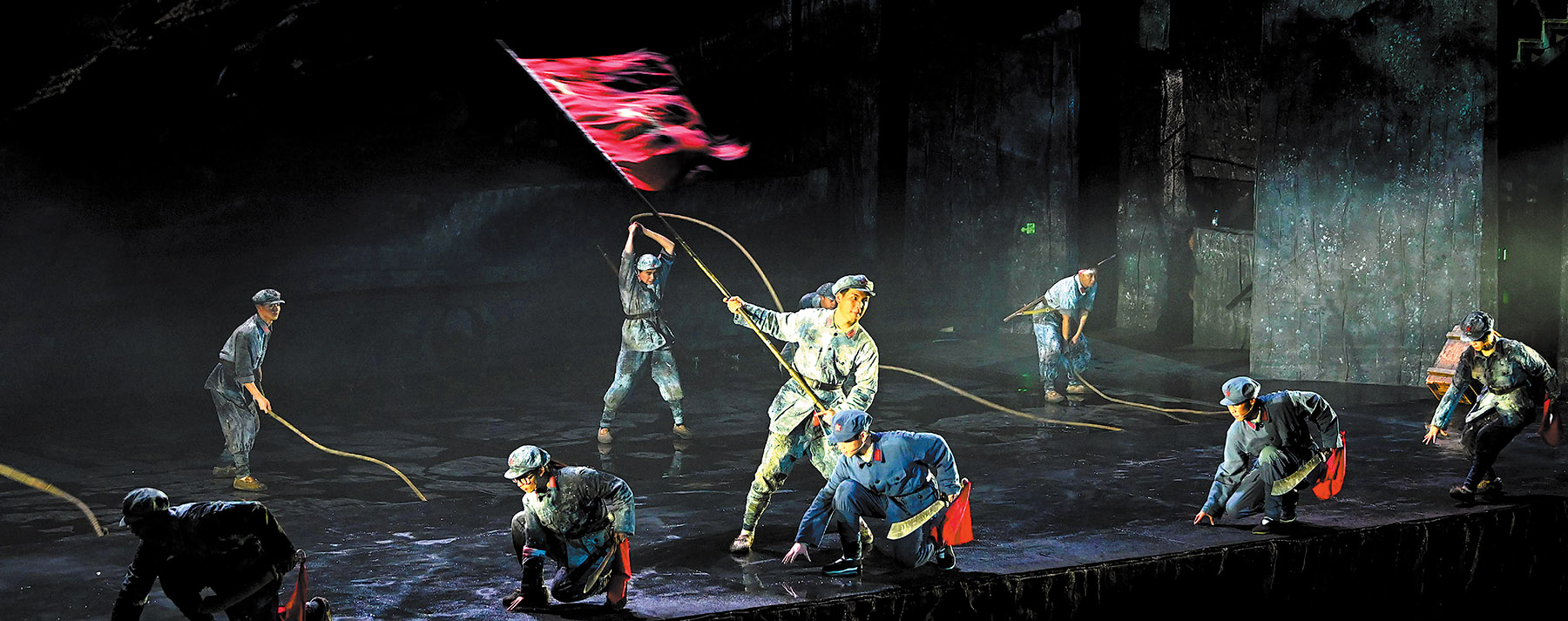
In another project at Qingyan ancient town in Guiyang, Yao's team developed another role-playing program allowing visitors to experience the Battle of Shizishan at Qingyan, a key rearguard action in April 1935 that covered the Central Red Army's southward advance during the Long March. People participating in the program can choose their characters and are given different tasks to complete.
"Museum visits build basic understanding, and these immersive activities foster deeper emotional connections with history," says Yao.
Wang Zhi'ou, of the "Red Banderole" museum, says, "Young people grow up in an era of highly visualized and digitized media, and they are accustomed to building their understanding through films, interactions and experiences.
"We don't need to require them to understand history the way older generations did, but we must make sure that no matter how expressive forms change, the spiritual core of history cannot be altered."
At the exit of "Red Banderole", there is a message wall recording people's handwritten feelings after experiencing the venue. Some express respect for the soldiers, some convey how they are moved, and others share the inspiration they gain. Wang Zhi'ou says this shows that visitors not only reflect on what happened in history, but also on their own connection to it.
ALSO READ: Following old and new connections
"This is the cultural transmission we want to see. The most important values embodied by the Long March — about ideals, faith, choices and perseverance — are still vital and should be passed on today," he says.
"That's why we hope our audiences, after gaining a better understanding of the past, can draw strength to walk toward their own future. If a young person, upon leaving our venue, begins to consider how their own path should unfold, I think we have done well in passing on red culture. That matters more than simply making them remember historical facts."
Contact the writers at wangru1@chinadaily.com.cn
