

Venues change evening outings with cultural heritage-themed goods, innovative produce, relatable puppets
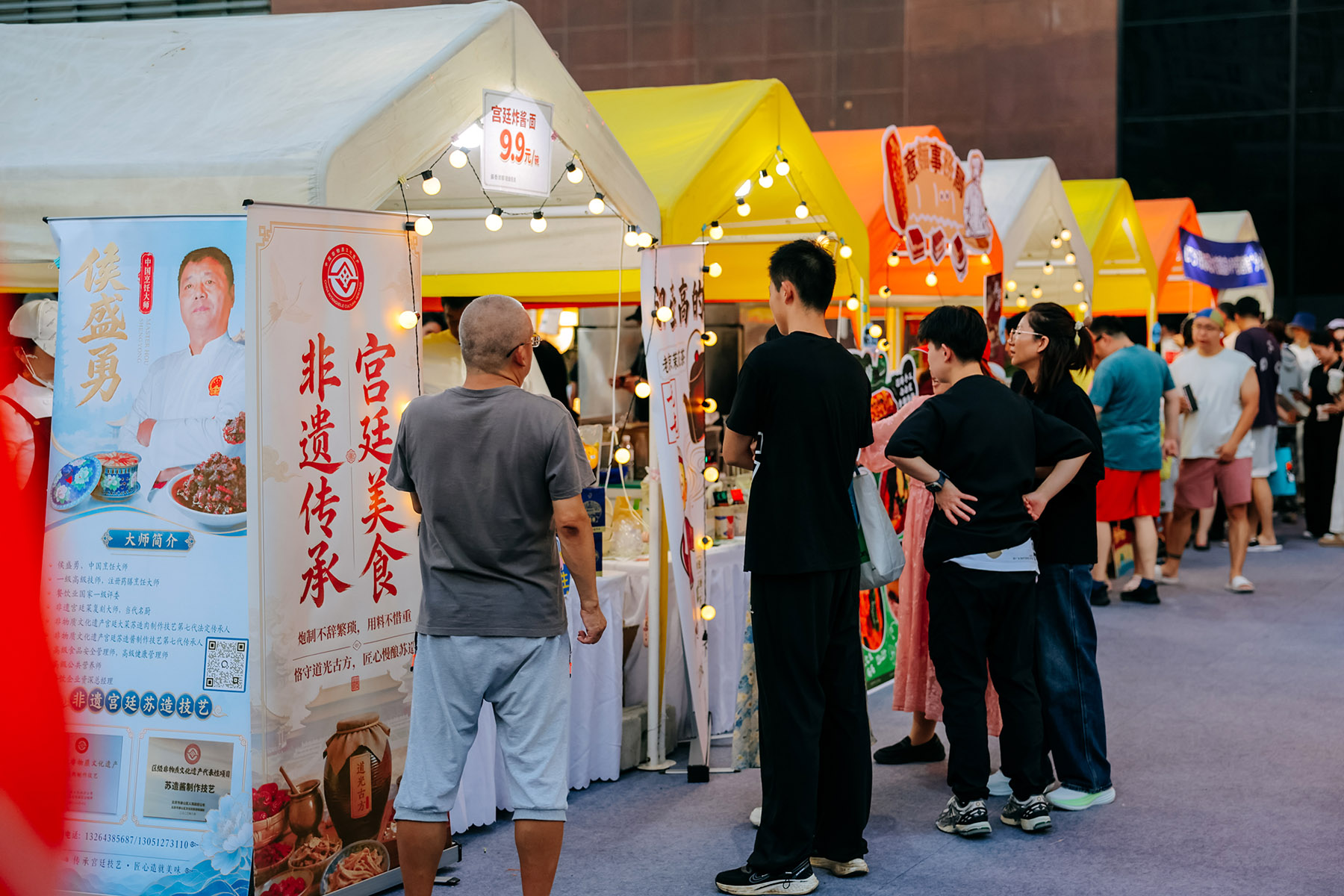
As dusk falls, people begin gathering at the outdoor plaza of DT51 shopping mall in Beijing. Hou Shengyong hands a bowl of zhajiangmian, fried sauce noodles, to a passerby. A sign reads: "Zhajiangmian made with suzao sauce — 9.9 yuan ($1.47) a bowl, with free refills."
Some customers ask whether it is traditional Beijing-style zhajiangmian. Others take a bite and wonder why it tastes different from the usual version.
The difference is the sauce. Hou is a seventh-generation inheritor of the traditional skill of making suzao sauce, a condiment that took shape during the Daoguang period (1821-1850) and developed into different variations.
Hou, who has researched suzao sauce for more than a decade, said it uses 28 kinds of spices and the soy sauce undergoes several stages of processing. Pork, beef or mutton can be used as the meat component, mainly to enhance the aroma and remove unpleasant smells, but the sauce determines the flavor.
"The sauce is the heart of zhajiangmian. No matter how well you prepare everything else, it won't work if the sauce isn't good," he said. Hou said that if he priced the noodles too high, many people would not try them. By keeping the price low, he can introduce the sauce to consumers before expanding through online sales and restaurant partnerships.
READ MORE: With 'smoke, fire and steam', night markets erupt into life
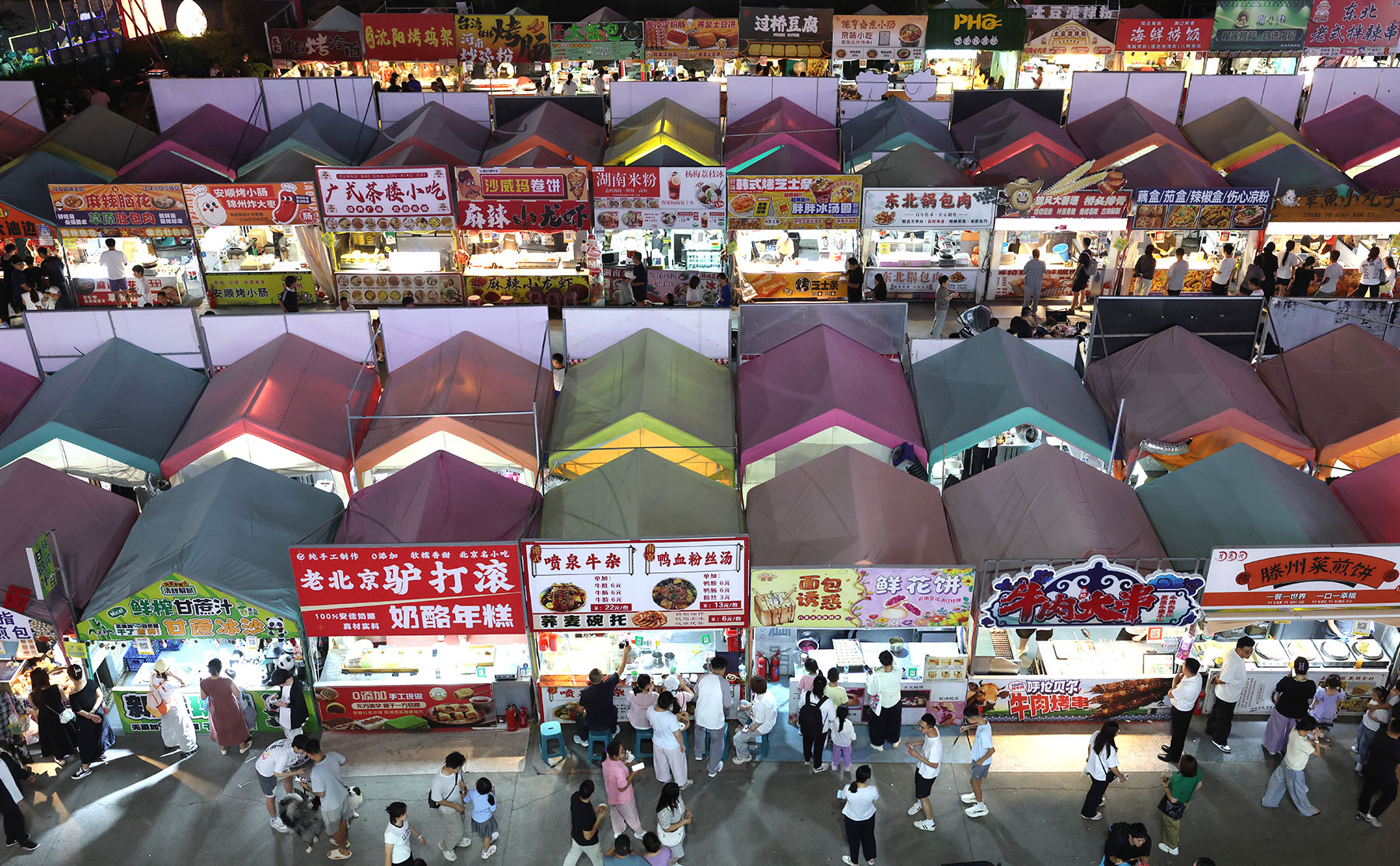
In Beijing, night markets are widening the experience of an evening outing. Food remains the focus of most, but gaining in prominence are time-honored brands, intangible cultural heritage, seasonal farm produce, creative goods, music, family activities and small businesses.
In other words, there is more on the menu than dinner. A night market can be a place to eat, shop, listen to music, bring the family or simply linger after dark. Part of the markets' appeal lies in that flexibility: Visitors can come for a meal, stay for a performance, pick up something for home or just spend time with friends without having to plan an entire evening around one activity.
For a city often associated with cold winters and a relatively quiet nightlife, the shift is notable. Policy support has helped drive the growth, while changing consumer habits are adding momentum. Traditional night markets are also taking on broader roles, bringing commerce, culture and leisure into shopping districts, communities and other urban spaces.
At the markets, a bowl of zhajiangmian introduces a traditional condiment; a winter-vegetable bun evokes a family memory; a shadow-puppet tattoo sticker engages young visitors.
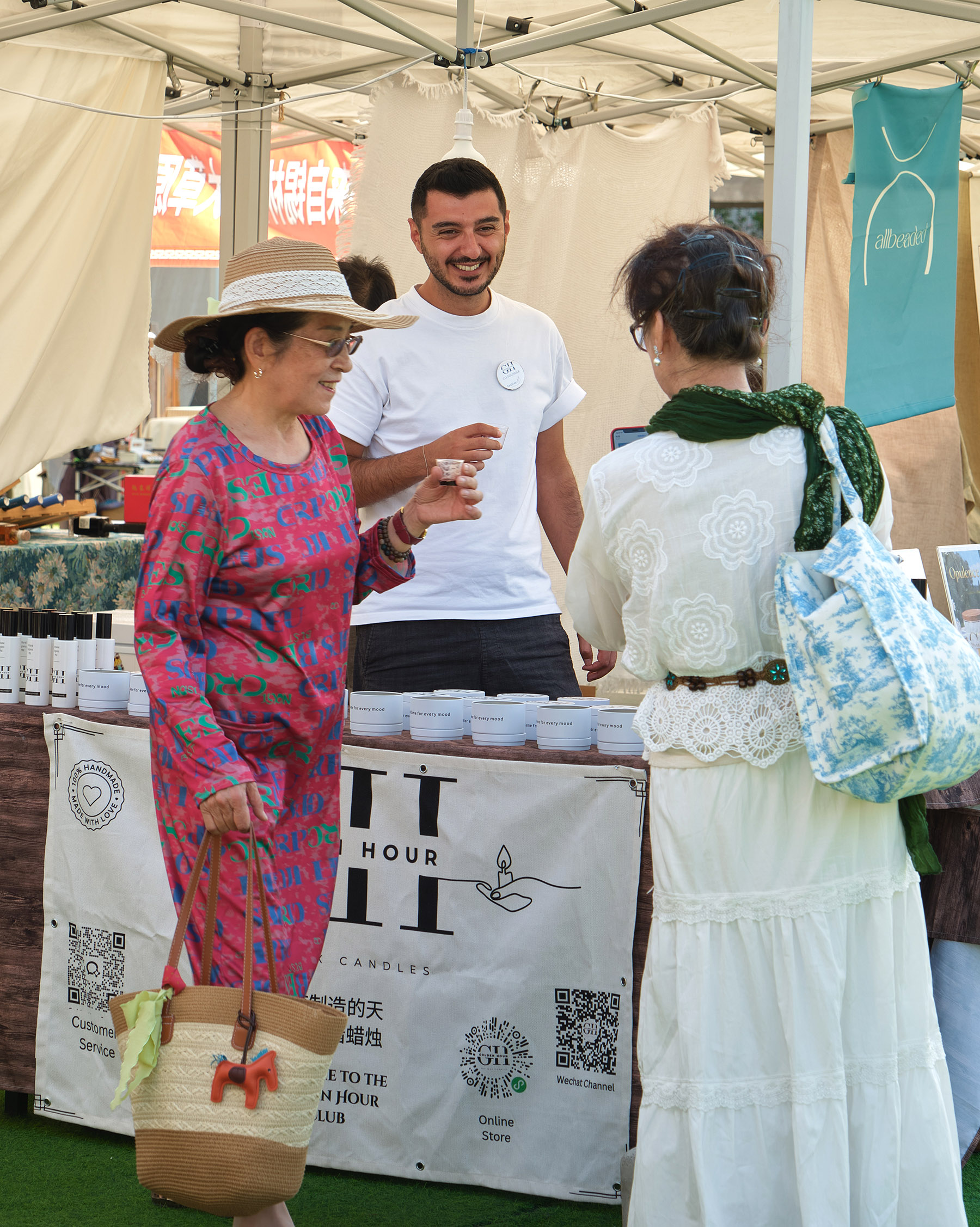
Soft, airy buns
In the Longfu Temple area, preserved-vegetable buns from Laijinyuxuan teahouse are reaching consumers in a new setting.
With 26 pleats, the buns are tall and resemble a small birdcage. The dough is fermented with a traditional starter, producing a soft and airy texture. The filling combines preserved vegetables with minced meat, creating a savory flavor with a hint of sweetness.
The bun is a signature snack of the century-old teahouse and is a fond food memory shared across generations.
Pei Wenzhe, brand director of Laijinyuxuan, recalls meeting an elderly woman accompanied by her granddaughter at the market. Seeing the buns, she began talking about her childhood and the times when someone in her family would ask a neighbor to buy them from Laijinyuxuan in Zhongshan Park. They would often share them with neighbors, the woman said.
Decades later, she was eating the familiar flavor again, this time with her granddaughter at the Longfu Temple market.
"Not everyone will make a special trip to Laijinyuxuan in Zhongshan Park," Pei said. "But while taking an evening walk after work or browsing a market with friends, people can get to know us."
At the Beijing Cocktail Festival, shadow puppetry added a pop psychology trend to make it relatable to a new generation.
The third edition of the festival brought together 110 bars from across the country and more than 30 food brands.
Amid cocktails, DJs and live music, Wang's Shadow Puppetry introduced MBTI-themed tattoo stickers. Myers-Briggs Type Indicator is a personality assessment based on questions about a person's preferences.
Dang Feihua, a fifth-generation inheritor of Wang's Shadow Puppetry, said intangible cultural heritage should not exist only in museums, exhibition halls and traditional cultural events. It was once popular at fairs and festivals, but today it needs new ways to connect with young audiences.
MBTI is popular with young people. It gives them a way to talk about themselves and provides a conversation opener. The faces, colors, clothing and patterns of shadow-puppet figures also convey identity and personality, Dang said.
"In the past, we used the shapes of shadow puppets to understand a character. Today, young people use MBTI to understand a person," he said.
Organic growth
Cultural access is only one part of the change. Another is how markets are beginning to think about their customers.
Compared with night markets filled with queues and constant noise, the Funstown organic market, held periodically in Beijing's Chaoyang district, is noticeably quieter.
During the summer months the market blossomed. After 5 pm, the temperature dropped and visitor numbers climbed.
"The heat during summer days often drove visitors away quickly; however, in the evening they were more willing to slow down, listen, and linger at different stalls," said farmer Huang Lili.
In the complex's Hey Town Plaza on a market day, seasonal farm produce, bread, desserts, tea and coffee, handmade objects, and pet products are arranged in rows. There are also secondhand goods exchanges, book-sharing activities, talks, a weekend communal table and pet adoption events.
Many visitors leave with a purchase. Some buy bread or vegetables; others stop to hear vendors explain how food is made or ask farmers about their growing methods.
Cai Jiaxi, who organizes the market, said it is part of Funstown's transition to full commercial operations and an attempt to develop its own brand.
"We felt that the park needed an event of its own," she said. "A market was a natural choice, but we wanted it to begin with things people genuinely use in everyday life — vegetables, food and household objects."
Vendors sell natural products, home cooking and lifestyle items and ideas, with about 50 to 60 stalls. Around 40 percent of the vendors have participated in all three organic markets held so far. Many farmers know their products well but have little marketing experience, so the organizers provide promotion and coordination.
"The farmers are usually in the fields or on the farms, and most of them are not good at marketing," Cai said. "What we can do is bring them here and help them meet the people who are interested in what they grow and make."
The organizers pay particular attention to whether visitors actually leave with purchases. "A market may not look crowded, but that doesn't mean it has no value," Cai said. "For us, what matters is how many people are willing to buy something and take it home."
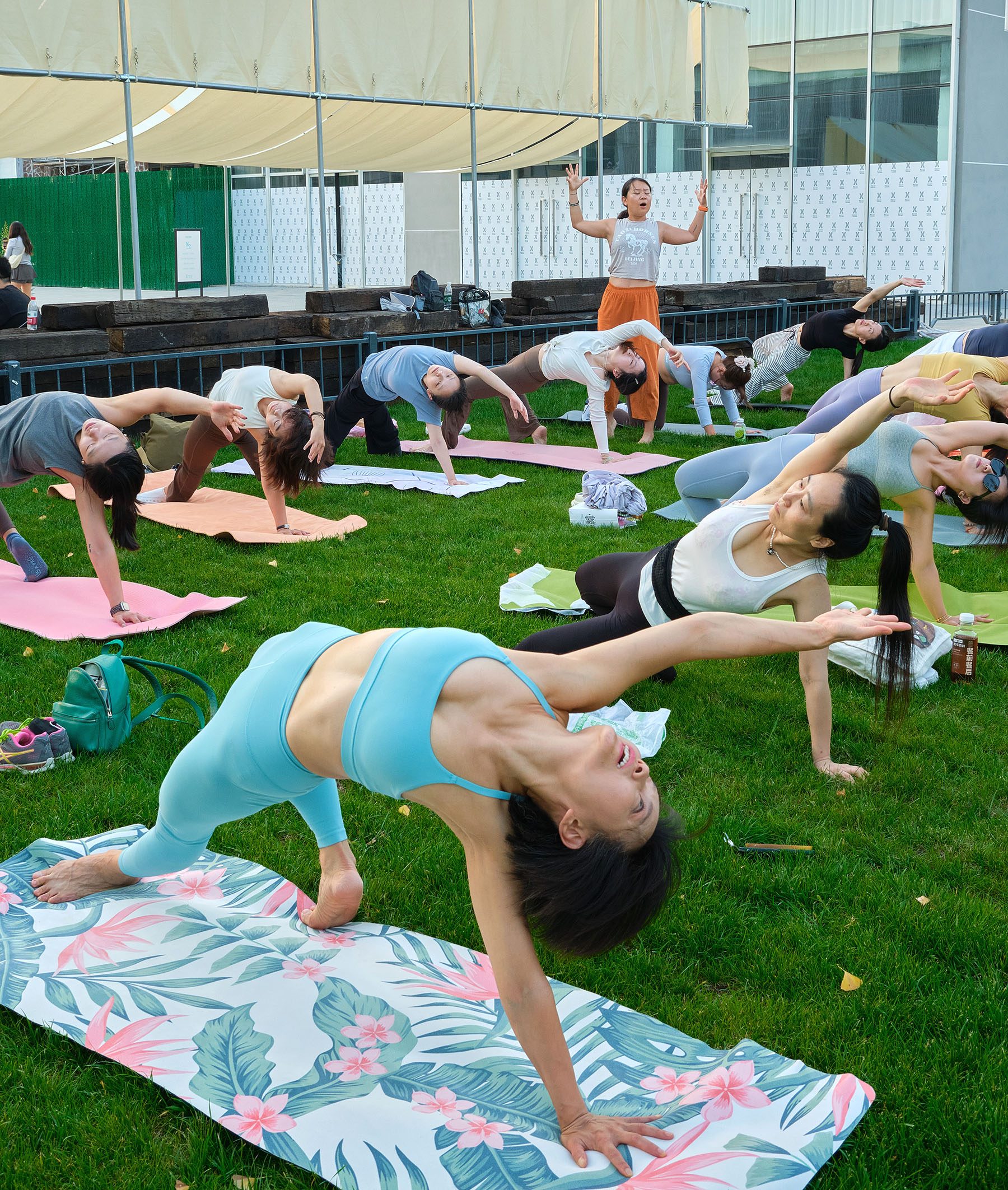
Fresh flavors
Li Yongchun, a vendor of Changbaishan ice wine from Jilin province, brought a dried tangerine peel hawthorn wine to the market to mark the brand's 90th anniversary.
She has taken part in events including the Sanlitun Craft Beer Festival and Yanjing Beer Festival and now spends many weekends moving between different markets.
"There's no point in looking only at how large the foot traffic is," she said. "What matters is whether people actually buy."
Li also uses markets to test new products. She has gauged the appeal of additive-free Changbaishan blueberries and baked buckwheat cookies, watching consumer responses before deciding what to bring next time.
"People already have plenty of food at home. I have to choose something distinctive," she said.
Huang runs a 2-hectare farm in Shunyi district, where she began growing vegetables after acquiring the land in 2015. She opened her farm to the public in 2024 to help people better understand how food is produced.
Huang takes seasonal produce to the organic market including lotus seeds and roots, pumpkins, winter melons, peanuts, corn, Chinese cabbage and radishes. The first time she took strawberry jam; the second time cherry jam; and the last time homemade winter-melon tea.
She often explains why naturally grown tomatoes may not be available in winter, or why Chinese cabbage may not necessarily be a summer crop. "People still don't know enough about farms and seasonal vegetables," she said.
For her, the market is also a chance to speak directly with consumers. "Some ask how vegetables should be cooked, while others are interested in ecological farming or share their own gardening experiences," she said. At one event, Huang met a retired agricultural official familiar with ecological farming, and the two talked for a long time.
The market has also led to collaborations among vendors. Huang plans to work with a company making environmentally friendly temperature-controlled tableware for cooking activities on her farm, and with a bakery to develop seasonal jams using produce from her farm. "The ingredients they need are exactly what we grow," she said.
Moon River
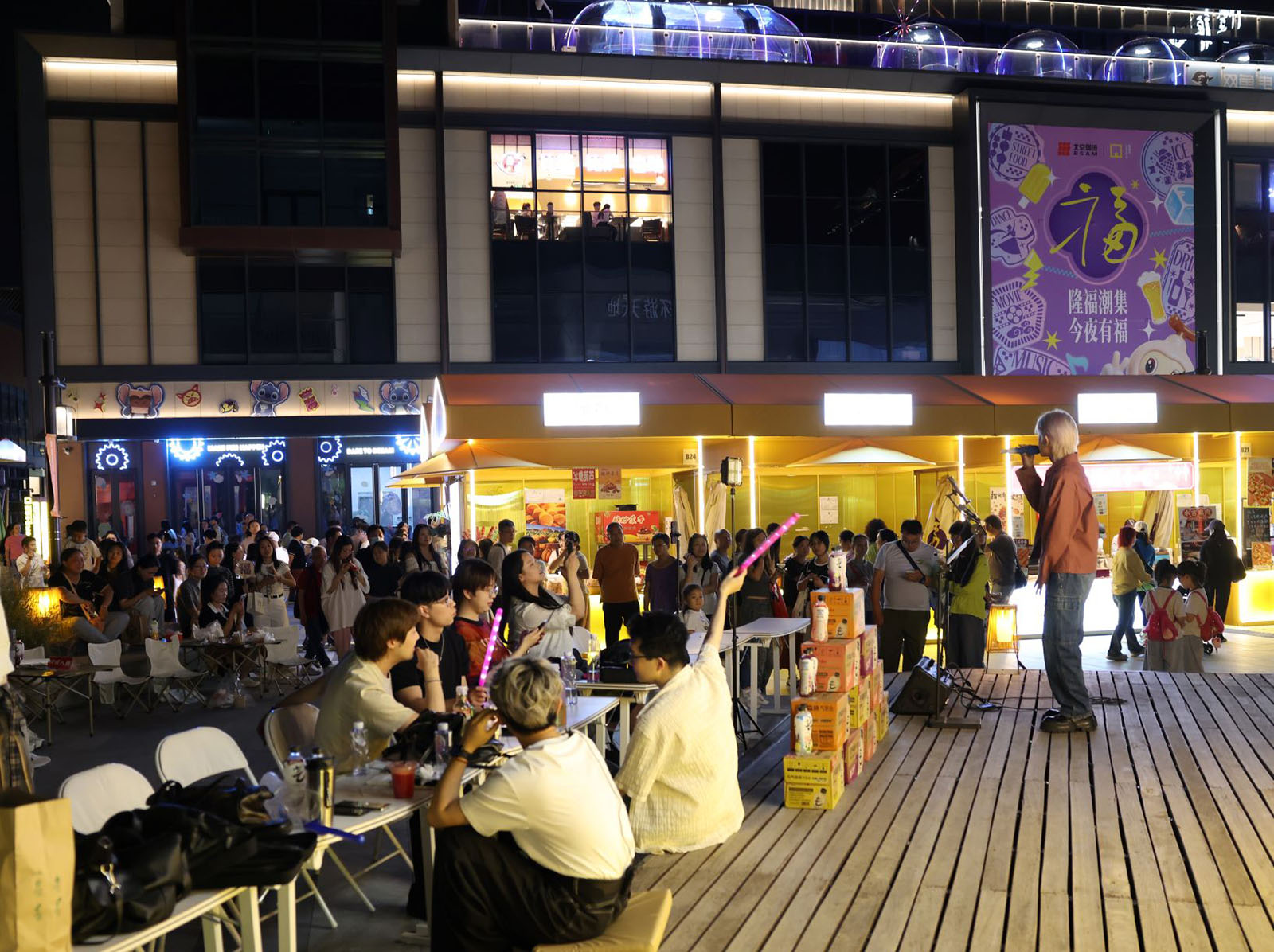
Each evening, Moon River Leisure Art Town in Tongzhou district fills with visitors, its food, creative and leisure areas drawing different groups into the same nighttime space.
In the food area, vendors serve grilled cold noodles, grilled chicken frames, fermented tofu, and other delicacies.
In the creative area, stalls selling books, handicrafts, trendy collectibles, vintage clothing and illustrations light up as night falls.
In the leisure area, children gather around a giant red rabbit sculpture. Music, outdoor cinema, children's activities and a charity section give families and young visitors reasons to stay longer. At busy stalls, customers can order through a mini-program, negating the need to wait in line.
The market screens vendors and limits overlapping categories. It monitors hygiene, pricing and product quality, adjusting the stall mix according to customer feedback and business performance.
Creative stalls outnumber food stalls, giving the market its "half food, half art" character. Daily, weekly and monthly rental options allow vendors to test products and build a customer base without committing to a long-term lease or investing in a permanent shop.
Tian Duoduo, 29, runs online stores on Taobao, Xiaohongshu and Douyin selling pet snacks. She started making pet food because her own dog was a picky eater.
At Moon River, she pays around 20 to 30 yuan a day for a stall. The position can be changed, and if the weather is bad, she does not have to come.
"How much I sell at the market isn't the most important thing. What matters most is whether I can get repeat customers," she said.
Pet owners can ask about ingredients and production methods, then continue buying products through her online stores.
ALSO READ: Beijing's old book market revived by new wave of collectors
In the food area, cocktail vendor Chen Xiuping is on her second day at the market. She and her husband had waited six months for a stall.
Chen works in sales during the day. In the evening, she and her husband run their small cocktail stand.
"My husband usually comes first," said the 39-year-old. "He gets here after 4 pm to set everything up, and I come after work, around 5 pm, to start mixing the drinks." They usually stay until 11 pm.
The drink recipes came from a friend who runs a cocktail bar. Chen focuses on preparing the drinks and keeping the stall clean, while her husband handles the accounts, apps and logistics. "I'm mainly responsible for the drinks," she said. "He takes care of the other things, so the division of work is quite clear."
She has noticed that while many vendors sell beverages at night markets, relatively few offer alcoholic cocktails. "There aren't that many stalls selling drinks with alcohol," Chen said. "So we thought we could try this and see what kind of response we get."
Chen's son is a senior high school student. "We work during the day, then come here in the evening. It's tiring, but it's another way to earn some money," she said.
Contact the writers at liyingxue@chinadaily.com.cn
