

Raising equity gives firm longer-term funding; sends vote of confidence
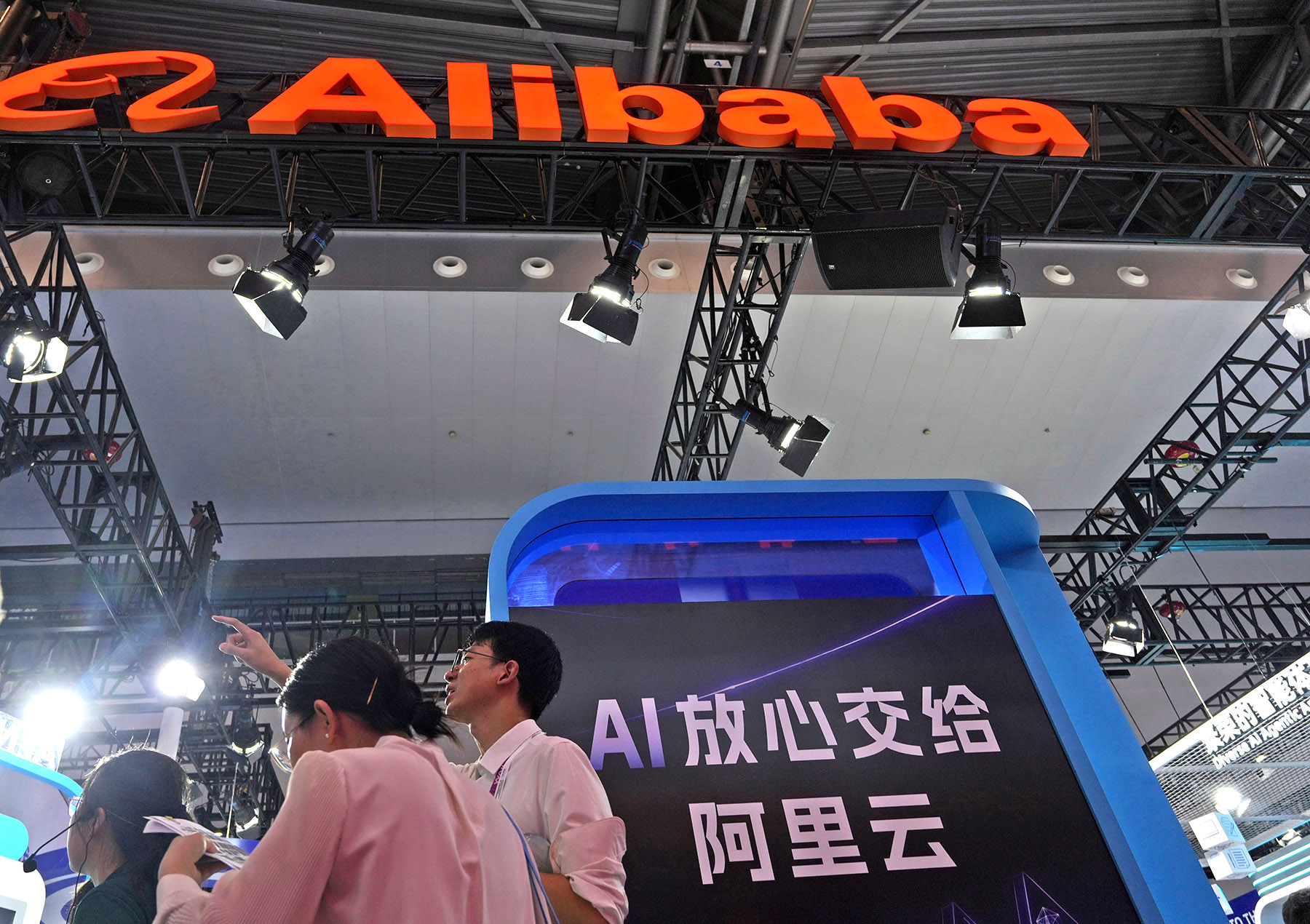
Alibaba Group is seeking to raise about HK$80 billion ($10.2 billion) through a new share placement in Hong Kong, which, if completed, would become the world's third-largest primary follow-on offering this year, behind only those placed by Alphabet and Intel.
The placement, announced on Sunday, would mark Alibaba's first new share sale since its Hong Kong listing in 2019. More striking is where every dollar raised is headed — the company plans to use 100 percent of its net proceeds to strengthen its artificial intelligence capabilities, including expanding and upgrading AI infrastructure.
Several sources close to the matter told China Daily that the offering was oversubscribed within an hour of its launch. One source close to the company disclosed that sovereign wealth funds and some long-term institutional investors showed keen interest.
READ MORE: Alibaba’s largest HK share placement a 'double-edged sword'
Right after the move, Alibaba's Chairman Cai Chongxin and CEO Wu Yongming bought a combined about HK$120 million of Alibaba shares.
Guo Tao, deputy director of China Electronic Commerce Expert Service Center, said: "Alibaba's placement also has benchmark significance for China's AI industry. Alibaba's continued expansion in AI capital spending could accelerate development across China's domestic AI supply chain, from AI chip adaptation and intelligent computing centers to liquid-cooling systems."
As the AI race shifts from a technology contest into a "capital endurance race", raising equity gives Alibaba longer-term funding while sending a vote of confidence through the broader sector, Guo said.
The aggressive spending comes as AI emerges as an increasingly important growth engine for Alibaba.
The company reported revenue of 268.95 billion yuan ($37.5 billion) for its fiscal first quarter ended June 30, with net profit attributable to shareholders of 10.54 billion yuan.
Alibaba CEO Wu Yongming told analysts after the earnings release that annualized recurring revenue from AI-related products was expected to approach $10 billion in the next quarter. AI-related product ARR had already surpassed 49.5 billion yuan in the first quarter, Wu said.
Jiang Han, a senior researcher at market consultancy Pangoal, said: "Alibaba's organizational restructuring was effectively designed to build a vertically integrated, full-stack AI operation, lowering transaction costs and speeding the deployment of new technologies. The improvement in commercialization returns mentioned by Wu is a direct monetization of that full-stack capability." Jiang added that Alibaba's AI investment was beginning to move from simply "burning cash" toward generating its own financial returns.
Alibaba's fundraising also comes as the AI sector's capital requirements are ballooning globally, pushing companies to seek ever larger pools of financing.
ALSO READ: Chinese AI models gain broader favor overseas
Anthropic confidentially filed for a United States' initial public offering in June and could list as early as October, with a targeted valuation of as much as $2 trillion. OpenAI is also targeting a potential fourth-quarter listing, while its valuation in private markets stands at around $850 billion.
Alibaba's HK$80 billion placement puts China's largest tech firms squarely into that global capital race. But raising more money does not remove the biggest uncertainty hanging over the AI boom — whether commercial returns can keep pace with the extraordinary amount of investment.
Investors are already showing some caution. Alibaba's US-listed shares closed at $119.34 on Monday, down 8.57 percent, while its Hong Kong-listed shares ended at HK$112, down 8.54 percent.
"The biggest risk investors need to watch is not that AI fails, but that the pace of AI commercialization fails to keep up with capital spending. In the end, this competition will not be about who spends the most. It will be about who can make returns on AI investment exceed the cost of capital first," Jiang added.
Contact the writers at chengyu@chinadaily.com.cn
