

Rapid response organized to capture serpents flushed by floodwaters into rural villages
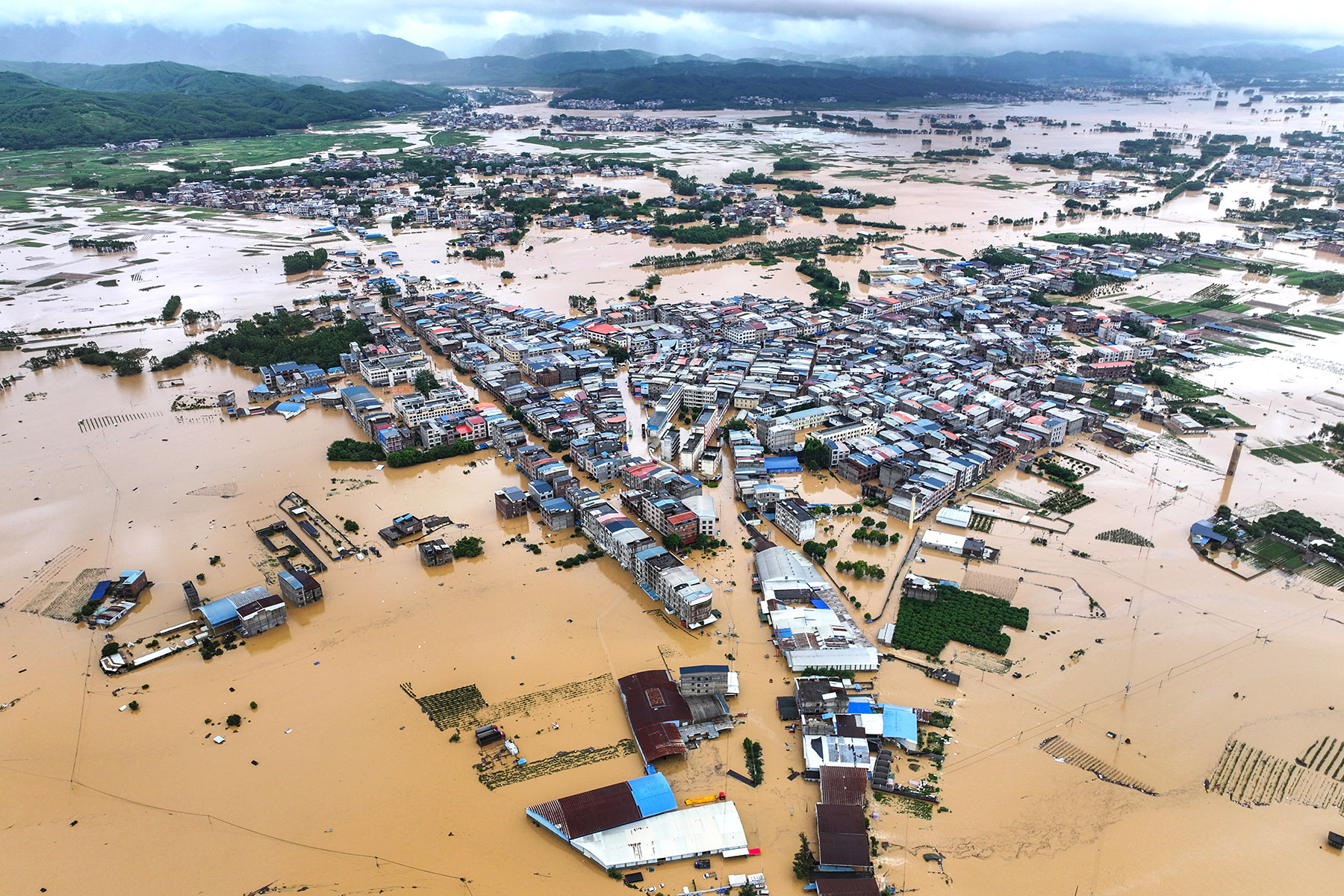
As floodwaters receded and the arduous work of post-disaster reconstruction began, an equally urgent and perilous task unfolded in the Guangxi Zhuang autonomous region last month.
Residents near Hengzhou city, Nanning who had survived the flood faced an unexpected reptilian threat.
When the levee of Liulan reservoir gave way under the onslaught of Typhoon Maysak, the torrential floodwaters destroyed a local snake farm downstream in Dengxu village of Yunbiao. An estimated 800 to 900 snakes including venomous cobras, king rat snakes and non-venomous rat snakes were released into the murky waters.
READ MORE: Guangxi floods hit jasmine sector hard
"Clearing the mud is just a matter of shoveling, but snakes are different. You don't know where they're hiding, or when they might emerge," one villager said.
At least two residents of Dengxu village were bitten by snakes after the flood.
Middle-aged woman Lu Cuilian was bitten by a cobra that was swept into her home by the flood. Her nephew told reporters that the snake first bit her on the neck, and as she tried to pull it away, it bit her arm.
With roads cut off by the flood and the nearby clinic's antivenom supply washed away, she could not reach a hospital in time. She held on for two days, and then died.
The following day, an elderly man surnamed Qin was bitten but survived after being sent to the hospital and receiving antivenom.
The village quickly organized a special patrol team, while multiple official and volunteer snake-catching squads scoured the area, armed with tongs, collection bags and headlamps.
Containing threat
The snakes' escape terrorized the local populace, who for days were afraid to go out at night and constantly scanned their surroundings while cleaning.
In the wake of the snake escape, local authorities moved swiftly to contain the threat.
Under the coordination of Guangxi regional emergency headquarters, regional, municipal, and county-level health commissions implemented a multipronged response encompassing snakebite treatment, hazard checks, and public awareness campaigns.
Experts from across the region and Nanning were sent to assist with snakebite treatment in Hengzhou, and the local hospital's antivenom supply was increased. A special emergency green channel for snakebites was established to minimize treatment time.
Local health authorities also conducted training for front-line medical staff on wound cleaning, proper treatment protocols, rapid assessment and pre-hospital emergency responses.
Meanwhile, officials issued safety advisories through village broadcasts, WeChat groups, and door-to-door notifications, urging residents to avoid nighttime outings, steer clear of grassy areas, ditches, and flooded zones where snakes might hide, and take precautions both indoors and outdoors.
Wu Zhi from the Dengxu village committee told local media that more than 10 villagers from neighboring hamlets that were not affected by the flood had spontaneously formed a civilian snake-catching team.
They ventured into affected areas, going door-to-door to catch snakes and prevent further injuries.
According to Wu, the team members mainly used fishing tools and electrofishing equipment for their operations.
The village committee also issued notices, warning residents without professional skills not to catch snakes themselves and to report sightings to authorities.
Local media outlet "Huaxiang Yinxiang", a WeChat official account of the Hengzhou converged media center, published an emergency guide for snakebite prevention and treatment during the flood.
It warned that the lingering floodwaters had forced snakes like kraits, green pit vipers, and cobras to move into homes, stairwells, and corners, and advised against using incorrect first-aid methods like burning, cutting, or sucking venom from the wound.
The local forestry bureau mobilized its own snake catchers and volunteers, according to the Beijing News.
One local team of seven to eight people reportedly caught over 2,000 snakes in just two days, most of them non-venomous rat snakes. A team member surnamed Zhu said after the flood, snakes mostly hid in corners.
Twenty-a-day man
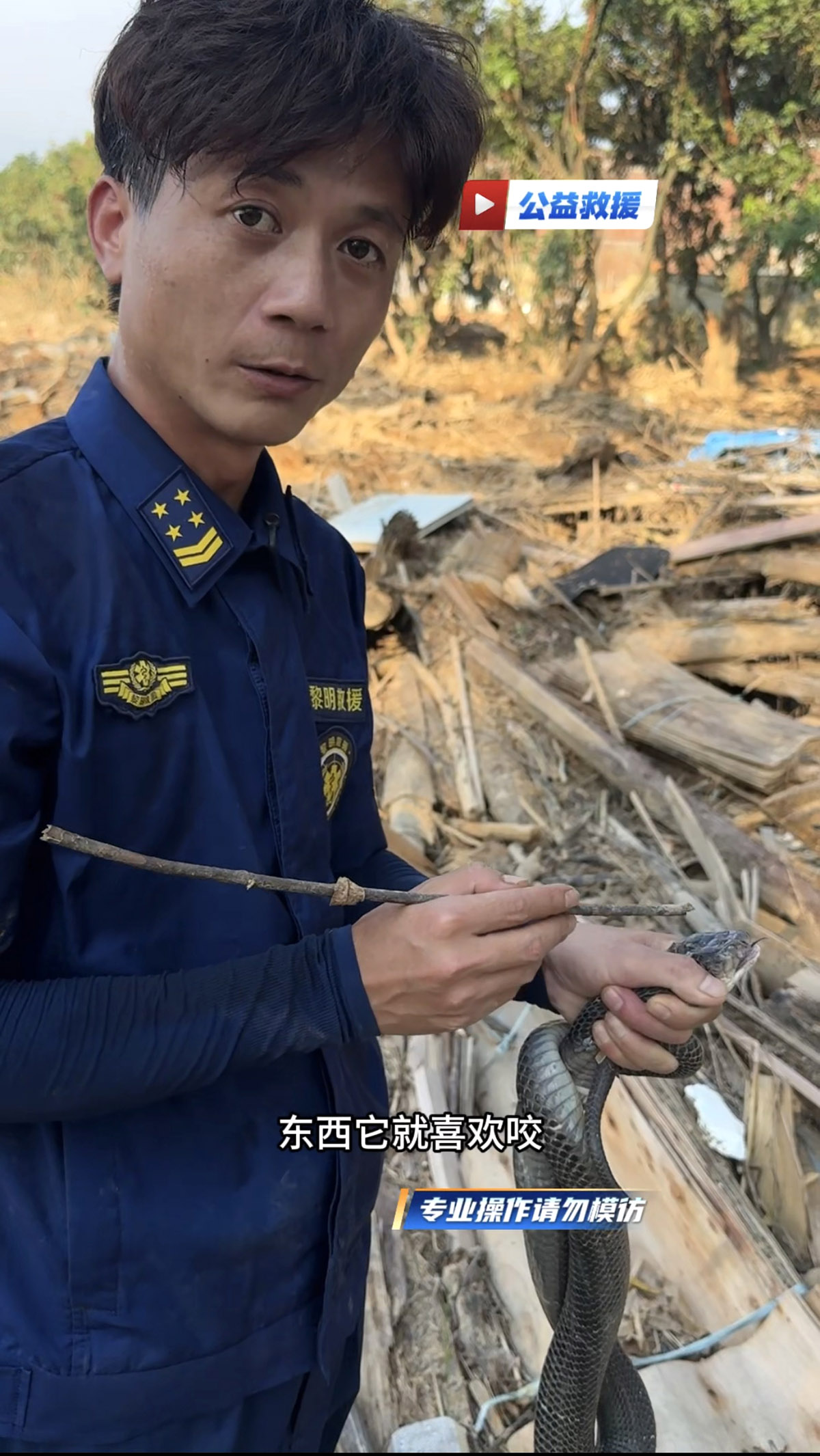
Among the snake catchers, one volunteer stood out — Chen Peixin, a 33-year-old with more than 600,000 social media followers.
For him, catching a snake with his bare hands is as natural as picking up a rope — he grabs the tail with practiced ease and bags it safely.
Driven by a sense of duty, Chen traveled over 1,000 kilometers from his home in Zhangzhou, Fujian province, to Hengzhou. He spent about two weeks there, catching an average of 20 snakes a day.
"Snakes aren't as terrifying as people imagine," Chen said.
"After the flood, some die. A surviving snake's first instinct is to hide and stay alive," he said, adding most snakes attack only when they feel threatened or provoked.
Chen, a member of the Zhangzhou Liming rescue team and a popular science blogger known as "Yuri" online, first learned of the crisis through news reports. "I'd never been anywhere else to catch snakes before," he said. "But when I saw what was happening, I couldn't just stand by."
He offered to help through his social media account. The response was overwhelming. He received numerous messages and over 10,000 likes.
On July 11, he and an assistant drove for more than 10 hours to Hengzhou, the world's largest jasmine planting base, which had been hit hard by the floods.
Upon arriving in Yunbiao town, he immediately began scouting for snakes by rivers and in jasmine fields, which were now largely destroyed. The small shelters scattered in the fields had become prime hiding spots for snakes.
Following local leads, he focused on Wuzhai village, where there was another snake farm. "Only when I got there did I realize how serious it was," he recalled. "I made up my mind: catch as many as I could, and do everything possible to help the villagers."
Back home, his rescue team usually handles one snake at a time, but this time, there were hundreds, or possibly thousands, Chen said.
The work was grueling. Wading through thick mud in boots, he had to clear debris, not just wood and bamboo, but vines, thorns, and broken tiles, before he could even get to the snakes.
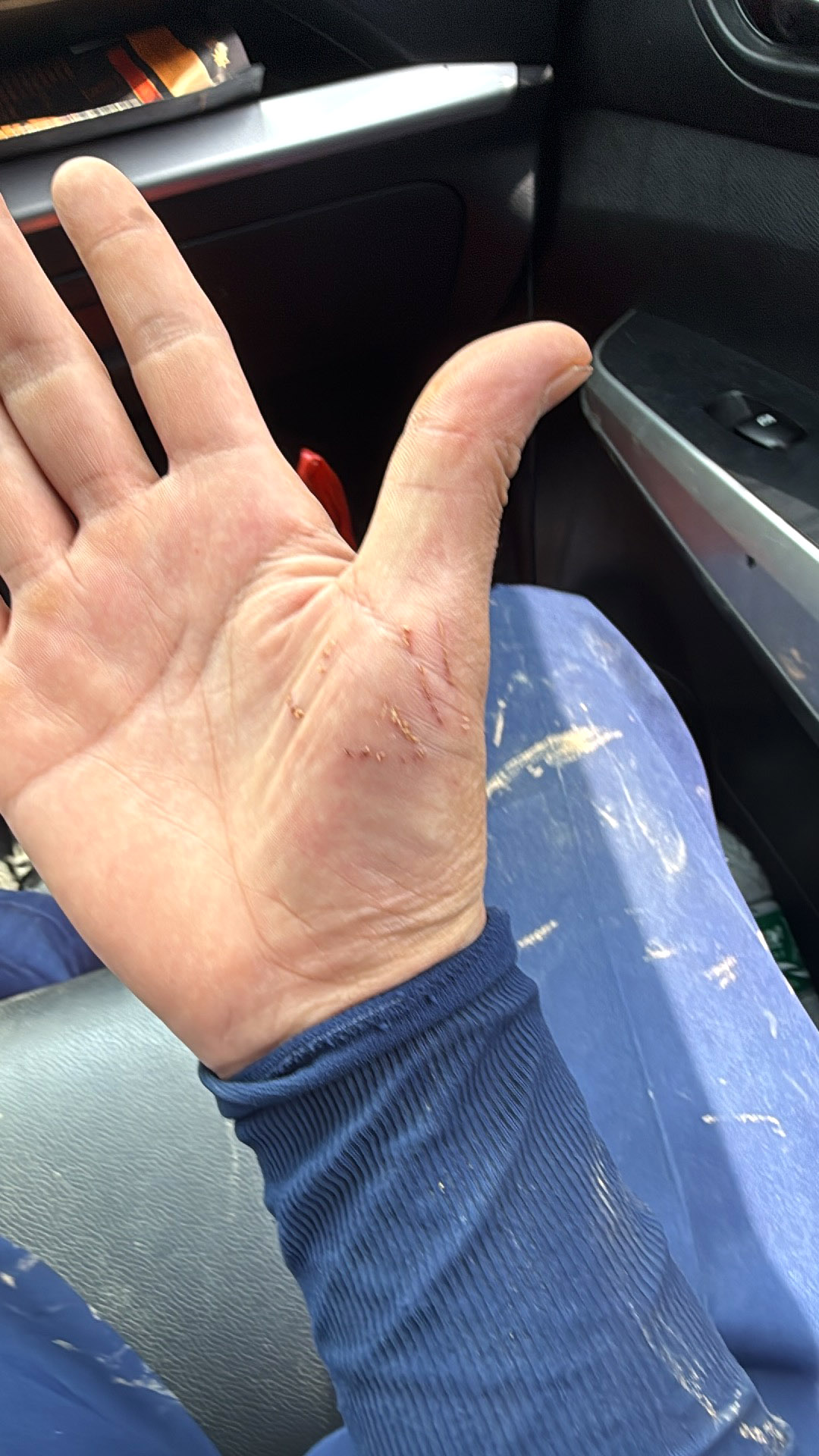
His mission had an early setback when a thorn pierced his left hand. He initially ignored it, but the wound became infected. "The bacteria in the floodwater caused it to swell, and I couldn't bend my thumb. It's impossible to catch snakes with one good hand," Chen said.
He was forced to return home to recover.
But his followers were not willing to let the effort end. After he confirmed he would return, they raised over 3,000 yuan ($445) to support his trip back. His rescue team also contributed.
Four days later, on July 17, Chen was back in Yunbiao.
One video he posted on July 18, a five-minute compilation of his work, garnered over 440,000 likes and 40,000 comments.
"So snake catching is as easy as catching mud fish, just grab the tail and shake it!" one user commented, joking he wanted to try it himself.
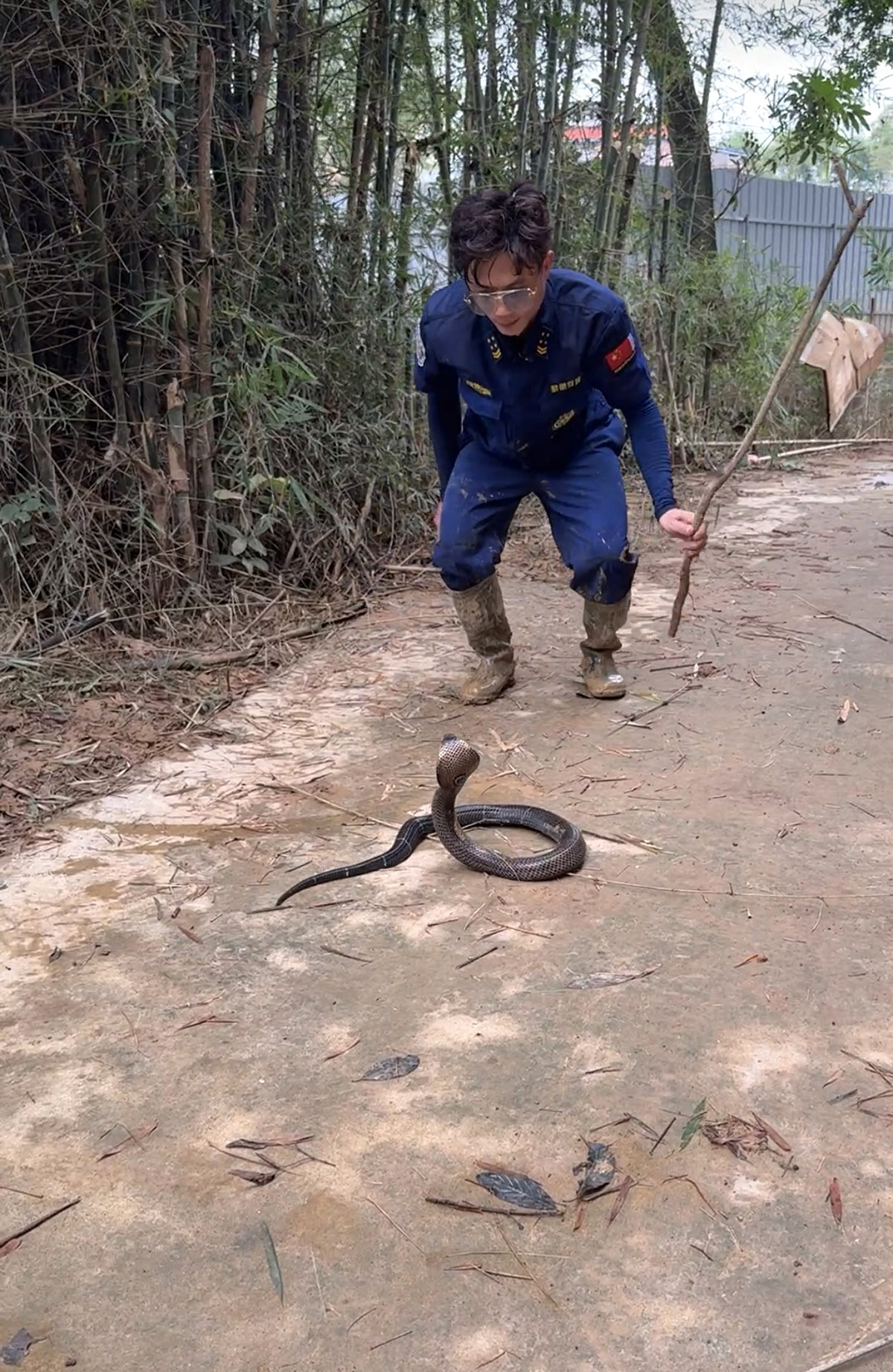
Others empathized with the cameraman: "The cameraman's heart was saying 'Stop asking me to get closer'."
Chen's first assistant declined to return, so this time he brought along his longtime friend Lai Yanquan. Lai admitted he was scared the first time he saw so many snakes. It took several days for him to even dare to film close-up.
Chen's biggest catch was a 2.5-kilogram cobra, which he found in a greenhouse.
Many online commenters urged him to wear protective gloves, but Chen said bare hands are essential for speed and dexterity. "Gloves get muddy and slippery; they affect my feel," he explained.
To him, the most dangerous part of the hunt was not the confrontation, but the "ambush".
In one instance, while pursuing a cobra in a cluttered corner, he was surprised by two more that suddenly rose up, staring straight at him.
Fortunately, they didn't all attack at once, and Chen managed to catch them one by one. "If they all attacked at once, I wouldn't be afraid either," he said. "I'd just tap their heads."
For Chen, the most important tool isn't technique, but staying alert and composed.
The intense physical work, in Guangxi's high temperatures, took a toll. "Several times I almost got heatstroke," he said. "Only when I sat down to rest did I realize how exhausted I was."
He would take a dose of huoxiangzhengqi water, a traditional Chinese herbal remedy for heatstroke, and press on.
During his time in Hengzhou, Chen was bitten only once, by a non-venomous rat snake.
Chen spent more than 10 consecutive days catching snakes in Hengzhou, moving from village to village.
At one school, he captured over 30 rat snakes, which are non-venomous. However, he caught even more cobras, each about 1.5 meters long and weighing around 1 kilogram.
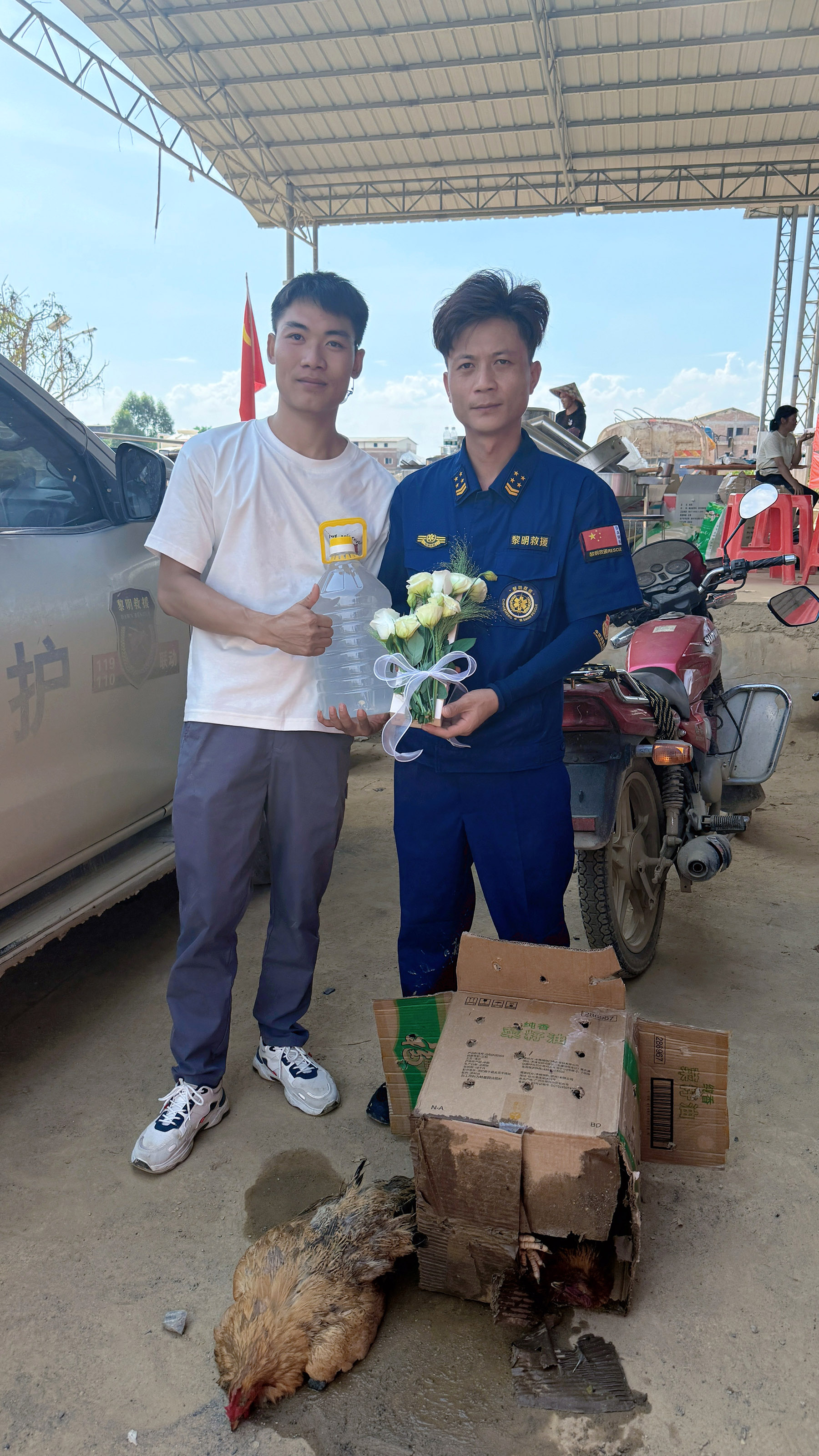
Before his departure on July 29, Chen livestreamed online. Some locals came to present him with homemade wine, chickens, gifts and banners expressing gratitude.
"The villagers are so warmhearted. It made me feel that my efforts were truly appreciated," he said, adding that he would definitely come back for a visit if he had the chance.
Farming wake-up call
Guangxi, which is the world's largest source of snake raw materials, had over 30 million snakes in captivity as of 2025, accounting for 80 percent of the total snake farming in China. Hengzhou is one of the three major snake farming counties in the region, according to the Beijing Youth Daily.
In Hengzhou, species like cobras and rat snakes are raised primarily for their medicinal and cosmetic value.
A local breeder surnamed Huang, who has 16 years' experience in the industry, told Jiupai News that snakes are kept in temperature-and humidity-controlled places fitted with wire mesh. Escapes only occur when floodwaters destroy the structures, Huang said.
"After the flood, many farmers' snakes were drowned. Only a very small number escaped," she said.
The incident has drawn renewed attention to the vulnerabilities of snake farming during extreme weather events.
Huang Song, a professor of ecology at Anhui Normal University, told CPPCC Daily that while current industry access policies are relatively well-regulated, flood safety risk assessments for snake farms have long been neglected.
He recommended that farm site selection be incorporated into a flood risk assessment framework, emergency containment plans for extreme weather events be established, and that post-disaster public education on snake avoidance be strengthened to enhance people's awareness of proactive self-protection.
Xu Xudong, a member of the National Committee of the Chinese People's Political Consultative Conference and dean of the school of life sciences at Central China Normal University, told CPPCC Daily that the convergence of natural disasters and specialty livestock farming poses new challenges to the biosafety and public health emergency response systems.
"For venomous snake farming and other specialty livestock operations, we cannot simply manage them as small-scale industries," he said.
He recommended they be registered with authorities responsible for emergency response work, public health, and ecological and environmental protection. "Risk assessments should be conducted at the outset of operations, and they should receive supervision, guidance, and services throughout the farming and management process," said Xu.
Contact the writers at zhangxiaomin@chinadaily.com.cn
