

The road to Jinshanling sets the pace for a festival among the mountains that unfolds without hurry, Chen Nan reports.
There comes a moment, somewhere after the high-speed train leaves Beijing behind, when the landscape begins to change. High-rises give way to rolling mountains, and phone notifications lose their urgency. The road narrows and winds toward Jinshanling, where the traffic ends and the valley begins.
Tucked into the mountains of Luanping county in Chengde, Hebei province, Aranya Jinshanling, about a two-hour drive from Beijing, has emerged in recent years as a mountain retreat, offering visitors sweeping views, tranquil landscapes and an escape from the pace of urban life.
For the founders of the Echo Valley Music Festival, to be held at Aranya Jinshanling from Aug 21 to 24, the journey is more than a way of getting there. It is the festival's opening movement.
"The process of getting here is already part of leaving the city behind," says the festival's artistic director and founder, pianist Shi Boyang. "By the time you arrive, you've already started listening differently."
That idea — slowing down before the music even begins — lies at the heart of the new chamber music festival, set amid the mountains of Jinshanling.
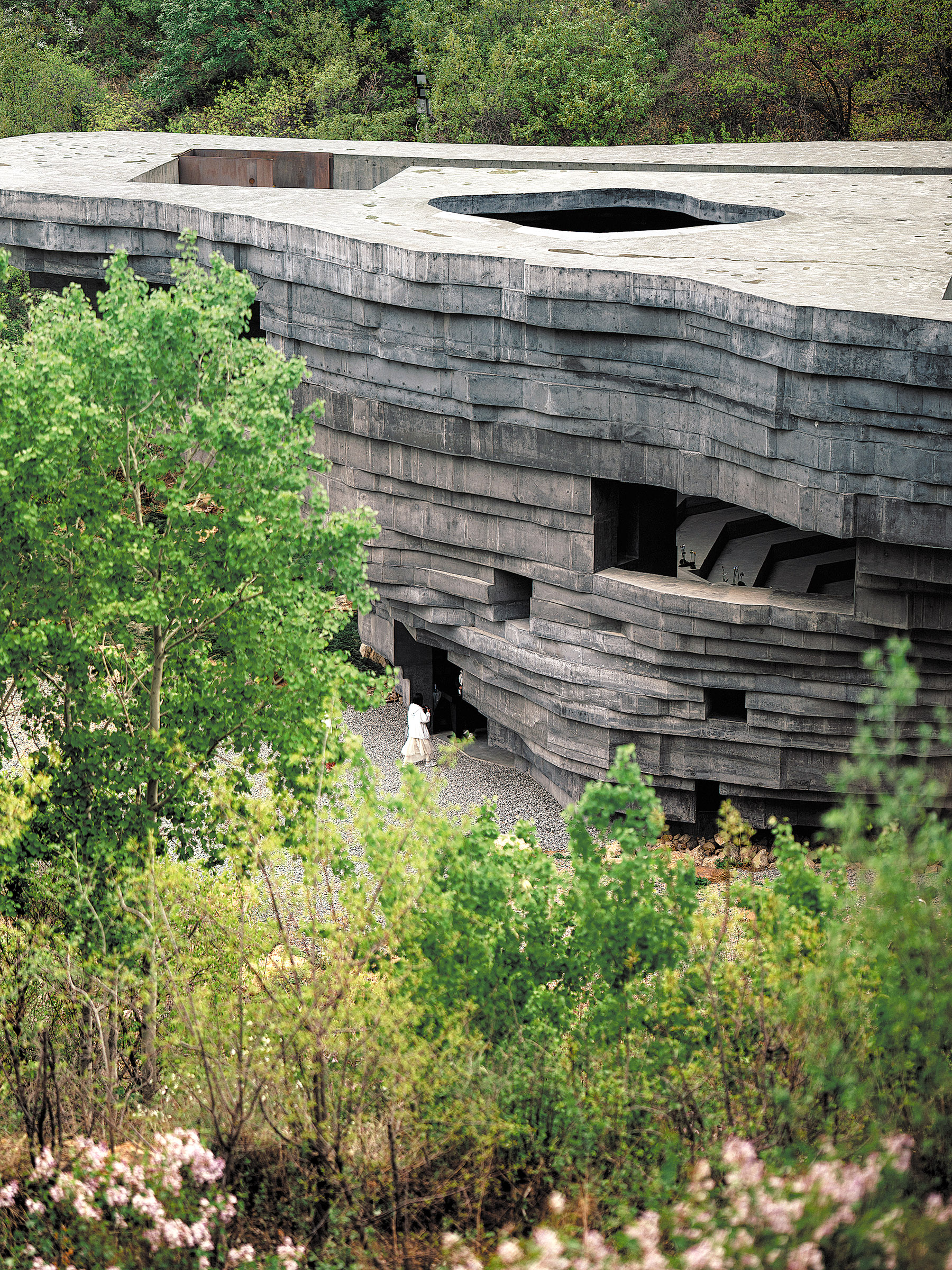
Its centerpiece is the Chapel of Sound, where four evening concerts will be held. Nestled in the valley and designed to resemble a weathered rock formation, the concert hall opens toward the distant mountains, blurring the boundary between architecture and landscape. Over four evenings, the festival unfolds like the valley itself, tracing a journey from awakening to light, from echoes to resonance. Each concert stands on its own, yet together they form a single artistic narrative.
The idea has been quietly taking shape for years.
While studying in Germany in her early 20s, Shi attended music festivals in small villages far from major cities. Reaching them often required long train rides, bus transfers or winding mountain roads. Yet, that remoteness was precisely what made them memorable.
People stayed for days. Musicians wandered into cafes after performances. Audiences lingered long after the applause had faded.
"After one especially nerve-racking concert, I went into a restaurant," recalls Shi, 33, a graduate of Hanover University of Music, Drama and Media and Detmold University of Music who now teaches at the Shanghai Conservatory of Music.
"An elderly man came over simply to tell me how much he had enjoyed the performance and to thank me. That intimacy was something I had never experienced before."
Music was not confined to the concert hall. It flowed naturally into conversations over dinner, chance encounters in the village and quiet walks through the surrounding countryside. That feeling stayed with her.
"I knew even then that one day I wanted to create a music festival like that," she says.
Born in Hebei province, Shi found herself driving through Zhangjiakou during a holiday last summer, captivated by the mountains. A subsequent visit to Jinshanling convinced her she had found the ideal setting.
"The weather was cool even in midsummer. We spent two days simply driving around," she recalls.
More importantly, the valley possessed something increasingly rare: genuine seclusion.
Jinshanling lies at the end of the road rather than along the way. Visitors do not simply pass through.
"You can stay there," Shi says. "You can temporarily forget city life."
That sense of retreat echoes the European festivals she admired, where the journey itself became part of the experience, bringing together people who had consciously chosen to make the trip — for the music and for one another.
The setting also transforms the act of listening.
"The concerts take place in a semiopen concert hall with only about 150 seats," says cellist Chen Yibai, who will perform throughout the festival. "In a traditional concert hall, almost every variable is controlled. Here, almost nothing is. A breeze may drift through a quiet passage. Rain may arrive unexpectedly. Evening birds may answer the music."
Chen, who won second prize at Belgium's Queen Elisabeth Competition in 2022, has performed at festivals around the world.
He vividly remembers an open-air concert in Germany about five years ago when a sudden downpour interrupted the performance. The audience stayed. Some sheltered beneath jackets, while others closed their eyes and listened.
The musicians covered their instruments beneath a small canopy as rain merged with the sound of the piano.
"It was unlike anything I'd ever experienced," Chen says. "It changed the way I thought about music."
Long before the festival took shape, its organizers visited the Chapel of Sound to test its acoustics. A cellist stood alone on the stage, and the organizers listened.
The hall exceeded their expectations. Yet, it was more than the acoustics that impressed them.
"You hear the wind moving through the valley. You hear insects. Nature becomes part of the performance," Chen says.
"The architecture embraces rather than competes with the landscape," adds Zhou Shilei, executive director of the festival. "A simple square platform is carved into the sloping ground, anchoring the building within the valley. Every opening, although seemingly spontaneous, has been precisely calculated to balance acoustics, structure, daylight and the surrounding scenery."
The valley itself completes the design.
Behind the building, a gently rising grassy slope forms a natural amphitheater for an outdoor stage. Inside, daylight pours through irregular skylights as the auditorium rises with the mountainside. Positioned openings disperse sound naturally, allowing voices and instruments to resonate while remaining connected to the landscape beyond.
Appropriately, chamber music lies at the heart of the festival.
For Chen, it represents music-making in its purest form.
"A solo performance can be lonely," he says. "Concertos involve enormous pressure because everything has to come together after rehearsals with the orchestra."
Chamber music is different.
Listening becomes as important as playing.
So does conversation.
Festival organizers hope those conversations continue beyond the stage. Audiences are encouraged to meet performers over coffee or during talks and workshops before hearing them perform later that evening.
"It's almost magical for someone attending their first classical concert," Shi says. "You realize musicians are ordinary people."
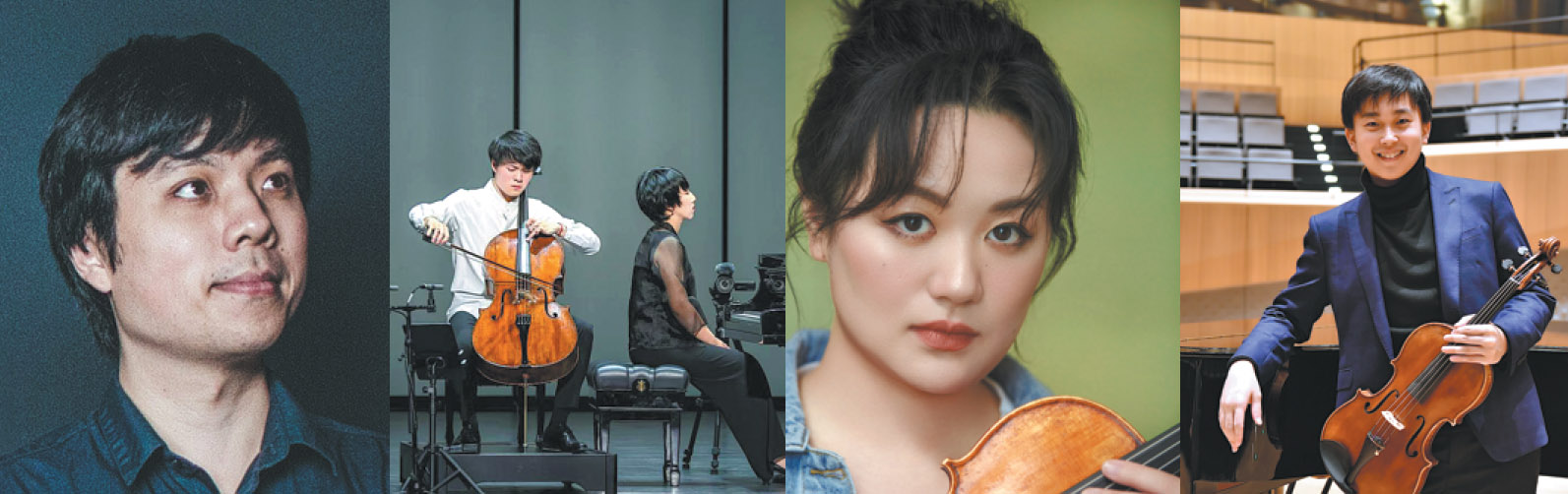
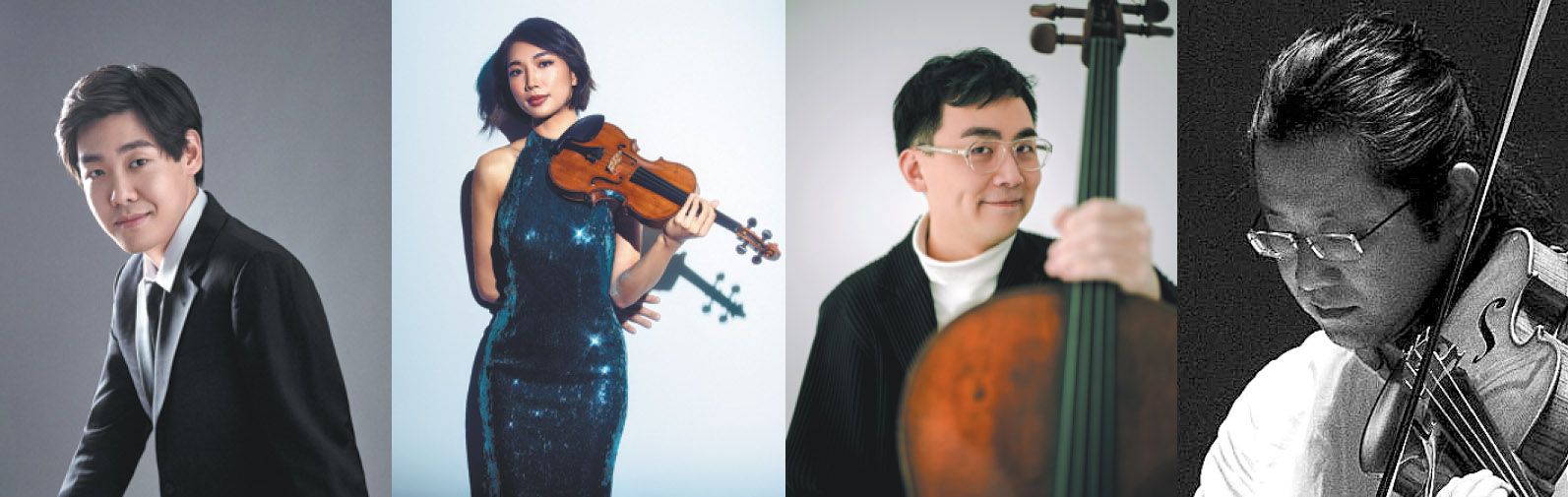
The opening concert will feature programs including Hungarian composer Zoltan Kodaly's Sonata for Solo Cello, Op 8, Czech composer Bohuslav Martinu's Three Madrigals for Violin and Viola and Czech composer Antonin Dvorak's Piano Quintet No 2 in A Major, Op 81, B 155. Musicians, including violinists Shen Danfeng and Liu Fanglei, pianist Shi, and cellist Chen, will perform at the opening concert.
The following concerts will present works including Divertimento in E-flat Major, K 563, Mozart's celebrated string trio for violin, viola and cello, Dmitri Shostakovich's Piano Trio No 1 in C Minor, Op 8 and Piano Trio No 2 in E Minor, Op 67, and Beethoven's Violin Sonata No 9 in A Major, Op 47, Kreutzer in string quintet arrangement.
"It started as my own idea. Slowly, it became everyone's celebration," says Shi, when asked about the process of designing the programs.
Echo Valley is more than a series of four concerts. Nearly 30 events — from jazz performances and outdoor film screenings to lectures and workshops — invite visitors to linger, explore, and continue the conversations sparked by the music. Shi hopes audiences leave with memories that extend far beyond the repertoire.
"Perhaps they'll remember the wind accompanying a cello, or rain falling during an outdoor performance," she says. "In cities, people often squeeze concerts into busy schedules. They arrive just before the lights dim and leave moments after the final bow.
"Echo Valley asks something different," she says. "It asks people to stay — to walk a little farther after the music ends."
Contact the writer at chennan@chinadaily.com.cn
