

China and Canada seek to rebuild trust amid US trade uncertainty, experts say
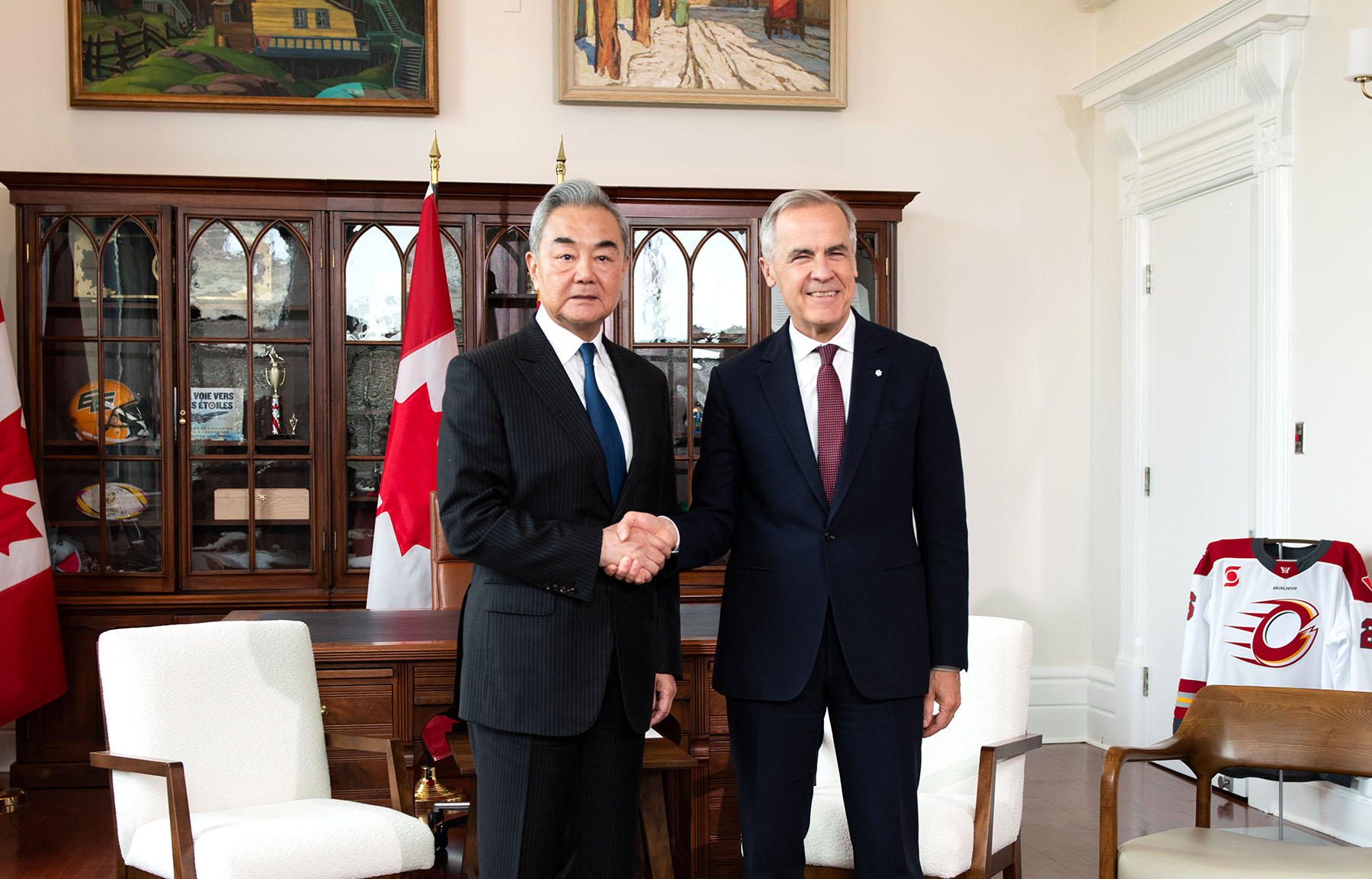
Chinese Foreign Minister Wang Yi's visit to Canada signals an effort by both sides to strengthen ties as Ottawa seeks to diversify trade and navigate growing uncertainty in its economic relationship with the United States, experts say.
Wang met with his counterpart Anita Anand and Canadian Prime Minister Mark Carney during his three-day visit last week, the first by a Chinese foreign minister to Canada in a decade.
For Jiang Wenran, founding director of the China Institute at the University of Alberta and president of the Canada-China Energy and Environment Forum, the visit signals a shift in the broader trajectory of the relationship.
READ MORE: Wang: China looks forward to promoting strategic partnership with Canada
"This visit … signals a deliberate shift from confrontation to pragmatic engagement," Jiang said."Meeting both Anand and Carney underscores high-level commitment to turning the recent thaw into durable institutions."
He described the visit as a test of the "new strategic partnership" announced earlier this year, with both China and Canada seeking progress on long-standing trade and policy issues.
Economic cooperation remains central to that effort.
During Wang's meeting with Anand, the Canadian government reiterated its goal of continuing to increase exports to China.
Jeff Mahon, former deputy director of the China division at Global Affairs Canada — a government department responsible for foreign affairs and international trade — said stronger economic ties are supported by the complementary nature of the two economies.
"Canada and China have complementary opportunities to increase trade in a range of goods and services," Mahon said.
"Given the size of Canada's economy, its current exports are relatively low. Therefore, it is a realistic objective for Canada to increase its exports (to China) by 50 percent by 2030," he said.
Jiang said the goal is driven by complementary strengths — agricultural exports, energy and clean-tech cooperation.
Both experts linked the interest in economic cooperation to Canada's broader effort to diversify trade relationships.
"Increasing exports to China will play a critical role in Canada's diversification agenda given China's large market size and ongoing transformation to a consumption-driven economy," Mahon said.
Jiang said Canada's need to diversify has become more urgent as uncertainty surrounding the United States-Mexico-Canada Agreement review approaches.
"With 75 percent of Canadian exports flowing to the US and the USMCA renegotiation looming, Canada faces acute pressure to diversify," he said.
"This uncertainty makes deeper economic engagement with China and other markets not just desirable but essential for sovereignty," he added.
Canada sent a letter to the US and Mexico on Tuesday outlining its recommendations to renew the trilateral trade deal for 16 years, while seeking parallel talks on sectoral tariffs ahead of the meeting between Canadian and US trade negotiators later in the day, Reuters reported.
The upcoming USMCA review may also prove to be the most significant challenge facing future China-Canada cooperation, Mahon said, adding that Canada will likely face pressure from Washington to align policies in certain sectors if it wishes to maintain preferential access to the US market.
"This political pressure demonstrates that we are entering a new era where politics will play a larger role in international commercial relations," he said.
Balancing act
Both Mahon and Jiang said the future of China-Canada relations will depend on Ottawa's ability to balance deeper engagement with Beijing while maintaining close ties with Washington.
Mahon emphasized the importance of pragmatism and trust-building.
ALSO READ: China, Canada to hold economic dialogue in second half of 2026
"For Canada-China relations to continue on a positive trajectory, the two sides will need to deepen and expand political trust," he said.
Despite the challenges, both experts expressed cautious optimism that bilateral ties can continue to improve.
"If Ottawa can keep promises amid external pressure, the relationship can evolve into a stable, interest-driven partnership," Jiang said.
Mahon said that both governments would need to maintain a constructive approach moving forward.
Contact the writers at gaoyang@chinadailyusa.com
