

Unavailability of vehicles stokes frustration as free market tested
Jose, a landscape worker in Houston, Texas, recently visited his grandparents and cousins in Mexico.
"I am a little jealous of my cousin's truck," Jose told China Daily. "He's driving a Changan Hunter. It feels so luxurious."
Jose said he's amazed by the standard features packed into the Hunter truck imported from China. They include a tailgate that converts into a step to make it easier to get into the truck bed, a bed cover to secure items, a large touch screen, a 360-degree camera with a backup camera view, and heated seats. The vehicle is also marketed as an extended-range electric vehicle, a groundbreaking achievement in the pickup truck category.
"My cousin paid about $30,000 for that truck. Here, that's barely enough for a base model of a similar truck," Jose said. "I wish we had prices like that here."
READ MORE: Chinese automakers make inroads across world
Those features that Jose covets can be obtained on a similar United States-made truck through premium packages and aftermarket additions. The caveat lies in the price: similar US trucks with similar features would cost around $45,000 to $50,000, an amount Jose said he can't afford.
Following Mexico, Canada recently opened its market to Chinese EVs and lowered the tariff from 100 percent to 6.1 percent.
Tesla announced it is launching its China-made Model 3 in Canada at a record low price of C$39,490($29,040). In the US, the same car is priced at $42,490, according to electrek.com, making it $13,450 cheaper in Canada.
In February, The Wall Street Journal's senior personal technology columnist Joanna Stern wrote a report titled "I test drove a Chinese EV. Now I don't want to buy American cars anymore".
She drove a Xiaomi SU7 Max for two weeks in New Jersey, borrowed from a friend who got a temporary permit to drive it in the US.
The opening of Stern's report sounded like a love letter: "Now, every time I climb back into my Ford Mustang Mach-E, I can't stop thinking about you — your long range, your modular interior, your absurdly large infotainment screen," she wrote. "Please come back to America… for me."
It's the same car that Ford CEO Jim Farley tried for at least half a year, and loved.
"I don't like talking about the competition so much, but I drive the Xiaomi," he said on "the Fully Charged podcast" over a year ago."We flew one from Shanghai to Chicago, and I've been driving it for six months now, and I don't want to give it up."
Praising the Xiaomi SU7 as a "high quality, great visual experience", Farley said he drove it "because of the competition". "To beat them, you have to know them," he said.
Strong appeal
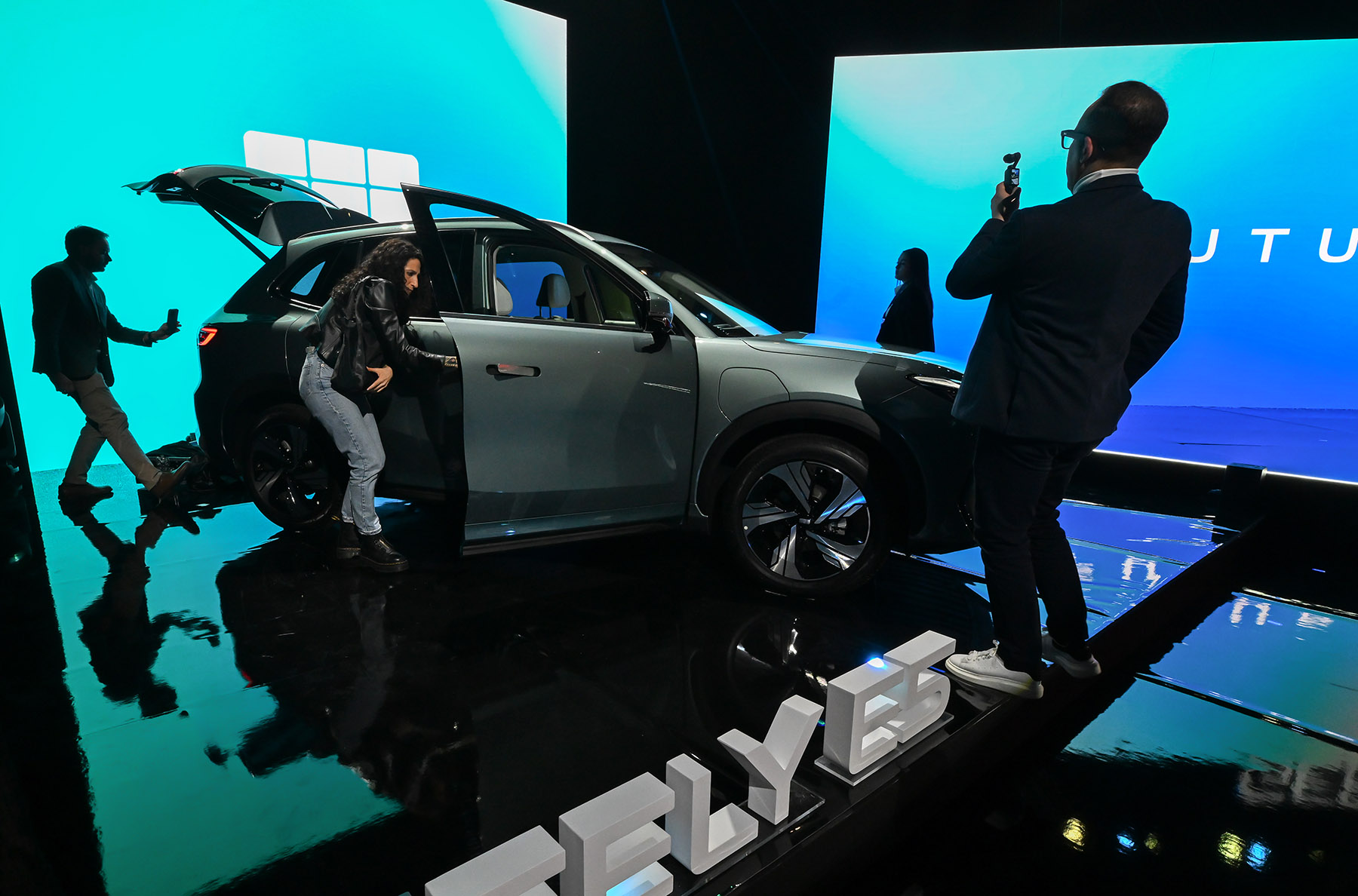
Chinese EVs are known for their innovation, competitive pricing, and advanced software integration.
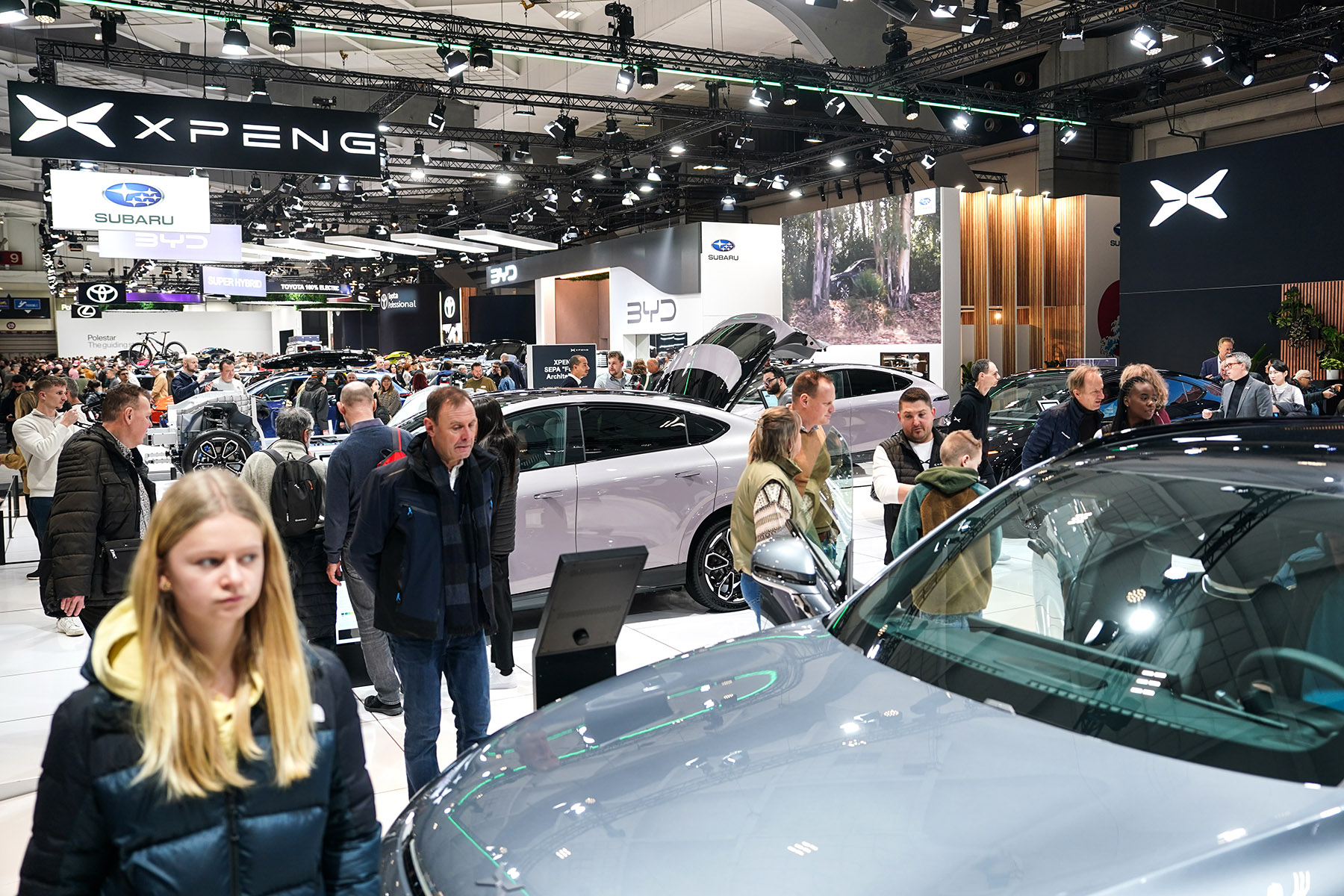
While consumers in many other countries have embraced them, people in the US — consumers, analysts, elected officials, and auto industry figures — are still debating whether or not to let them into the country.
The biggest group wanting Chinese imports are consumers, most of whom, unlike Stern and Farley, haven't had a chance to lay their eyes on a Chinese EV.
But they are aware of them, and many want to buy one, according to a consumer survey released in February by Cox Automotive, a global leader in auto service and technology.
Roughly 47 percent said they'd buy a Geely Xingyuan over Tesla's Model Y, while 38 percent would opt for a BYD Seagull over the same Tesla.
Overall, 38 percent of those surveyed said they are very likely to consider a Chinese brand in the US. Among Gen Z, the percentage was as high as 69 percent — their enthusiasm largely due to their embrace of new technology and green energy, experts said.
The 2025 Dave Cantin Group Market Outlook Report showed that 40 percent of US consumers would consider buying a Chinese-made vehicle.
In April, the WSJ reported about people with dual citizenship driving Chinese EVs bought in Mexico into El Paso, Texas, for their daily cross-border commutes. The article drew almost 2,000 comments from readers.
A sample analysis of the comments using artificial intelligence showed those favoring an open market outweighed those wanting a ban for "national security" reasons.
The "most liked" comment said:"Sure. Let's prohibit imports instead of building better cars. American cars are not only more expensive; they are actually worse quality."
The reason is straightforward: no new car sold in the United States today has a sticker price below $20,000, while Chinese brands sell capable EVs in Mexico and elsewhere starting around the same price.
The average new car in the US had a list price of $51,456 in March, according to the vehicle valuer Kelley Blue Book.
"If US automakers aren't going to make small, affordable cars, why shouldn't we consumers be able to buy imported Chinese cars? I don't want an SUV or truck," said one of the most liked comments.
US automakers have relied heavily on expensive models to make profits in recent years. Yet, "we've reached peak truck, as consumers finally push back and demand more vehicle options, particularly sedans, that are more affordable, leaving some dealers struggling with their product mix," the 2025 Market Outlook Report said.
Affordability a key factor
Auto affordability has become a serious issue in the US. A modeling study by Plante Moran found that a third of the US population can't afford new vehicles, CNBC reported in January.
"Affordability is reshaping purchase decisions, driving interest in cheaper Chinese vehicles," Dave Cantin Group President Brian Gordon said when the 2025 Market Outlook Report was released in August.
However, US automakers are not willing to give US consumers the options to buy Chinese EVs.
"We should not let them into our country because (of) the economic impact," Ford CEO Farley said in a Fox TV interview in mid-April."Manufacturing is the heart and soul of our country, and for us to lose that to those exports would be devastating for our country."
Many readers of the WSJ article said that banning Chinese EVs undermines the principle of a free market and the competitiveness of the US auto industry.
"Let's see … should we protect a handful of billion dollar corporations (the US automakers) or should we protect millions of US citizens who want/need an affordable car? I favor the little people but I'm pretty sure Congress does not," wrote Simon Smith in the comments section.
"Let them in! If US automakers can't build a quality, affordable product, they deserve to lose the market. What happened to free markets?" asked Claude Whitworth.
Noah Smith, an economic analyst, former assistant finance professor and Bloomberg economic columnist, argued that the presence of Chinese EVs will benefit the US overall.
"The main reason to let in Chinese EVs is that the United States needs to embrace EVs in general," Smith said in a January blog.
He argued that if the US keeps driving combustion cars while the rest of the world switches to EVs, its automotive technology "will be orphaned from the rest of the world".
"One way Chinese EVs would benefit America is by forcing Detroit to compete," Noah Smith wrote, reasoning that competition would force US automakers to make big investments in EV innovation and technology and "keep doing this until it worked".
The US is not in a good position when it comes to EV innovation and production. According to analysis from E2's Clean Economy Works tracker, US companies announced just $12.3 billion in new clean-energy and battery investment in 2025 -the lowest annual figure since the project began.
Meanwhile, cancellations and downsizing reached $34.8 billion, with the EV battery sector losing $21 billion in committed capital.
The contraction was, to a great degree, due to domestic policy changes with tax credits for solar, wind and EVs compressed or rolled back.
Meanwhile, China is forging ahead with new EV technologies.
At the 2026 Beijing Auto Show that ended on May 3, CATL unveiled six new battery technologies in a single day, including a third-generation Qilin cell rated for more than 1,000 kilometers of range, a Shenxing fast-charging cell that reaches 98 percent of a full charge in six minutes and 27 seconds, and a 350 watt-hour-per-kilogram condensed-state cell that is good for 1,500 km.
BYD founder Wang Chuanfu, while launching the second-generation Blade Battery, put the design philosophy plainly: "The only way out is to make charging as fast and convenient as refueling a gas car."
Protectionism vs practicality
While the US public is warming toward Chinese EVs, some US politicians want a complete ban on them.
On April 29, Republican Senator Bernie Moreno and Democratic Senator Elissa Slotkin introduced a bipartisan bill — the Connected Vehicle Security Act — that would ban vehicles, connected vehicle technologies such as software and data systems made by China or in partnership with China from the US. They cited national security and job protection as the primary reason for this bill.
The bill has been endorsed by the United Auto Workers union. "Our national and economic security relies on a strong US auto industry," said UAW President Shawn Fain.
ALSO READ: China to further regulate competition in new energy vehicle industry
"General Motors supports policies that protect and strengthen American manufacturing and the global competitiveness of US automakers," GM said in a statement.
Job security is sometimes at odds with innovation, some investment analysts said. New technology means disruption, and disruption means changes to existing orders.
Many experts agree that China's EV advance has been driven primarily by competition.
However, American consumers may not be able to get what they want, at least in the short term, the 2026 Market Outlook Report from Dave Cantin Group predicted.
"While a highly limited, regulated and negotiated entry remains a small possibility in 2026, we don't see this impacting the retail landscape for another three to five years in the US," the report said.
Contact the writers at mayzhou@chinadailyusa.com
