

NEV expertise helps country secure more orders than Japanese at Bangkok motor show
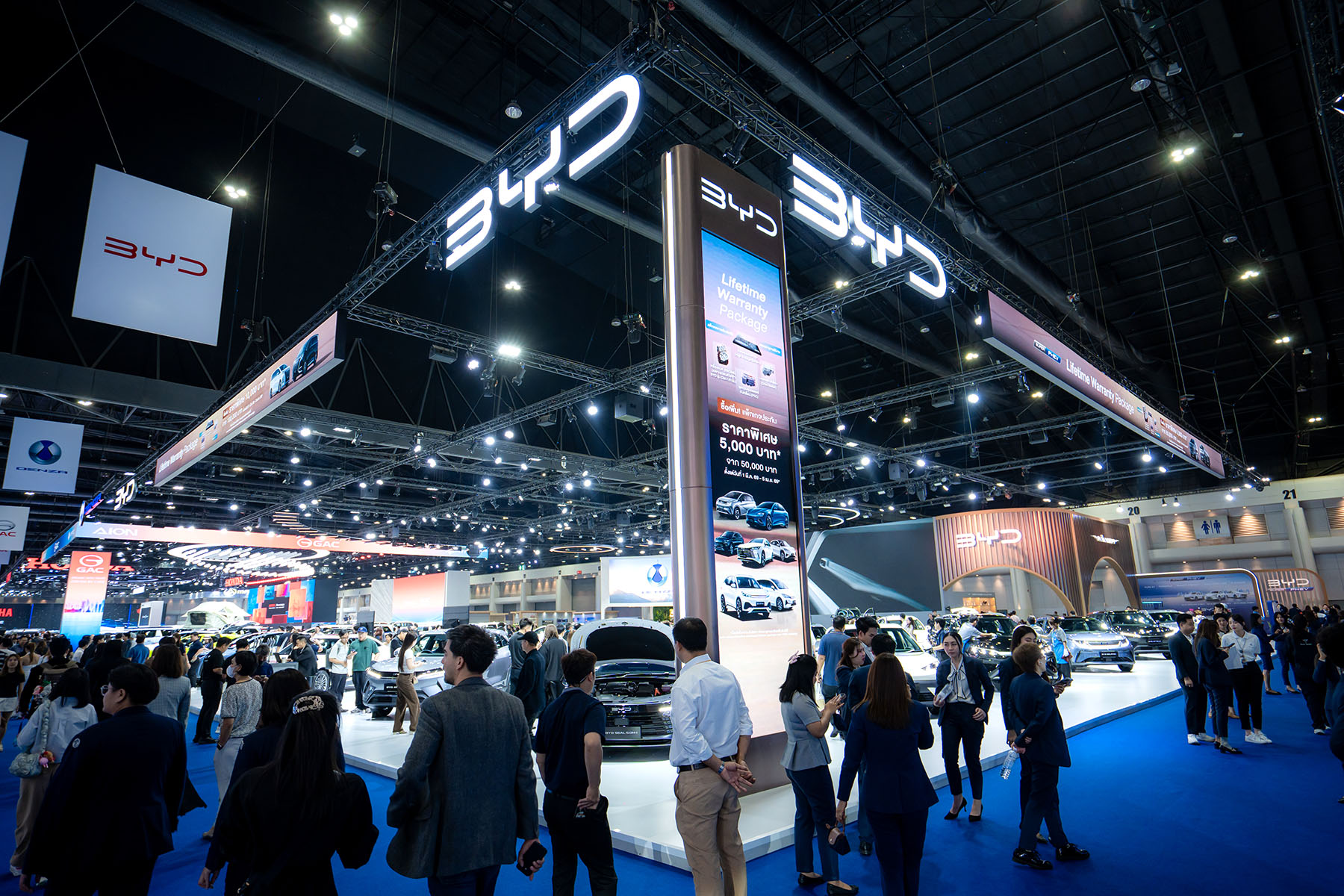
Chinese automakers have achieved headway in major overseas markets, a feat largely fueled by their advancements in new energy vehicles, reshaping the global auto industry.
The 2026 Bangkok International Motor Show, which concluded on April 5, was a vivid showcase of this momentum. The event secured 132,951 car orders, a record in the show's history, with NEVs accounting for more than 70 percent.
Chinese brands surpassed Japanese counterparts in overall bookings for the first time, ending Japan's decades-long dominance in the Southeast Asian market. Among the top 10 brands, seven were Chinese. These included BYD, which took the top spot, and Chery, MG, Changan, Geely, Great Wall Motor and GAC's Aion.
READ MORE: China to further regulate competition in new energy vehicle industry
Japanese brands only had Toyota and Honda in the top 10, with Suzuki and Subaru failing to make the list.
Yale Zhang, managing director of Shanghai-based consulting firm Automotive Foresight, said that Chinese brands have left competitors far behind in the fields of electrification and intelligent technologies. Even in Southeast Asia, Japan's stronghold for 40-50 years, Chinese brands can break through.
Data show Japanese brands including Toyota, Honda and Mitsubishi once accounted for more than 90 percent of market share in markets like Thailand and Indonesia.
"Japanese automakers have indeed lagged in electrification; not from unwillingness, but from a slow transformation pace," Zhang said. He said they are leveraging China's supply chain to launch and test NEV models in the market, efforts that have yielded some results, but global success is uncertain.
Data from the Federation of Thai Industries show that the sales of pure electric vehicles in Thailand reached 120,000 units in 2025, a year-on-year increase of about 80 percent, and Chinese-brand EVs accounted for more than 80 percent.
Localized production is a key driver of Chinese automakers' success in Thailand. Seven Chinese automakers, including BYD, Aion and GWM, have built facilities in the country, with total investments exceeding $3 billion. These facilities help them avoid import tariffs, reduce logistics costs and enable faster market response.
"Thailand, as a regional hub, can serve as a production base for right-hand-drive vehicles," said Zhang. After reaching 40 or 60 percent localization, vehicles can be exported to the other 10 ASEAN countries tariff-free, and also sold to right-hand-drive markets such as Oceania and the UK with zero or low tariffs.
Jaturont Komolmis, vice-chairman of the Bangkok International Motor Show, said Chinese brands offer Thai consumers a wider range of accessible, cutting-edge choices. Meanwhile, China has been continuously increasing investment in the NEV industry chain in Thailand, and related products have been adopted by local companies, helping reduce electricity costs and promote sustainable development.
Beyond Southeast Asia, the European market — known for its strict technical standards and mature consumption — has witnessed explosive growth in Chinese NEVs.
According to a recent report from the European Automobile Manufacturers' Association, the number of vehicles imported by the EU from China increased by 30.7 percent in 2025, exceeding the 1-million mark for the first time. The share of Chinese-made vehicles in the region rose from 5 percent in 2022 to 7 percent in 2025.
BYD's sales in Europe reached 187,000 units in 2025, soaring 268.6 percent year-on-year, making it the fastest-growing automaker in the region.
In March, Leapmotor topped Italy's battery electric vehicle market with 5,513 registered units, a 28-fold year-on-year surge. In the first quarter, it recorded 11,637 registered units, taking 33.5 percent of the BEV market and 44.6 percent of retail BEV sales.
Compared with BEV models from European automakers, Chinese ones have a clear lead in technology and configuration. Even with tariffs, they retain a price advantage, Zhang said.
Chinese automakers are very disciplined in local pricing — matching or slightly undercutting local models — which not only secures profits for manufacturers and dealers but avoids disrupting the local market's competition, Zhang added.
According to the China Association of Automobile Manufacturers, China exported 7.1 million vehicles in 2025, a year-on-year increase of 21.1 percent. In 2026, exports are expected to reach 7.4 million vehicles, a growth of 4.3 percent, while total vehicle sales are projected to grow only 1 percent year-on-year.
Zhang said that the domestic market is under sales pressure due to a sharp reduction in car trade-in subsidies this year. The overseas market is a "savior" for Chinese automakers, from which the only growth comes.
China's main auto export destinations include Latin America, the Middle East, Europe and Southeast Asia.
Zhang said that the Middle East is the biggest variable this year. If geopolitical conflicts continue, this million-unit market could decline and it remains to be seen whether other global markets can compensate.
ALSO READ: Chinese carmakers go local to grow globally
For instance, countries with domestic manufacturing — such as Mexico, which has imposed a 50 percent tariff on Chinese cars starting in 2026 — could see declining exports. Meanwhile, nations like Australia, with no local automakers, remain open. Chinese cars are expected to take 25-30 percent of Australia's market this year, Zhang said.
Geopolitical shifts, tariff changes and cultural differences are all uncontrollable risks when going abroad, Zhang said. "When expanding overseas, Chinese brands should remain humble and cautious, just like foreign companies did when entering China two or three decades ago."
Setting up joint ventures and partnerships with local companies or dealers is an effective way to better understand local customers and limit mistakes, he added.
Contact the writers at caoyingying@chinadaily.com.cn
