

China will leverage the upcoming China-South Asia Expo as a platform to help businesses on both sides expand trade and investment in established sectors and emerging industries, accelerating regional integration and fostering inclusive growth, officials and experts said on Friday.
The 10th edition of the expo, scheduled for June 11-16 in Kunming, Yunnan province, comes as bilateral trade between China and South Asian nations surged past $200 billion for the first time in 2025, up 10.7 percent year-on-year, according to the Ministry of Commerce.
The momentum has continued into 2026, with trade jumping 15.8 percent in the first four months compared with the same period last year.
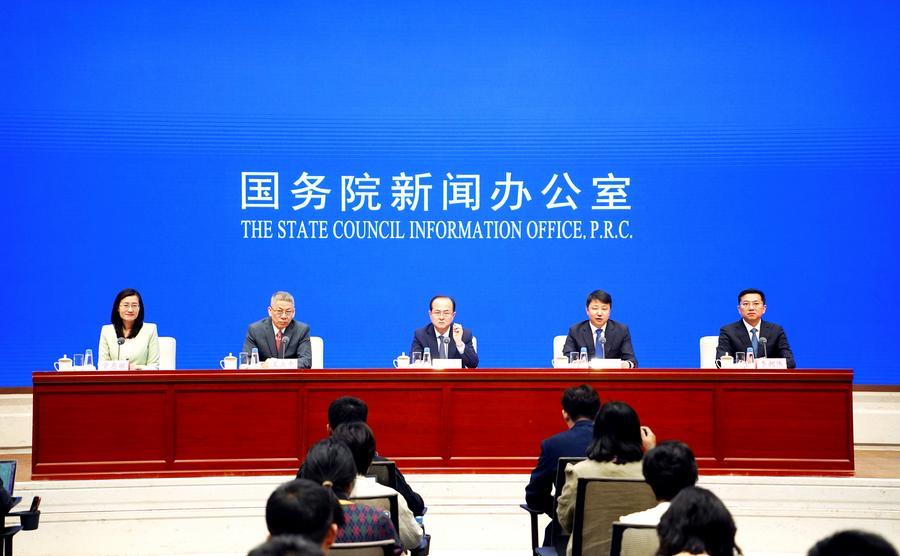
The expo has drawn participants from more than 60 countries, regions and international organizations, covering all of South Asia, Southeast Asia and RCEP members, said Liu Yong, vice-governor of Yunnan, at a news conference.
Liu noted that nearly 800 free booths will be provided to South Asian nations, allowing their textile handicrafts, jewelry and gemstones to better enter the Chinese market. "This is about mutual benefit and shared prosperity," he added.
Trade between China and South Asian nations has more than tripled since the first expo, and China has become the largest trading partner for Pakistan, Bangladesh, Sri Lanka and the Maldives, according to data from the Ministry of Commerce.
Wang Liping, director of the ministry's department of Asian affairs, said that South Asia, a densely populated region with relatively lower levels of economic development, is nonetheless a vibrant land of trade and investment opportunity, brimming with untapped cooperation potential.
China has granted zero-tariff treatment on 100 percent of tariff lines to least developed countries in South Asia, including Nepal and Bangladesh, while also offering preferential tariff rates to Pakistan, the Maldives and others through bilateral free trade agreements.
China and South Asian countries together form a vast market of 3 billion people, accounting for one-fifth of global GDP. With the expo as a key platform, Wang said, "the room for collaboration is enormous."
Going forward, Vice-Minister of Commerce Yan Dong called for greater trade liberalization and facilitation, with existing platforms such as the expo and cross-border e-commerce being better harnessed to create more convenient conditions for South Asian countries to access China's massive market.
"Simply put, governments will provide better services and build cooperation platforms to make it easier for businesses to trade, with lower tax and logistics costs," he said.
Meanwhile, many Chinese companies are keen to explore overseas markets, Yan said, adding that China will build platforms to better connect industries and enterprises from both sides, leveraging their respective resource endowments, industrial plans and development needs for integrated trade and investment development.
Yan noted that beyond traditional sectors such as infrastructure, transportation, power and telecommunications, China will tap into new areas of cooperation like cross-border e-commerce, green development, the digital economy and biomedicine.
"We will share China's development experience in these sectors while driving coordinated growth across South Asia," he added.
Cui Fan, professor of international trade at the University of International Business and Economics in Beijing, said that South Asia has rich natural resources and a young labor force while China has technological and industrial advantages.
"Future cooperation should not be confined to primary product trade," Cui said. "We must extend industrial chains, increase added value, and strengthen technology transfer and sharing in areas such as photovoltaic manufacturing and electronic assembly."
Contact the writer at wangkeju@chinadaily.com.cn
