

On Leijia Mountain, 956 meters above sea level, Xu Lihui rises before dawn. The path up is steep, 20 minutes at a quick pace, half an hour at a leisurely stroll.
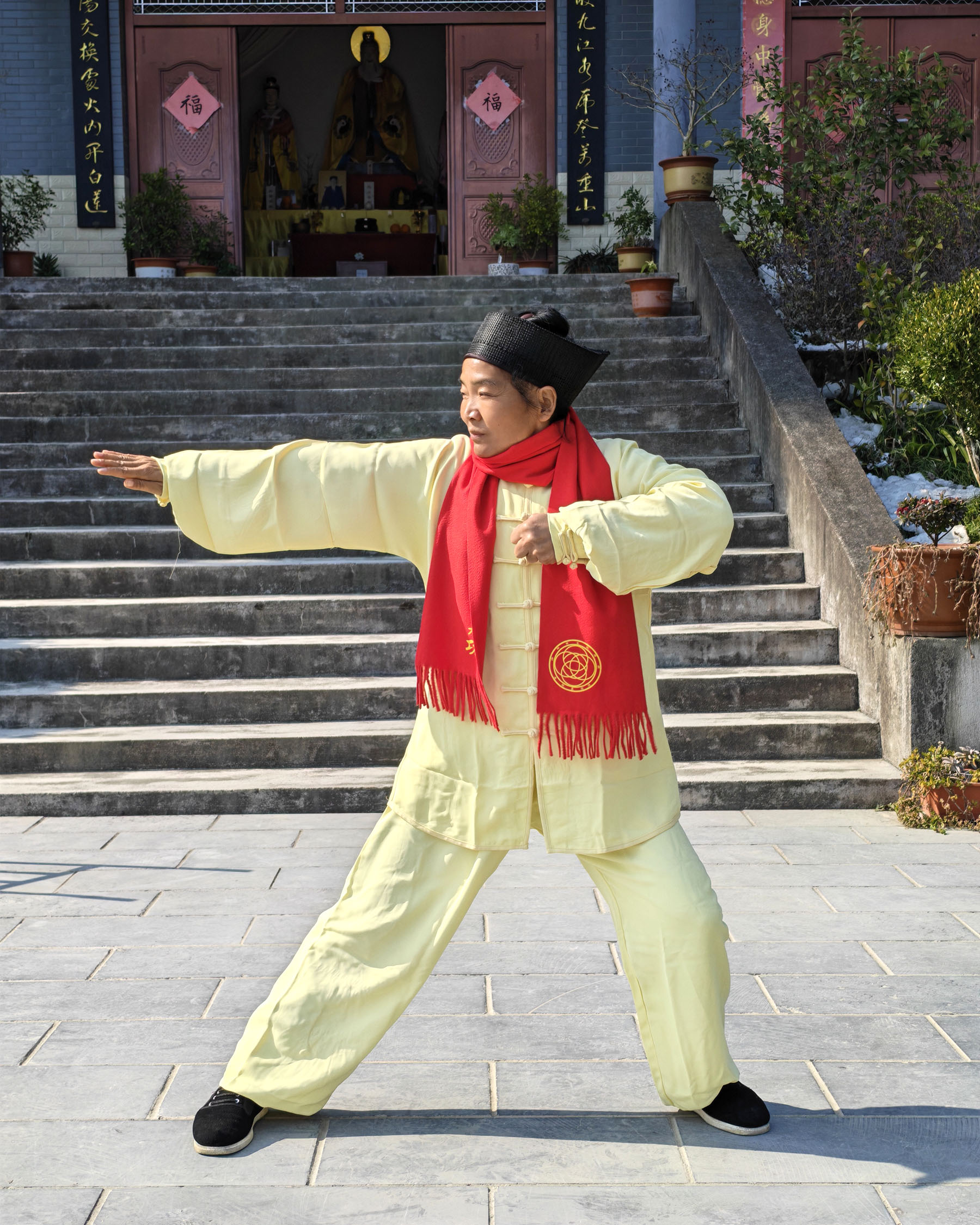
At the top of the mountain sits Huangzhong Temple, a Taoist retreat amid Zhangjiajie's mountainous landscape, Hunan province.
Now, more than 10,000 people ascend the mountain every year to practice jingang changshou gong (vajra longevity) — a set of eight exercises passed down through generations — to rehabilitate the body.
They come from across China and abroad, including Russia, Germany, the United States, Canada, France, and Malaysia, Xu has observed over the years.
"They are not merely tourists; they come here to 'correct their form' and for the slower pace of life," she says.
READ MORE: Development at its peak
Xu was 14 when she studied with Master Zhang Zhishun, who had gathered his followers to teach the exercises in the early 1990s.
When they returned to Zhangjiajie in 2012,Zhang was in his 100s and wanted to find a place, a small temple, where he could live his last days quietly. They looked at several places. Then there was Leijia Mountain.
After Zhang passed away in 2015, Xu led other disciples to continue his legacy and gradually expanded the area, paving the mountain roads leading up to it.
Visitors who make the climb enter another world. They stay in simple dormitories. They wake before sunrise and practice the exercises. Then, they work the land, planting vegetables, cutting firewood, and grinding tofu from the mountain's spring water.
"A day without work is a day without food. They eat what they grow. No meat. No alcohol. No television. No distractions," Xu says.
For many, the experience is transformative. Some arrive with depression or anxiety, or with bodies worn down by modern life, she observes. "After three days of practice and labor, they generally smile more, and some don't want to leave."
Xu remembers one Russian man who came in 2015 with his wife and baby. His Chinese was poor, so he didn't ask questions. "He just watched and practiced quietly with us. Last year, he returned," she says with surprise.
Over the years, many such guests have left their impression on Xu.
She also vividly remembers a Malaysian Chinese who had lived abroad for decades and returned specifically to learn the exercises, then later brought friends. Another British Chinese man spent months tracing Master Zhang's footsteps across the country, including Shandong and Hainan provinces, before arriving at Huangzhong Temple.
Xu finds that many international guests love the traditional culture and feel "something here that they cannot find elsewhere."
In 2023, jingang changshou gong was added to Hunan's intangible cultural heritage list. Xu was happy when she received the certificate: "This was my master's wish. He wanted more people to know these exercises and thus preserve them."
Huangzhong Temple is not the only place in Zhangjiajie where visitors can step off the tourist trail and into something more personal.
Across the region, in villages and valleys tucked between the famous peaks, other experiences await, offering more ways to appreciate these mountains.
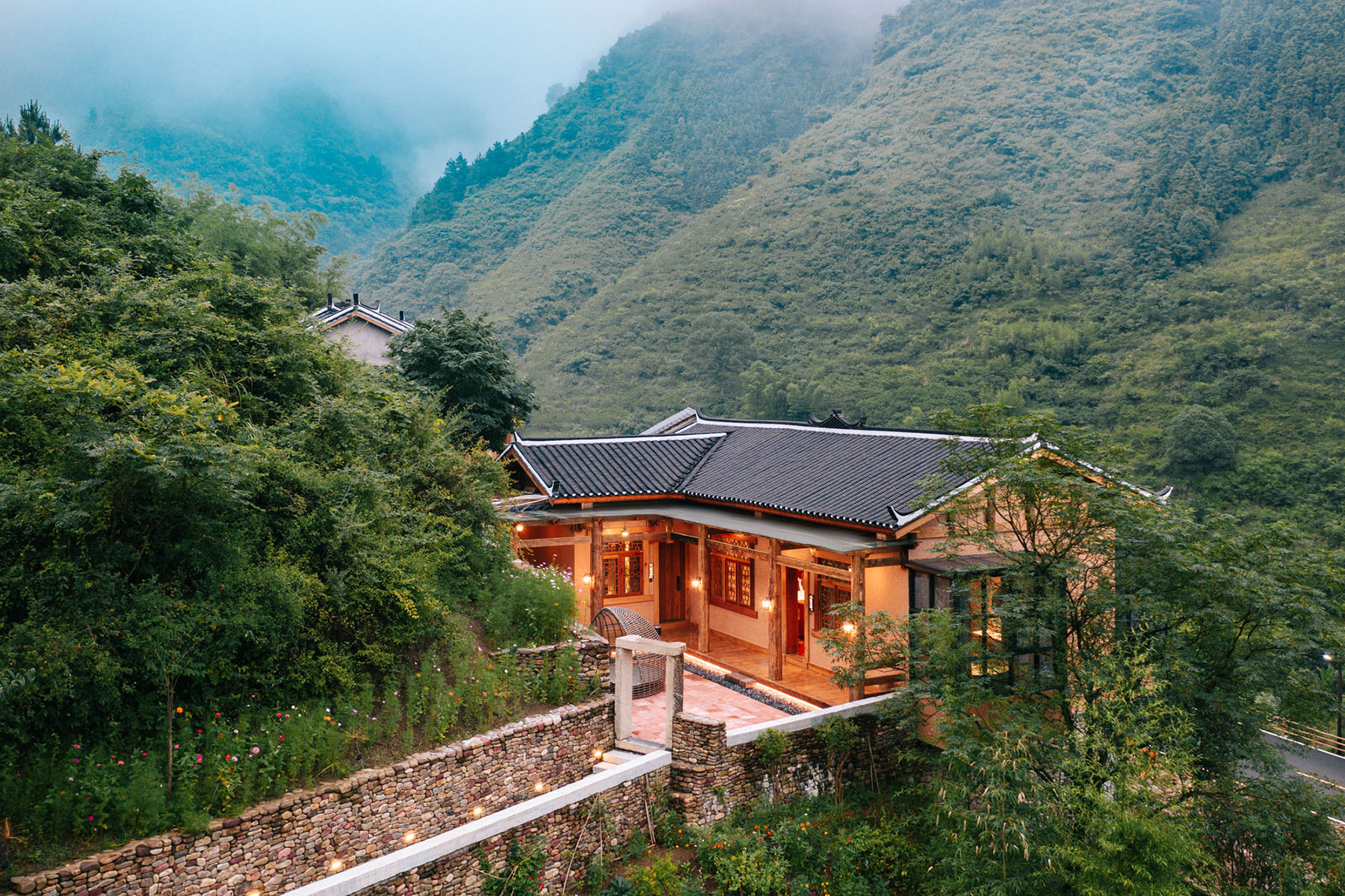
About an hour's drive down the mountain, in Wayaogang village, Qu Shuangquan walks through his guest property, checking that the housekeepers have everything ready.
These days, most of his guests come from abroad and find their way to this village at the foot of the mountains, booking rooms from 2,000 yuan ($293) to more than 10,000 yuan a night, and stay for days.
"When the visa-free policy expanded last year, international guests started coming," Qu notes. He is proud that many international guests return more than once and leave him raving reviews.
From the road, the buildings look modest — stone walls, dark wood, and sloped roofs of traditional Tujia ethnic architecture. Nothing flashy. But step inside, the quality is revealed. Qu used no new timber in the construction. Every beam and plank came from old demolished houses elsewhere — hardwood that had already aged decades, even centuries. "Old wood has texture. It feels heavy and real," Qu says.
He and the craftsmen had a four-meter bench carved from a single beam, and stone walls assembled piece by piece from river rocks, fitting them together like puzzle pieces. "Nothing is mass-produced, and nothing was rushed," he emphasizes.
Guests wander through rice fields, sit by the stream, and eat vegetables grown on-site. Pork is sourced from local farmers and tofu is freshly made from beans ground in the village.
The property also features a pool, bar, spa, and coffee shop. The main attraction, Qu points out, lies in its contrast: the outside looks humble, while the inside holds care.
"The mountains are why people come to Zhangjiajie. But this is where they stay," he says with pride.
Qu didn't plan any of this. In 1989, Qu left these mountains to join the military in southern Hainan. His mother missed him so much back home that she couldn't sleep.
He returned to Zhangjiajie after being discharged from the military and took a government job. However, even the job's stability couldn't keep him from thinking about his village, where his uncles and aunts had sent him off with money and love.
A longing hit him. He felt compelled to build something on the land where he grew up, a place where friends could come for tea and meals. He then built the property in 2011. It is a bit far from the city, but it is home, so he named it Home in the Distance.
More friends came, then friends of friends, then strangers, and as the property grew, so did his vision for the property.
Now, on a typical day, Qu walks the grounds, watching guests settle into hammocks, order coffee at the bar, and ask the housekeepers about hiking trails. "Seeing their joy is what satisfies me," he says.
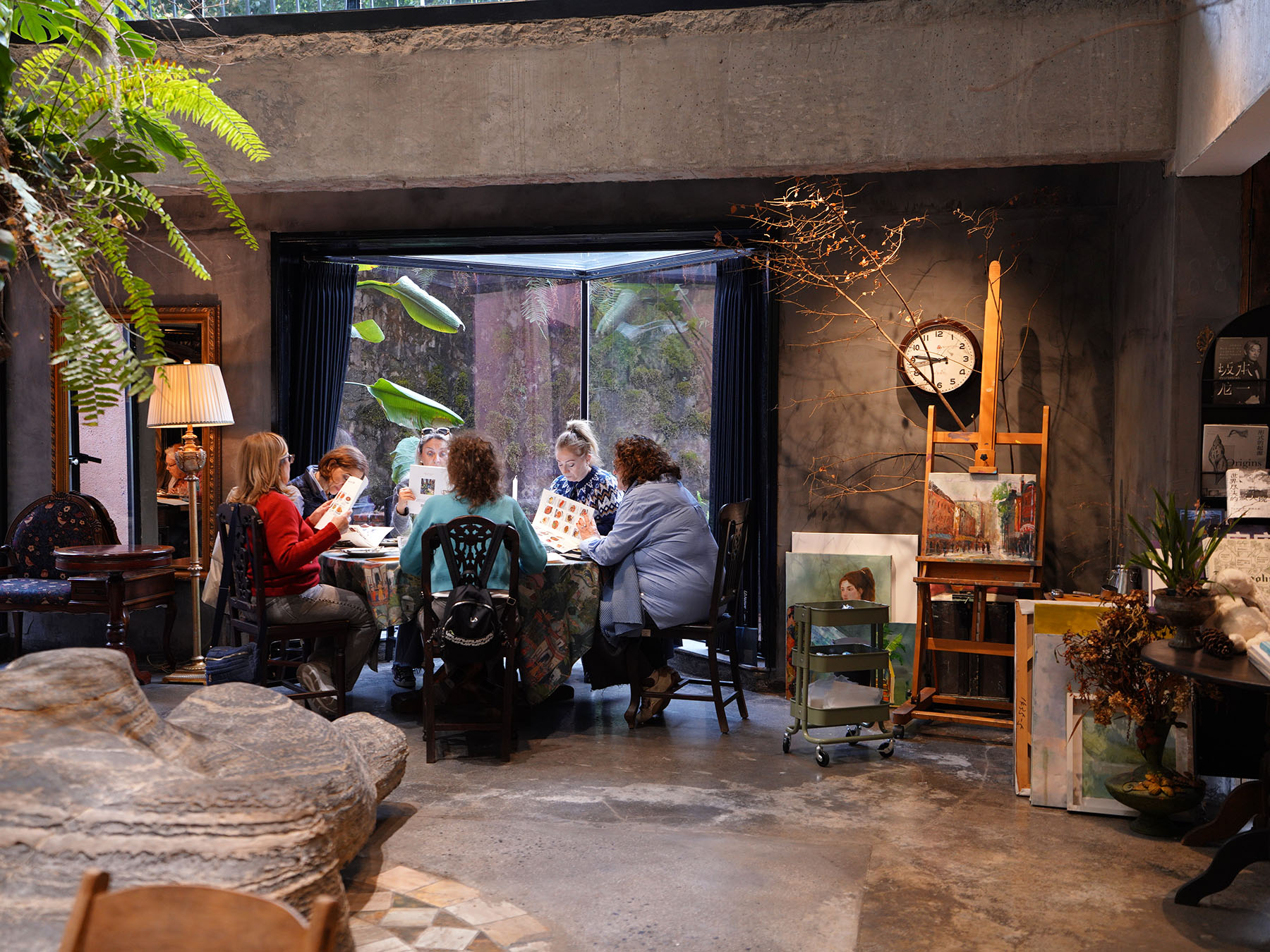
Back in the city, near the river, another kind of welcome awaits. Wang Ting pushes open the door of Nimo Kitchen. Sunlight filters through a two-story magnolia tree in the center of the dining room.
The building sat abandoned for more than a decade before Wang and her three partners found it. With a half-basement, it was unremarkable, tucked among other buildings on the road between the airport and the high-speed rail station.
After acquiring the building, they covered the exterior with old red bricks to give off a warm, simple vibe while renovating it to stand out like a villa among the apartment blocks.
Wang has been in the restaurant business for eight years. This is her third restaurant. Her partners are a coffee specialist, a designer and an experienced baker.
ALSO READ: Tracking a mountain of history
Each wanted to build a more complete, colorful Western restaurant.
In addition to a dining area with a maximum capacity of 200, much of the 2,000-square-meter space is given to thousands of plants. They also had a skylight installed, and vintage furniture fills the corners, which Wang collected over the years. Jars line the windowsills. Inside, Wang cultivates her own cultures for kombucha and other fermented drinks.
"They're alive and go into bread. Many of our ingredients aren't bought, but grown by us," she adds.
Wang says her team didn't calculate the return on investment for every aspect, but kept building what felt right, confident that the business' long-term prospects were strong given the huge tourism potential in Zhangjiajie.
Business has been steady since opening in September 2024. International visitors keep arriving. For example, international guests accounted for more than half the revenue in March, she shares. "In this restaurant, you feel like you're abroad, with various nationalities and different languages," she notes.
She says her business has enabled her to feel better connected to the city's development. "Zhangjiajie is growing its inbound tourism. We feel it as we connect with people from different countries. Some invite us to visit them. I'm genuinely happy."
