

Visitors are not only drawn by the karst formations, but also the region's vast number of attractions, report Yang Feiyue and He Chun in Zhangjiajie.
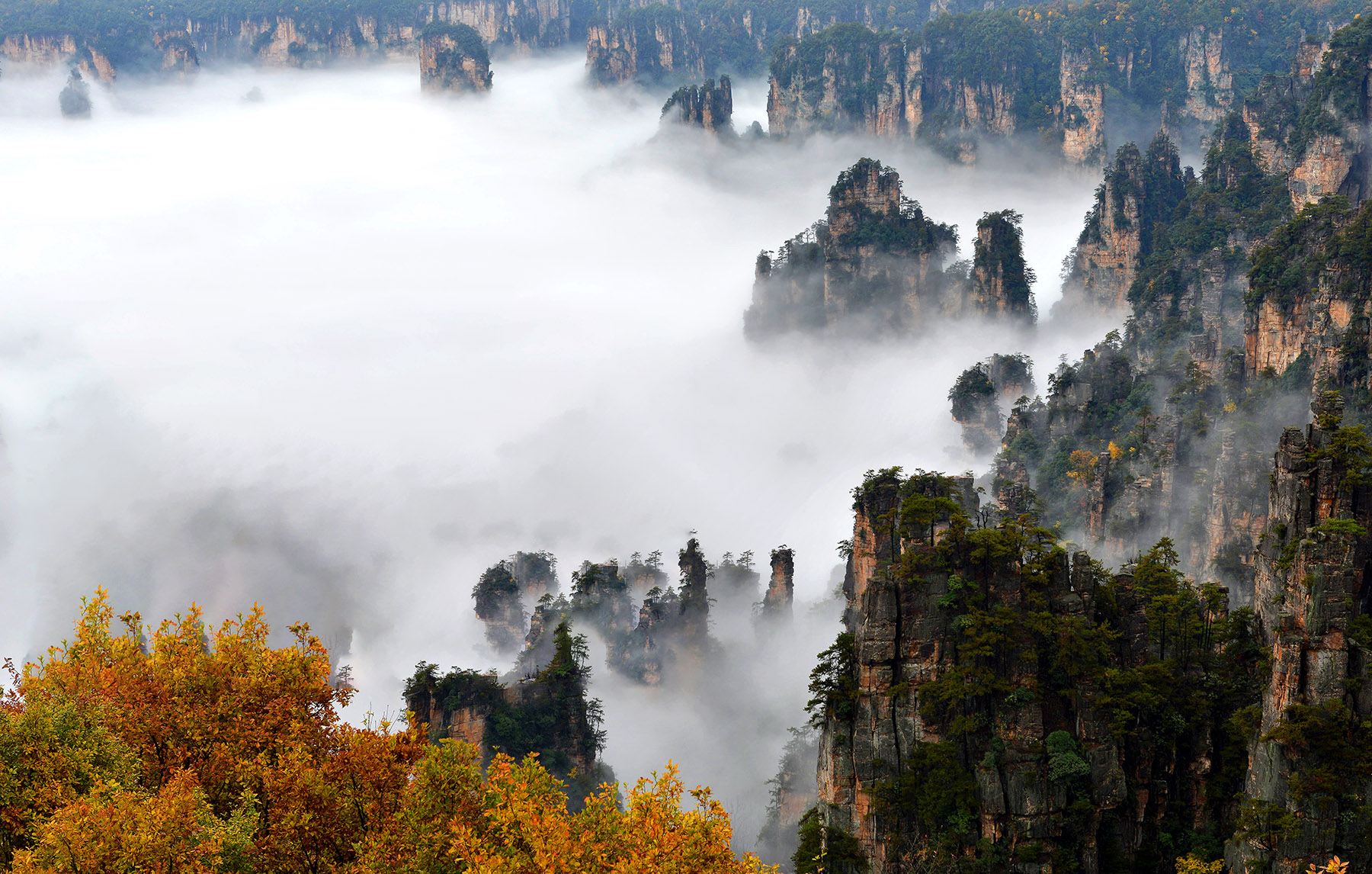
Zhang Shupeng stands on a platform less than two square meters wide in early March, when winter slightly loosens its grip on the mountainous landscape of Zhangjiajie, Hunan province.
Below him, a colossal stone gateway punches through a vertical cliff face 1,300 meters up, as if some giant once drove a fist through the mountain and left the hole as a door to the sky.
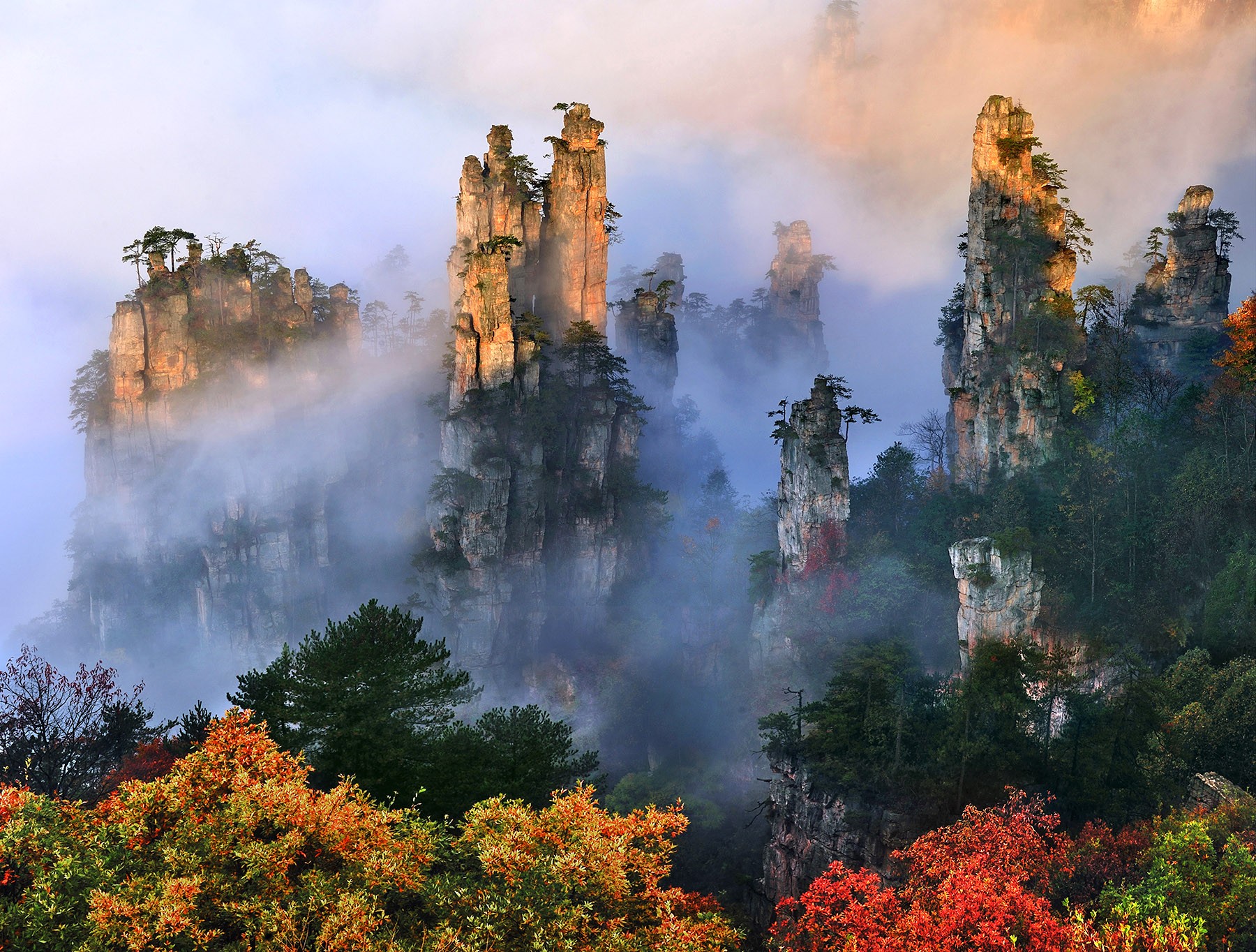
Beyond it, thousands of quartz sandstone pillars rise through the mist like the petrified fingers of ancient gods across the Zhangjiajie National Forest Park, their peaks floating above the clouds as if the earth itself has come alive and is reaching for heaven.
READ MORE: Tracking a mountain of history
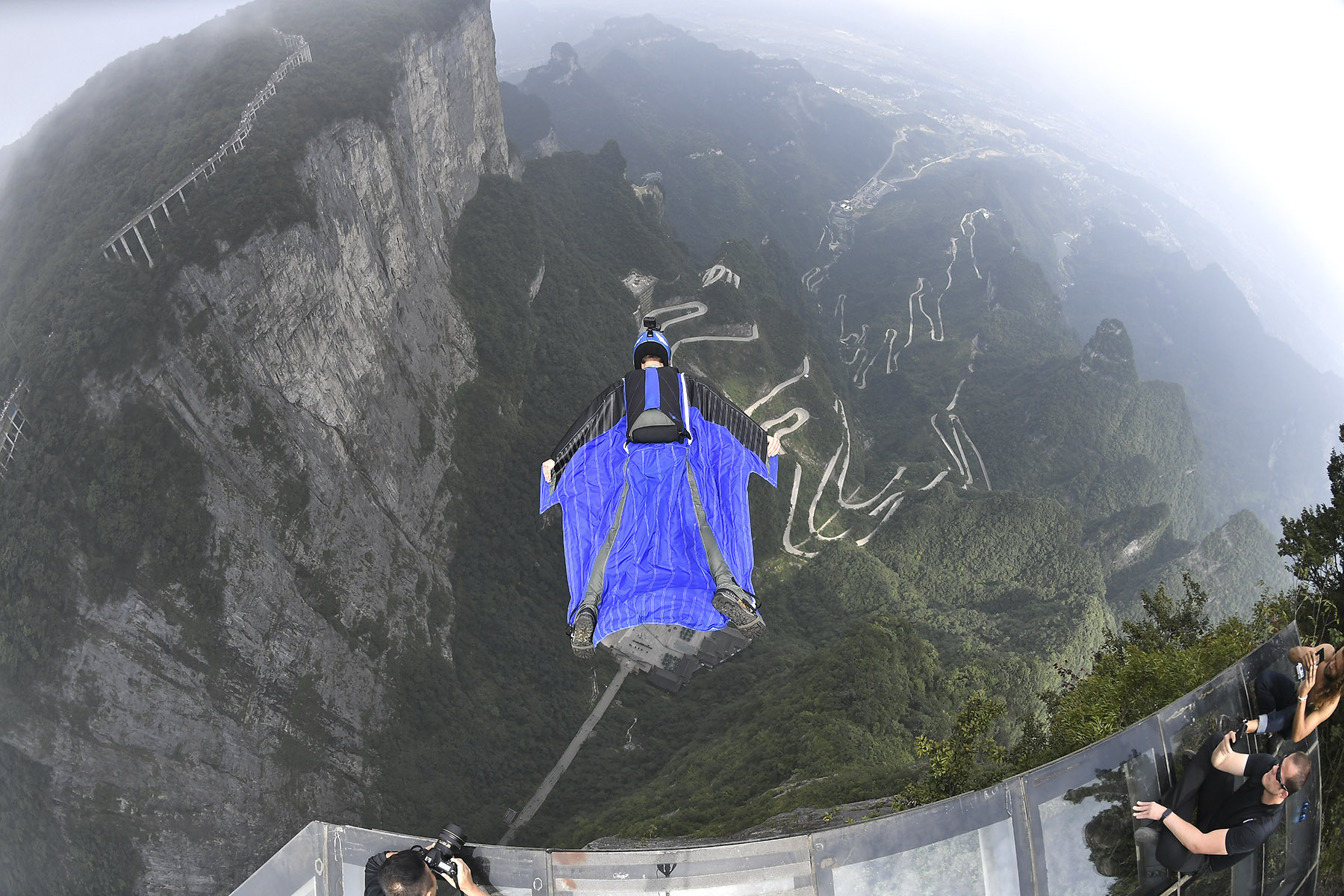
Zhang steadies himself for a few seconds before jumping off in a wingsuit, to the cheers of onlookers and their raised phones.
For three or four seconds, he falls at 220 kilometers per hour, twice the usual freeway speed limit. Air slams into his body and face. Any tiny deviation changes his trajectory.
"It is impossible to describe," he says as he attempts to explain the sensation, adding that it requires intense focus.
After an arc, he levels out, flies, opens his parachute, and lands in a small parking lot.
For Zhang, it is not a performance, but regular training, and he has completed the feat more than 1,800 times.
For four months each year, the man in his early 40s lives in Zhangjiajie. Each day, he jumps six or seven times.
He was not the first wingsuit flyer drawn to Tianmen Mountain, a major attraction in the region, and a perfect site for the extreme sport.
In 2012, the first Wingsuit Flying World Championship was held in Zhangjiajie. Zhang watched as a spectator as the world's best flyers carved through the sky with grace, elegance and precision.
He was equally captivated by the stunning, complex landscape below, a terrain so dramatic it seemed carved by nature itself.
The experience inspired him to become one of China's first certified wingsuit pilots.
"Tianmen Mountain's difficulty lies in the complexity of low-altitude flying," he says."The margin for error is extremely low."
From the air, Zhang has witnessed the mountain transform over the years.
"The changes are quite noticeable," he says, adding that high-speed rail has arrived and flight routes have expanded.
The cable car he has ridden countless times has been upgraded, and so has the glass skywalk.
"Services are more attuned to what visitors require," he adds. "Queuing areas now have seating and sunshades, with mist sprays for cooling during summer. Foreign card payments and multi-language services have followed."
Yet Tianmen Mountain was not this accessible when Tian Huilin first stood at its base in 2003. "It was a wild peak that tourists could only stare at from below," recalls Tian, general manager of the Tianmen Mountain scenic area.
It is a typical karst platform formation, ringed by sheer cliffs. Aside from occasional local climbers, almost no one could reach the top.
Over the following two decades, cable cars were built, walkways were carved into rock, and steps were cut into the mountain. The peak gradually opened to the world.
"Developing Tianmen Mountain meant first solving the transportation problem," says Tian, who arrived when the cable car construction began.
They built one of the world's longest cable cars at the time — more than 7,400 meters from downtown to the summit, with a vertical drop of over 1,200 meters. They also built a winding road from the base to the top."Both projects were extremely difficult," Tian notes.

In September 2005, the cable car opened. Tianmen Mountain officially began receiving visitors.
What Tian didn't expect was that the cable car and road, originally just transportation solutions, would themselves become attractions. "This cable car crosses the city and countryside, and goes directly into the mountain. It's a moving viewing corridor. Floating in the air, the experience is unique," he says.
Human creativity kept adding new value to the mountain. In 2011, Tianmen Mountain managing team built China's first glass skywalk. They intended it as a small addition to enrich the experience. "We didn't expect it to become such a hit, leading scenic areas across China to replicate it," Tian says with a smile.
Tian's team is now working toward the next phase of infrastructure improvements.
They are investing nearly 2 billion yuan ($293.36 million) to completely upgrade the cable car from downtown to the summit. Capacity will increase from 1,000 to 3,000 people per hour, he says.
"After improving capacity, we will add leisure and vacation amenities on the mountain, such as campsites, locally distinctive dining, and cafes. Tourists can stay multiple days and relax."
Matteo Amghar, from France, was stunned by the hiking environment in the Zhangjiajie mountains during his recent winter trip.
With snow stuck to his shoes, he felt as if he had accomplished something big.
He noticed a fundamental difference between hiking in Zhangjiajie and in Europe. "In Europe, hiking is a really popular activity, and everyone does it, but it's less controlled. There are fewer cable cars and other things," says Amghar, who was on a 25-day trip, traveling from Chengdu, Sichuan province, to Hong Kong with a deliberate detour to Zhangjiajie.
"In Zhangjiajie, the mountains are wild, but the infrastructure makes them accessible in ways European trails are not," he notes.
He spent two full days in the snow-covered mountains. "The snow scenery is crazy, with those pillar-like mountains we see in photos. But seeing them in person, in the snow, is completely different."
An experienced traveler, he visited China years ago, going to Shanghai, Xi'an, Shaanxi province, and Beijing, but found Zhangjiajie holds a different charm.
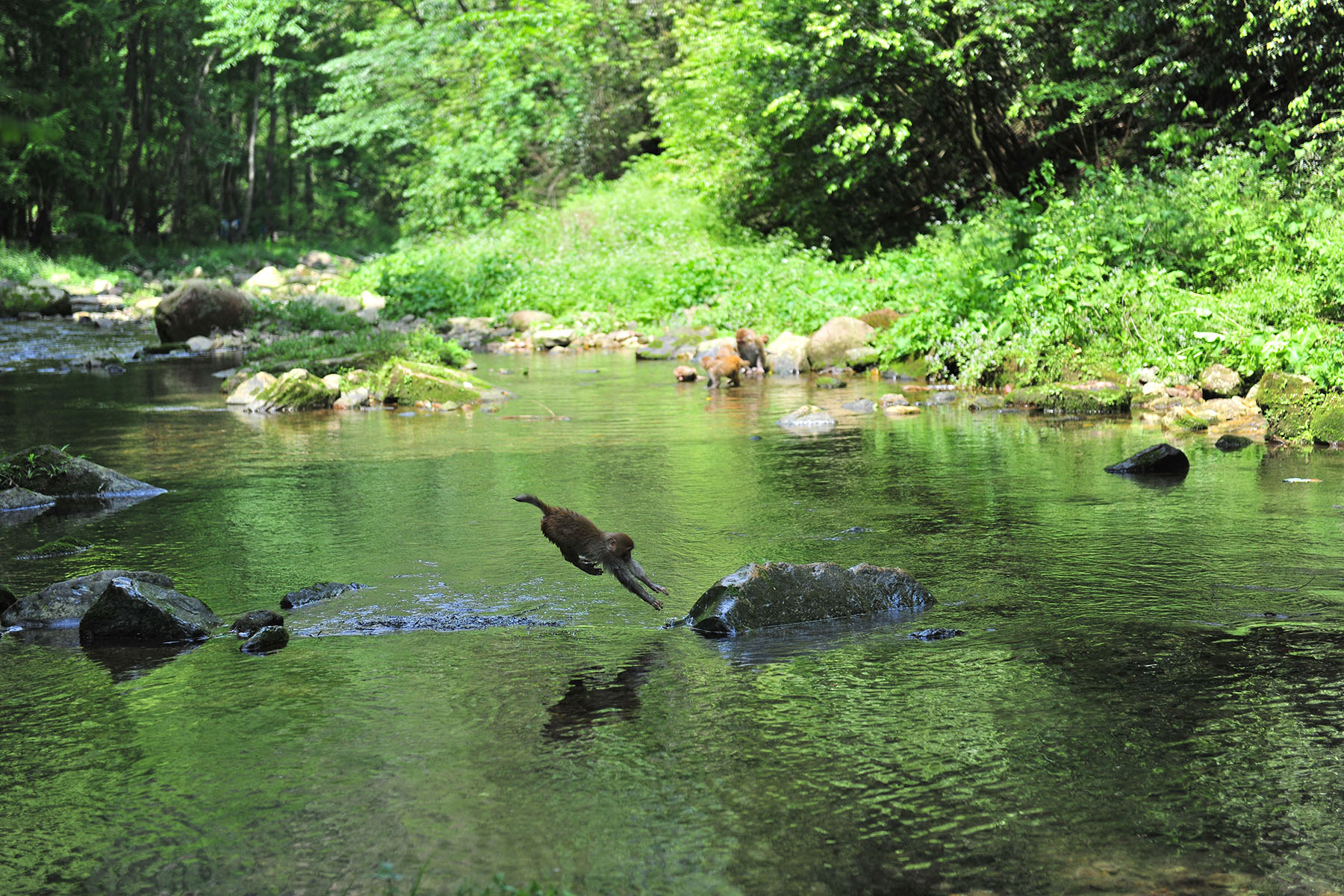
What impressed him most were the monkeys. "They are really cute. But we did not dare stop, afraid they would surround us."
Zhangjiajie welcomed more than 1.33 million inbound visitors from 192 countries and regions last year, drawn to its UNESCO World Heritage-listed quartz sandstone pillars — the same otherworldly landscape that inspired the floating mountains in Avatar.
The city's international popularity continues to grow, with visitors arriving from South Korea, Southeast Asia, Europe, the Americas, and beyond, local authorities report.
Zhong Jun, executive vice-mayor of Zhangjiajie, sees its international popularity as a foundation to build upon.
The city government will focus on enhancing quality to match its global reputation, he says.
The strategy will center on international standards and modern quality, youth engagement, technological creativity, cultural depth, wellness tourism, and global dialogue.
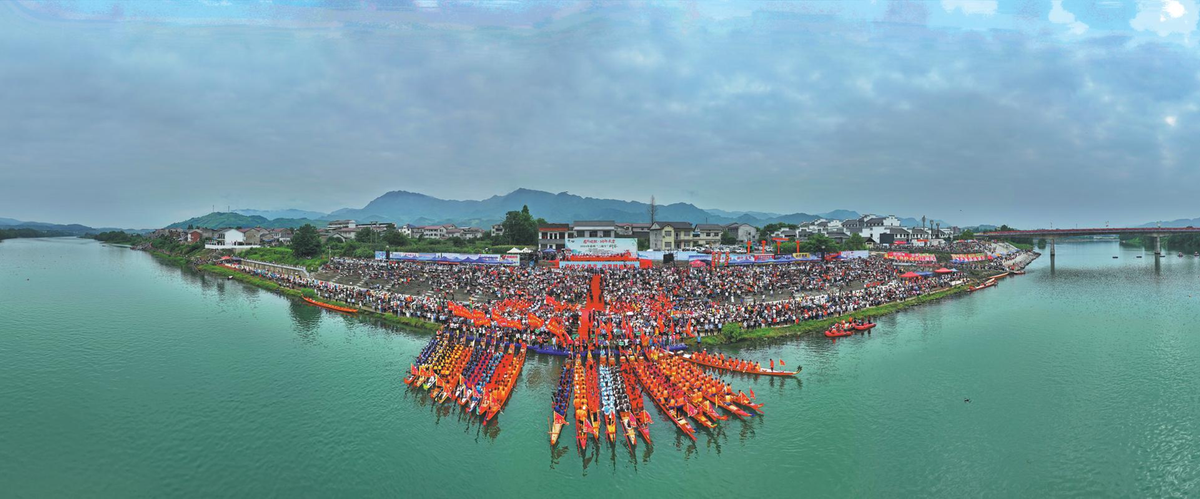
New projects will be aimed at diversifying the visitor experience. Discussions are underway with South Korean conglomerates for medical aesthetics services. Additionally, locally grown coffee is in development, a response to the many foreign visitors who drink it.
To attract younger travelers, Zhong proposes the Shanren Festival, where visitors will be encouraged to bring their own installations to fully unleash their creativity. The festival will incorporate wingsuit flying, skiing, street dance and acrobatics.
Describing his ideal future for Zhangjiajie, Zhong envisions a city where the international atmosphere extends beyond scenic areas into everyday life.
ALSO READ: A land of imagination
Visitors from home and abroad will gather in cafes and public spaces amid the mountains, he says.
Zhang, the wingsuit flyer, particularly enjoys how the sunset illuminates the mountains as he flips over mid-air, looking up at the sky. "It feels especially warm and quiet," he says.
"Tianmen Mountain, in particular, is a magnificent natural monument. Its geological wonders and complex climate system form an excellent classroom for humans to challenge themselves and understand nature."
Contact the writers at yangfeiyue@chinadaily.com.cn
