

Driven by tech innovation, nation now setting pace of global energy transition
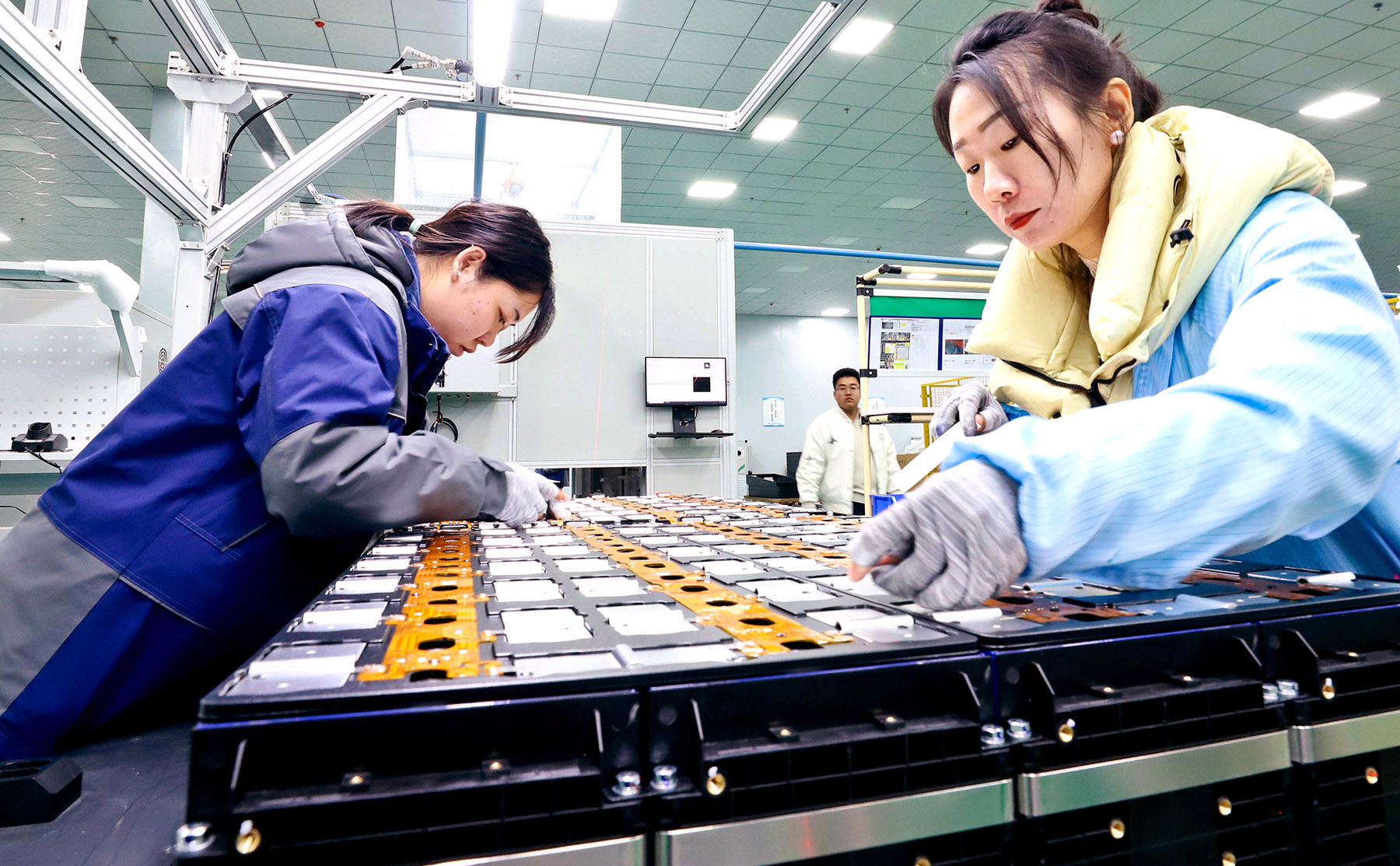
China has cemented its status as the undisputed heavyweight champion of the global energy storage sector, successfully transforming itself from an industry follower into the global pacemaker, said industry experts and government officials.
By the end of 2025, the nation's cumulative installed capacity of new energy storage had reached a staggering 144.7 gigawatts, capturing 51.9 percent of the global market — the first time China has accounted for more than half of the world's total share.
This historic milestone, detailed in the recently released Energy Storage Industry Research White Paper 2026 by the China Energy Storage Alliance, underscores a profound paradigm shift.
Driven by relentless technological innovation, a massive pivot toward localized global manufacturing, and aggressive strategic planning by both private pioneers and State-owned behemoths, China is now setting the pace of the global energy transition, it said.
READ MORE: CATL advances dual battery tech
China's energy storage industry has achieved large-scale development, with the number of newly added enterprises reaching a record high and industry capacity continuously increasing, said Chen Haisheng, chairman of CNESA.
Chen emphasized that China's primary energy storage technologies are now largely on par with the most advanced global levels, with lithium batteries, compressed air energy storage and flow batteries achieving international leadership positions.
According to the white paper, new energy storage now accounts for more than two-thirds of China's total domestic power storage capacity, representing a staggering 45-fold increase compared to the end of the 13th Five-Year Plan (2016-20).
In 2025 alone, newly commissioned capacity reached 66.4 GW, or 189.5 gigawatt-hours. This reflects year-on-year growth of approximately 52 percent in power capacity and 73 percent in energy capacity, marking the fourth consecutive year that China has ranked first globally in newly added installations.
What makes this phenomenal growth particularly noteworthy is the underlying policy environment in which it has been achieved. For years, China's energy storage boom was heavily propelled by administrative mandates that required renewable energy developers to pair their solar and wind farms with a specific percentage of energy storage.
However, at the beginning of 2025, a landmark policy shift occurred, as the National Development and Reform Commission and the National Energy Administration jointly issued a directive aimed at deepening market-oriented pricing reforms for new energy.
This crucial document eliminated the mandatory storage pairing requirements, effectively pushing energy storage out from under the umbrella of an administrative "cost item" and into the fierce arena of a market-driven "value item".
Despite the removal of forced quotas, the industry's growth has accelerated, signaling that the sector's endogenous momentum is rapidly strengthening and that pure market mechanisms are beginning to play a leading role.
Liu Deshun, chief engineer of the NEA, emphasized the government's commitment to this economic transition, vowing to continue accelerating the perfection of market mechanisms for new energy storage, establishing a robust capacity pricing system, and systematically building a reliable capacity compensation mechanism to guide the sector's rational and profitable development.
Development of the new energy storage industry will be promoted as part of China's efforts to accelerate the establishment of a new power system in 2026, he said.
The government aims to come up with a new power system capable of accommodating a high share of new energy by 2035, along with further improvements in new energy consumption and regulation systems.
As the domestic market matures, the global supply chain is undergoing a rapid and profound restructuring, prompting China's leading energy storage enterprises to radically upgrade their international strategies.
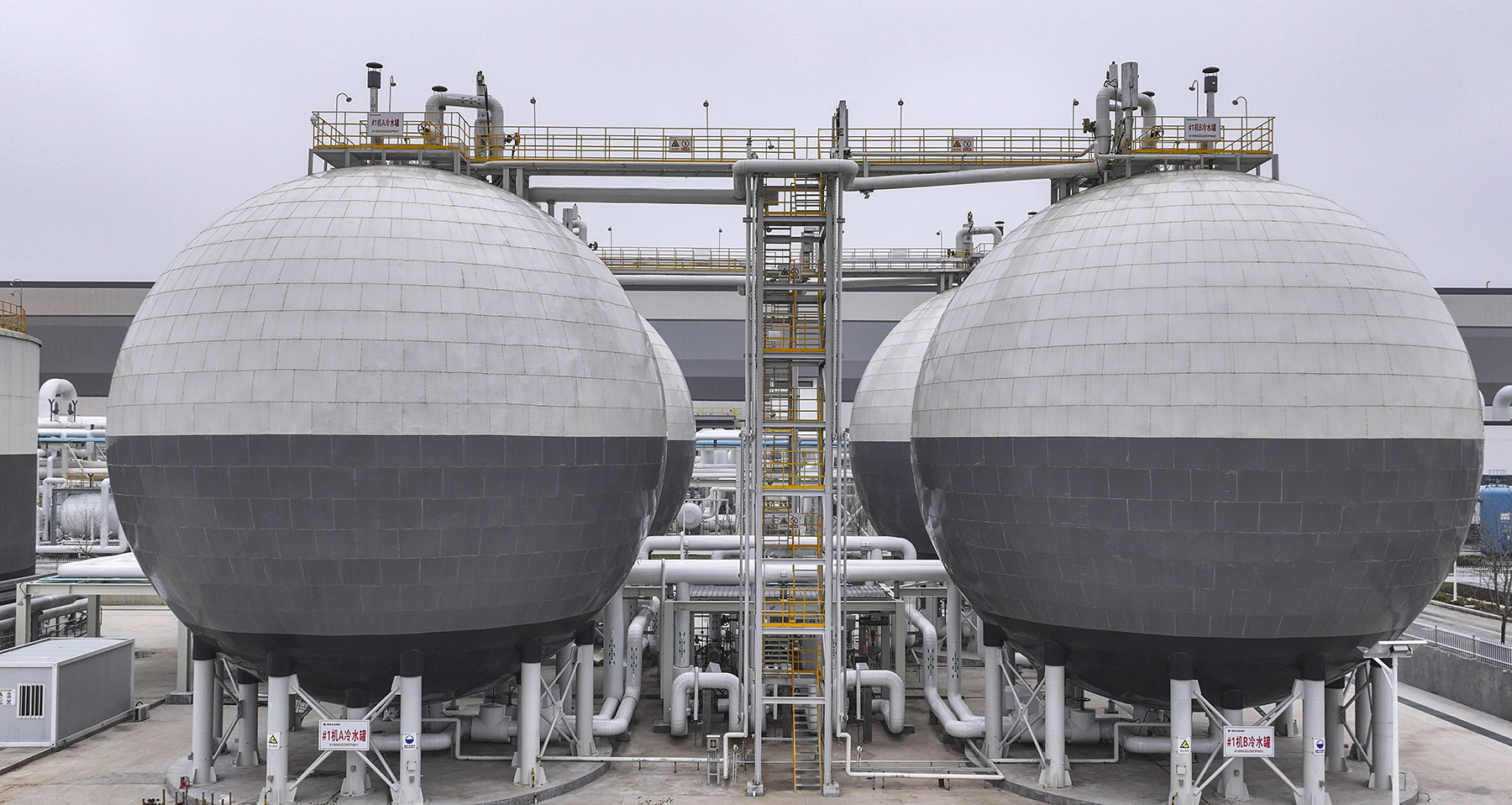
The industry's "going global" logic has evolved significantly from the simple export of finished products to a deep, systematic globalization defined by the synergistic output of manufacturing capacity, technology and industry standards.
Figures released by the CNESA DataLink global database show that newly added overseas orders for Chinese energy storage companies hit 366 GWh in 2025, representing a massive 144 percent year-on-year surge.
These orders span more than 60 countries and regions, with over 70 Chinese companies actively expanding their footprints across core markets in Europe, Asia-Pacific, Latin America, North America and the Middle East.
Industry heavyweights such as Chinese battery giant CATL, new energy power equipment maker Sungrow Power Supply, China's leading EV maker BYD, and Beijing HyperStrong Technology Co Ltd are spearheading this global charge, it said.
This expansion is increasingly characterized by massive foreign direct investment and localized manufacturing.
In March 2026, Hithium Energy Storage signed a letter of intent with the Spanish government to invest approximately 400 million euros ($471 million) in a massive battery and energy storage system manufacturing plant.
Scheduled to begin operations in 2027, the facility will focus on lithium iron phosphate battery cells and containerized storage systems.
Just a month earlier, Sungrow announced a 230-million-euro investment to construct its first European manufacturing facility, which will boast an annual production capacity of 20 GW for photovoltaic inverters and 12.5 GWh for energy storage systems.
Solar giant Longi Green Energy Technology Co said it has been actively advancing the planning and construction of a 5 GWh energy storage production facility in Atlanta in the United States, further enhancing its localized manufacturing and service capabilities to lay a solid foundation for subsequent large-scale deliveries.
Chen from CNESA said the global supply chain is fundamentally shifting its priority from regional security. Consequently, Chinese companies are adopting highly diversified, full-lifecycle layout strategies.
Fang Yi, chief strategy analyst at Guotai Haitong Securities, said Chinese enterprises are seizing high-value-added links within a shifting global industrial chain.
By moving from simple product exports to a systematic "capacity +brand + channel" approach, Chinese firms are successfully ascending to the highly lucrative ends of the industrial "smile curve", said Fang.
While the US and Europe remain vital, emerging markets are rapidly becoming the new engines of global energy storage growth, said CNESA.
According to Tian Qingjun, senior vice-president of Envision Group, the global market is experiencing an unprecedented demand for energy storage solutions, driven primarily by the rapid transition to renewable energy and soaring electricity needs.
As countries increasingly rely on intermittent power sources like solar and wind to meet their decarbonization goals, the ability to capture, store and reliably dispatch energy has become a critical necessity for maintaining grid stability, he said.
"This urgency is further amplified by the widespread electrification of transportation and the explosive, round-the-clock power requirements of modern data centers and artificial intelligence infrastructure," said Tian.
"Consequently, advanced energy storage systems are no longer just complementary assets. They have evolved into the fundamental backbone required to manage peak demand, prevent curtailment and ensure a resilient, continuous global power supply in the modern energy landscape."
Tian noted that major global markets include the Middle East, where the construction of mega-scale renewable energy bases is driving explosive demand, and Latin America, where the pressure to balance power grids overloaded with high proportions of renewable energy is forcing rapid market expansion.
In emerging Asian economies, grid stability and surging electricity demand are also accelerating project deployments, while in Africa, basic power supply security and new energy grid integration are the primary catalysts, he said.
Furthermore, analysts highlight a massive new driver on the horizon: artificial intelligence.
A recent research report by Industrial Securities projected a highly prosperous outlook for all energy storage sub-sectors in 2026, driven by a "triple dividend" of favorable policies, essential demand and improving economic viability.
Crucially, as AI data centers scale globally, their immense and continuous power requirements are positioning energy storage systems as an indispensable pillar for their stable operation, it said.
KPMG echoed this sentiment in its Global Tech Report 2026, predicting explosive growth in both new energy storage and solid-state batteries.
The consultancy noted that storage resources are transforming from mere supplementary grid tools into foundational elements of modern power systems.
On the other hand, recognizing energy storage not just as a lucrative market, but as a critical component of "new quality productive forces" and a strategic imperative for national security, centrally administered State-owned enterprises are deploying massive capital.
Multiple SOEs have accelerated their entry into the sector via joint ventures, equity acquisitions and dedicated investment funds.
ALSO READ: China achieves breakthrough in extracting lithium from salt lakes
China General Nuclear Power Group recently partnered with TCL Zhonghuan to establish a new energy joint venture in the Inner Mongolia autonomous region, with business scopes explicitly including energy storage technical services. State Power Investment Corporation also announced recently the winning bidders for a massive 7 GWh storage system centralized procurement, short-listing firms like Envision Energy.
Looking at the 15th Five-Year Plan (2026-30), CNESA projects that while the industry's percentage growth rate may shift gears following years of explosive expansion, the sheer size of the existing base will continue to generate massive absolute volume increases.
Globally, cumulative battery storage capacity is expected to surge by 8 to 17 times between 2024 and 2035. By 2030, China's installed capacity alone is projected to reach an astounding 371.2 GW to 450.7 GW.
Despite the spectacular headline numbers and the flurry of global dealmaking, the NEA also warned that China urgently needs to consolidate its supply chain advantages and enhance upstream-downstream synergy as global competition is becoming increasingly fierce and complicated.
Furthermore, despite massive installed capacities, experts agree that market and pricing mechanisms must be further refined.
Without robust economic models, the true value of energy storage — such as critical grid peak-shaving, frequency regulation and capacity support — cannot be fully monetized by operators, said Lin Boqiang, head of the China Institute for Studies in Energy Policy at Xiamen University.
Contact the writers at zhengxin@chinadaily.com.cn
