

Arriving with no expectations, a five-day journey through mountains, forests and rivers reveals a province best experienced in person, not on a screen, Thomas Hopkins reports.
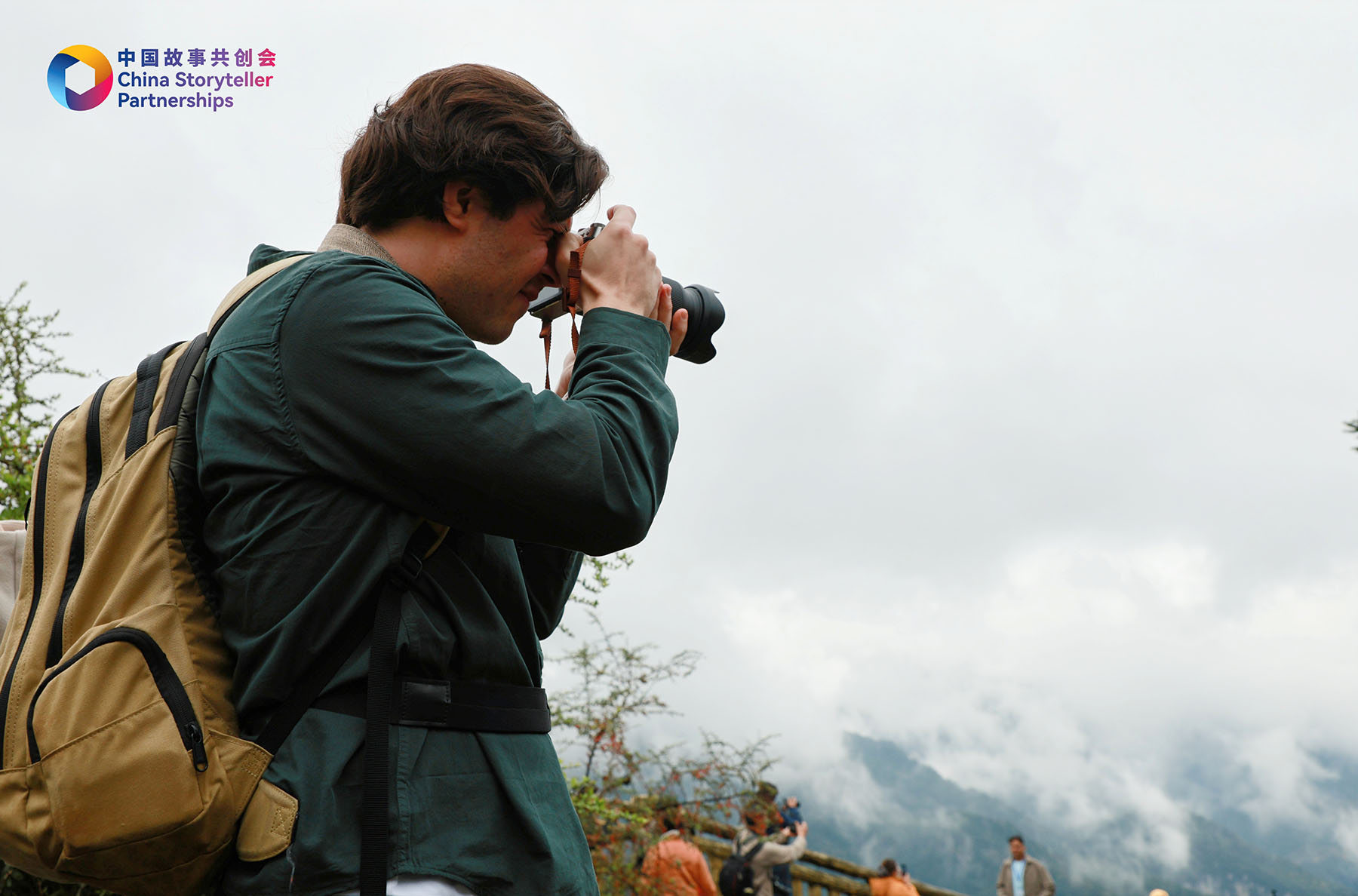
Prior to landing at Guiyang Longdongbao International Airport and being quickly shuffled off to catch a train to Tongren, I knew nothing about the province of Guizhou or what to expect from the five days I would be spending there.
A detailed guide had been provided to me, but besides skimming the itinerary — going to a mountain, cool; experiencing matcha culture, sounds fun; playing basketball in a cave, all right — I didn't read it because, well, I didn't feel like it.
I was on vacation in the days leading up to this trip, and, hey, I like surprises. To put a more philosophical spin on my laziness, in a day and age when it's common to live vicariously through online content, I think there is virtue in going into a situation blind.
READ MORE: Guizhou is an adventurer's paradise
While cities like Beijing, Shanghai, Xi'an in Shaanxi province, and Chengdu in Sichuan province usually top China's tourist destination lists, Guizhou offers an environment that feels unique: vast, inescapable mountains covered in lush, endless green forests, with pristine, teal-blue rivers cutting through it all, and a truly countless number of caves and waterfalls waiting to be explored.
To sharpen that point, Guizhou boasts its many UNESCO World Heritage sites — Libo Karst, Shibing Karst, Chishui Danxia, and Fanjing Mountain; and there's also the Shuanghe Cave system, which is recognized as the longest dolomite cave system in the world.
Of course, I didn't know any of this going in, but as I sat by a window on the train and watched this beautiful, picturesque landscape — mountains near and far, little clusters of homes nestled in valleys in between, mighty rivers parting rising rock formations, and terraced grass fields — fly by, I began to wonder if I had gone through some kind of wormhole and been transported to a fairytale-like wonderland.
I skimmed the materials again, my eyes settling on the second sentence: "Guizhou is defined by its breathtaking landscape, where mountains and hills cover over 92 percent of the terrain." That explained it."Bro, this place is over 92 percent mountains," I texted my friend back home in the United States, as if I were now an expert on the region.
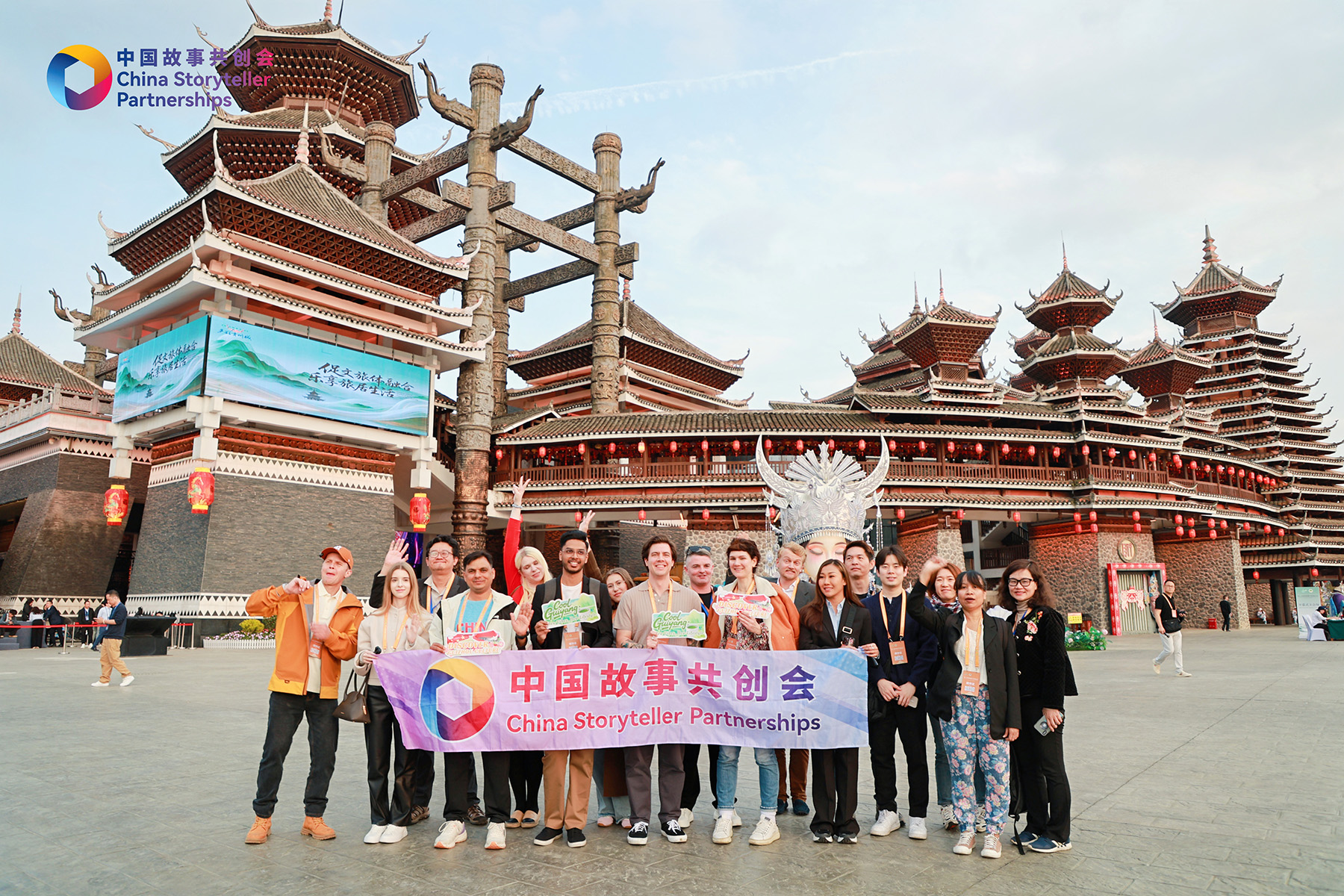
As a participant in the 2026 China Storyteller Partnerships — Global Media and Content Creators Explore Colorful Guizhou trip, I had the pleasure of being disabused of my ignorance, not through internet searches and social media snippets, but through firsthand immersion in the cities of Tongren and Guiyang. And yet, with a loaded five-day itinerary, I still experienced only a small taste of what the province has to offer.
With saving the beginning for the end in mind, I'll start with day two on Fanjing Mountain and an admission: as someone with a fear of heights, if I had known what was awaiting me, I probably wouldn't have made it as far as I did.
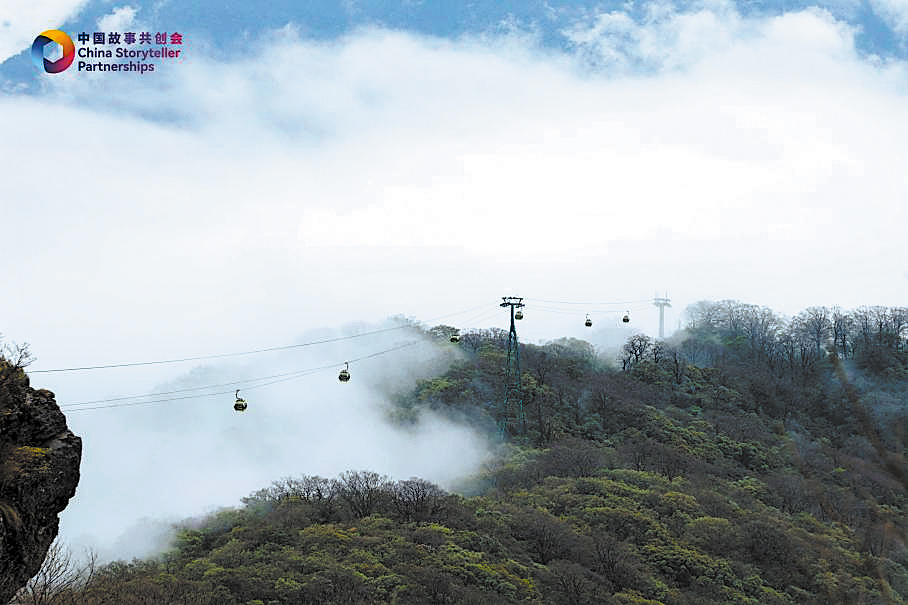
A 20-minute cable car ride that shoots you up the mountain and high above the clouds was just the beginning. From there, it's a kilometer-long hike up a winding wooden staircase through the surrounding forest — the exclusive home of the critically endangered Guizhou snub-nosed monkey. Then, the big reveal: the Red Cloud Golden Summit, a 2,572-meter-high pillar-like mountain peak split by a narrow gorge with twin temples crowning each side. A string of expletives left my mouth. Even if I had seen pictures or videos beforehand, the reaction would have been the same. Nothing can prepare you for something so magnificent.
So, how do you get to the top? More stairs. With a journalist's commitment to the truth, it is my sad duty to report that I made it only about a quarter of the way to the summit, to where the stairs reached a point where the banister drops straight off a cliff ("Don't look down!" Yeah, I know, whatever, I'm scared) and I had to gracefully bow out. Maybe next time.
The next day, we took a boat through the Lizhi Gorge. For over an hour, we gently floated on the surface of the Wujiang River, whose waters are a shade of blue-green that I had never seen before in nature. The weather was gloomy, with intermittent rain and thick clouds of mist rising like smoke from the trees. It would have felt ominous if it weren't so beautiful.
Surrounded on both sides by cliffs, mountains, and forests, sitting atop the vibrant river, it felt as if we were in a scene from a sci-fi movie — you know, right before something really bad happens. But, luckily, this isn't a sci-fi movie; this is Guizhou. This is China, where human development coexists with the protection of natural assets, like lucid waters and lush mountains.

However, natural beauty isn't the only thing Guizhou has in spades. Indeed, the province's ecological variety is matched only by its ethnic diversity, with 17 indigenous ethnic groups, such as the Miao, Dong, and Bouyei, each preserving their own traditions and customs, which leads me back to how the journey began.
After getting off the bus, we were greeted at a gate by a group of people from the Dong ethnic group: a man flanked on both sides by beautiful girls dressed in colorful, traditional costumes standing in front of a table of bowls filled with rice wine. They sang us a song backed by the sounds of a Dong pipa — a traditional lute of the Dong people. Then the girls picked up the bowls and brought them to their guests. The girls raised bowls of rice wine to my lips, and after I finished sipping the sweet spirit, they smiled and welcomed me to China.
We were then led through something of an obstacle course where we jumped over bamboo poles. From there, the girls went onstage and performed several spectacular dance routines, and then, as the guests of honor, we lit a ceremonial bonfire and danced around it, holding hands while music played.
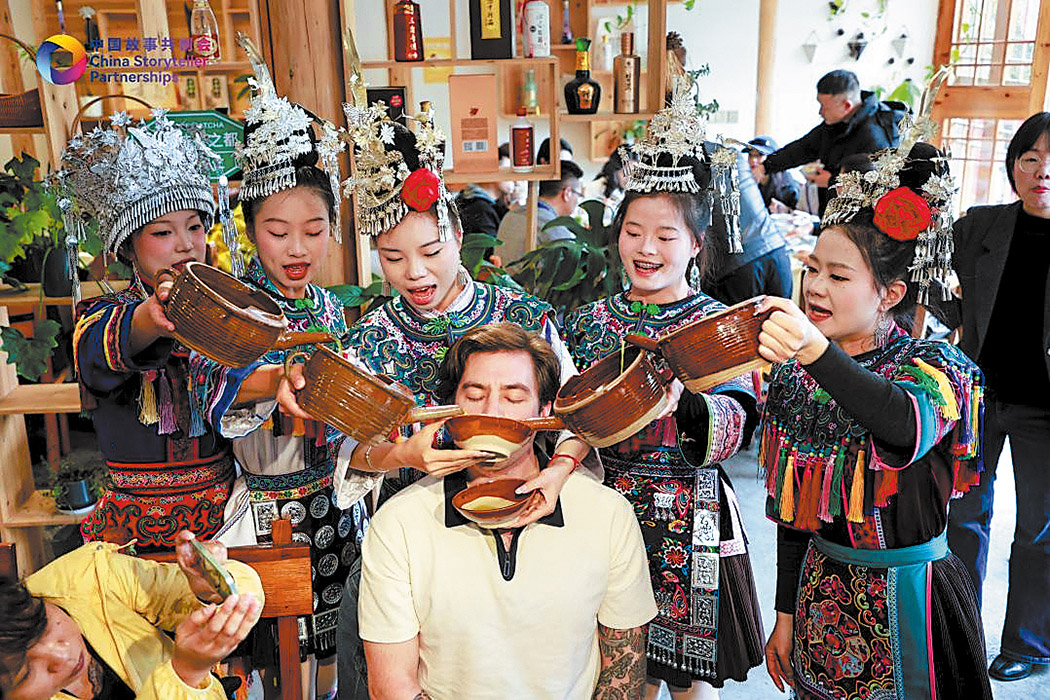
In the midst of this celebration, my mind couldn't help but wonder, "How is this my life? How did I get so lucky to be part of something so unique, fun, and life-affirming?"
However, I didn't daydream for long; I wanted to be fully present for the gift that was being bestowed upon me. To be welcomed so warmly and graciously, and to take part in these cultural traditions rooted in 5,000 years of civilization, is not something that I take for granted.
ALSO READ: It's all about the eating
Experiences like this are a reminder that you cannot live life through a phone screen. You simply cannot feel like I did because of a video on social media. No drone footage will allow you to breathe the crisp mountain air as you gaze out over the clouds. And no description, not even by an incredibly gifted writer such as myself, can convey the warmth of the people who greet you with open arms, eager to share their culture with you.
Go to colorful Guizhou for yourself and experience all it has to offer.
Contact the writer at hopkins@chinadaily.com.cn
