

Food is driving a new kind of tourism, one that puts sights in second place
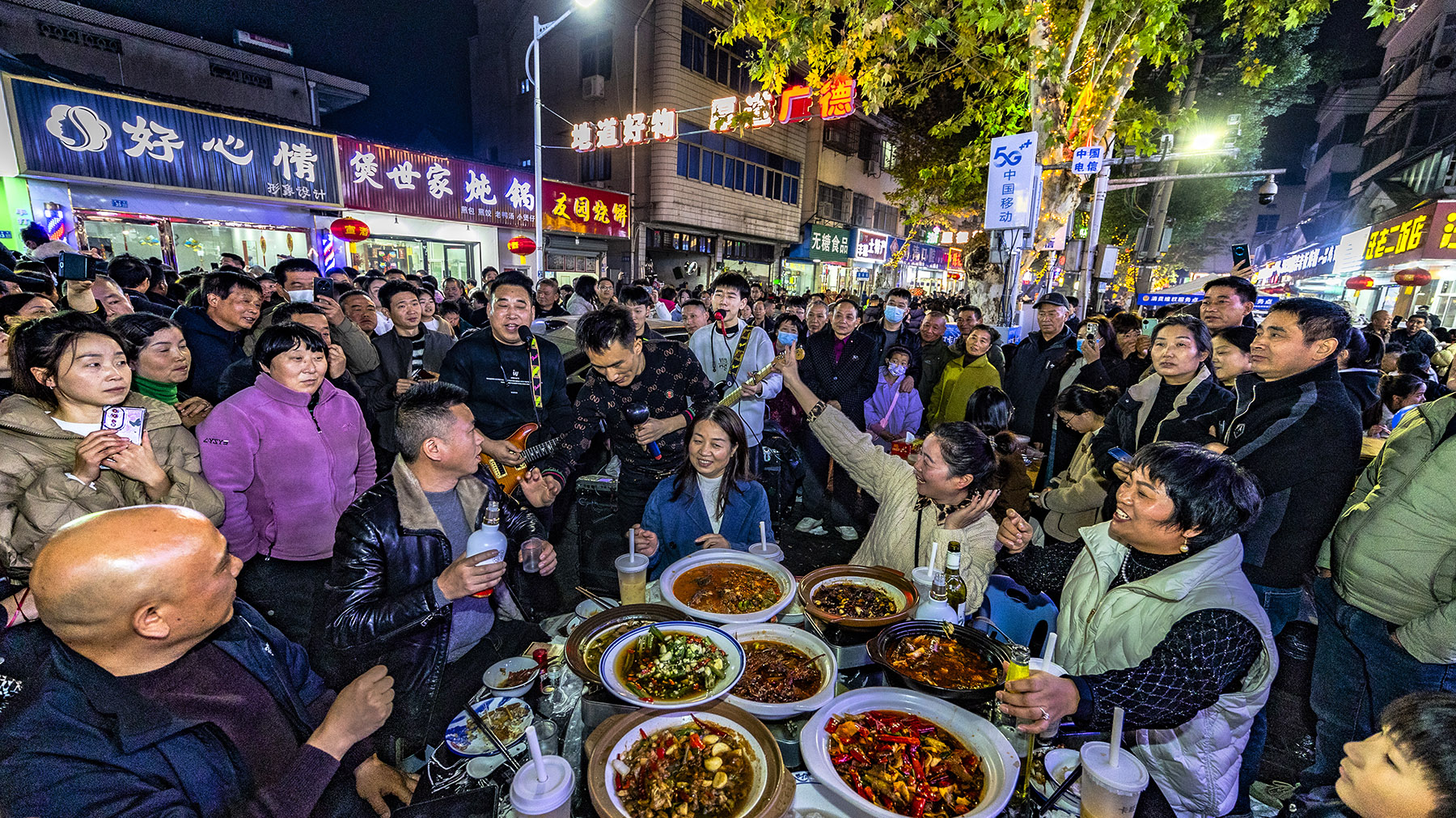
Travelers, especially young adults, are increasingly chasing authentic local food in places far and wide.
On social media platform Xiaohongshu, the hashtag "small towns worth visiting just to eat" had attracted about 1.47 billion views and more than 5.5 million posts as of December.
Rather than starting with sightseeing, some tourists search a place name and arrive with a food list already made even before the airplane lands.
Are there any cities that are just for eating — no sightseeing needed? The answer is yes. Netizens with a bent for travel are posting long lists of towns and their signature dishes.
READ MORE: Experience Guizhou's gifts
Taken together, three destinations selected for this article show different faces of the same phenomenon: They are building their identities and economies around food, with social media platforms providing the map.
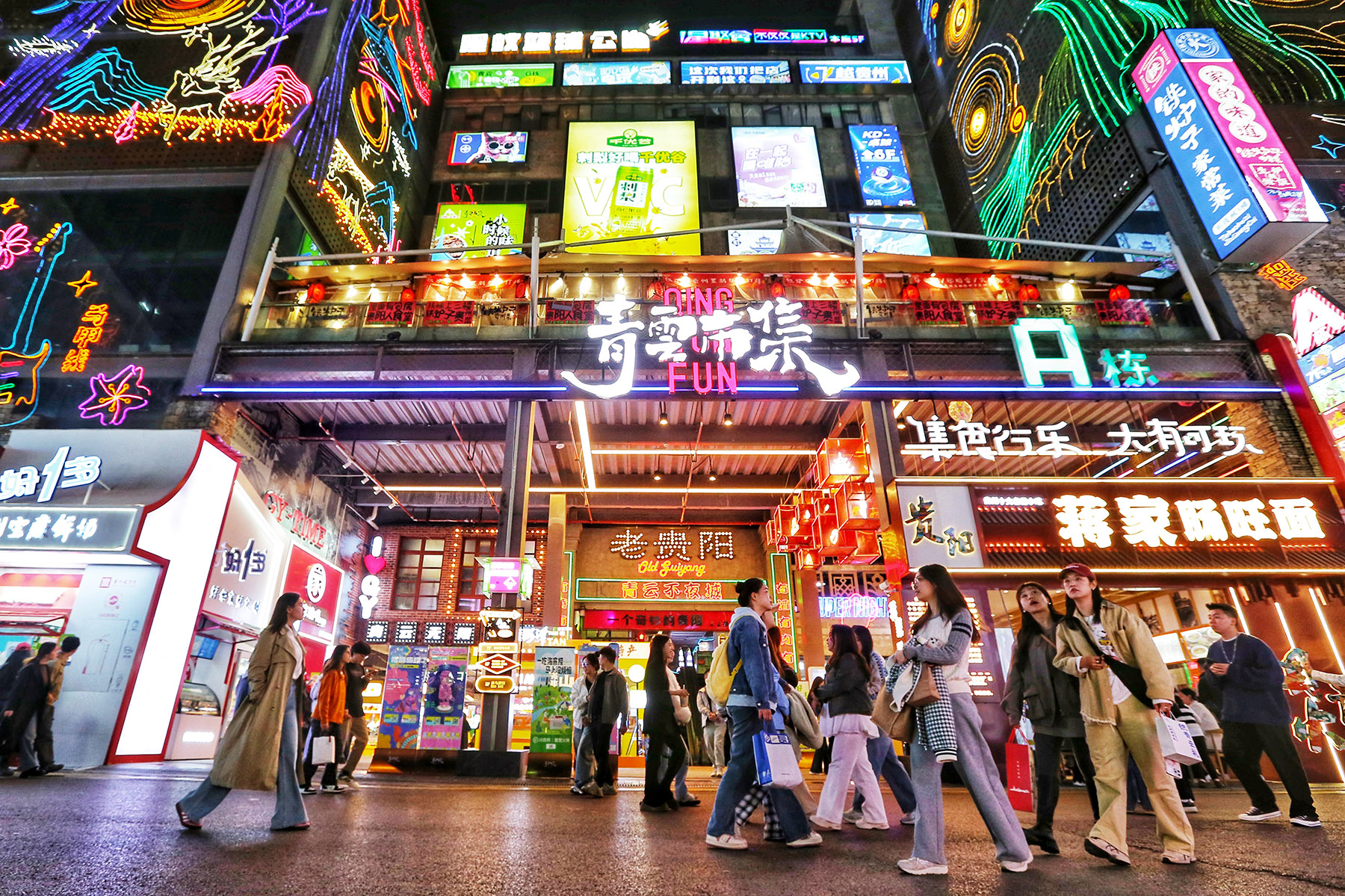
Guiyang, Guizhou province
As one commenter put it, "Anyplace in Guizhou should be on the list. It is just so, so delicious." In recent years, Guiyang has arguably risen to prominence on China's map for the food-obsessed.
Guiyang, the provincial capital, is often used as a transit hub for travelers heading to other attractions. Compared with those scenic draws, the city itself was once considered less entertaining — that is, except for its food.
Guiyang's cuisine has become a virtual consensus of praise. Travelers are a familiar sight on the city's streets, pulling suitcases while hunting for something to eat. Signs for spicy chicken, potato cakes and sticky rice frequently feature a passport-style photo — the face of the vendor working behind the countertop.
The stalls are typically small and modest, but each commands a loyal following. Potato cakes are crispy on the outside and glutinous inside, typically dipped in local chili powder. Sticky rice is mixed with lard, soy sauce and crispy pork bits, then wrapped around pickled radishes and peanuts. Every bite has a strong flavor that's unmistakably local.
"I found the sticky rice by following an online guide," said a visitor surnamed Yan from Suzhou. "In Guiyang you can even eat five meals a day."
On Xiaohongshu, posts recommend shops such as Ding's Sticky Rice and Auntie Yu's Potato Cake. When asked why vendors put their faces so prominently on their signs, a vendor selling fried potatoes laughed and said, "If you put your face out there, customers know exactly who you are, and you cannot just disappear." This presumably keeps the food quality high.
That distinctive signage has spawned its own check-in culture. When visitors are unsure whether a food stall is the one that was featured in a guide, posts may include a close-up of Auntie Yu so readers can verify the match at a glance.
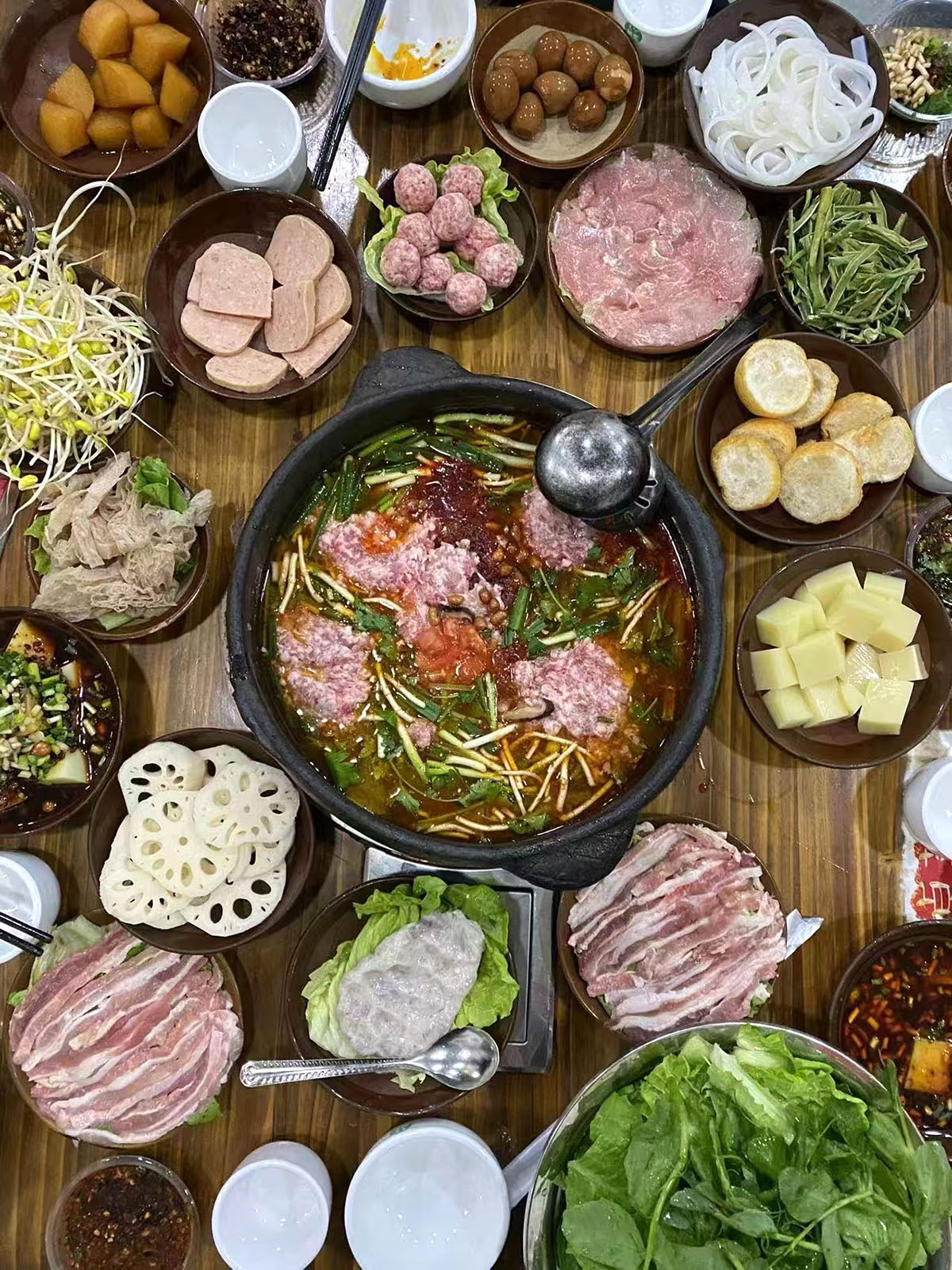
If these down-to-earth morsels form the base rhythm of Guiyang's food scene, a rising accent note is reshaping its palate: coffee.
It may come as a surprise, but coffee has been one of the city's biggest draws over the past two years. Tang Weiyi, a visitor from Chengdu and a dedicated coffee fan, took high-speed trains to Guiyang twice just to try its coffee and even brought a cup back on the return trip.
He said he had heard that the business owner of Guiyang brand coffee Captain George won an international contest. That shop was his first stop on the trip.
Long lines form at the best cafes. A staff member at one of Captain George's outlets said peak wait times reach one or two hours for a sought-after cup of brew.
Another brand, SeekSeeking cafe, has 10 outlets across the city. They sold around 3,000 cups per day on average during this year's National Day holiday, local media reported.
Part of the appeal is the ritual. Coffee is sometimes served in a goblet topped with a woody aromatic foam and finished off with a citrus peel.
After visiting three cafes one day, Tang said Guiyang's coffee "definitely feels different".
"Each shop has its own character. They don't feel interchangeable. The orange-flavored specialty left the biggest impression."
Guiyang has about 6 million permanent residents and more than 3,000 registered cafes. That is roughly one cafe per 2,000 people, compared with one per 3,000 in Shanghai. This gives the city one of the country's highest cafe densities, and the figure has continued to rise, Xinhua News Agency reported.
Local baristas dig deep into niche competitions such as roasting, brewing, latte art, espresso, cupping and creative coffee. Each shop stakes out its own specialty.
"Local flavor, a relaxed vibe, youthfulness and new ways to play are Guiyang's four keys," said Long Cong, vice-mayor.
From street snacks to meticulously crafted specialty coffee, Guiyang is building a layered, youthful food ecosystem that increasingly draws visitors who come mainly to eat.
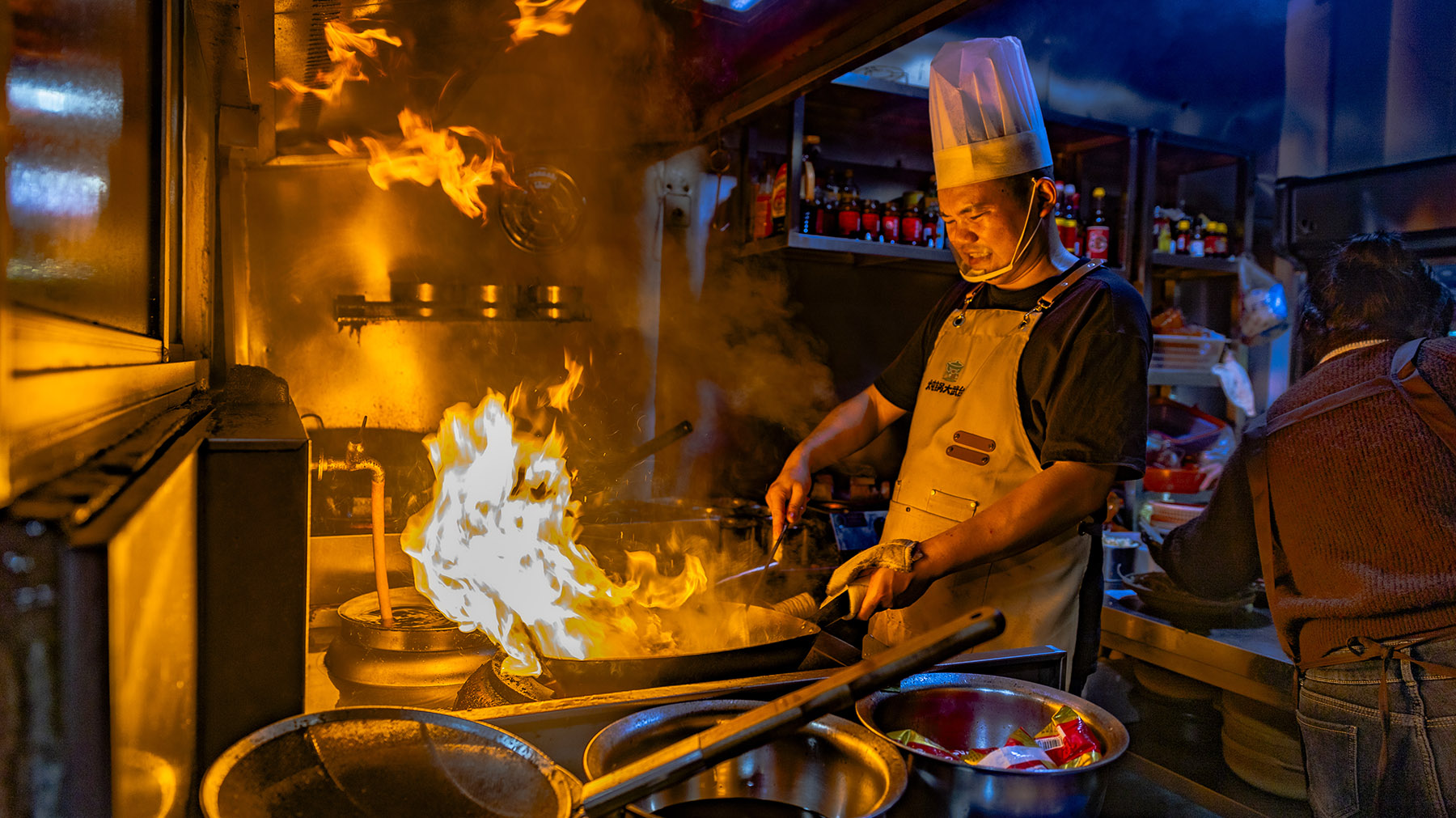
Guangde, Anhui province
Shift east and the story changes scale but not theme. Guangde, a county-level city in Anhui province, has become a magnet for short, food-first trips.
Its proximity — roughly a two-hour drive from Shanghai, Hangzhou and Nanjing — makes it ideal for micro vacations. Social media short videos and posts have driven thousands of visitors to its stew pot restaurants, milk-tea stands and dim sum counters.
The license plates of vehicles on the road show that many visitors come from other provinces.
They are particularly fond of the local stewed dish — Guangde stew pot, as well as Come Wonka milk tea and Zhanji dim sum.
On a recent Friday night, Wang Xiaoyi, 28, and her boyfriend drove from Shanghai to Guangde. "We were tempted by the steaming stew pots we saw in short videos," she said.
"We were pleasantly surprised to find free parking. Volunteers handed us a hand-drawn tourist map with large, clear writing. The police officers patrolling the street made us feel very safe."
While customers lined up at the restaurant entrance, employees offered Wang and her friend hot tea to keep warm.
"It felt like the whole city was welcoming us. The enthusiasm of the people of Guangde is even warmer than the stew pot's fire," Wang said.
On Nov 18, 2024, Guangde held a stew pot competition on Yingchun street, which included a tasting event known as the Hundred Pot Feast. It got widespread attention online.
From Nov 23 to Dec 15, Guangde received more than 4 million tourists, equivalent to eight times the registered population of the region. At the end of 2024, the registered population of Guangde was 511,300, according to the local government.
Located at the geographical center of the Yangtze River Delta region, Guangde borders both Jiangsu and Zhejiang provinces. This irreplaceable location naturally integrates it with three major metropolitan areas, significantly reducing the travel costs for tourists and opening a convenient door for the influx of micro vacationers.
The local government established a dedicated service team to inspect merchant service quality daily and respond promptly to complaints from residents and visitors alike.
To facilitate visits to local attractions, the local government also launched a no-cost transportation network with free bus lines connecting urban and rural attractions. It also introduced special buses that offer coffee.
The government opened more than a dozen free parking lots in popular areas, and government institutions opened their internal parking spaces for visitors to alleviate the pressure. Tourist maps and food maps were also distributed widely, frequently pushing travel information through official media to help tourists plan their trips.
The authorities responsible for food supplies ensured a stable flow of essential stew pot ingredients such as bamboo shoots and chicken.
Local dining businesses collectively promised to maintain freshness, to refuse preprepared food and to keep prices steady.
Warm-hearted local residents voluntarily adhered to a "not driving unless necessary" policy and actively gave way to tourists. They even offered local snacks to visitors, creating a touching citywide environment of hospitality.
More than that, major attractions waived entrance fees and organized fireworks shows and hanfu parades to enrich visitors' experience. Tourists were encouraged to shift from "having a meal" to "spending a day" in Guangde.
Zhao Jianhua drove from Anji county, Zhejiang province, to Guangde in less than an hour. "It was even faster than going to downtown Hangzhou," he said.
Zhao was highly satisfied with the stewed chicken and chestnut pot. Friends who came with him spent a long time taking pictures of their milk tea with their phones.
"We originally came for the food, but didn't expect there would be so many surprises. We must stay overnight next time," Zhao said.
Northeast China
In the northeast, a different kind of reinvention is underway.
Recently, a tea brand from Shenyang, Liaoning province — 700CC — has been making waves on social media with its corn grits milk tea. It has become the hottest trendy drink in the region as winter begins.
The innovative product combines traditional coarse grains from northeastern breakfast tables with modern tea drinks for a rustic rush just in time for the peak of ice and snow tourism.
Corn grits, known as dachazi in the northeast, have always been a simple and unpretentious staple in porridge and other dishes, carrying the homestyle flavors of childhood for many generations.
This winter, through the innovative work of 700CC, the traditional grits have been transformed into the new star of the milk tea industry. According to 700CC, the new product uses high-quality whole corn from Northeast China, ground to retain the plump corn germ particles. This is paired with brown sugar pearls, buttery corn milk, and a milk base made with natural soda water.
The hot version is warming and filling, while the cold version is refreshing and blends the fragrance of grains and milk in each sip.
The company also introduced a new corn toy pendant that evokes childhood memories and local sentiments for northeastern children.
"The new product was launched on Nov 15, priced at 18 yuan per cup offline," said Liu Haifeng, manager of a 700CC store in Harbin, Heilongjiang province. "It's selling well, with 200 to 300 orders on weekends," he said. "Most customers choose the hot drink, saying it's perfect for winter."
At Liu's store, most of the customers are young adults.
"I saw it on Xiaohongshu and came specifically to try it today," said Hu Yaoqiang. "I didn't expect to actually chew on particles of corn grits. That's its real taste."
For Zhao Lijia, a tourist from Hangzhou, Zhejiang province, the milk tea was an unexpected highlight of his trip to the northeast.
"I had only heard of northeastern corn grits before, and I didn't expect it could be made into milk tea," he said. "The soft and sticky texture is very special, making it an immersive experience of the culture of Northeast China."
The corn grits milk tea development team explained that the product deliberately retains the rough texture of corn grits paired with brown sugar pearls to enhance the chewing experience.
The warm yellow packaging design and themed toy pendant give the product a comprehensive regional feel.
The brand's cofounder, Xiao Wanqi, said the success of corn grits milk tea reflects confidence in Northeast China culture.
"We plan to continue exploring the potential of local ingredients, launching more products with regional characteristics and innovative flavors," she said. Currently, the drink is selling well in stores across the northeast, with related videos on platforms like Douyin accumulating more than 10 million views.
With sales booming offline, it's no surprise that online discussions are lively, too. On Xiaohongshu and Douyin, the topic "Northeastern corn grits milk tea" continues to gain traction.
ALSO READ: Guiyang's tourist appeal grows
Enthusiasts say that products like corn grits milk tea combine regional culture with tea consumption, so they broaden ingredient boundaries and give the brand a unique memory point. That makes it instantly addictive.
Critics, however, argue that excessive pursuit of "outrageous" creativity might deviate too far from the essence of tea drinks, and the 18 yuan price far exceeds the perceived value of traditional corn grits porridge.
So, if the taste and experience don't measure up to expectations, it might end up as just a short-term marketing gimmick, they say.
And so there you have it. Guiyang, Guangde and Shenyang showcase three different food-first landscapes, all shaped by the combined forces of social media platforms that map desire, young consumers who value authenticity and want to share and local actors, including vendors, cafes, governments and brands, which respond fast to demand.
For planners, the lesson is clear. Food can be a gateway to a city or a region, but lasting success depends on infrastructure, transparent supply chains and preserving the sensory and social ties that make a dish worth traveling to taste.
Contact the writers at liuboqian@chinadaily.com.cn
