

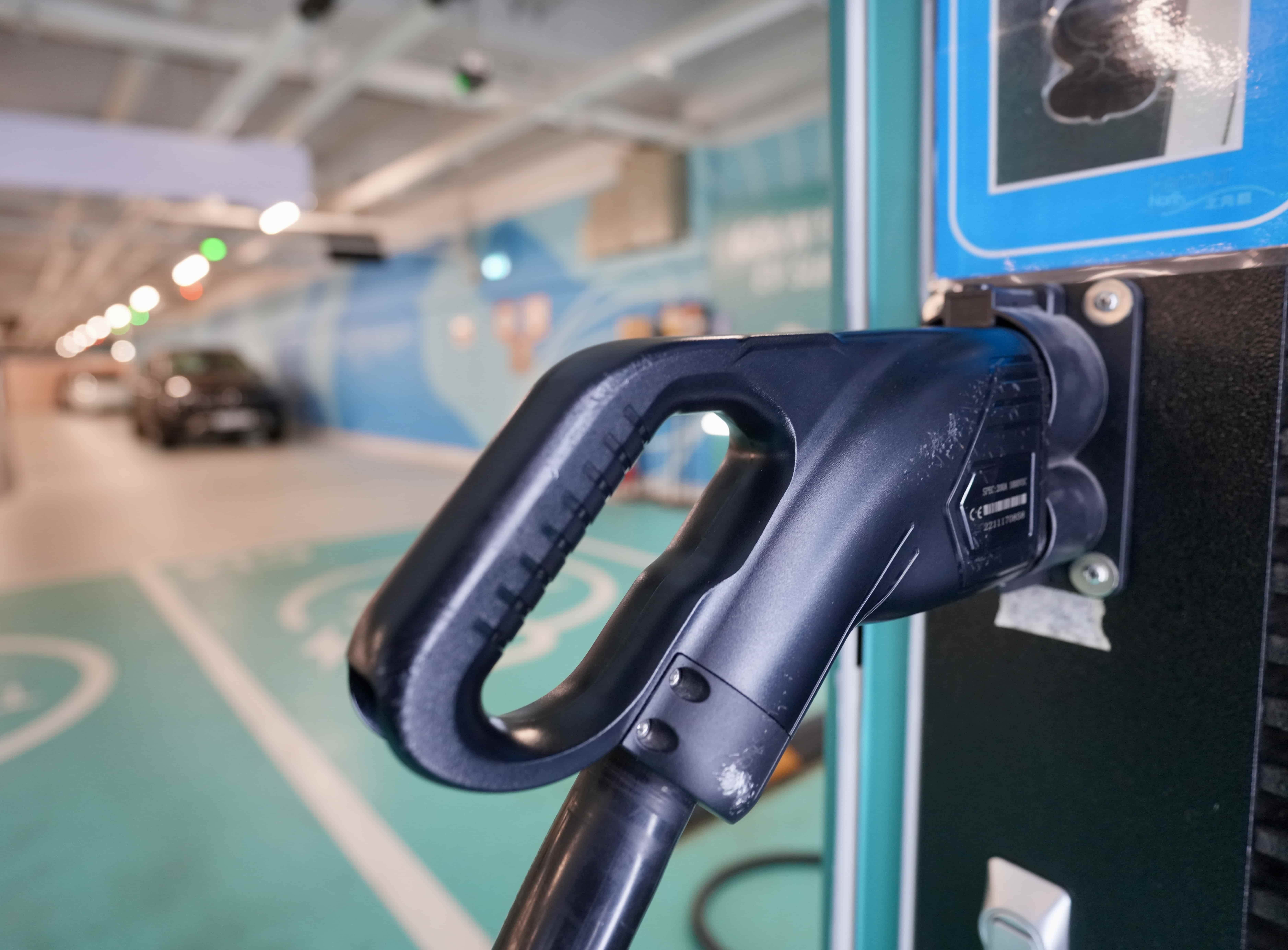
The current surge in oil prices, fueled by turbulence in the Middle East, offers “perfect timing” for Hong Kong — a city tied to fossil fuels — to push for wider adoption of electric vehicles by solidifying its policy incentives and power infrastructure, according to industry experts.
It is also imperative for the special administrative region to stick to electrification as a long-term strategy as energy security is a vital pillar of national security — a key goal in line with the nation’s recently approved 15th Five-Year Plan (2026-30) that emphasizes shifting away from fossil fuels and becoming energy self-reliant.
Globally, many countries are under strain due to their reliance on fossil fuels as the Middle East crisis unfolds following the United States-Israeli strikes on Iran late last month. Consequently, Iran closed the Strait of Hormuz — a vital passage for oil shipments.
The impact is already felt on Hong Kong’s streets where 82 percent of vehicles continue to rely on fossil fuels, including gasoline, diesel and liquefied petroleum gas. Between Feb 28 and March 21, the SAR’s average premium gasoline price — after walk-in discounts and reduced duty — climbed by 8.8 percent, from HK$17 ($2.18) per liter to HK$18.50. For motorists with a 50-liter tank, the surge translates into an extra HK$75 for each refueling.
Chief Executive John Lee Ka-chiu said last week the city’s authorities have required oil suppliers to ensure a steady, uninterrupted flow of fuel, and enhance the transparency of their pricing mechanisms. The SAR government has said that, starting from April 1, it will publish weekly post-discount pump prices of all oil companies, benchmarked against international refined oil rates to provide motorists with clear market references.
ALSO READ: New program set to boost Chinese mainland EV exports to HKSAR
Legislator Simon Lee Hoey said the oil-dominated energy landscape has repeatedly buckled under the weight of geopolitical instability, triggering waves of pessimism in financial markets and, in several instances, full-blown economic crises.
As energy security remains a critical pillar of national security, the lawmaker said it is important for Hong Kong to enforce robust measures to reduce reliance on fossil fuels and diversify its energy mix, as stressed in the 15th Five-Year Plan.
In 2025, non-fossil energy consumption on the Chinese mainland surged to a record 21.7 percent of total primary energy use. This volume is roughly equivalent to the combined non-fossil energy consumption of the entire G7 bloc.
Fast-tracking the adoption of EVs and other clean energy solutions, he said, must be prioritized in the city’s medium-term strategy.
Stronger EV adoption
“Reducing our reliance on fossil fuel means Hong Kong won’t be grabbed by the neck by others,” said Ringo Lee Yiu-pui, honorary life president of the Hong Kong, China Automobile Association, as volatile gas prices are driving more consumers to electric alternatives.
He urged the SAR government to reconsider the scheduled March 31 termination of certain tax concessions for private EVs. “Instead of ending these benefits, the authorities should consider how to sustain the momentum”, he said.
According to official data, Hong Kong’s rapid embrace of EVs has led to a quadrupling in their number on the city’s roads to more than 140,000 in just four years, accounting for 18 percent of all vehicles.
Ringo Lee attributed the rapid adoption to national policies, an expanding lineup of EV models, particularly from the Chinese mainland, and local tax waivers.
Hong Kong has, for years, exempted EV buyers from paying first-registration tax. For gasoline-powered private car owners who intend to switch to electric, they can get a duty exemption of up to HK$172,500 if they agree to dismantle a non-EV, also known as the One-for-One Replacement Scheme.
However, while the government’s latest budget sustains similar tax benefits for commercial EVs for another two years, the One-for-One policy is due to be terminated on March 31.
READ MORE: Mainland EV maker Seres raises $1.8b in HKSAR listing
At present, private cars make up around 72 percent of all vehicles on Hong Kong’s roads, and the pivot away from private EV incentives has raised concerns among advocates like Ringo Lee.
“There are now seven EVs among every 10 newly registered cars in Hong Kong — a growth rate that’s among the highest in the world,” he said, adding he sees no reason to curb the momentum.
The convergence of rising consumer preference, government support and global oil price volatility now offers the “best timing” to step up EV adoption, Ringo Lee said, urging the authorities to refine the policy rather than discarding it.
Infrastructure gaps
Billy Mak Sui-choi, associate professor in Hong Kong Baptist University’s Department of Accountancy, Economics and Finance, noted that Hong Kong’s gasoline prices are among the highest worldwide, while electricity costs remain relatively low compared to those of many other major metropolises, creating a compelling financial incentive for drivers to switch.
He emphasized that vehicle electrification is a pillar of national energy security as every sector has transportation needs. “Electricity can be generated through diverse channels. It doesn’t have to rely on oil imports from the Middle East,” he said.
Hong Kong’s power grid is already heavily insulated from external risks by its integration with the mainland. Mak said 48 percent of the fuel used in Hong Kong’s power plants is natural gas supplied by the mainland, while another 28 percent is sourced from the Daya Bay nuclear power station in Shenzhen, Guangdong province.
As the world’s fourth-largest natural gas producer, China provides a critical buffer that shields Hong Kong’s electricity market from the extreme price swings often seen in oil markets.
READ MORE: Huawei’s EV partner Seres said to gauge interest for $2b listing in HKSAR
The SAR’s EV fleet is projected to double to 290,000 units by 2030, meaning that one in every three vehicles on the road will be electric. However, Mak warned that infrastructure remains a significant hurdle.
“We don’t have enough chargers,” he said. “And, the power system in many old buildings was never designed to accommodate the high-load installation of multiple charging points.”
Ringo Lee suggested introducing the mainland’s ultra-fast charging solution, through which an EV can be fully charged in a few minutes, to address the bottleneck, while Mak urged the government to secure more land for installing chargers, and establish clearer safety protocols for high-density chargers.
Simon Lee said Hong Kong should include more renewable energies in its fuel mix of power generation, while upgrading the grid to enable the import of zero-emission electricity from the mainland, further reducing the city’s exposure to fossil fuel pricing.
The shipping and aviation sectors however, remain reliant on fossil fuels — a reality that leaves them vulnerable during oil price spikes.
Chow Shui-kan, president of the Hong Kong and Kowloon Fishermen Association, said over 90 percent of the city’s large fishing trawlers had been grounded at ports after fuel prices jumped from less than HK$1,000 a barrel to over HK$2,000 a barrel in the past two weeks.
“An oceangoing trawler consumes 13 to 15 barrels of fuel daily,” he explained. “At these prices, operating is simply unaffordable for most shipowners.”
Hong Kong is studying alternative fuels, such as methanol for maritime transportation, and sustainable aviation fuel (biofuel produced using waste products such as used cooking oil) for aircraft.
Mak said that as these fuels can be processed locally and their pricing is largely decoupled from global oil markets, they represent ideal substitutes for energy security.
However, industry reports show that high production costs, low adoption willingness and a lack of refueling infrastructure remain significant hurdles.
He urged the government to offer incentives for fishermen to switch to green fuels — a necessary step to ensure that Hong Kong’s traditional industries are not left behind in the push for energy security.
Contact the writer at williamxu@chinadailyhk.com
