

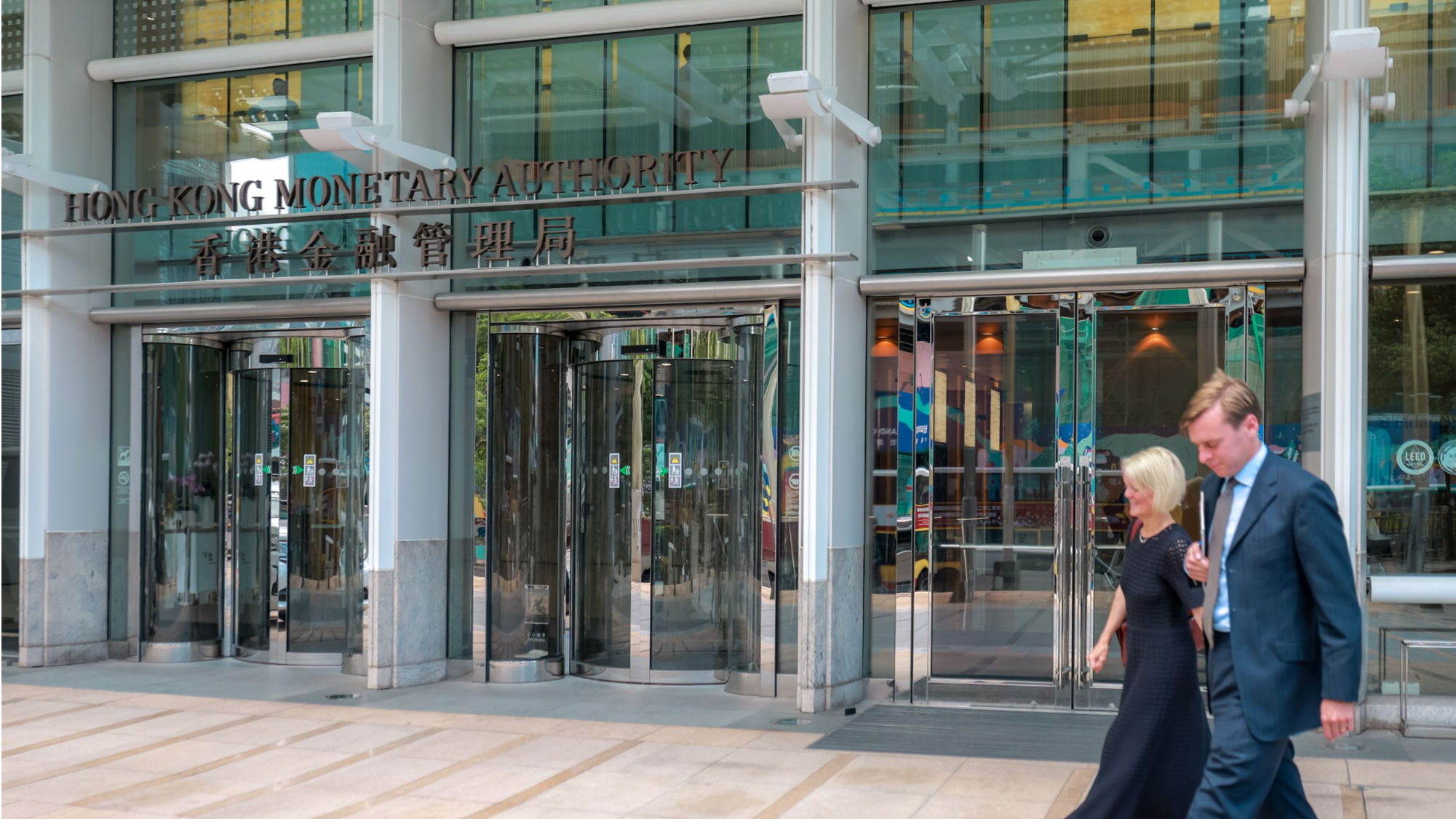
The Hong Kong Monetary Authority announced on Thursday that it will hold its base interest rate steady, at 4 percent, after the US Federal Reserve left rates unchanged amid increased uncertainty and rising inflationary concerns due to the conflict in the Middle East.
The HKMA announcement came hours after four Fed officials, including three who objected to language in their post-meeting statement that suggested the central bank would eventually resume cutting rates, voted against the decision to leave their benchmark federal funds rate in a range of 3.5 to 3.75 percent.
The 8-4 vote marked the first time since October 1992 that four officials dissented against a Federal Open Market Committee decision after a two-day policy meeting.
Asked about the dissents in what will be his last press conference, Fed chair Jerome Powell said they reflected the fact that the center of the committee “is moving toward a more neutral place.” But, he added, “a majority of us didn’t feel like we needed to send a signal on that right now.”
Referring to the Fed decision, the HKMA said in its statement on Thursday that the policy decision is in line with market expectations.
“The market generally considers that the path of US monetary policy remains quite uncertain, and depends on developments in US inflation and labor market, especially as oil prices have remained elevated amid continued tensions in the Middle East region, with the impact on US inflation still to be observed,” the statement reads.
RELATED ARTICLES
- ME conflict in focus as HK follows Fed to keep base rate unchanged
- HKMA cuts base rate to 4% following Fed move
- HKMA chief warns of HKD interest rate hike amid tightening liquidity
- Tracking Fed, HKMA cuts rate in move seen positive for economy
The HKMA pointed out that Hong Kong’s monetary and financial markets have continued to operate in an orderly manner, but cautioned that the future trend of US interest rates is quite uncertain, which may influence the interest rate environment in Hong Kong.
“The public should carefully manage interest rate risks when making decisions about property purchase, investment or borrowing,” it added.
Under the Linked Exchange Rate System, Hong Kong dollar interbank rates generally track the US dollar counterparts with the city's currency pegged to the greenback in a tight range of 7.75-7.85 per dollar, while shorter-tenor interbank rates tend to be also influenced by the supply and demand of Hong Kong dollar funding in the local market such as seasonal factors and capital market activities.
In the latest rate cut, the HKMA lowered its base interest rate by 25 basis points to 4 percent on Dec 11 last year, shortly after Fed officials delivered a third consecutive interest-rate reduction and the final one for the year.
Amid stalled peace negotiations between the US and Iran, the global oil prices surged on Wednesday to settle at about $118 a barrel, with the average US gasoline price up 40 percent to almost $4.23 a gallon since the February 28 start of the conflict.
Data released on Thursday is expected to show that the inflation index used by the Fed to set its 2 percent inflation target increased 3.5 percent on an annual basis as of March, Powell said, with risks that the combination of import tariffs and high energy costs could feed further into underlying or "core" inflation that would make the central bank's inflation fight harder.
"The prospects are real ... We're going to have to wait and see," Powell said, noting that while policymakers were not ready to signal the possibility of rate hikes at this week's meeting, "the center is moving towards a more neutral place" where an increase in borrowing costs would be given equal weight in policy guidance to a cut.
With inputs from agencies
