

As modern laws empower local guardians, Shixia patrollers shield the Great Wall from damage and unauthorized mountain hikers, Bai Shuhao reports.
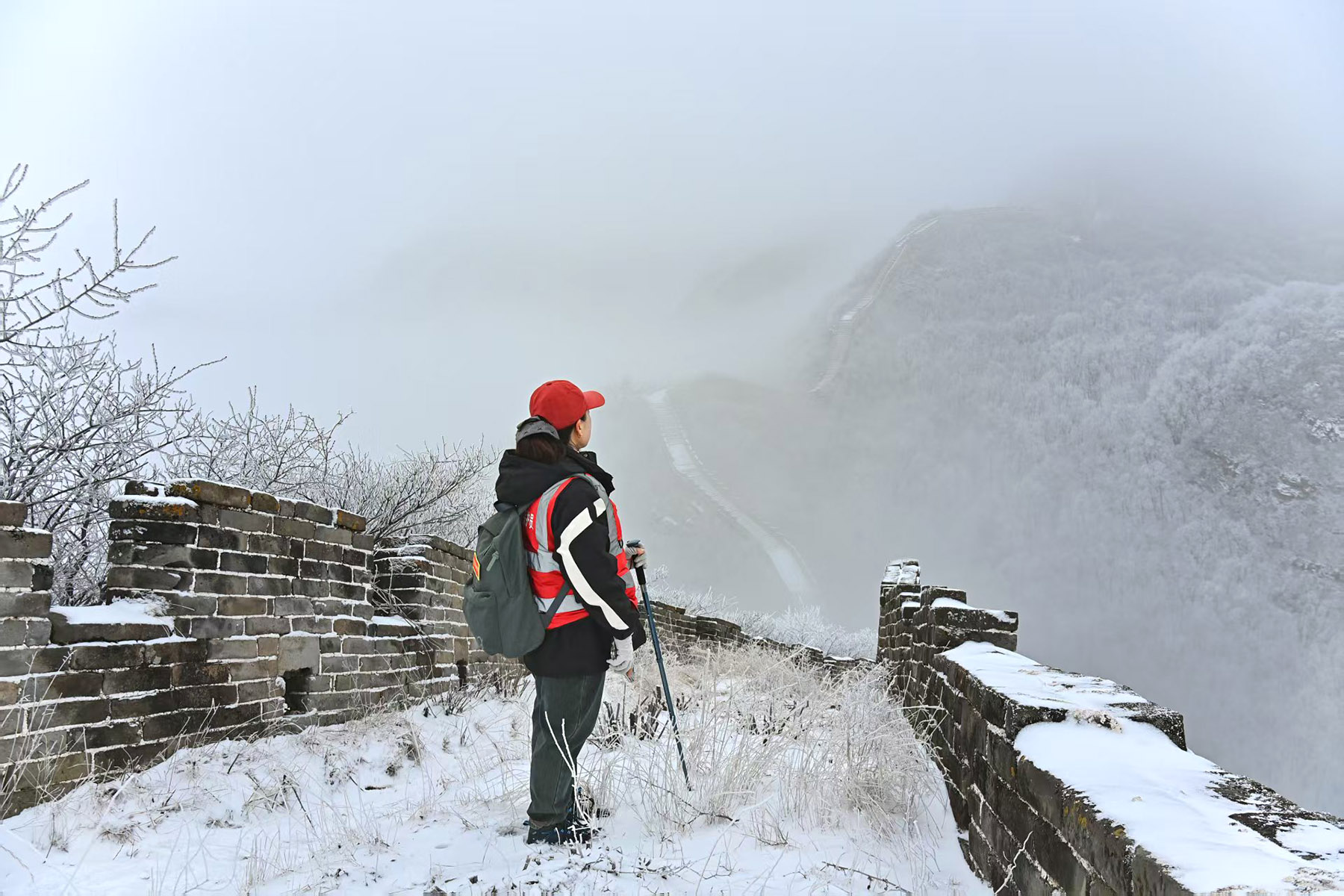
Liu Hongyan, 45, has walked the Great Wall so many times that she no longer bothers to keep count. Five days a week, she climbs onto the ancient ramparts to patrol, tracing the same weathered stones that have stretched across mountains for centuries.
"I never tire of walking it," Liu says.
On days when her mood dips, she pauses and listens: wind brushing through leaves, insects humming in the grass, birds calling across the ridges. "The sound quiets the heart," she says.
Liu grew up beneath the Great Wall in Shixia, a village tucked deep in the mountains of Beijing's Yanqing district, southwest of Badaling town.
Surrounded by steep peaks and encircled on three sides by the Wall, the village occupies a strategic pass that armies once fought fiercely to control. The traces of those centuries of conflict remain etched into the landscape. About 8.6 kilometers of the Ming Dynasty (1368-1644)Wall run through Shixia's territory, along with another 1.5 km of crumbling fortifications dating to the Northern Qi Dynasty (550-577).
READ MORE: The Great Wall of man and nature
In the 1980s, residents of Shixia began organizing to protect the Great Wall. By 2006, they had established the Shixia Great Wall Volunteer Protection Association, the first farmer-led organization in Beijing devoted to safeguarding the monument.
Today, more than half the village's residents volunteer as guardians of the Wall. Several, like Liu, serve as full-time protectors.
Their efforts have recently gained stronger legal backing. On March 1, the Regulations on the Conservation of the Great Wall in Beijing officially took effect — the first local statute specifically designed to govern the Great Wall's management. The regulation marks a shift toward more systematic and legally grounded protection of Beijing's section of the Wall.
Guarding the Great Wall may sound like a grand responsibility. In practice, it involves countless small tasks. For Liu, the new rules have also made her job easier.
"In the past, if we saw something improper, we could only take photos and try to persuade people," she says. "Now we can contact enforcement officers directly."
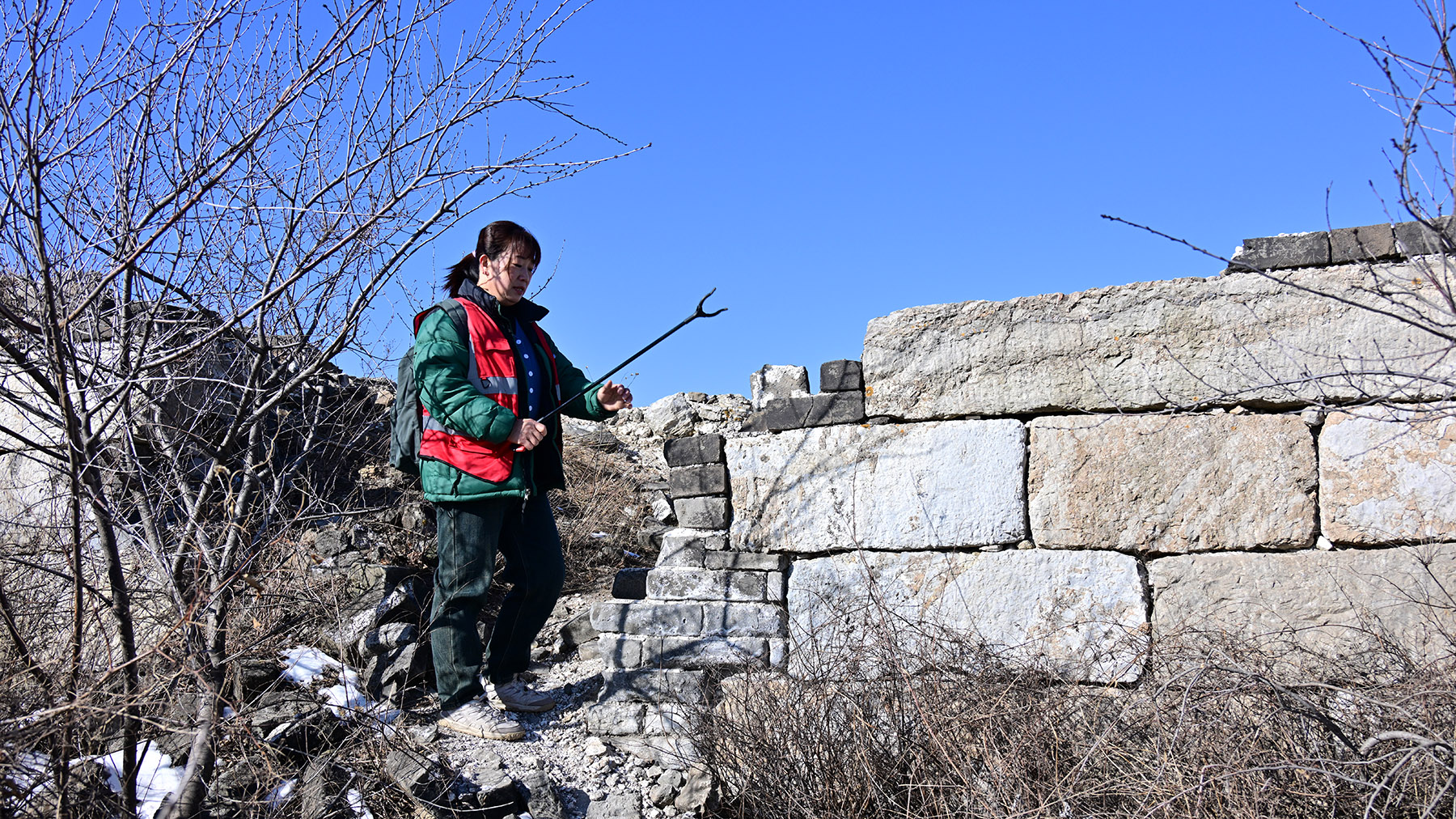
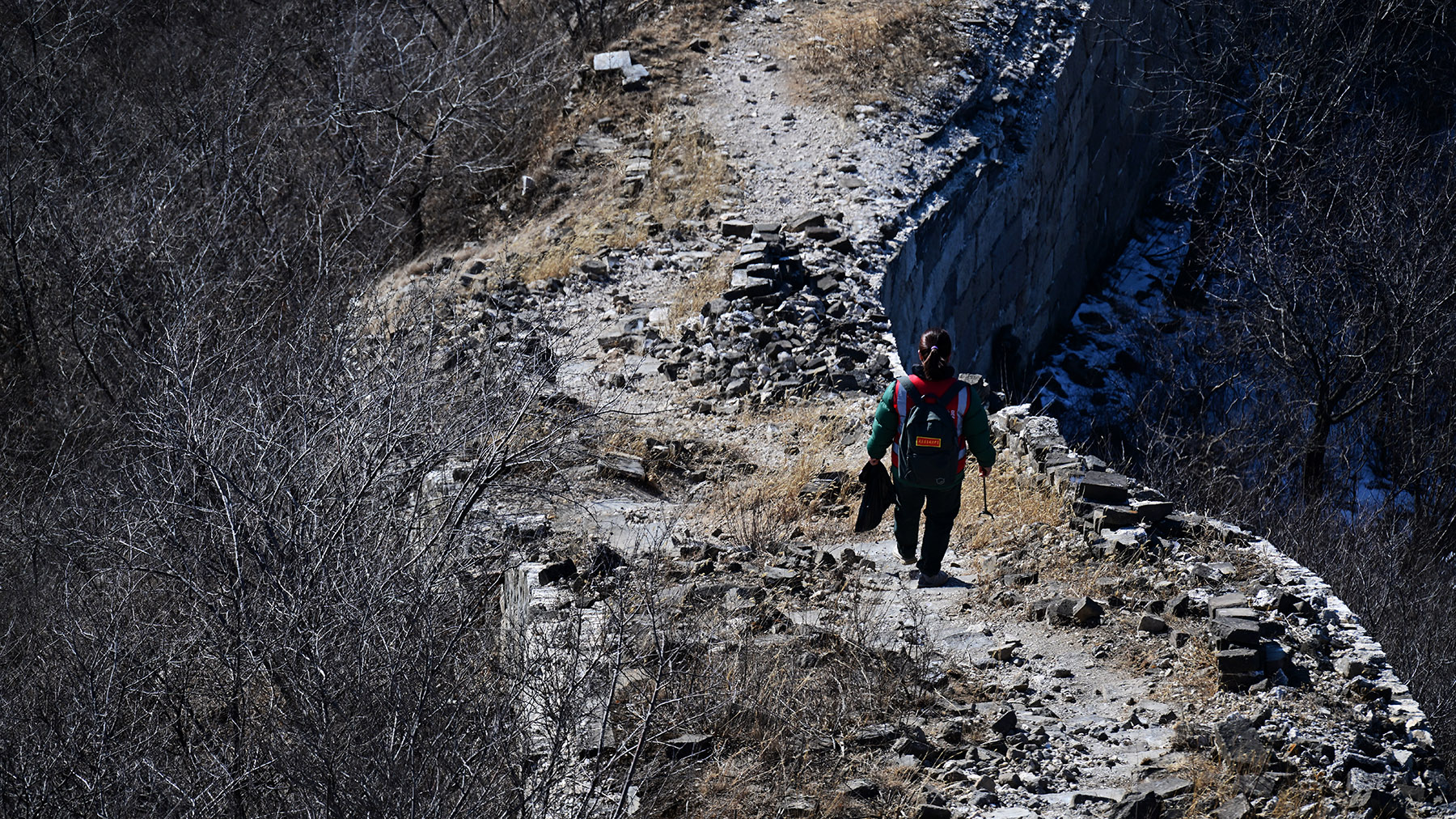
Most weekdays, she leaves home around 8 am, carrying water and a packed lunch. She follows the line of the Great Wall through the mountains until mid-afternoon, returning home as the sun dips behind the ridges. A phone app tracks her steps: about 20,000 a day.
Her duties include picking up trash, checking the masonry for loose bricks or new cracks, and reporting damage for repairs.
Another critical part of the job is intercepting "wild hikers" attempting to climb undeveloped sections of the Wall.
Stretching roughly 21,200 km across northern China, the Great Wall spans 15 provinces and regions. More than 520 km run through Beijing alone, crossing six districts and including some of the best-preserved stretches of the Ming-era section. Among them is Badaling, the most visited section and part of the UNESCO World Heritage Site.
Yet in Beijing, only about 5 percent of the Wall has been restored and opened to visitors. Much of the rest remains in fragile ruins, exposed to natural erosion and the pressures of unauthorized climbing.
In Shixia, none of the Great Wall is officially open to the public. The scenery is striking: steep mountain paths winding through dense forests. But loose stones and sheer slopes make the terrain hazardous.
During her patrols, Liu often encounters hikers who have slipped past warning signs and barriers. One incident still stands out.
Three summers ago, she came across a family tour group. A child in the group had picked up fragments of white mortar and begun drawing on the ancient bricks.
"I hurried over and asked the child to stop," Liu recalls. She then asked the guide to show identification. The guide said he had none and questioned how Liu could prove the child was responsible.
Liu answered firmly.
"The Great Wall is a heritage left to us by our ancestors," Liu says she told him. "It doesn't belong only to our village; it belongs to everyone."
The guide eventually apologized. Later, Liu and a colleague wiped away the marks with handkerchiefs and wet tissues.
Under the new regulations, such behavior is now clearly prohibited. Article 22 bans activities including carving or graffiti, and organizing group events on sections not designated for visitors. Violators can face penalties under existing laws, with groups subject to fines of up to 50,000 yuan ($7,247).
Liu recently attended a training session in the village explaining the new rules. "Next time something like that happens, we can cite the regulations," she says.
Efforts to strengthen protection have evolved over two decades. Beijing introduced its first municipal management measures for the Great Wall in 2003. In 2006, China adopted the Great Wall Protection Overall Plan, a framework aimed at monitoring, preventing damage, and coordinating preservation efforts across regions.
Tang Yuyang, a professor at Beijing University of Civil Engineering and Architecture who helped revise the new Beijing regulations, says the latest law grew out of a review that began in 2018.
According to her, the updated rules establish a management system that emphasizes "overall protection, segmented management and responsibility at multiple levels". They also broaden the definition of what must be preserved — including the Wall itself, related cultural relics and the surrounding environment.
Modern technology will play a growing role as well. The regulations encourage the use of electronic monitoring and early warning systems to deter damage and prevent risks such as natural disasters.
The rules also attempt to address the persistent problem of hikers climbing undeveloped sections. Rather than imposing a blanket ban, the regulations define official "Great Wall visiting areas", leaving room for new forms of controlled access beyond traditional scenic sites.
"The ultimate goal of protecting the Great Wall is to benefit the public," Tang adds.
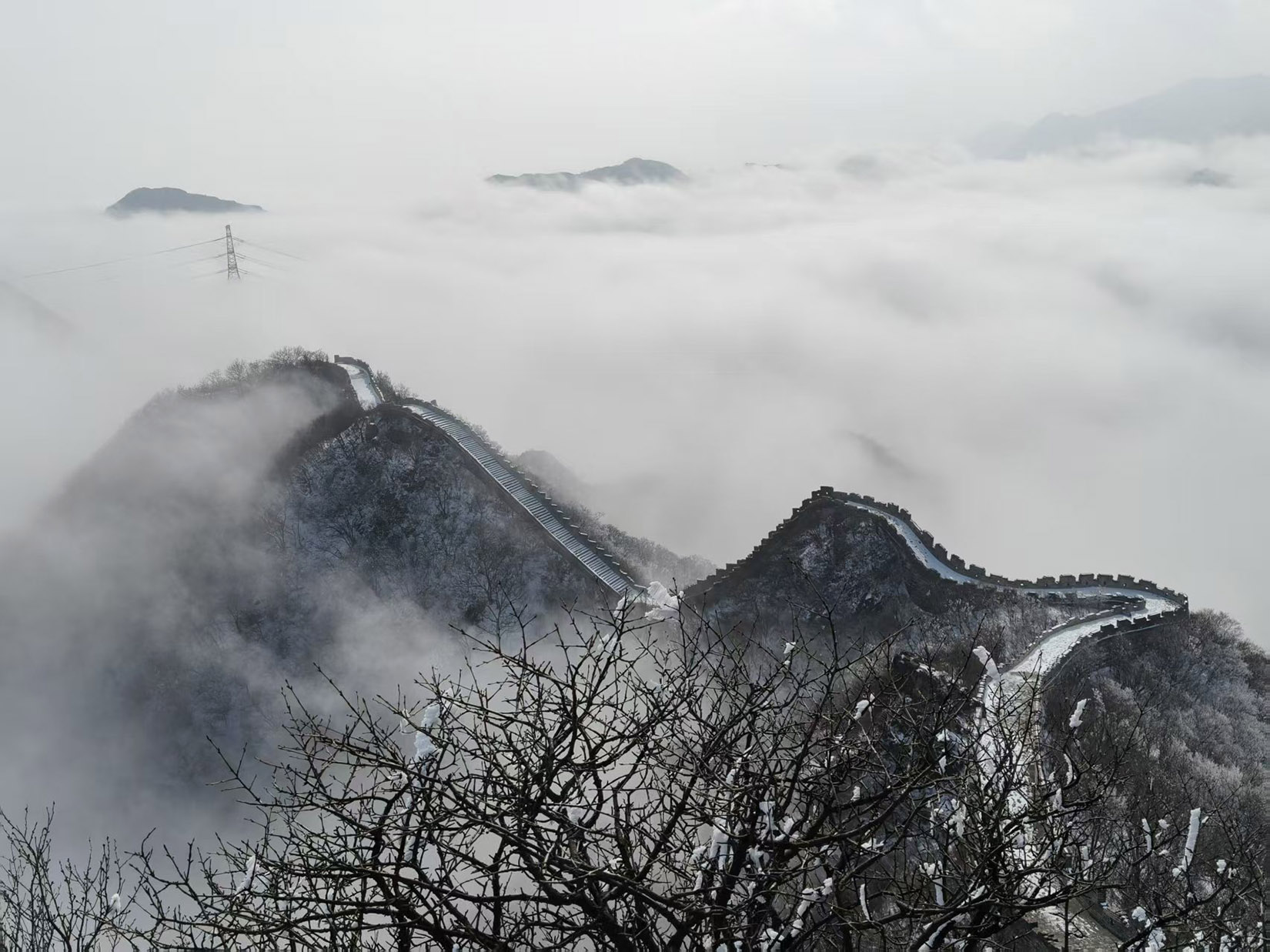
Shixia is already experimenting with that balance. Last year, a forest trail known as the "Beijing Great Wall Viewing Path" opened along the mountainside. Visitors can admire the Great Wall and the village's rustic landscape without climbing onto the fragile ruins.
Gu Wenting, Shixia's Party secretary, hopes the route will expand so that scenic viewpoints appear along the mountains. The plan is to draw more visitors to the village itself.
More than 20 family-run guesthouses now operate in Shixia, along with cafes, small distilleries and tea houses. Travelers can sample traditional foods recognized as part of China's intangible cultural heritage and watch demonstrations of local handicrafts.
Village leaders are also planning to work with cultural heritage authorities to restore the remains of an ancient brick kiln used in the Wall's construction. The site could eventually allow visitors to see how the bricks and materials were produced centuries ago.
Nearby, restoration of the Huajiayaozi section is nearing completion, leaving about 2 km unfinished, according to Li Jing, deputy director of the Yanqing District Great Wall Management Office.
The district is also developing what officials call the "Badaling World-Class Great Wall Scenic Area", which will eventually link multiple segments into a 16.5-km continuous visiting route.
"When it opens," Li says, "it will help drive development in the villages around Badaling and support rural revitalization."
According to Beijing's long-term plan for the Great Wall Cultural Belt, more than 10 percent of the capital's section could be open to visitors by 2035.
ALSO READ: Beyond the Great Wall's end
For Liu, now in her seventh year as a protector, the Great Wall remains a constant companion through the seasons.
Spring brings peach and apricot blossoms scattering pink across the hills, followed by lilacs. Summer turns the mountains deep green, with cool shade falling across the ramparts. In autumn, the hills ignite with red leaves. Winter arrives quietly, with frost clinging to branches and snow stretching across distant ridges.
Asked which season is most beautiful, Liu hesitates. "It's hard to tell," she says. "Every season has its own beauty, and we should always respect it. It's like our guardian."
In Shixia, the Great Wall is not simply an ancient monument. It is part of daily life — something villagers protect, live beside, and pass down through stories. And in the quiet mountain valleys beneath the Wall, those stories continue to grow.
Contact the writer at baishuhao@chinadaily.com.cn
