

Dedicated teachers make deep personal sacrifices to ensure opportunities for youngsters
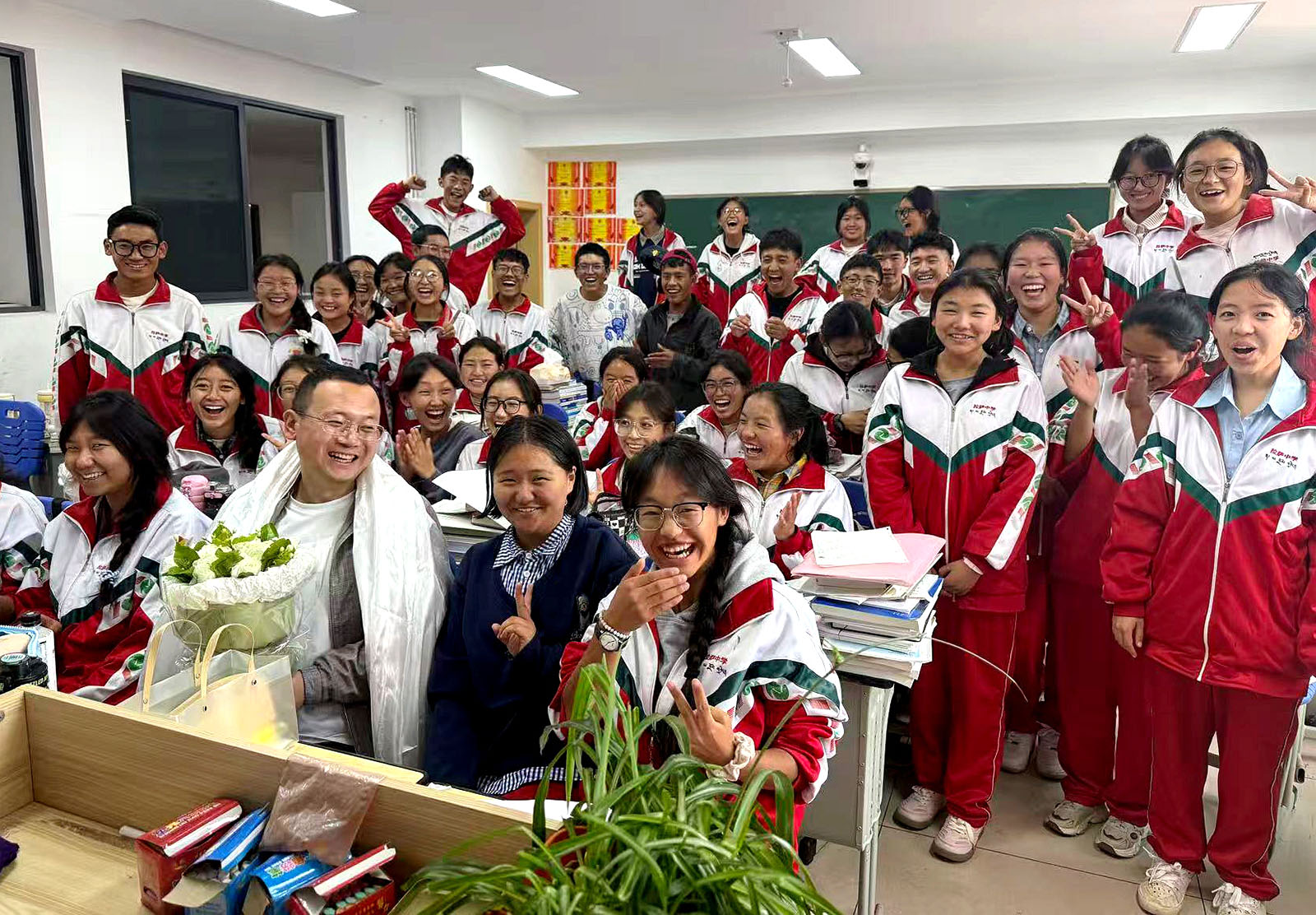
The morning he was due to fly back to Lhasa, the capital of the Xizang autonomous region, Shi Lei found his 5-year-old son curled inside his suitcase. The boy had quietly climbed in and pulled the lid shut, hoping to be taken along. "I'm afraid you'll leave me behind," he whispered.
For Shi, a Shaanxi Normal University graduate who has taught English at Lhasa Middle School for nearly 14 years, this heart-wrenching moment laid bare the painful reality faced by many educators who have chosen to teach on the "roof of the world".
It is a choice mirrored across generations of SNNU teachers and students — a story not only of personal sacrifice but of institutional commitment. Since 2007, SNNU has enrolled 1,196 students from Xizang or those committed to working there after graduation.
From 2011 to 2025, it sent 884 graduates into Xizang classrooms. Over the past 15 years, more than 1,000 SNNU students have participated in teaching internships in the region, with more than 80 percent choosing to stay. Behind these numbers are lives shaped by altitude, isolation, and an unwavering belief in the power of education.
READ MORE: Reform helps raise life expectancy in Xizang
Shi's four years at SNNU were formative. Serving as class monitor and becoming a member of the Communist Party of China, he was known for his dedication to academia and public service. He also met his future wife, Wang Baohua, at the university. The rigorous teacher training at SNNU, equipped him with the foundational skills and philosophy he would carry to the plateau.
His conviction was tested and solidified during a three-month teaching internship in 2011 at Gonggar Middle School in Lhokha.
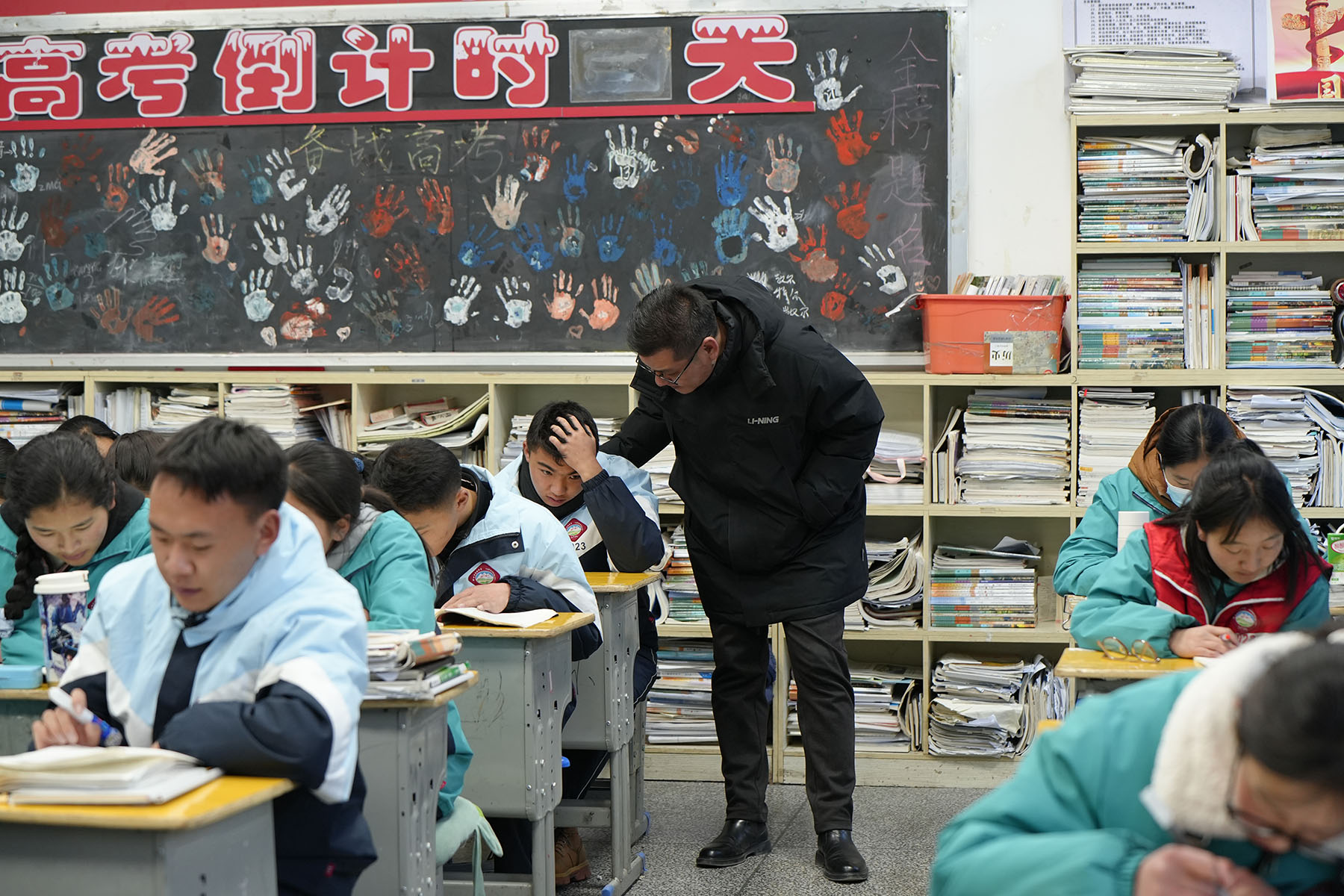
He vividly remembers starting his first class with only a quarter of the students having English textbooks. Through efforts to make the subject engaging — using English songs and short poems — he saw a shift.
By the third week, nearly all the students had not only brought their books but had carefully covered them. "(They're) small details, but I was happy to see they were willing to step into this subject," he recalled.
The students' innocence, along with simple, warm interactions, cemented his connection to teaching in the region.
After graduation, despite receiving job offers from prestigious schools in Guangzhou, Guangdong province, Chongqing, and his hometown Xi'an, Shaanxi province, he chose to honor his pledge and teach at Lhasa Middle School.
What began as a planned five-year commitment was repeatedly extended. "Let me finish teaching this graduating class," he would say, and his stay stretched into nearly 14 years.
This choice came at a significant personal cost.
The high-altitude environment (with oxygen levels about 60 percent of sea level) took a severe toll on his health, leading to conditions like hyperthyroidism, hypothyroidism, high-altitude pulmonary edema, immune system damage, and heart problems. He once fainted twice in class and experienced two nine-hour work-related blackouts due to heart issues and exhaustion.
The sacrifice has extended to his family. He carries guilt for being unable to adequately care for his mother during her cancer treatment, for his wife who left a stable job in Fujian province to restart her career in Xi'an, and for his young son who misses him deeply.
"Every time I go back to Xizang for work, I have to leave very early in the morning, otherwise he would cry for a long, long time," Shi said.
Yet, his dedication is fueled by a profound sense of purpose and the rewards of his work. In the classroom, he insists on full English immersion, employs brain science-based techniques for vocabulary memorization, and focuses on holistic student development rather than just grades.
This commitment is reciprocated with deep affection from his students, who call him big brother, and professional recognition. Two of his former students are now studying at SNNU. "The sense of fulfillment and achievement is incomparable," he said.
Extended commitment
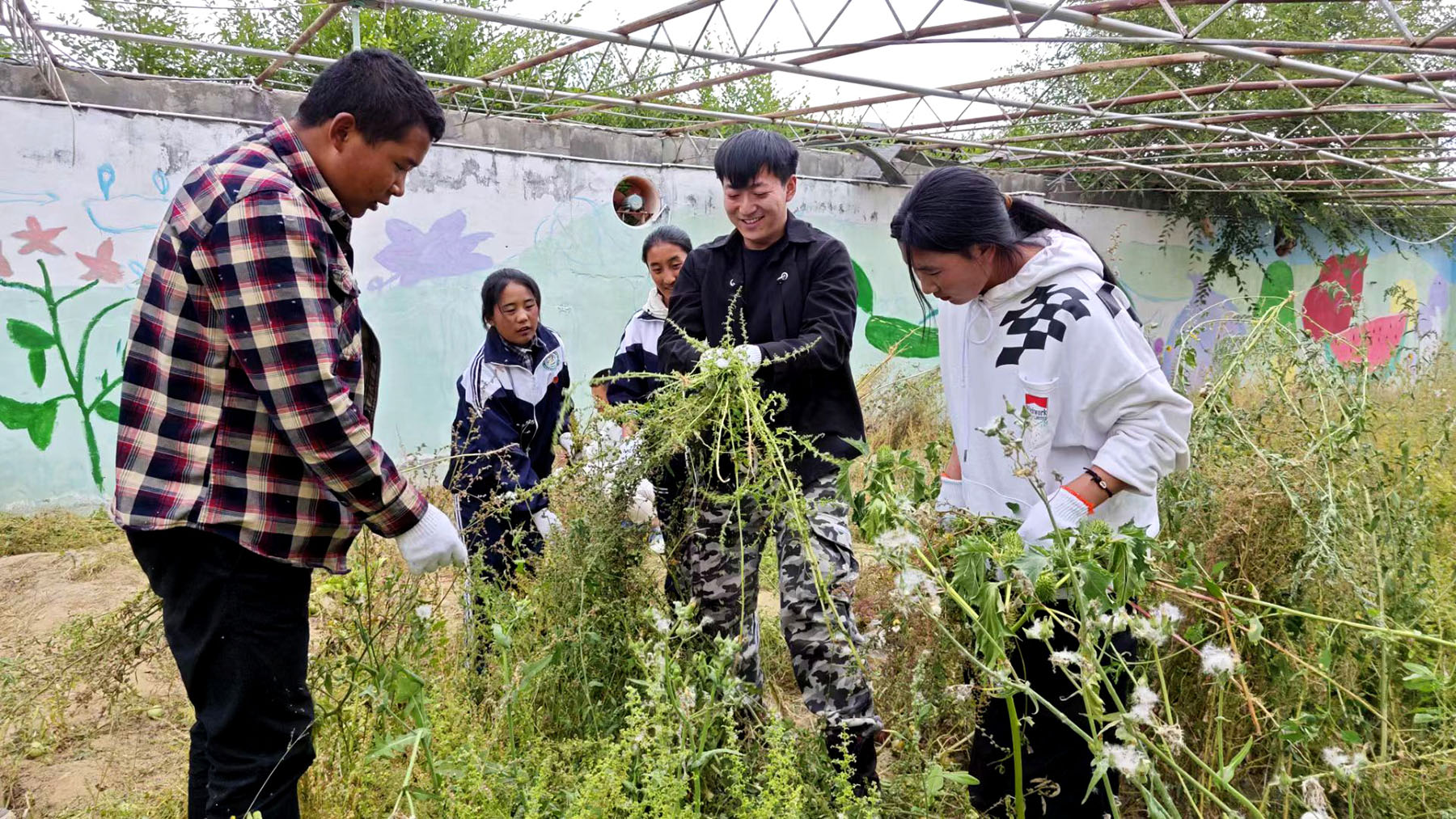
Zhang Yi, another SNNU graduate, has spent 18 years in Nagchu, at an average altitude of 4,500 meters — the highest prefecture-level city in China.
When he first arrived in the city in the early 2000s, he lived in a student dormitory with five others, fetched water from a well, and burned dried yak dung for heat and cooking during winter. He recalled the terror of using a pressure cooker for the first time: "When the steam shot up, we all ran out and shut the door."
Why stay? "Modern education in Nagchu only started in 1956. The foundation is weak. I feel I can realize more of my value here," Zhang said.
He has served as a teacher, a municipal education bureau officer, a primary school Party secretary, and now a high school leader. "From the beginning, I told my students and colleagues: I'm not an outsider. I am here to work for Nagchu."
He said he became used to the high altitude very quickly. Zhang describes Nagchu as "a land where no trees grow".
Yet, he holds a firm conviction that through dedicated educational work and sustained support for the region, seeds of knowledge and talent can be sown.
"These seeds will one day grow into towering trees, providing a continuous stream of vitality and robust intellectual support for the development of this ancient land," he said.
As a school administrator, he hopes that more people will come to Xizang, and specifically to Nagchu, to take root and build their lives there. He acknowledges the formidable challenge of the high altitude but emphasizes that the local people's yearning for quality educational resources is more urgent than anywhere else. For graduates who choose to stay, it is here that they can maximize their potential and realize their fullest value, he said.
A critical bridge between SNNU and Xizang is its internship program, which is led by Pang Wei, an associate professor in the School of International Studies at the university who has taken students to the plateau for four years. Since 2020, she has accompanied 184 interns, all but three of whom stayed to teach after graduation.
Pang's role goes beyond academic guidance. She brings pulse oximeters, oxygen supplies, and glucose to monitor and treat students' health. To ease their anxiety, she rents tents and organizes gatherings where interns from different schools share experiences.
The interns bring not only manpower but new teaching methods. Nyima Phentok, vice principal of Lhasa No 2 Senior High School, said the SNNU students "inject fresh vitality" into the teaching corps.
Pang witnessed the remarkable transformation of her students over the three months on the plateau. She recalls that upon first arriving in Xizang, the students were filled with anxiety due to the high-altitude hypoxia and unfamiliar environment, constantly asking, "When will this internship end?" Yet, as their departure neared, their reluctance was palpable. "They didn't want to leave," she said.
Pang said teaching on the plateau isn't like the dramatic portrayals in films and TV shows. "There are no legends of scores jumping from 10 to 100."
Especially in schools located in remote, high-altitude border areas, she noted that students often have a relatively weaker foundation, making significant academic improvement in a short time very difficult. "But the meaning of education," she emphasized, "lies in quiet dedication and perseverance".
Winning hearts
One such intern was Miao Ruixue, a physics major from SNNU. During her 2025 internship at Lhasa Beijing Experimental Middle School — a high school built in 1998 as part of an aid project funded by the Beijing municipal government — she initially struggled to connect with her students.
The toughest part was to remember the names of her 50 Tibetan students, which she managed to do in a month.
To help students better understand physics, she switched to local references — the running speed of a yak, the boiling point of butter tea — and crafted simple teaching tools from everyday materials.
Her toughest moment came when her mentor was away and classroom discipline collapsed — students fought, even smoked in the bathroom. After losing her temper, she was surrounded by apologetic pupils. "Teacher, we're sorry," they said. That night, she realized education was not a one-way transmission but a "resonance between hearts".
At her farewell, students surprised her with a classroom party, khata scarves, and songs. With tears in her throat, she told them: "Study hard. I'll come back to visit you."
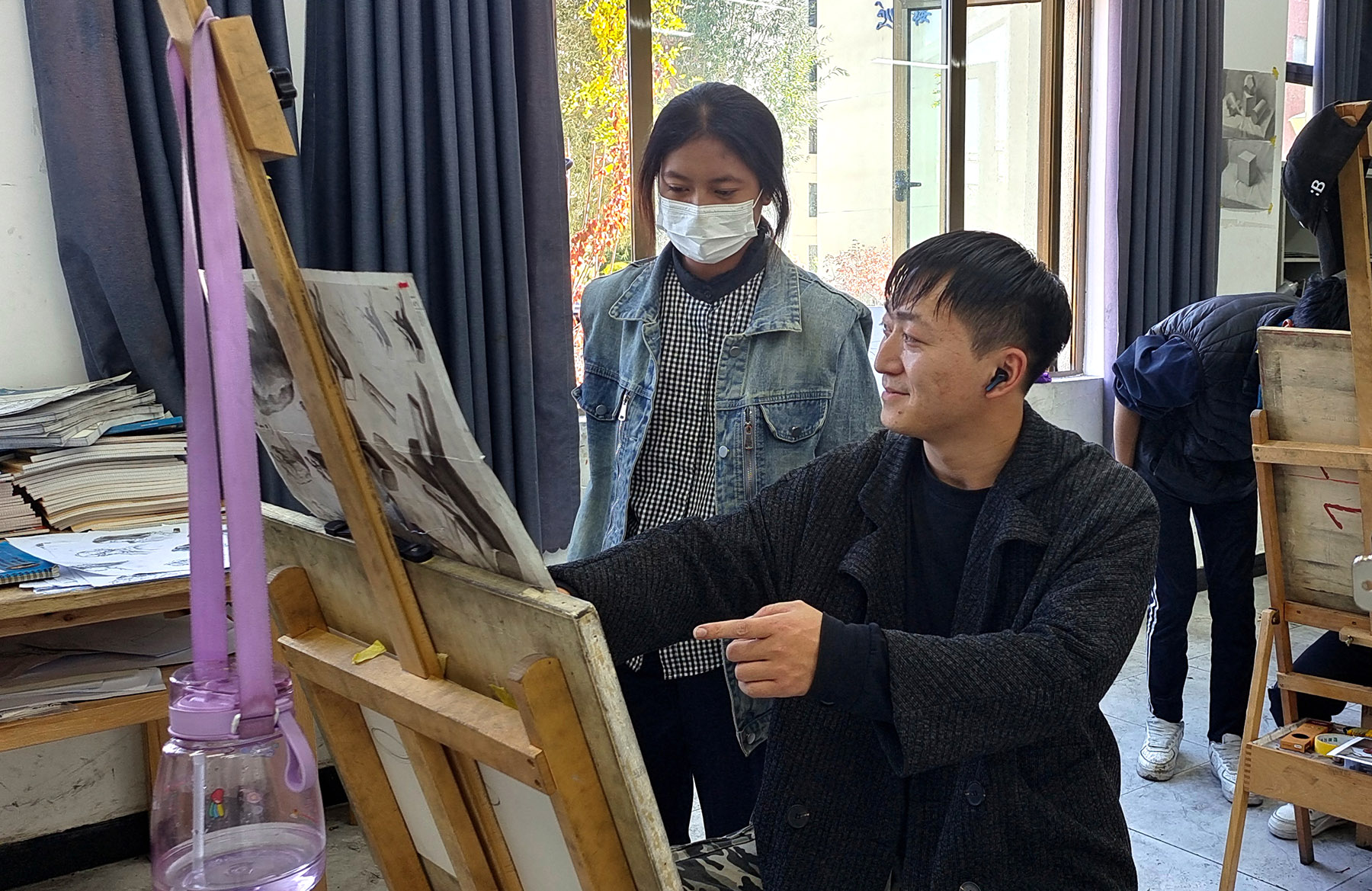
Yang Pengxin, an art major from SNNU, arrived at Ngari Senior High School in 2023. His first lessons fell flat until a local teacher advised him to incorporate Tibetan culture.
He learned to make traditional masks from cardboard, painting them with vivid patterns. "When I showed the mask, the students went wild," he said.
One girl, Drolkar, later presented him with a drawing of the Potala Palace using techniques he taught. "I want to be an art teacher and paint my hometown," she told him.
For Yang, the experience was transformative. "In Xizang, teachers don't just teach — they accompany children with genuine heart," he said.
Lasting legacy
Some projects outlive their founders. Li Chenguang, a politics teacher from Xi'an, began his three-year support mission in Lhasa Ngari High School in 2019, a high school in Lhasa that mainly admits students from Ngari.
When he met the students for the first time, they were escorted by police officers from Ngari to Lhasa. The police officers told Li that these were among the most talented students from Ngari, and their safety was a top priority.
"Then I realized that as teachers, it is also our duty to make sure they turn into useful people for their hometown and the country," he said.
Finding that students had almost no extracurricular books to read, he started buying books monthly. After sharing his idea online, donations flooded in — from friends, educational foundations, publishers.
The library now holds nearly 50,000 books, with a Tibetan-language section and 120 reading seats.
More remarkably, students have carried books home during winter breaks — 1,000 volumes transported 1,400 kilometers by 30 students in 2020 to their hometown for students in lower grades, and 2,000 more to other schools in their hometown in 2021. "This volunteer spirit is like dandelion seeds taking root in their hearts," Li said.
ALSO READ: China plans to implement key education reforms
His story underscores that service in Xizang, while demanding, can also propel career growth and bring material recognition. Before going to Xizang, he was a promising teacher at Xi'an High School.
During his three-year stint, he served as a subject group leader, director of the teaching research office, and deputy Party branch secretary. Upon returning, he was promoted at Xi'an High School. Moreover, there were also an annual high-altitude subsidy of about 50,000 yuan, and a travel subsidy, as well as higher monthly salary.
Zhang's ascent to Party secretary of his school illustrates that the system can recognize and reward dedication.
Pang, a researcher in Tibetan culture and regional development, said her stay in Xizang has helped with her research and led to published papers, internal reports for State departments, and further demonstrates that the relationship is not solely one of giving.
Shi has also become part of the backbone of English teaching at his school. However, he said his physical condition and long-term separation from his family might not allow him to teach in Xizang for his entire career, and he hopes to return to Xi'an soon.
Contact the writers at zoushuo@chinadaily.com.cn
