

Under Georgian director David Doiashvili, The Cherry Orchard becomes a nostalgic and ephemeral meditation on change, loss and human absurdity, Chen Nan reports.
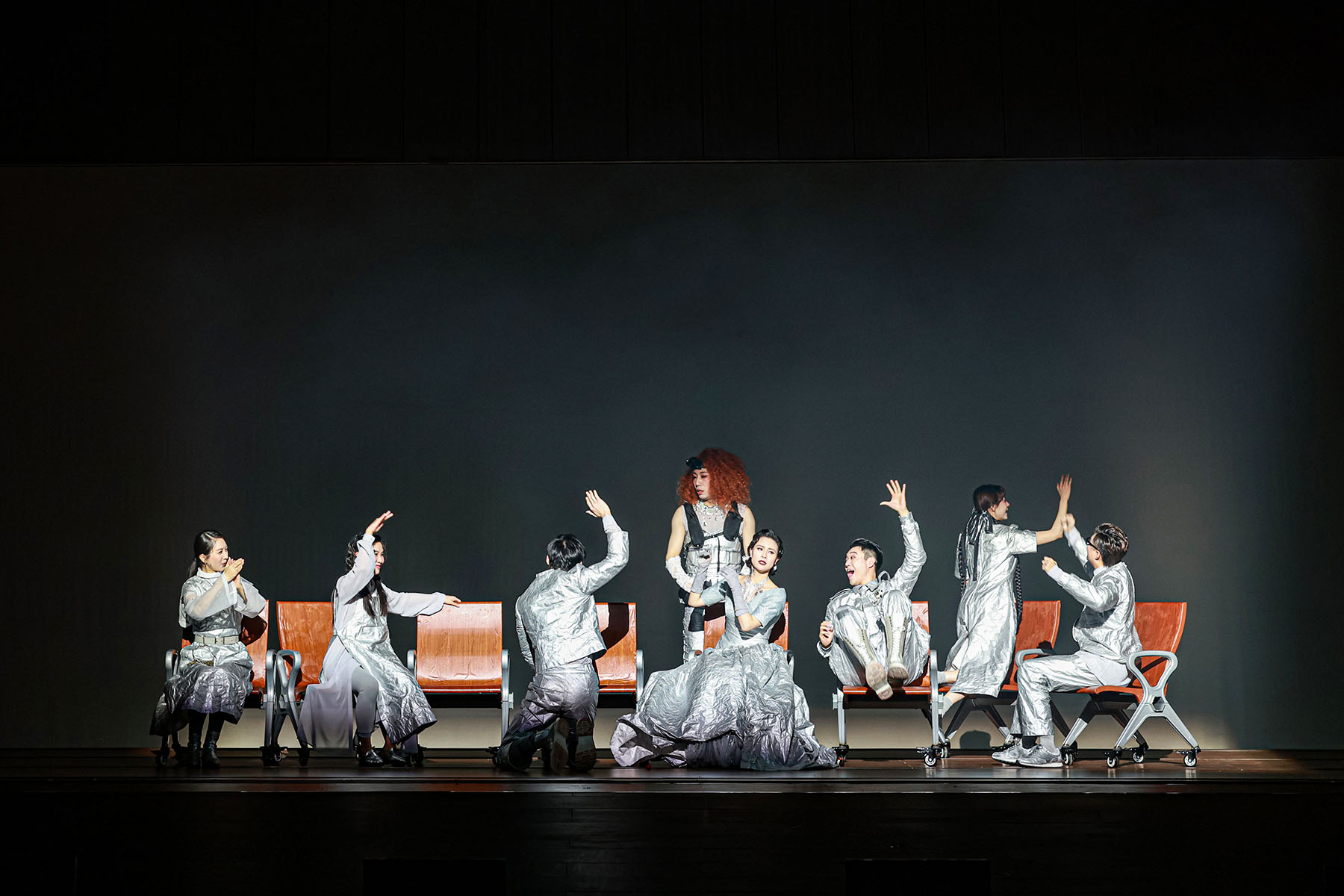
The stage is enveloped on all sides, creating a compact, almost claustrophobic space crafted from wood, with a design that evokes both intimacy and tension. The actors, holding pieces of chalk, sketch scenes of shadows on windows and faded cabinets, creating a nostalgic yet ephemeral setting. The characters, each immersed in their own reflections, either mourn the past or dream of the future.
The Cherry Orchard, Anton Chekhov's timeless story with themes of change, loss, and adaptation, has been reimagined by the Beijing People's Art Theatre. Directed by Georgian director David Doiashvili, the Chinese stage adaptation premiered on Wednesday at the Cao Yu Theater in the Beijing International Theatre Centre, with shows running until Jan 11.
READ MORE: Fostering dialogue with artful endeavor
A drama in four acts, The Cherry Orchard, performed and published in 1904, was Chekhov's final play, and is also one of the most iconic works in the history of world theater. It centers on Lubov Ranevskaya, who returns to her family estate in Russia after years of living abroad in France, only to find the estate and the once-beautiful orchard on the verge of being sold to pay off her debts. The story captures the profound cultural and emotional upheavals caused by societal and economic change.
"The drama reflects how individuals adapt to the shifting tides of time and make difficult choices, sometimes at the expense of the past," says Doiashvili, whose approach has blurred the lines between time and space onstage, creating a world where past, present and future coexist in an abstract, fluid form.
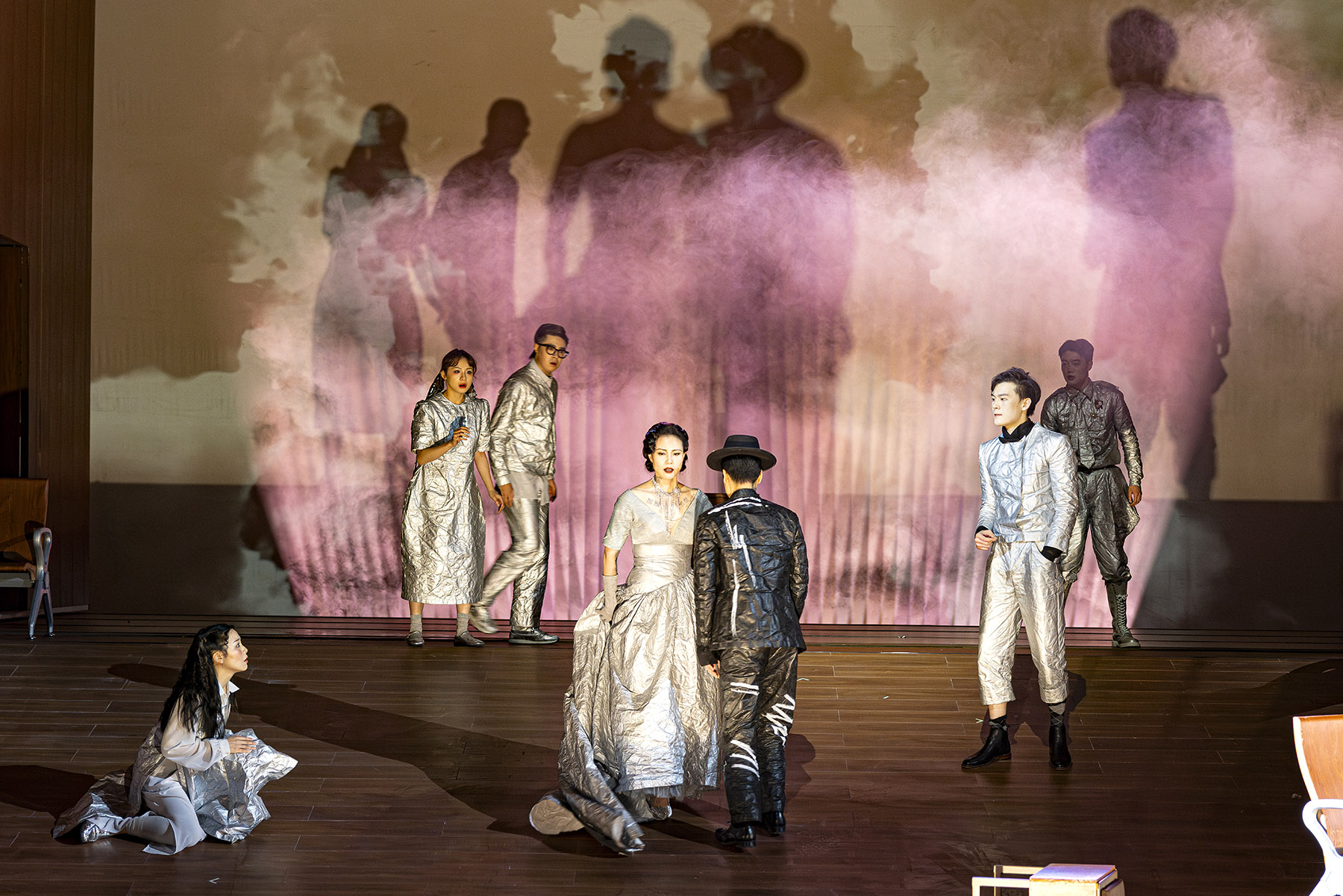
The set and staging seem to reflect this collapse of time. At one point, when the wealthy merchant Lopakhin, who ultimately buys the estate, proposes cutting down the cherished cherry orchard to build villas, the destruction of the orchard — symbolizing the end of an era — becomes more than just a plot point. It represents the clash between old ideals and new realities.
Although Chekhov claimed the play was "a comedy, sometimes even a farce", audiences and readers frequently perceive a hint of tragedy in the fall of the once-elegant Ranevskaya family. The humor embedded in Chekhov's writing, while subtle, becomes clear in director Doiashvili's vision.
"From our perspective, Chekhov's work might feel a little heavy, and we struggle to understand why he would consider the sale of the cherry orchard a comedy," says Yang Mingxin, who plays Lopakhin. "But as we got deeper into rehearsal, I began to understand. It's not the plot that's funny; it's the people in the story."
The absurdity lies in how the characters, especially the aristocrats, refuse to listen to Lopakhin's practical suggestions for saving the orchard, instead mocking his ideas. This rejection of reality and his role as the voice of reason amid confusion forms the comedic foundation of the play.
"The more I studied the script, the more I admired Chekhov's writing. Every character has depth, and none of them is expendable," Yang says.
Bringing Chekhov's complex characters to life for a Chinese audience posed a unique challenge, but Doiashvili's distinctive methods have guided the actors through this cultural translation.
Huang Wei, who portrays Ranevskaya, recalls how the director didn't begin by rehearsing the first scene but instead jumped straight to the third act.
"We saw the ending first, and then we understood how the characters arrived at that point," she says. The process was like decoding a mystery, where each rehearsal helped reveal the characters' deeper motivations."

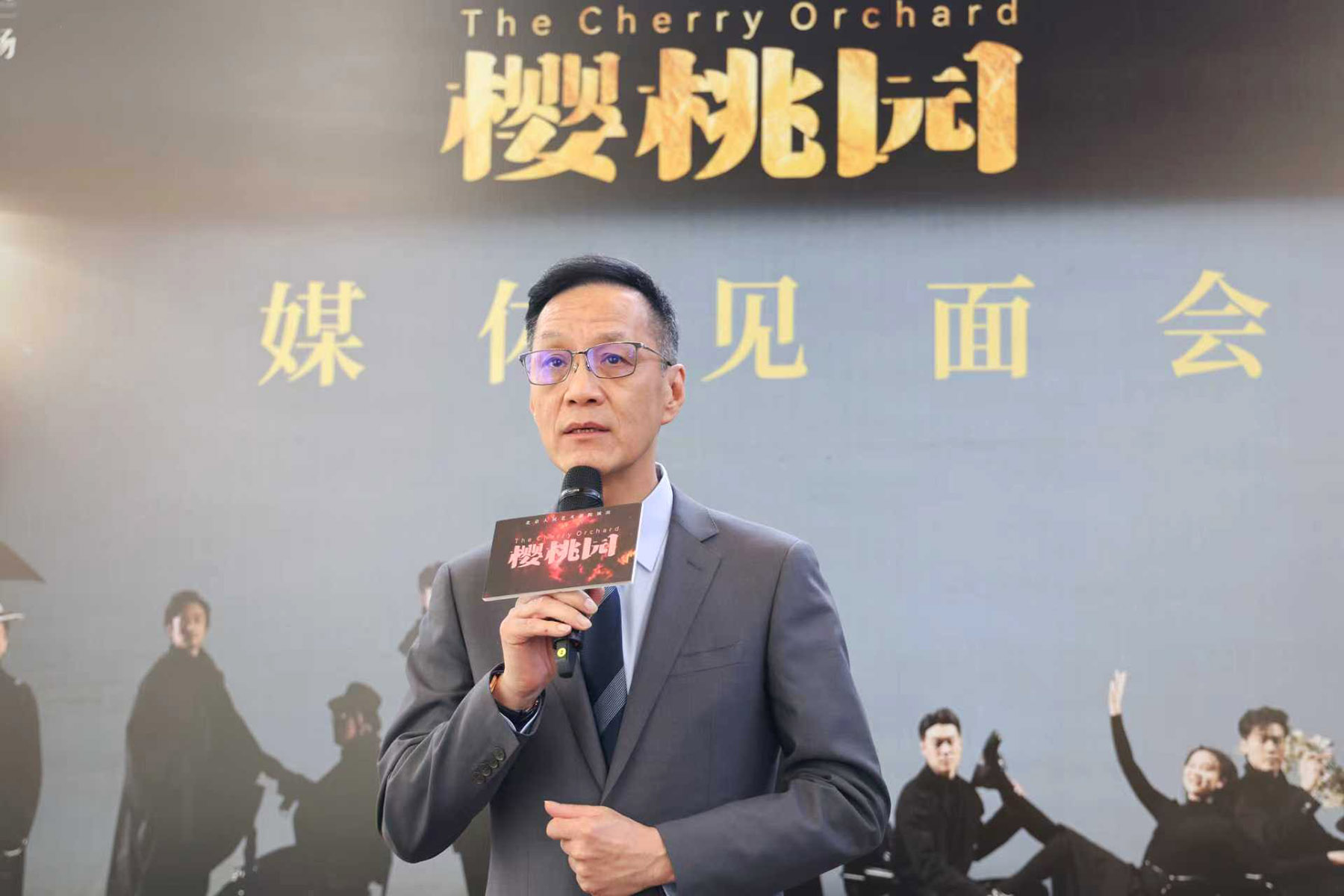
The Beijing People's Art Theatre has a strong tradition of performing Chekhov's plays, including The Seagull and Uncle Vanya, according to the theater's president, veteran actor and director Feng Yuanzheng. This new production continues that legacy while bringing fresh perspectives and insights to the material. The theater's first president, Jiao Juyin, once called The Cherry Orchard Chekhov's "final lyrical poem", acknowledging its unique place in the canon of world drama.
Feng also shares a personal connection to the play.
"The first large-scale production I saw in Germany was The Cherry Orchard, when I studied there back in the 1990s. The nearly five-hour performance epitomized realism in a way that made previous interpretations seem somewhat shallow by comparison," he recalls."Chekhov's work has an eternal relevance, not just because of its deep themes but because of its accessibility. He captures the surface of life while exploring its profound core. Chekhov is a treasure trove with endless possibilities for interpretation."
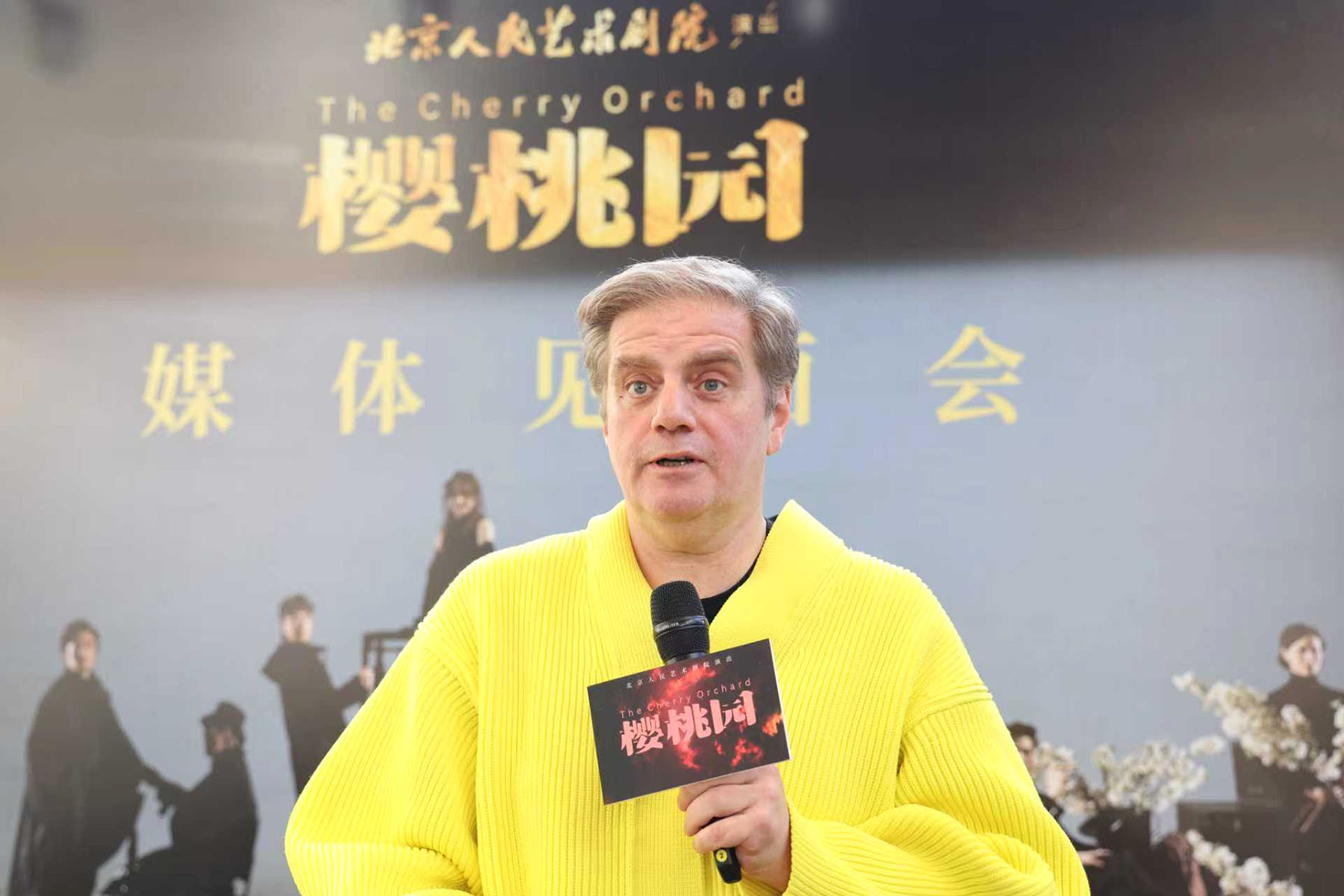
This new version of the drama aims to create a deep cross-cultural dialogue, notes Feng. Director Doiashvili, known for his innovative staging and rich theatrical expressions, is no stranger to Chinese audiences. His production of William Shakespeare's A Midsummer Night's Dream was staged in Beijing during the Beijing People's Art Theatre International Theatre Festival, which took place in October and November.
ALSO READ: Theaters adapt to dramatic change of scene
Doiashvili sees the stage as a space where diverse cultural forces can merge, and he hopes to create a new emotional and intellectual experience for the audience. As he puts it, "Through this work, I hope the audience will not only see Chekhov's characters but also reflect on their own life journeys."
Contact the writer at chennan@chinadaily.com.cn
