

From the Tang to the Song, immersive restaurant performances turn Chinese history into a multisensory feast, Yang Feiyue reports.
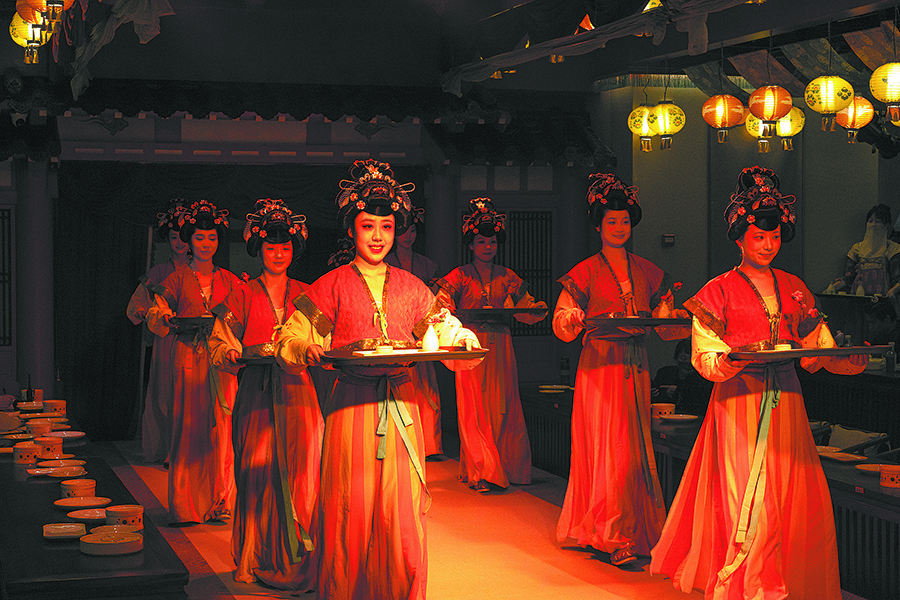
The lantern light flickers, casting dancing shadows on stone as a woman in elegant, flowing silks in the style of the Southern Song Dynasty (1127-1279) glides forward to greet guests at a palace-like restaurant in Jianou city, north of eastern Fujian province.
She recites a welcome in ancient verse before leading them through a luminous tunnel that evokes a feeling of traveling back in time to Jianzhou (established prefecture), Jianou's historical name a thousand years ago.
Before them, a panoramic LED screen, stretching an impressive 28.8 meters, unrolls like a living scroll, depicting the bustling markets, teahouses, and waterways of ancient Jianzhou.
It makes for a vivid opening to the Jianzhou Grand Feast, a 30-million-yuan ($4.2 million) immersive cultural dining spectacle that has, since its opening about three months ago, become a popular local tourist spot.
ALSO READ: Youth redefine local heritage in 2025
"We have been seeing a steady flow of visitors on weekends and holidays," notes Sun Ze, the restaurant's marketing director.
The restaurant taps into the profound history and culture of ancient Jianzhou, which has passed down the legacies of Zhu Xi's Neo-Confucianism and the Song Dynasty's Beiyuan imperial tea.
"Traditional cultural tourism often remains passive — it's static observation — but we think that enjoying food, something that is a common factor throughout history, can become the ultimate cultural medium," he explains.
"We wanted the weighty culture of Jianzhou to step out of the history books and become an immersive experience modern consumers can eat, see and participate in."
Nearly 1,500 kilometers to the northwest, in the ancient capital of Xi'an in Shaanxi province, a Tang Dynasty (618-907) scene also comes to life over the dining table.
Sun Ting, director of Fu Rong Yan Restaurant's seasonal aesthetic dining show, has witnessed similar robust demand.
"It is common to have our weekend shows fully booked a week in advance and we operate double sessions daily for lunch and dinner, since we launched over half a year ago," Sun Ting states.
READ MORE: It's all about the eating
In the neighboring Twelve Hours of Chang'an street, another Tang-themed dining performance, Joyful Banquet — Flourishing Tang, has staged over 1,000 performances and welcomed more than 100,000 domestic and international visitors since its debut in early 2024.
"We have consistently sold out tickets up to 10 days in advance during peak holidays, maintaining an average occupancy rate of 85-90 percent," says Han Ying, who is in charge of catering operations for the street.
Its customer base is varied, from out-of-town tourists drawn by its reputation to local culture enthusiasts fascinated by the Tang era, and Xi'an residents who choose it as a premier venue to host visiting friends and family, Han observes.
"Our guests aren't just coming for a meal, they are actually purchasing a cultural experience, the chance to cross time and spend a day as a resident in the Tang Dynasty capital of Chang'an," she explains.
These novel dining projects have been at the forefront of a shift in Chinese cultural consumption, where a meal is transformed into a multisensory portal to the past.
Data from earlier last year (2025) from the on-demand service platform Meituan show that searches for immersive shows and dining experiences have more than tripled year-on-year, with keen interest in cities like Shanghai, Hangzhou in Zhejiang province, and Beijing.
From spectator to participant
The foundational idea driving these experiences is a reimagining of the audience's role.
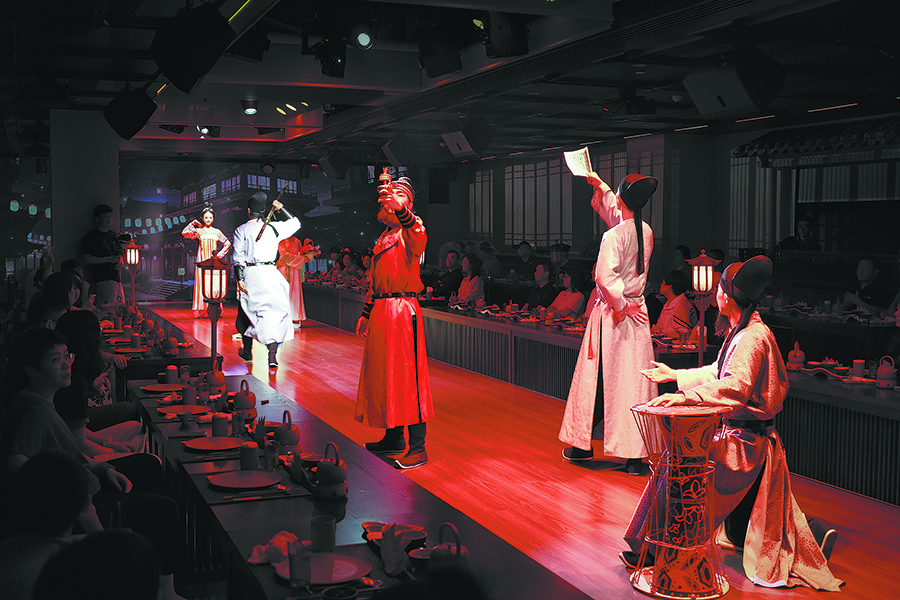
"When audiences come here, it's not just about having a meal or watching a show," explains Sun Ting of Fu Rong Yan. "They are completing a three-dimensional understanding of the Tang Dynasty".
For her, the critical distinction of a successful dining show is the seamless fusion of dining and entertainment, not a clumsy amalgamation of the two.
She emphasizes that the entire creative philosophy revolves around "aesthetic feeling", which encompasses the inherent beauty of Tang culture, the visual beauty of creative design, the artisan beauty of Chinese cuisine, and the deeper beauty of human emotion.
"I tried to turn the flat, static history of museums into a three-dimensional, flowing experience right before the audience's eyes," she says.
The show ingeniously uses the traditional 24 solar terms as its structural backbone, which Sun Ting says are like "an elegant framework".
"They give the whole experience a chapter-like rhythm and an internal cultural logic," she says.
READ MORE: Tracing China’s origins
Likewise, Jianzhou Grand Feast in Fujian also applies the solar terms concept.
"The core design is to let culture permeate without a single dead angle," Sun Ze explains.
The Jianzhou feast is divided into three main chapters: Welcome, Offering and Farewell. The Offering chapter is further split into four seasonal segments, each featuring a thematic dish with a local intangible cultural heritage performance and an interactive element.
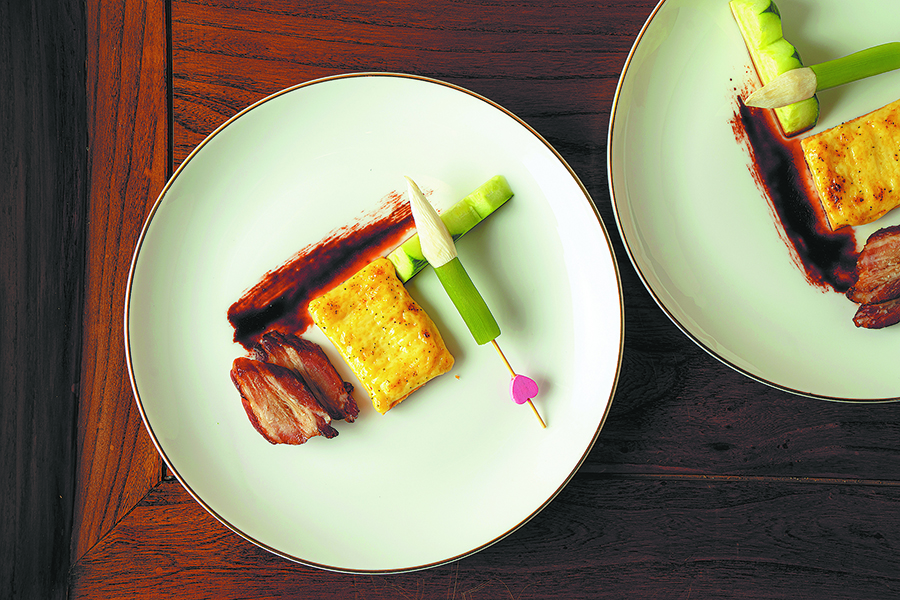
For instance, during "Autumn", the dish Golden List Inscription — a crispy, golden pork knuckle, its name a homophone for "top of the exam list" — is served.
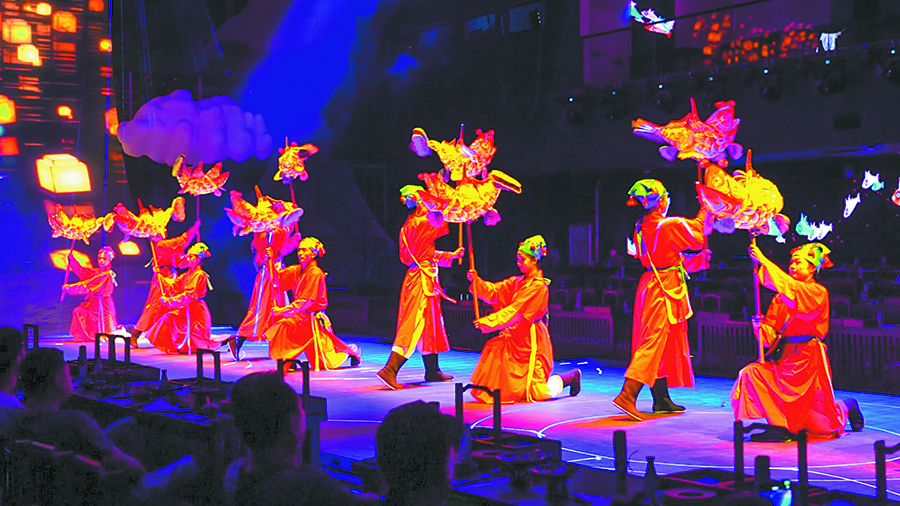
The stage then erupts with the Jianzhou fish-dragon dance, with actors weaving through the tables with glowing fish lanterns, as carp transform into dragons and leap over the "dragon gate" on the giant screen.
"This dialogue between the symbols of carp leaping the dragon gate and the idea of acing the imperial exams showcases Jianzhou's accumulated cultural deposits as a place of Neo-Confucianism," Sun Ze explains.
Elsewhere, Song-style maidens demonstrate the ancient method of whipping tea, while local inheritors of the bow-fishing technique thread grass rope through fish gills, tying it to their tails as a way to keep fish attached to the boat but alive and fresh for days.
"Contrary to a passive reception of knowledge, our format of eating, watching, and participating simultaneously turns culture into an experience of active perception," Sun Ze says, adding that this multisensory approach helps the audience "discover the approachability of tradition and better understand the life philosophy and humanistic spirit behind it".
Technology bridges eras
Han Ying believes Joyful Banquet — Flourishing Tang sets itself apart by placing technology at the heart of historical immersion.
One striking example unfolds during a scene in which renowned ancient poets Li Bai, Du Fu and Wang Wei compose verses together.
As their brushes move across the page, 3D imaging projects iconic lines onto a screen, while sweeping landscapes materialize in real time.
"At that moment, visitors can viscerally feel the grandeur and emotional force of Tang poetry. The sense of immersion is simply powerful," Han explains.
She stresses that this technological impact, however, rests on a foundation of rigorous cultural authenticity.
From architectural design and dinnerware to the ceremonial rituals, language, performer and audience interactions, every detail is carefully rooted in historical research, she points out.
At Jianzhou Grand Feast, technical operations involve meticulous synchronization of lighting, sound, and the pacing of the dishes, all of which are precisely choreographed to match the narrative's emotional cadence. "For instance, when serving Beiyuan imperial tea, the lighting shifts to warm tones, and the giant screen displays landscapes with mist and clouds, complemented by a 'singing' scene," Sun Ze describes.
"This creates a deep fusion of taste, vision and hearing, making the audience feel as if they are eating within history."
At Fu Rong Yan, Sun Ting believes the greatest technical and creative challenge lies in the delicate rhythm between performance and consumption.
"We had to repeatedly test: How long from kitchen to table does the dish remain hot? What's the average time an audience takes to eat a course? At which emotional beat should the performance introduce the dish? And at which moment should the lights dim to give breathing space for dining?," she explains.
The answers should prevent servers from disrupting a pivotal scene or performances from competing with the act of eating, she adds.
Constant evolution
To combat the common pitfall of "onetime consumption" in cultural tourism, these projects are built for evolution.
"We have been working on increasing revisit rates through multiple measures," Sun Ze shares.
For example, performances and dishes will change according to the 24 solar terms, such as a tea-picking opera for Qingming Festival and a moon-worshiping ceremony for Mid-Autumn Festival.
"This should give returning customers new experiences, keeping it fresh," he says.
To maintain long-term vitality and combat potential experiential fatigue, Joyful Banquet — Flourishing Tang has implemented a systematic renewal mechanism, Han says.
"We refresh our menu every quarter, following the wheel of the seasons, so there's always something new to discover," Han says, adding that this evolution extends beyond the food.
The content of the performances and the interactive characters who engage with guests are also adjusted seasonally.
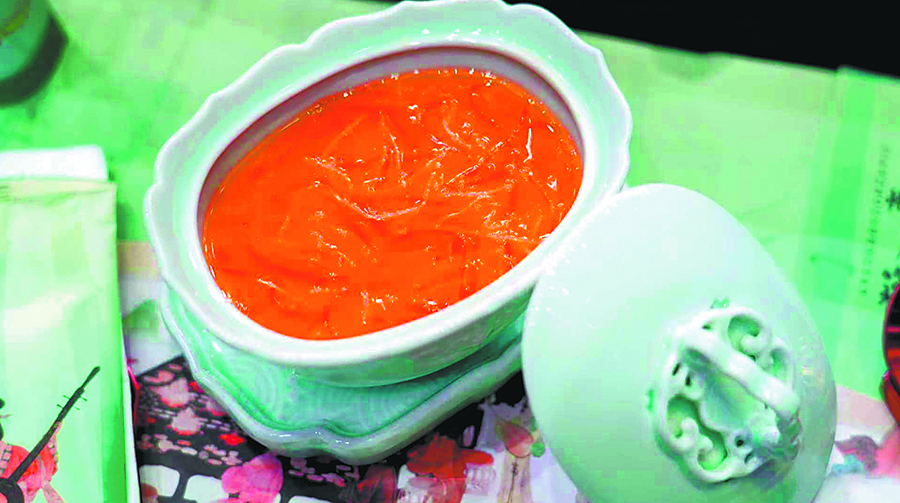
For instance, in spring, a performer portraying the tea sage Lu Yu might prepare tea and discuss classic teas with waiting guests. In summer, the presentation could feature a special ice delicacy based on a recipe from the Tang Dynasty.
The makeup studio correspondingly updates its inventory of seasonal Tang-style clothing.
"We have a dedicated makeup service where ticket holders can change into costumes for free, though hairstyling and makeup costs are additional," Han explains.
To date, about 70 percent of guests have ultimately opted for the full package of costume, hairstyle and makeup, she notes.
Sales of cultural and creative merchandise are also robust. "Guests are clearly willing to pay for a premium experience," she says.
"We initially expected a larger proportion of tourists, but data from ticket validations reveal a very high percentage of local guests."
Han adds: "This shows us the strong sense of identity and pride locals have for profound local cultural heritage. Many are repeat visitors who come back with friends or bring their out-of-town guests for the experience."
