

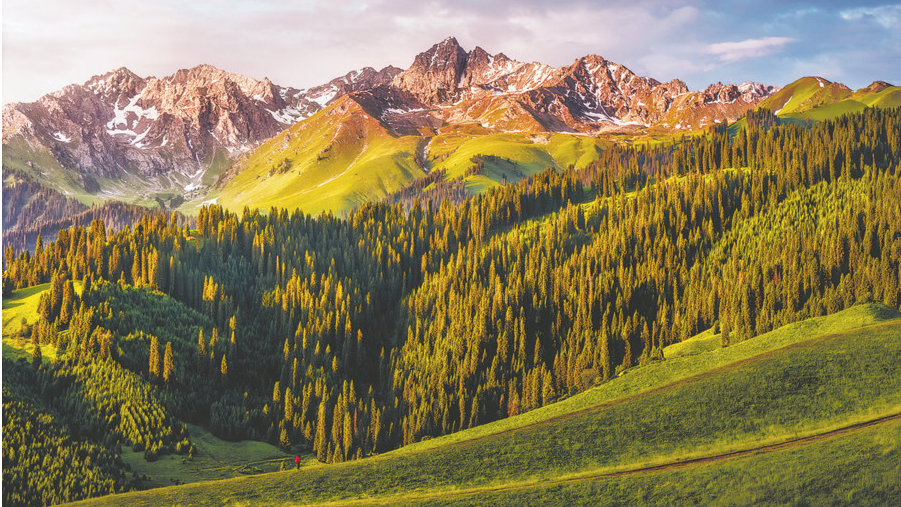
A land that spans one-sixth of China's territory, the Xinjiang Uygur autonomous region embraces a spectacular array of landscapes in the country's far northwest: magnificent mountain ranges, basins, glaciers, deserts, grasslands, forests, rivers and lakes.
It has a complex network of air routes, highways and railways, alongside impressive megaprojects and abundant resources.
The region produces more than 90 percent of China's cotton and 80 percent of the tomatoes used in products nationwide.
READ MORE: Xinjiang exudes its rich cultural wealth
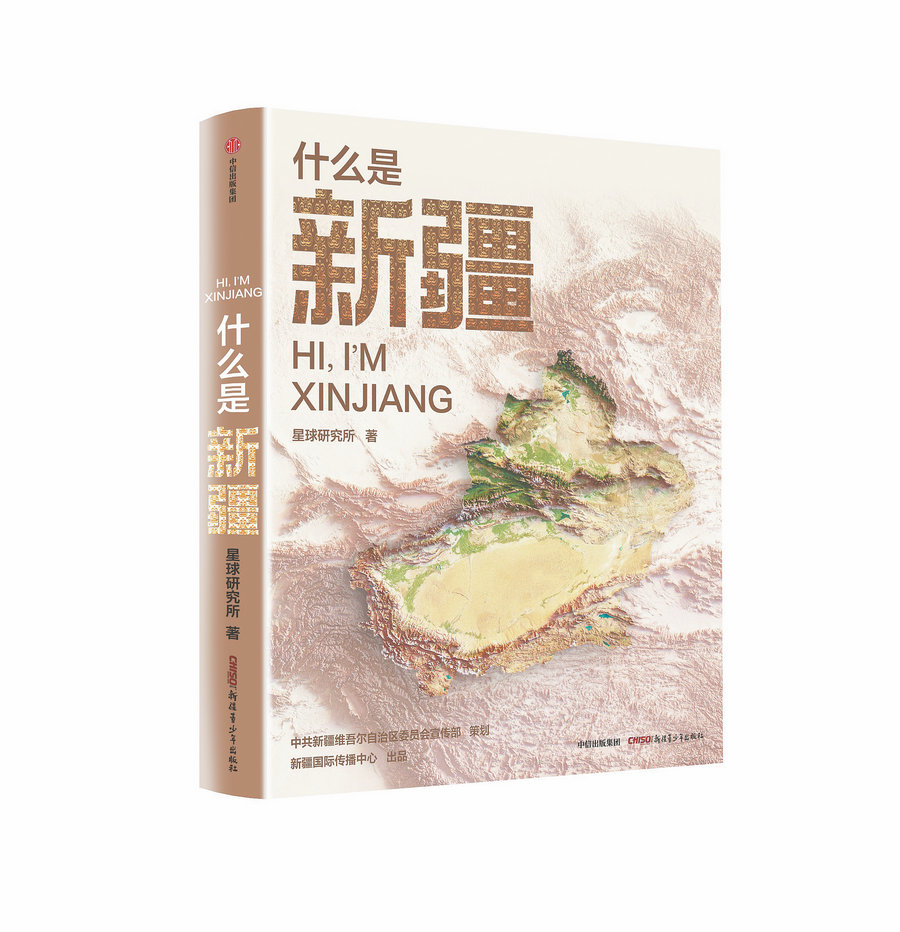
Xinjiang's breathtaking natural and cultural scenery — diverse yet enigmatic — exudes inexhaustible allure for travelers. But where should one begin to explore? An ambitious new book, Hi, I'm Xinjiang, takes on the challenge to provide compelling insights into the region and help readers make informed choices.
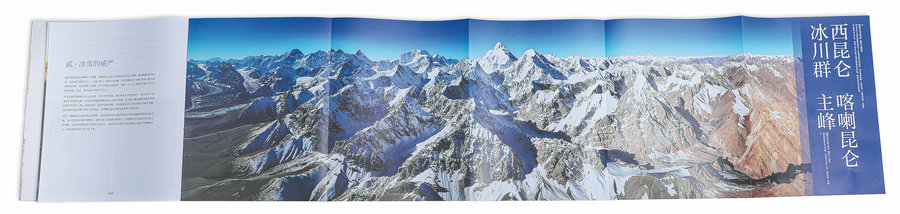
The book delves into the region's physical geography, glacial hydrology, evolution of life, historical civilizations and modern development, weaving together a sweeping 300-million-year narrative of the region, its profound history and remarkable transformation. It includes more than 300 photographs, 33 infographics and five pullout images to offer a better visual experience.
The book — initiated by the Publicity Department of the Communist Party of China Xinjiang Uygur Autonomous Region Committee, published by CITIC Press Group and Xinjiang Juvenile Publishing House, and presented by Xinjiang Today Media Hub — was released in October to celebrate the 70th anniversary of the autonomous region's establishment.
During the book's launch in late September in Urumqi, Hong Tianxiang, cofounder of the Institute for Planets, the book's content provider, said that their goal was to showcase the multifaceted features of Xinjiang through scientifically grounded explanations, rational yet warm writing, and stunning visual presentations.
"We hope this book will provide readers with a fresh perspective on all major aspects of Xinjiang and offer a clear framework to understand and engage with the region," he said, adding that the book was born from their exploration, interpretation and homage to this land.
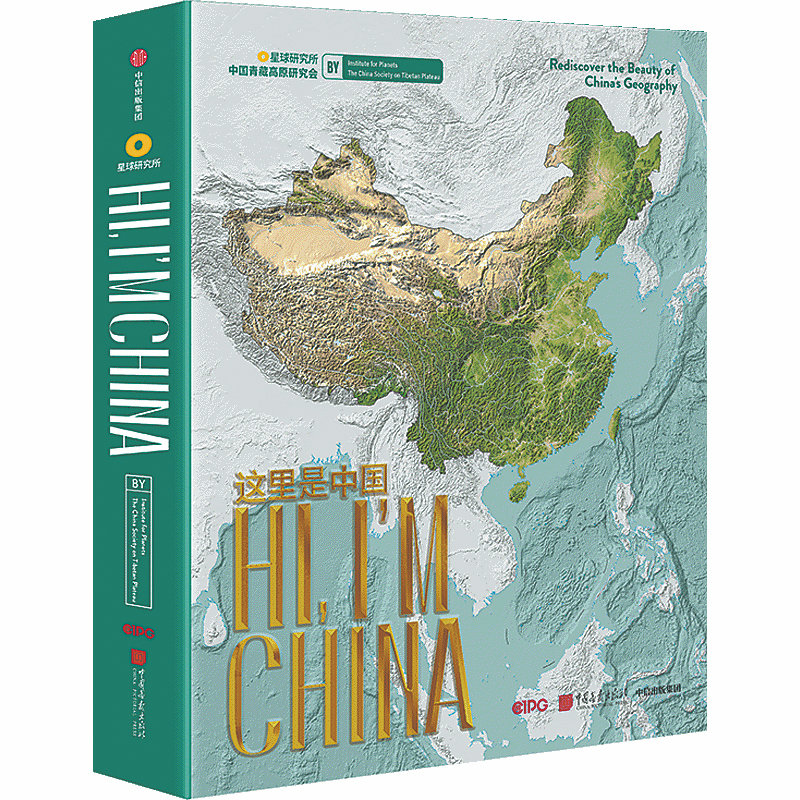
The Institute for Planets is an organization dedicated to popularizing knowledge across fields like geography, astronomy, architecture and engineering, using accessible texts, photos and videos. Previously, their three-volume series on geography, Hi, I'm China, has sold more than 2.5 million copies. An English version of the first volume was released in late September.
Teeming with life
The core concept of Hi, I'm Xinjiang, according to Hong, rests on a metaphor that compares Xinjiang to an all-embracing ocean — an ocean of life, civilization and future possibilities.
This may seem counterintuitive given that Xinjiang, sitting at the heart of Eurasia, is far from any real sea.
Therefore, to help readers grasp this vision, the book traces the land's origins back 360 million years, to a time when the ancient blocks that would eventually form Xinjiang — and indeed much of what is now China — existed merely as scattered microcontinents and shallow epeiric seas amid prehistoric oceans.
Over hundreds of millions of years, tectonic activity gradually forged Xinjiang into its present state. Three major mountain systems — the Altay, Tianshan and Kunlun ranges — stretch roughly east-west across the region and sandwich the Junggar and Tarim basins in between.
Moisture carried by winds from distant bodies of water, such as the Atlantic Ocean, the Mediterranean Sea, the Indian Ocean and the Arctic Ocean, travels thousands of kilometers to bring precipitation to this landlocked region.
Although mountains cover only 42.7 percent of Xinjiang's land, they receive more than 80 percent of its annual snow and rainfall. This creates dynamic vertical landscapes, featuring nearly half of the nation's glaciers and a wealth of precious sapphire-blue lakes nestled among peaks and basins. These include the well-known Sayram Lake in the Bortala Mongolian autonomous prefecture, and Kanas Lake in the Altay prefecture.
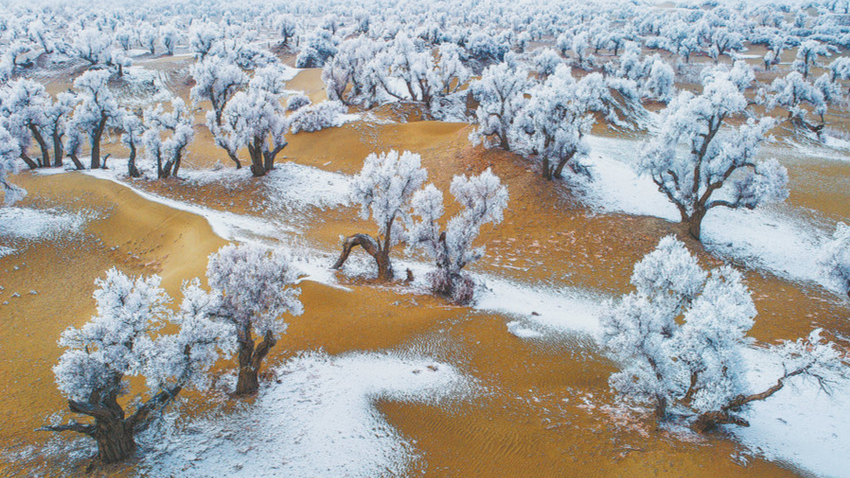
In some areas of Xinjiang, cattle and sheep roam freely over lush grasslands with abundant water sources, whereas in more arid zones, forests of desert poplar and species, such as the Tarim red deer, Yarkand hare and wild camels, exemplify life's strength and resilience.
In remote, high-altitude regions, the snow lotus quietly blooms. Occasionally, Parnassian butterflies can be seen fluttering gracefully among the rocks. There are fewer than 60 species of butterflies worldwide in the Parnassius genus, and nearly half make their home on the mountaintops or along the snow lines of Xinjiang. This is a land teeming with life.
The region is also home to a wide variety of domestic produce. Fruits such as apples, pomegranates, jujubes, sea buckthorn, grapes, pears, figs and Hami melons — particularly known for their sweetness — thrive, along with nuts including almonds and walnuts.
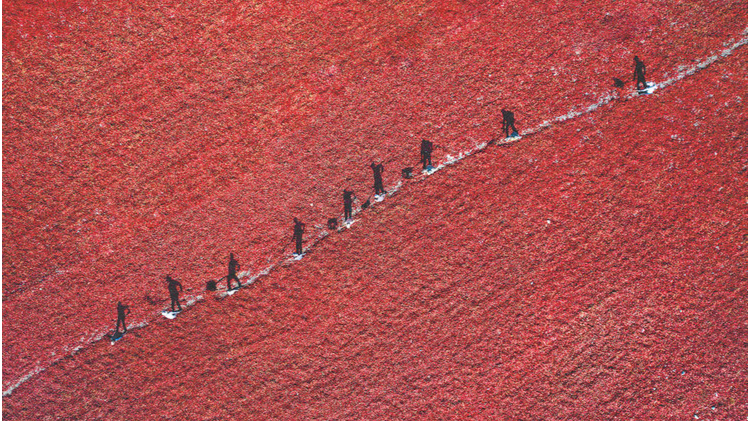
Despite having only 5.5 percent of China's arable land, Xinjiang is one of the country's most highly mechanized agricultural regions. According to the National Bureau of Statistics, the region produced 24.32 million metric tons of grain in 2025, ranking 13th nationwide, while achieving the highest per-unit yield in the country at 8,291.9 kilograms per hectare.
Beneath the surface, Xinjiang is also rich in mineral resources, with 154 types identified — including coal, oil, natural gas, gold, copper and lithium — accounting for 88 percent of mineral varieties discovered in China. Among these, the region leads the country in proven reserves of 10 minerals.
The capacity of Xinjiang's new energy resources, such as wind and solar power, has exceeded 100 million kilowatts — equivalent to 4.5 times the capacity of the Three Gorges Dam, the world's largest hydropower project. The electricity generated is transmitted to 22 provincial-level administrative regions.
In recent years, megaprojects focused on energy and transport have significantly alleviated the natural barriers that once hindered Xinjiang's development. Among the most exciting updates is the 22.13-kilometer Tianshan Shengli Tunnel, the world's longest expressway tunnel, which opened to traffic on Dec 26.
The tunnel crosses through the Tianshan Mountains and reduces travel time from several hours to just around 20 minutes, enhancing connectivity between northern and southern Xinjiang.
Having integrated these megaprojects into the book — such as the tunnel and ultrahigh voltage transmission systems which allow Xinjiang to literally "charge" distant provinces — Hong expressed a personal interest in these projects that manage to "reorganize resources across such a vast expanse of land and reshape its surface".
Spirit of openness
Xinjiang, historically known as Xiyu (Western Regions), was formally included in Chinese territory during the Han Dynasty (206 BC-AD 220). After that, dynasties in the Central Plains regarded the region as part of their territory and exercised jurisdiction.
The region strategically lies at the crossroads of major ancient civilizations. To the east, it connects to the Central Plains through the Hexi Corridor, the main artery of the ancient Silk Road in Gansu province. To the west, crossing the Ili River Valley along the northern foothills of the Tianshan Mountains opens the way to Central Asia.
Traversing the Pamirs leads into the Fergana Valley and onward toward South Asia and the Mediterranean. To the north, the Altay Mountains serve as a gateway to the vast Eurasian Steppe and further to Eastern Europe.
Through trade and cultural exchanges along the ancient Silk Road, the Western Regions gradually became the primary route for the Central Plains' dynasties to engage with Central Asia, West Asia and Europe, serving as a convergence point for various civilizations.
A rich historical legacy is preserved in numerous archaeological sites across Xinjiang, such as the ruins of Loulan Ancient City in Ruoqiang county. Scientific analysis of unearthed artifacts suggests that the visible layout of the ruins dates back to the Western Jin Dynasty (265-316).
Experts speculate that the surviving "three-room structure" built from earth blocks likely served as a government office, suggesting that Loulan Ancient City may have been a key military and political center in the Western Regions at that time.
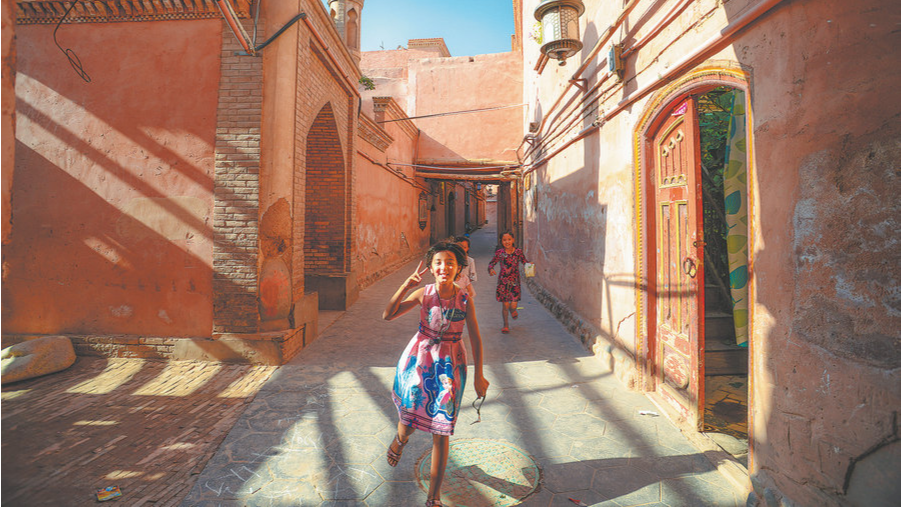
Over millennia, Xinjiang has evolved into a land where multiple ethnic groups blend and thrive together. Today, it is home to all 56 ethnic groups of China, making it one of the country's provincial-level administrative regions with the fullest ethnic composition and a vibrant diversity of folk customs and traditions.
This spirit of openness is precisely captured in the conclusion to the book, a poem written by the late Xinjiang-based writer Zhou Tao (1946-2023):
"Across the boundless expanse,
Countless lives are forged —
Utterly ordinary, yet fiercely bold.
The embrace of the Gobi Desert is also the embrace of the sea,
Open wide, gathering souls from every corner of the world."
Hi, I'm Xinjiang is the result of a collaborative effort between major national and local publishing houses. Kang Rizheng, an editor with Xinjiang Juvenile Publishing House, explains that their key contribution was to provide the book with a localized perspective.
"Xinjiang is not only a place to be observed — it's also an observer of itself. Through this lens, we have rediscovered Xinjiang."
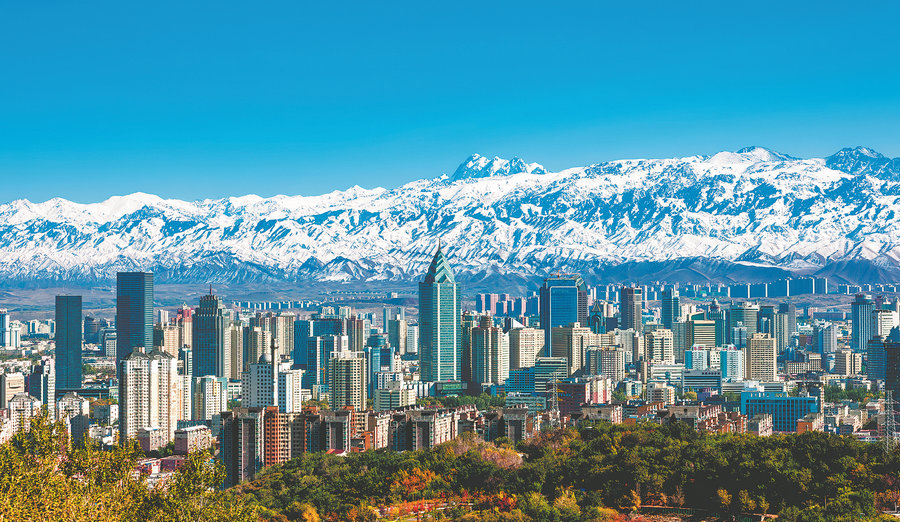
He recalls meeting members of the Beijing-based CITIC Press Group in Urumqi where they were amazed to see the Bogda Peak rising behind the streets — a sight that local people might take for granted, often overlooking the beauty that surrounds them.
READ MORE: Xinjiang's sands reveal fascinating finds
"For readers who have never been to Xinjiang, the book will evoke a deep longing to experience this land," Kang says.
"And for those of us who live here, it invites us to see our home with fresh eyes and to fall in love with it all over again."
Li Mu, deputy chief editor of CITIC Press Group, says that as a major player in China's publishing industry, the company has actively partnered with local publishers to bridge its broad public network with their regional expertise. She also expresses hope for deeper collaboration with cultural institutions across Xinjiang.
