

As 2025 closes, China's youth continue to redefine the nation's future, reviving traditions while crafting new cultural narratives across regions.
Editor's Note: In 2025, China's youth are crafting a new cultural narrative — not by following a timeline, but by mapping it across the country. This annual review shifts the focus from chronology to geography, capturing a regional resurgence through nine compelling stories. From digital village builders to Tibetan language songwriters, from Cantonese advocates to rural revitalizers, young people are rediscovering and reinterpreting local heritage. They are not merely inheritors of tradition but active creators of it. This report highlights how a new generation is planting its future in native soil, forging a dynamic connection between youth and homeland.

Hebei
An increasing number of young people are returning to the fields, transforming agriculture by leveraging technology to boost grain production.
Laoting county in Hebei province is known for its vast saline-alkali lands, where traditional farming methods are labor-intensive and often yield low results.
A group of local young people, with an average age of 29, has replaced experience-based farming with data-driven management, turning once-barren land into fertile ground.
Duan Yanyan, a hardware engineer on the team, integrated Internet of Things technology, programming, and smart machinery into field management. Automated valves, remote-controlled water pumps, and drones have taken over much of the manual labor, reducing costs while enabling digital monitoring of crop growth.
Beyond production, the team has expanded into agricultural support services. Wei Mingzhao explained that they collaborate with agricultural research institutes to trial new crops, helping local farmers optimize their cultivation practices.
"Sometimes our work is physically tiring and demanding," said Li Zhiguo. "But its value is essential. Agriculture is the foundation of national development, and ensuring food security is key to securing the country's future."

Beijing
Amid the labyrinth of hutong in Beijing, a number of independent bookstores are quietly emerging as vital hubs that link history with the present, preserving local culture and nurturing a love of reading.
Zhao Chen, the founder of Possibly Books in Chaomian Hutong, describes the space as a "multifunctional public arena where new possibilities continually unfold".
Beyond simply selling books, the store fosters community ties through book exhibitions and interactive settings that encourage friendships through shared readings. It also hosts "citywalk" activities that connect the store with nearby areas, turning books into a bond that revitalizes neighborhood relationships.
A silver-haired professorial couple, after residing in Europe for many years, returned to Chaomian Hutong, where they had lived in their youth. They were deeply moved by Zhao's new community bookstore, describing it as having a "curative effect". Meanwhile, the younger generation's expectations of bookstores are becoming increasingly diverse — some have even proposed marriage at Possibly Books.
"A small yet exquisite, book-centered, multifunctional cultural and artistic space is not only a representation of the good life but also a standard feature of an elevated community culture," Zhao said.

Jiangsu, Zhejiang, and Shanghai
Young people from across the nation are flocking to the rural outskirts of major cities in the Jiangsu-Zhejiang-Shanghai region, transforming these areas into thriving, vibrant communities.
Here, the countryside offers a unique blend of urban and rural characteristics — natural beauty paired with efficient management and convenient infrastructure. New residents and professional teams are developing vacation villas, affordable housing for young people, cafes, and international schools.
Freelance programmer Zhu Weitian founded a youth commune in Nuancun, Liangzhu, Zhejiang province, providing entrepreneurial support for tech talent. He likens the area to Beijing's Zhongguancun 20 years ago — full of the same energy and creativity, but with more freedom and lower living costs.
Zhao Dan, head of Nuancun's operations team, emphasizes the importance of social connections in the area's appeal."People are drawn to people," he said.
Nuancun brings together individuals with diverse interests and shared goals, such as hiking, meditation, and collaborative tech creation. New residents find like-minded friends, sparking meaningful interactions and even joint ventures.
"The Jiangsu-Zhejiang-Shanghai countryside has an organic force for growth," Zhao said. "It is the perfect place for pragmatic idealists."
Hubei
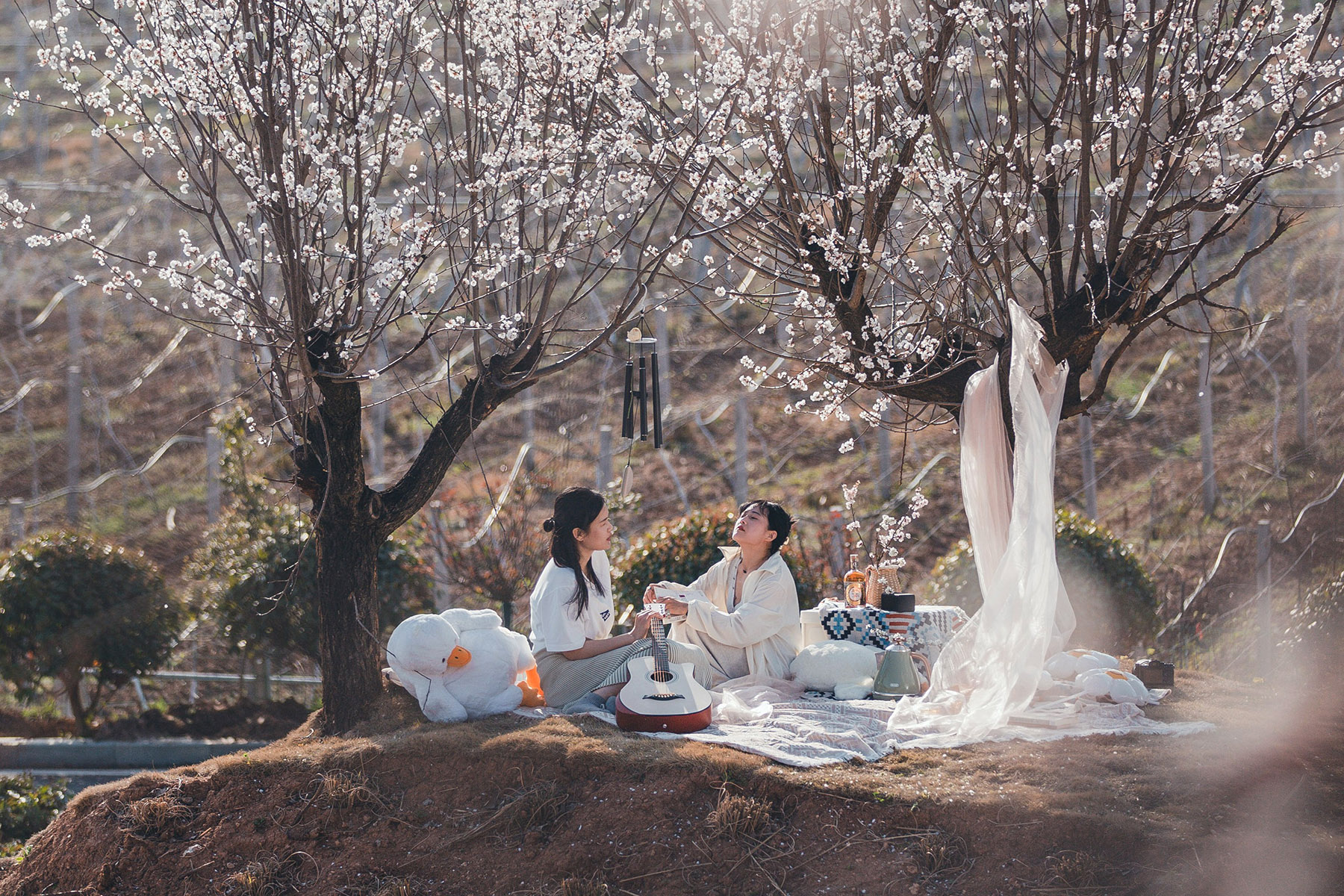
Young people in Xinghua village, Danjiangkou, Hubei province, are sparking new momentum by combining ecological resources with youth-driven innovation.
The village once struggled with population decline and outdated infrastructure, but it has reinvented itself as a rural tourism destination. This transformation has been made possible through the collective efforts of grassroots leaders, returning young entrepreneurs, and local residents.
Wei Mingjun, one of these entrepreneurs, started an e-commerce business that promotes local specialties — such as apricots and kiwis — through short videos. His business highlights the growing role of digital platforms in expanding the village's reach.
"I hope to help share our high-quality farm products and beautiful scenery beyond the mountains," he said.
Meanwhile, Zhang Xingxing, deputy secretary of the village Party branch, played a crucial role in turning idle houses into a cluster of homestays.
These efforts are paying off. As Chen Meimei, a young tourist, noted, immersive experiences like nighttime flower-viewing walks and traditional costume photography offer more than just picturesque scenery — they reveal a vibrant countryside where the story of revitalization is unfolding.
Hong Kong
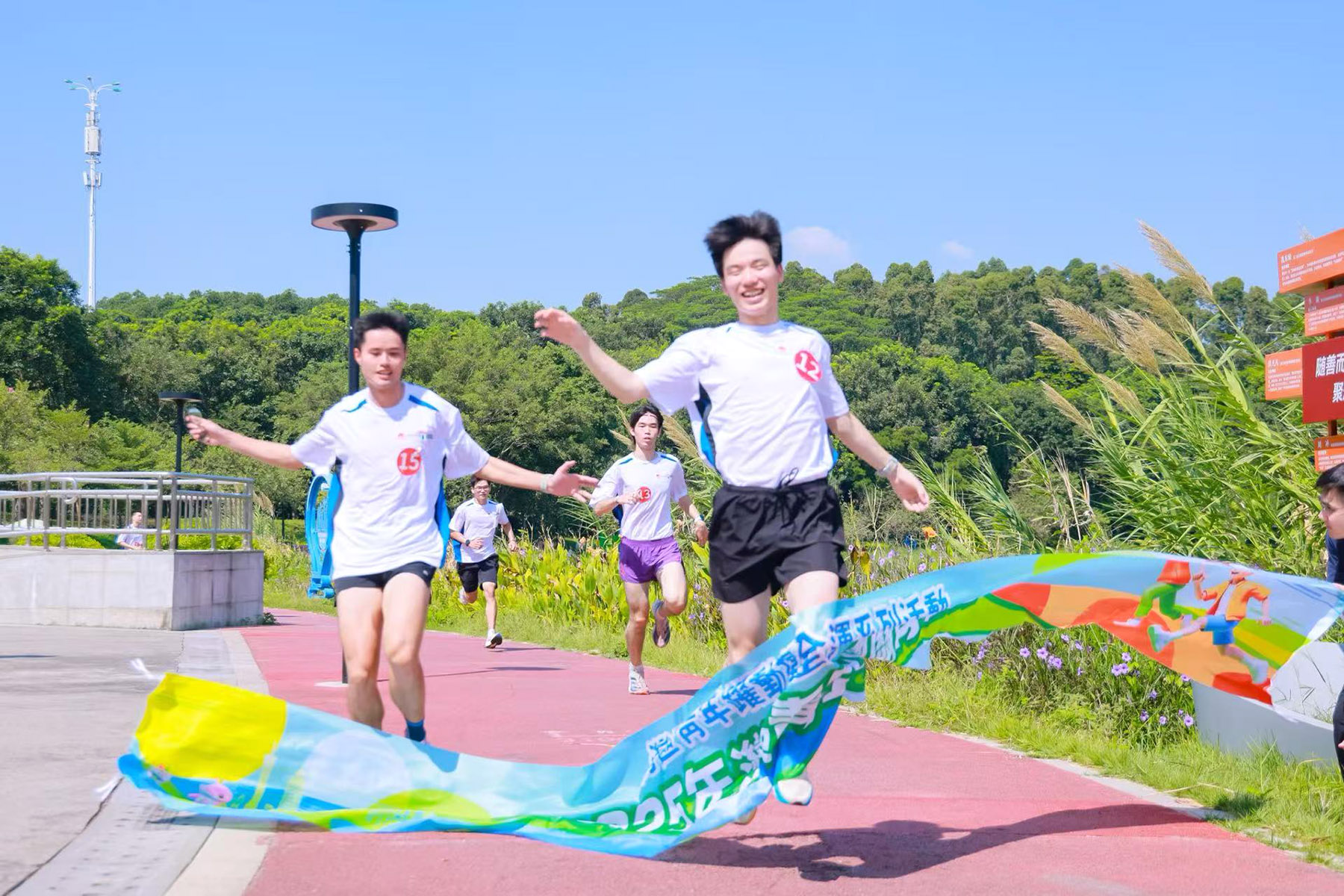
In Hong Kong, sports are deeply woven into daily life, from hiking city trails and coastal peaks to regular fitness routines. For Chan Yuen-tung, project manager at the Hong Kong think tank One Country, Two Systems Youth Forum, this sports culture offers a window into how young people connect and interact across the Guangdong-Hong Kong-Macao Greater Bay Area.
Around the time of the 15th National Games, held in November, she organized two youth sports exchange programs, bringing together sports-loving youth from across the region to experience signature disciplines from different host cities. "The National Games are not just about competition. They also carry strong social and cultural significance,"Chan said.
During the programs, sports became a universal language. Through shared training and friendly competition, the participants built connections that extended beyond regional identities. Some teams even continued to meet and train together after the events ended.
Chan hopes that sports-based exchanges can foster more sustained and meaningful interactions among youth in the Greater Bay Area, grounded in regular participation rather than one-off events.

Xinjiang Uygur autonomous region
A wave of trendsetting energy, driven by young people, is reshaping the cultural landscape of the Xinjiang Uygur autonomous region. In fields like rap music and local design, they are transforming traditional roots into avant-garde expressions.
Designer He Yuxuan reintroduces trends by grounding them in cultural heritage, weaving ethnic languages, traditional attire, pastry shapes, and more into her artistic creations.
"Local culture is like crops and farm produce. It's deeply tied to this land, and you must plant deep roots to bear fruit," she explained.
Mirali Maxrap, better known as SHarK and the 2025 champion of The Rap of China, has even bigger ambitions: to elevate Xinjiang's rap scene from a "special feature" to the "cutting edge" of the genre.
In recent years, a new generation of talented rappers has emerged from Xinjiang. However, SHarK emphasizes that the region's trendy culture shouldn't be defined by labels alone. Beyond blending ethnic elements into the music, they must also create a pioneering style where Xinjiang's symbols are not merely nostalgic tags but the very essence of trendiness itself.

Guangdong
In the vibrant, ever-evolving city of Shenzhen, Guangdong province, Yuan Xiaoting is dedicated to preserving and revitalizing the region's sonic heritage as both a promoter of the Cantonese language and a vlogger. Her journey centers around finding new ways to nurture dialect culture in a rapidly modernizing metropolis.
Yuan believes that the core of local culture in Shenzhen and throughout Guangdong lies in pragmatism and efficiency. Many expressions in the Cantonese dialect reflect this "down-to-earth, unpretentious" spirit. As a district-level "cultural promotion ambassador" for Shenzhen, she feels a strong responsibility to share this unique urban character with the wider world.
In response to concerns about the "extinction of dialects",Yuan has initiated a series of systematic projects, including the creation of a Cantonese language course, which has attracted over 30,000 students worldwide. She also pioneered an internationally oriented Cantonese course taught entirely in English.
To her surprise, she discovered that overseas variants of Cantonese, such as Malaysian Cantonese, have preserved more archaic vocabulary. This finding reinforced her belief in the importance of global dissemination to keep a language vibrant.
"Language is a living museum," she said. "Its significance lies in affirming and extending our identity. Our most authentic selves are embedded in our dialect."
Sichuan
Songs in ethnic languages are evolving from regional cultural expressions into sources of creative inspiration for the younger generations.
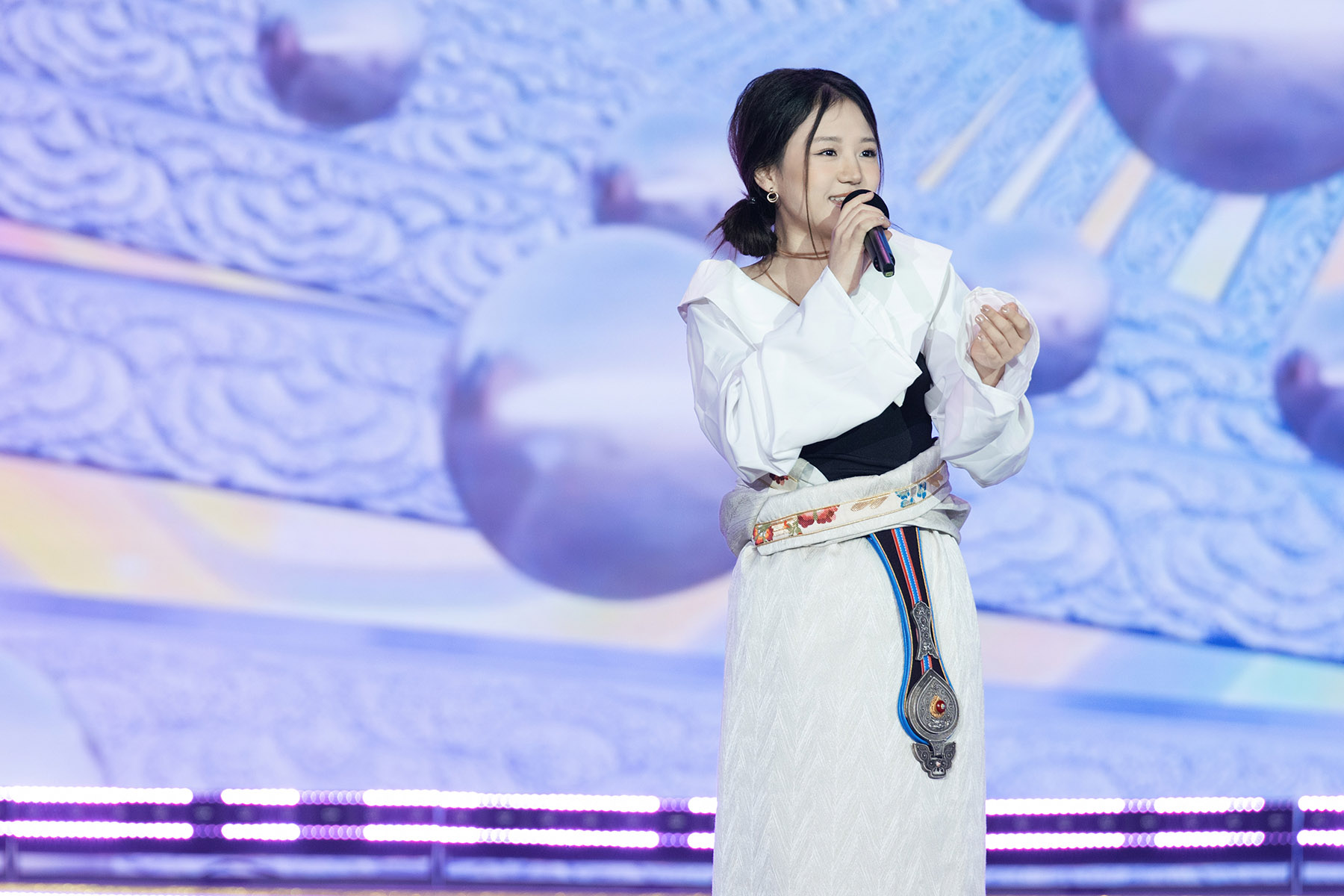
Sidan Mamcu, a Gen Z singer-songwriter from the Jiarong Tibetan community in Aba Tibetan-Qiang autonomous prefecture, Sichuan province, fuses the Tibetan language with global music genres in her work.
Raised in an ethnically musical family, she feels a natural intimacy when singing in Tibetan, a language she describes as being closer to the sky, evoking openness, resonance, and emotional depth.
For Sidan Mamcu, the dialect itself is inherently musical."The tones already carry melody," she said. "You don't need special techniques. Just speak the words, find the tune, and it flows."
Even listeners who don't understand the lyrics often connect instinctively with the sound and cultural atmosphere of her songs.
In recent years, Sidan Mamcu has gained attention for her original Tibetan-language music that blends traditional vocal styles with Afrobeat, electronic music, and hip-hop.
Her recent song, Sa Sa Sa, tells the story of a Tibetan girl awakening to her own agency. "From my grandmother to my mother to me, each generation breaks through a little more," she said. "Now, my generation can explore and create more broadly and become who we truly want to be."

Henan
By May 1, China had launched the nationwide psychological support hotline, "12356", aimed at improving the accessibility and standardization of mental health services across the country.
The Psychological Health Center at the 8th People's Hospital of Zhengzhou in Henan province was among the first institutions to join the initiative, integrating the "12356"hotline into its existing services as early as January. "Since then, the number of calls has more than doubled," said Zhang Lixia, the center's director.
Since 2022, Henan has prioritized extending adolescent mental health services to villages and communities in its annual key livelihood projects for four consecutive years.
Zhang explained that the center currently employs 22 professional counselors to manage the hotline. More than 200 doctors and experts from the hospital are available for backup support during crisis interventions.
Wu Hengqian, a 29-year-old counselor at the hospital, has answered over 1,000 calls during his five years of service. He describes the hotline as a "bandage" for the soul.
"Traditional counseling often requires a weeklong wait for an appointment, but the hotline offers immediate, anonymous, and free support," he said.
