

Duan Zhiyuan has a simple philosophy: "Only those who do not cherish life can ignore music."
It is a creed that drove Duan, a retired editor from Urumqi, Xinjiang Uygur autonomous region, to embark on a journey to Almaty, Kazakhstan, to retrace the footsteps of Xian Xinghai, the Chinese composer of the famed The Yellow River Cantata.
Duan says that since he was a child he has been an "active literary element". His understanding of music deepened as he aged, transforming from youthful enthusiasm into a profound respect for resilience, and he became engrossed in the story of Xian Xinghai.
In 1940, Xian was sent to the Soviet Union to make music for a revolutionary documentary, but work was suspended when the Great Patriotic War erupted in 1941. As Xian tried to return to China, he was stranded in Almaty, cut off from his homeland, but he continued to compose.
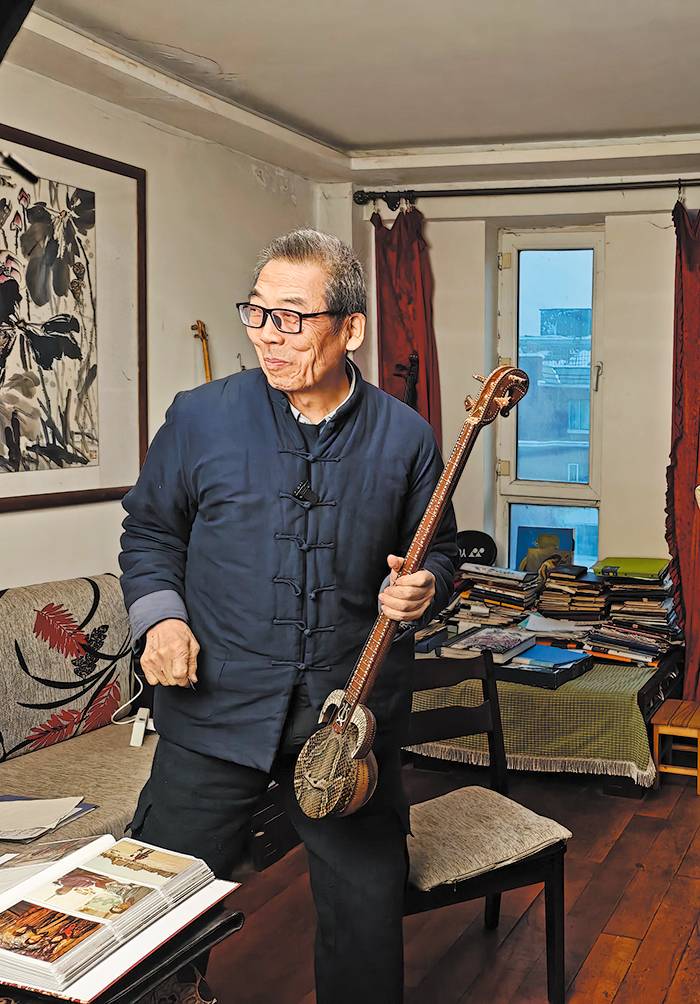
After a car accident 32 years ago, retirement beckoned for Duan, but that did not mean he was ready for a quiet life.
"I went to Almaty to see the Baikadamov family," Duan, 75, says, recounting his meeting with the daughter of the Kazakh choral director Bakhytzhan Baikadamov, who provided Xian with accommodation and food despite the family's limited means during Xian's last years. Despite the language barrier, a bond between Xian and Baikadamov formed.
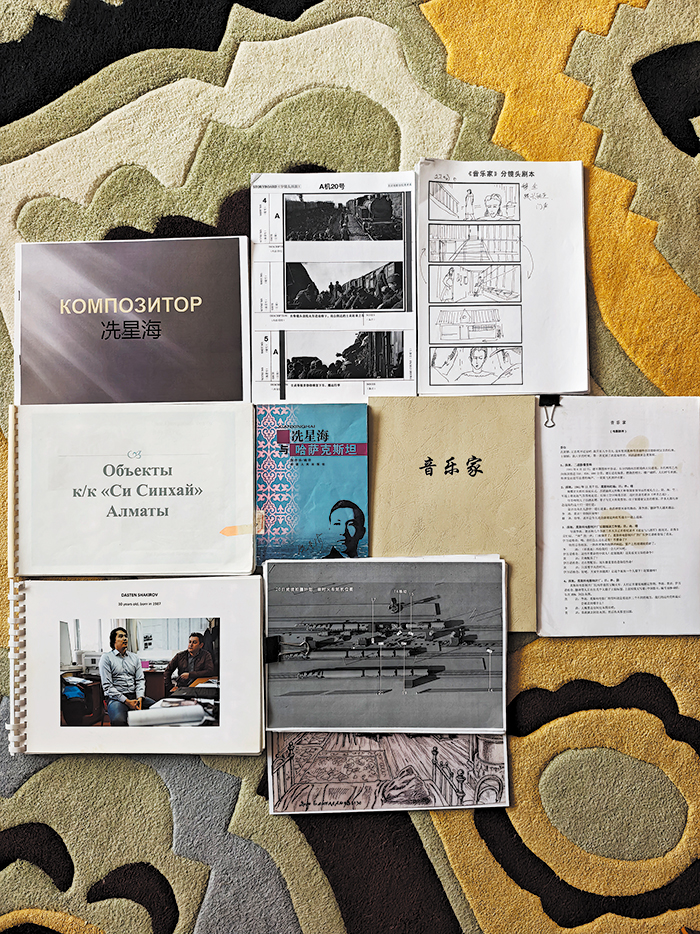
The journey was personal for Duan. He spent his own savings and traveled despite physical challenges to document this history. The hospitality he found in Almaty mirrored the history he was chasing. A translator he recruited refused payment after seeing how determined Duan was, a gesture that Duan says deeply moved him.
His dedication did not go unnoticed by the composer's family either. Xian Nina, Xian Xinghai's daughter, was struck by how this stranger from Urumqi "poured all his resources" into retracing her father's steps in Almaty. "I don't think the average person could have achieved what he (Duan) did."
Duan has become the go-to expert on Xian, and he is a fierce advocate of the composer's spirit of internationalism. That work serves as a bridge, much like the one connecting his hometown of Urumqi with Almaty. While they were formally designated sister cities in 1993 — the first such pair between China and Kazakhstan — their relationship is not a modern administrative construct. It is a bond forged in the fires of the Chinese People's War of Resistance Against Japanese Aggression (1931-45), traversed by an international route supporting China that ensured the transportation of critical supplies and the movement of people, one of them being Xian.
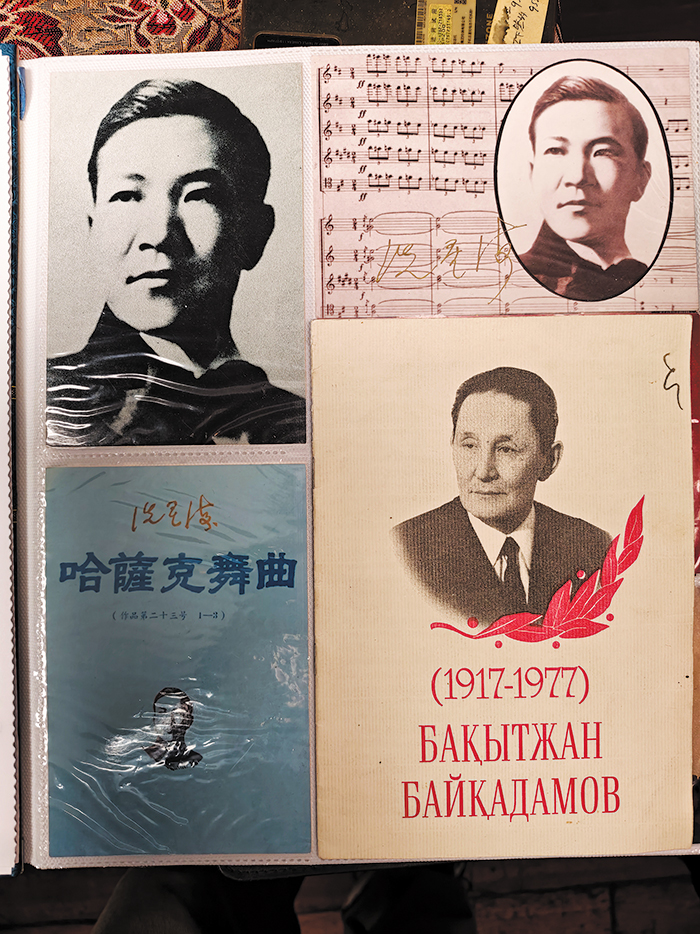
The bond formed in those dark days is now permanently etched into the map of Almaty. To honor the composer, the city renamed a street Xian Xinghai Avenue and erected a monument ensuring his legacy stands tall. Fittingly, this road runs parallel to Baikadamov Avenue, placing the two friends side by side, just as the pair were in life.
Extraordinary friendship
For Xian Nina, these landmarks are a testament to an extraordinary friendship. She speaks with profound respect for Baikadamov, lauding his moral character.
It was a reflection of the Kazakh spirit she admires deeply.
"They are so warm-hearted. When they see someone in trouble, they reach out. They would never turn a guest away after dark."
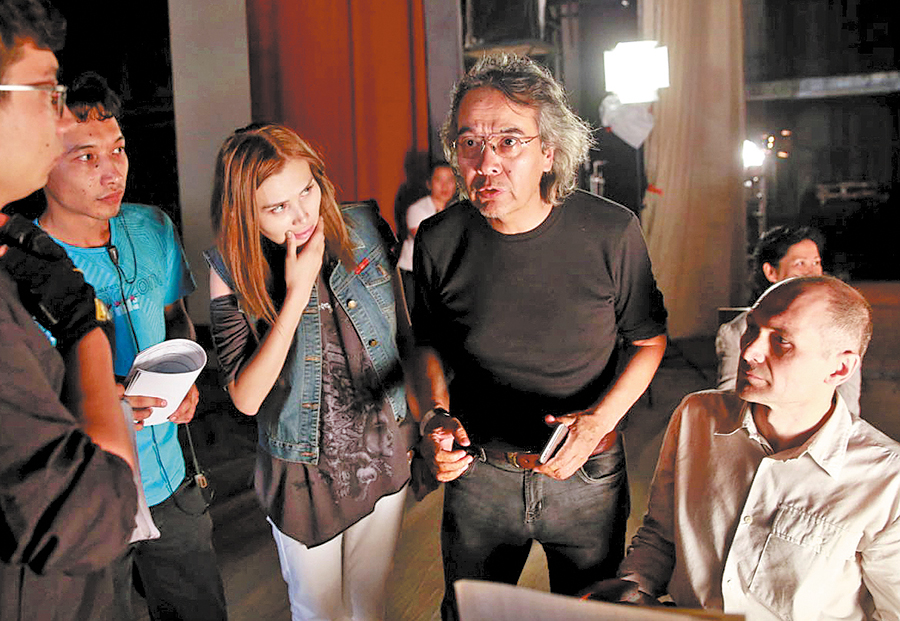
To bring this remarkable story of humanity to a wider audience, the Urumqi-born movie director Xierzhati Yahefu was responsible for The Composer, the first co-produced film between China and Kazakhstan.
"The older generation of revolutionaries and cultural figures laid the foundation for this collaboration,"Xierzhati says. "Framed by the vision of building a community with a shared future for humanity, the film serves as one of the most effective forms of cultural collaboration and exchange, capable of bridging distances and fostering emotional connections. Co-productions like this also represent an excellent approach to advancing the Belt and Road Initiative," he added.
Lyu Yi, the acting consul general of China in Almaty, says projects such as the co-produced The Composer are a "vivid embodiment of the heart-to-heart connectivity" fostered by the Belt and Road Initiative.
This year marks the 120th anniversary of Xian Xinghai's birth and the 80th anniversary of the victory in the Chinese People's War of Resistance Against Japanese Aggression (1931-45) and the World Anti-Fascist War, and Lyu says that efforts, including the renovation of memorial facilities for Xian and the re-screening of the film, serve a crucial purpose: to encourage young people to value peace.
"We hope both sides will carry out more cultural collaboration projects that have warmth, depth, and emotional resonance."
Even as cinema bridges a psychological gap, government policies have made travel between the cities easier.

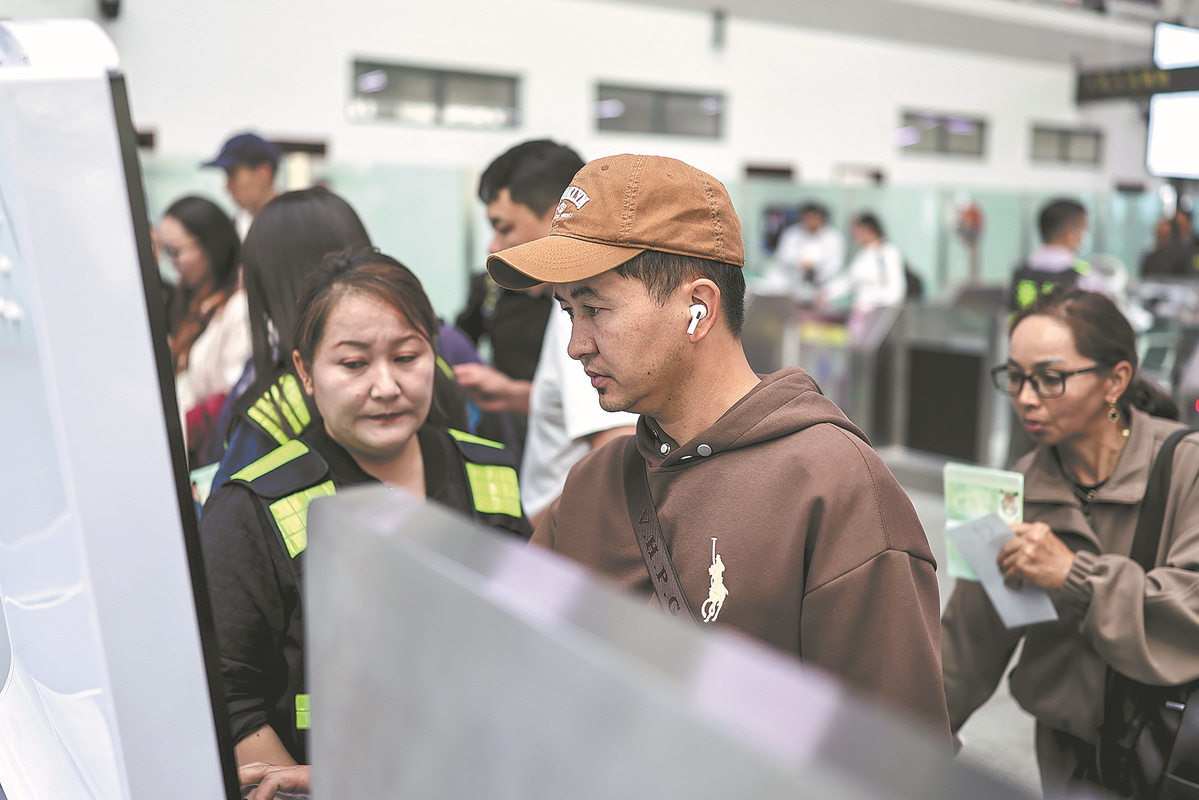
With 2024 and 2025 designated as mutual tourism years between the two countries, simplified travel procedures have injected strong momentum into tourism, business and cultural exchanges. A relaxed rule came into effect in November 2023, allowing visa-free travel between China and Kazakhstan. In the two years since, 179,000 transits were made between the two countries, as recorded at the Urumqi Tianshan International Airport, according to China Central Television.
Of those transits, 118,000 were by Kazakhstan nationals. In the first half of this year, 54,100 Chinese tourists visited Almaty, 33.4 percent more than in the corresponding period last year, the Department of Tourism of Almaty City said in September.
For Ainur Baitumanova, a tourist from Almaty, the eased visa rules turned a trip that once required lengthy preparation into a spontaneous getaway. Her border crossing in October last year was seamless.
The policy also produced a shopping spree for her. Baitumanova and her friends arrived in Urumqi with virtually empty suitcases and returned to Almaty with cases bursting at the seams, the luggage including winter hoodies, boots and a fur coat.
However, beyond the shopping, she found a city that felt remarkably like home, she says. This sense of familiarity was most potent at the dinner table. Baitumanova's love for Xinjiang cuisine had begun in Almaty, where dishes such as dapanji (big-plate chicken, Xinjiang's signature dish) introduced her to the region's rich flavors. "Xinjiang is a great tourist destination for us, because of the language, the culture and the food."
The cultural mirror extended to the nightlife. At a local venue, she says, she was surprised to see people dancing to Kara Zhorga, a traditional Kazakh song, and performing music with a passion that struck her.
Reaping rewards
Baitumanova says she has noticed that more Chinese are visiting Almaty, and businesses in both countries are reaping the rewards.
Even as filled-to-the-brim suitcases like those of Baitumanova are fueling trade, freight workhorses in the form of the Tianshan China-Europe (China-Central Asia) freight train have emerged as a modern caravan connecting China to Central Asia and Europe. Urumqi and Almaty serve as core hubs for this line.
Li Gang, general manager of Xinjiang International Land Port Group, says that in the first 11 months of this year Tianshan freight trains made 714 trips, moving more than 1.3 million tons of exports and imports valued at nearly 19.5 billion yuan ($2.77 billion). A milestone was reached in March last year with the launch of the full-timetable Tianshan China-Europe freight trains from Urumqi to Almaty.
The service enables Tianshan freight trains to run according to prearranged schedules.
The Urumqi-Almaty line now operates on a fixed weekly frequency, an important upgrade from previous services, Li says. As a key destination and the economic center of Kazakhstan, Almaty directly benefits from it. The service has expanded to Kazakhstan, and beyond, driving nearly 29 billion yuan in total import and export trade since its operation, he says.
Gulnar Shaimergenova, director of the China Studies Center in Kazakhstan, says the operation of freight trains via Urumqi and Almaty has in effect transformed these sister cities into logistics hubs linking China's inland regions with the Eurasian continent.
"This establishes a robust new architecture for our countries, significantly driving growth in trade, transit transport and industrial collaboration."
The Almaty-Urumqi linkage mechanism has become the "core engine" for pragmatic collaboration between Kazakhstan and Xinjiang, she says.
The efficient and stable operation of the China-Europe and China-Central Asia freight trains has facilitated a rising two-way flow of goods made in China and Central Asian quality products, Lyu says.
This momentum has transformed the link between Urumqi and Almaty from a question of whether it connects to how fast, stable, and well it connects. This evolution, he says, provides solid support for deep collaboration in logistics, trade and manufacturing, bringing tangible development opportunities to countries along the route. "While powerfully boosting regional connectivity, the trains are also conveying trust and collaboration."
Urumqi and Almaty are key gateway cities in their respective countries for engagement with Central Asia, Lyu says. Friendly ties between the two cities reflect the China-Kazakhstan permanent comprehensive strategic partnership at the local level.
"We look forward to both sides contributing more to the high-quality development of the Belt and Road Initiative and the building of a China-Central Asia community with a shared future."
Fang Aiqing and Shao Xinying contributed to this story.
Contact the writers at wanghaoran@chinadaily.com.cn.
Xian Xinghai, a people's musician
Born in Macao in 1905, Xian Xinghai is celebrated as "The People's Musician". After studying at the Music Training Institute attached to Peking University and the National Conservatory of Music in Shanghai, he traveled to Paris in 1929 for advanced studies and returned to China in 1935.In 1938, he traveled to Yan'an to serve as the dean of the Music Department at the Lu Xun Academy of Arts.
In May 1940, using the alias Huang Xun, he left Yan'an and traveled via Dihua, now Urumqi, to the Soviet Union to compose the score for the documentary Yan'an and The Eighth Route Army. After war broke out in the Soviet Union in 1941, his work was suspended. Stranded and destitute, he eventually made his way to Almaty in late 1942. It was there that the Kazakh composer Bakhytzhan Baikadamov extended a helping hand to a stranger. In those difficult times, Baikadamov gave him shelter and support, while Xian shared his expertise in composition with Baikadamov.
Absorbing the essence of Kazakh folk music, Xian composed works such as National Liberation, Sacred War, and Man Jiang Hong. In 1944, on Baikadamov's recommendation, he moved to Kostanay, Kazakhstan, where he composed the symphony Amangeldy, honoring the Kazakh national hero and rallying support against fascism. Xian Xinghai died in Moscow in 1945.
Wang Haoran
