

In the third essay of her series pegged on the rise of women artists globally, Chitralekha Basu turns the spotlight on the behind-the-scenes people and institutions that have helped create the spaces where Hong Kong’s women artists can thrive.

Hong Kong was an early joiner in the worldwide advocacy campaign for greater visibility of women artists. Videotage, one of Hong Kong’s first independent platforms for the city’s emerging digital and new-media artists, was founded in 1986.
Ellen Pau (1961—), a Hong Kong pioneer of video art, was one of the co-founders. She says that the handheld video camera became the preferred device used by women makers who felt marginalized in the film industry.
“In the ’80s, Hong Kong was at a stage similar to the civil rights movement in America in terms of the city’s fight for human rights, citizens’ rights, and social justice, and people, especially activists, women, and low-budget creative people, would use portable video cameras to produce their stories and documentaries.”
The fact that at Art Basel Hong Kong 2025, the crowds swarmed around Doku the Creator, the towering digital avatar of Tokyo-based Chinese artist Lu Yang (1984-) and seemed equally in love with the interactive video game accompanying Mak Ying Tung 2’s (1989- ) Home Sweet Home Backyard: Golden House series of triptychs, products of the latter’s community-engaged practice, is owed at least in part to the roles played by Pau, Linda Lai (1957-) and their ilk — the first generation of Hong Kong interdisciplinary artists who have also produced a robust stream of critical and insightful writing on their own work and that of their fellow artists. From the early ’90s to the 2010s, they wrote extensively about the diverse practices of the city’s women artists and why they mattered.
Strengthening visibility
Özge Ersoy, executive director of Asia Art Archive (AAA) — a Hong Kong nonprofit started in 2000 and dedicated to preserving and highlighting the documentation of recent art history in Asia — agrees that Pau and Lai “laid the foundations for discussing gender in Hong Kong art”.
“Much of what we do today builds on their work. At AAA, we preserve these contributions and make visible how discourse evolves.” Ersoy goes on to explain how the personal archives acquired by AAA — including those of conceptual photography artist Holly Lee (1953-2024), and art historians with a gender-focus, Tao Yongbai (1937-), and Wang Gongyi (1946-) — often serve as a bridge between present- day women artists of Hong Kong and their predecessors, as well as between artists from across Asia.
“We activate archives by organizing exhibitions, talks, workshops, and creating regional conversations,” she says.
Recently, AAA invited Hong Kong artist Jaffa Lam (1974-) and filmmaker Crystal Kwok (1966-) to respond to In Our Own Backyard, materials from the archives of women artists and women’s movements in South Asia in the ’80s and ’90s. “Participants connected with the archives on their own terms — drawing parallels, asking questions, and showing how feminist histories speak to one another across the region,” Ersoy says.
One of the major women-artist-focused programs run by the AAA, together with M+ museum, since 2018 is the Wikipedia Edit-a-thon. People from all walks of life — “from secondary school students to established scholars” — come together to address gender imbalance and gender insensitivity in art-world-related Wikipedia entries.
“To date, over 300 participants have improved more than 245 articles — creating new pages for artists such as Holly Lee, Ivy Ma (1973-), Jaffa Lam and Firenze Lai (1984-), among many others,” says Ersoy. “Contributions range from major additions — new citations and contextual sections — to smaller but equally important edits like correcting typos and translating passages,” she adds. “No contribution is too small; every edit strengthens the visibility and accuracy of these artists’ histories.”
The arc from 2018
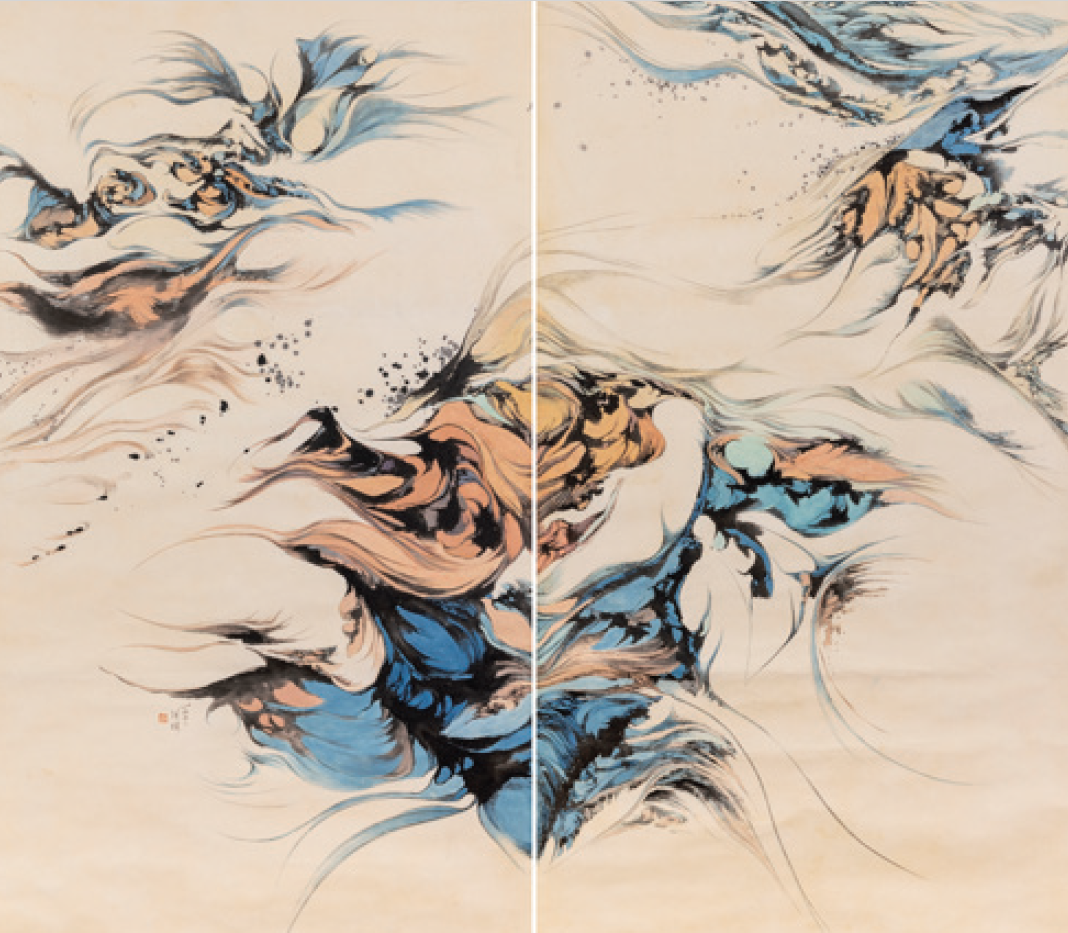
2018 seems pivotal in the history of women-made art in Hong Kong. It was the year Eliza Gluckman, curator of the New Hall Art Collection at Murray Edwards College, University of Cambridge, joined forces with AAA to take on a major research project spanning 50 years of artistic development in Hong Kong shaped by women artists. Sotheby’s HK hosted an exhibition tied to the project the following year. It featured works by 10 Hong Kong women artists: Au Hoi-lam (1978-), Rosamond Brown (1937-), Irene Chou (1924-2011), Choi Yan-chi (1949-), Fang Zhaoling (1914-2006), Ho Sin-tung (1986-), Ko Sin-tung (1987-), Jaffa Lam, Angela Su (1958-) and Doris Wong (1981-) names that remain relevant to any discussion of Hong Kong women artists today.
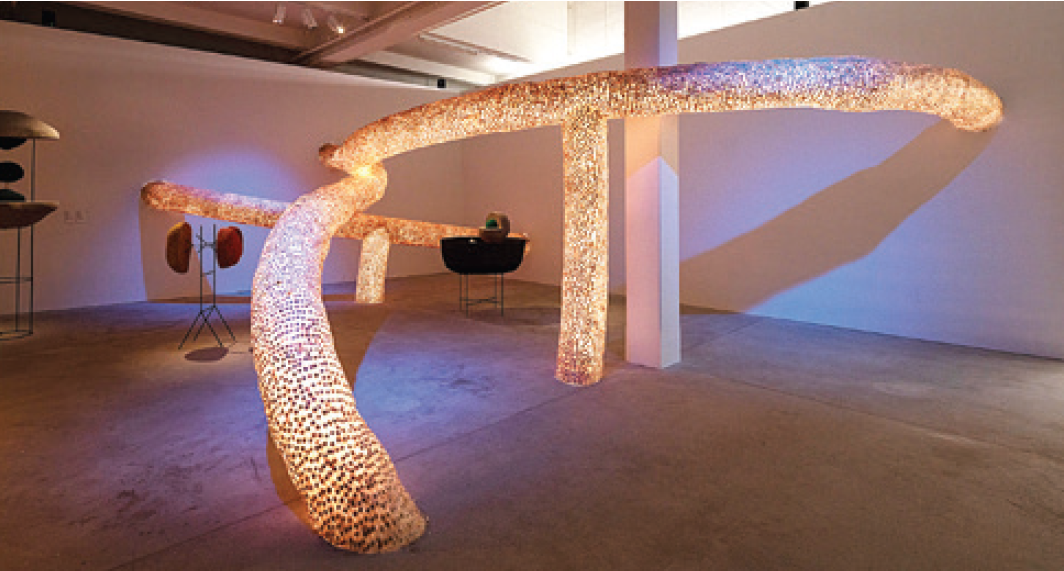
For its opening exhibition in 2018, Tai Kwun Contemporary — the expansive four-story exhibition space in the revitalized Central Police Station compound — hosted two young women artists, So Wing-po (1985-) and Cao Fei (1978-). Six-Part Practice was So’s first solo show, mounted on a jaw-droppingly spectacular scale. Her ode to pharmacological Chinese herbs comprised six installations, including one in which millions of tree-of-Damocles seeds stuck all over illuminated fiberglass tunnels meandering across the exhibition hall stood out like stars in the Milky Way. With So, Tobias Berger, then head of art at Tai Kwun, had taken a chance on a practically unknown artist, “fresh out of art school”. Since then, So has been going places, and Berger could not be happier about it. “She is participating in biennales, … is represented by a great gallery, Blindspot, has good publications. It is really beautiful to see how nicely she developed.”
He adds that Tai Kwun giving him a free hand with running the space helped. Two years into his role as head of art, Berger was doing a bit of stocktaking. “And it turned out that we had been very, very balanced. Maybe tilted a little bit more on the female side, but that was because at that time women were making more interesting, more challenging and more appropriate work.”

Musings on the marginalized Carola Wiese, senior adviser, UBS Family Advisory, Art and Collecting, says that curated shows featuring women artists by influential Hong Kong institutions such as Tai Kwun and M+ museum can have “a knock-on effect” on sales. She mentions Polish German artist Alicja Kwade’s (1979-) solo show at Tai Kwun and Dream Rooms: Environments by Women Artists 1950s – Now, currently on at M+, inspiring collector interest in the featured artists.
At M+, the efforts toward creating a space for underrepresented voices, and indeed creating a conversation around those voices, were evident even before it was officially opened in 2021. Ambiguously Yours, put on at the M+ Pavilion in 2017, “explored how popular culture in Hong Kong, primarily film and Cantopop, has been an important space within which gender norms have been challenged, and not just conventional ideas of femininity”, says Tina Pang, curator of Hong Kong visual culture at M+.
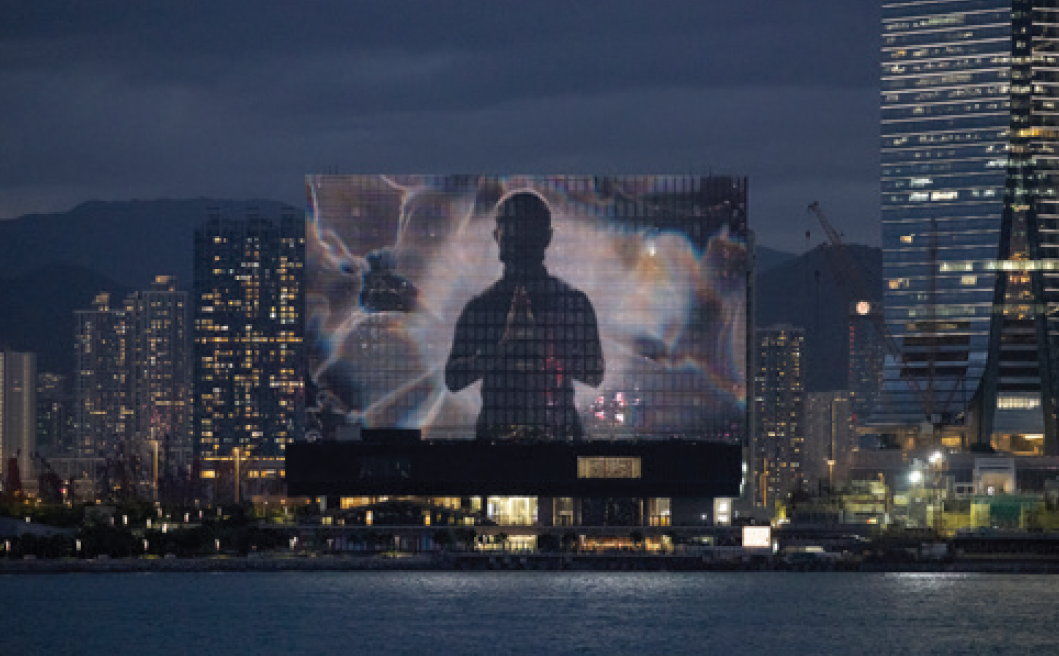
Nickos Gogolos, associate director, Collection, Archives and Library at M+, reveals that as of November, women — not counting their presence in collaborative projects — constitute approximately a quarter of the makers represented in the museum’s holdings. Among them, 51 percent are from the Chinese mainland and Hong Kong. Gogolos reveals that M+ has acquired an intergenerational collection of works by five noteworthy Hong Kong women ink artists — Irene Chou (1924-2011), Joey Leung Ka-yin (1976-), Eunice Cheung Wai-man (1986-), Wong Yee-ki (1988-), and Zaffer Chan (1991-).
Pang draws attention to M+’s role “in representing and collecting materials that can make certain kinds of histories about the visual culture of Hong Kong more available to a wider audience”, including those that risk extinction unless preserved, referring to Lo Yukying’s (1950-) photos of Hong Kong film sets taken during the heyday of the local film industry to illustrate her point.
“Lo was a very important figure in the publishing of Film Biweekly(1979—2007), and she documented a lot of behind-the-scenes activity in Hong Kong cinema.”

Revisiting the pioneers
In 2017, the Asia Society Hong Kong Center (ASHK) began a pro-active campaign to turn the spotlight on underrecognized, or almost-forgotten, 20th-century Chinese women artists by hosting a series of retrospective solo shows together with a number of ancillary public events.
Those featured include ink artists Fang Zhaoling and Irene Chou, and pioneer of interdisciplinary art, Lalan, aka Xie Jinglan (1921-95), whose abstract watercolor works, imbued with a spiritual luminosity, have since become a darling of the art market, placing her directly below global market leaders among women artists, Yayoi Kusama (1929-) and Lucy Bull (1990-).
“Due to historical and structural reasons, many women artists have indeed been overlooked in art history, and now is the best time to study and present their work,” says Chris Wan Feng, head of gallery and exhibitions at ASHK.
In March, the facility will unveil a retrospective on Hung Hsien (1933-), a Yangzhou-born artist “whose personal journey from Asia to America and her entire artistic career — interacting with Chinese ink traditions and American experimental art — are worth revisiting”.
Weaving female narratives Since its opening in 2019, the Centre for Heritage, Arts and Textile (CHAT) has consistently highlighted the dignity in and creative aspects of knitting, sewing and embroidery — activities commonly associated with routine household work and with women’s societal role. “By presenting women’s textile labor in our exhibitions, CHAT aims to empower them to recognize the value of their work and to share their stories with others through honoring their labor in the gallery,” says Mizuki Takahashi, CHAT’s executive director and chief curator.
She notes that the presence of textile- based artworks at international exhibitions and art fairs has grown significantly since CHAT was founded. “Themes such as community history and traditions, collective creation, and women’s contributions are being articulated through textile works.”

Recently, Hong Kong ceramicist Sara Tse (1974-) was invited to set up an open studio at the Mills, the revitalized textile mill compound where CHAT is housed. The sprawling maps, fabric installations and rows of framed photos on the wall at Tse’s open studio constituted a memorial to the artist’s alma mater — Kwai Chung Public School, which has since been demolished.
The exhibition also served as a living testament to Tse’s attempt to preserve the botanical heritage of her school. Together with her fellow alumni and visitors, she had planted seeds of common Hong Kong plant species that had once thrived in her school compound on the Mills’ rooftop. The harvest from the rooftop farm was the source of the natural dyes and fibers used at the collaborative workshops — ceramic-making, textile dyeing, cyanotype photography and branch weaving — led by Tse.When CHAT invited Tse to vary her practice by creating works using textiles as a medium, “she readily embraced this challenge and invited her fellow primary school alumni to participate,” says a delighted Takahashi.
It’s the kind of role Hong Kong’s independent art spaces have played for decades: nudging artists into discovering who they can become.
