

The just-concluded WestK Solo Fest — the first of its kind in Hong Kong — was a testament to the courage and confidence of artists who embrace the idea of carrying an entire show on a lone pair of shoulders. Rob Garratt reports.
While the idea of going solo might be daunting even to a seasoned performance artist, for the bravest of them, it’s an Everest of sorts — a uniquely challenging yet liberating platform for self-expression.
Melissa Leung, who made her solo debut at the inaugural WestK Solo Fest — which wrapped on Sunday — says, “It’s something performers have to face, eventually. Being artists, we like difficulties, we like being tortured. We don’t like feeling comfortable.”
Yet solo performance is not a format widely embraced in Hong Kong. Festival curator Bobo Lee believes that the 11-day event was the city’s first of its kind.
READ MORE: HK musicals rock
And long overdue as well, considering a solo show allows an artist to unravel their inner world in a uniquely personal manner, as was demonstrated amply at WestK Solo Fest, whose tagline, “Standing alone, speaking for many”, underscores how authentic autobiography can speak for a wider culture. “It’s really difficult, just being yourself and alone on stage,” says Lee. “So what urged you to do that? There must be something you really want to share.”
Homegrown debuts
A quartet of performances by East-Asian artists may have resonated most deeply with the local audience. The program opened on Jan 8 with a double bill of millennial women — Leung and Michelle Li — refracting their unique experiences of navigating life in Hong Kong through the prism of their respective mediums.
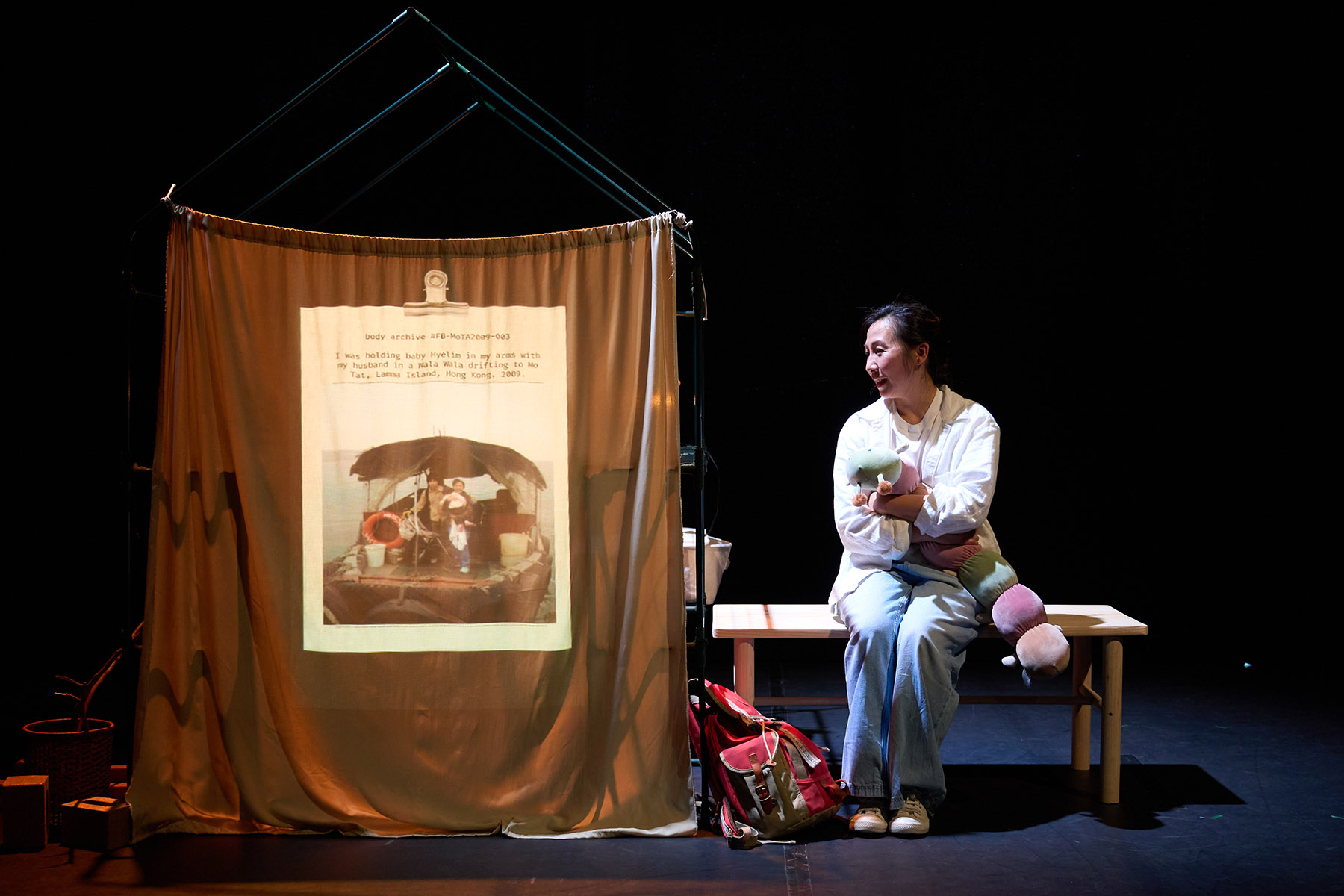
Called Body As Archive: Drifting, Leung’s piece stems from an ongoing research project and lecture series. It documents how she arrived in Hong Kong from the Guangxi Zhuang autonomous region at age 6, and how growing up in a tiny squatter home in Ngau Chi Wan meant having to perform acrobatic feats on a daily basis just to be able to inhabit that space.
“It wasn’t pleasant, hygienewise, but at the same time it gave me a lot of body memory,” she says.
Body As Archive: Drifting explores the idea of migration — linking the displacement of Palestinians, and Leung’s inability to establish a permanent family home for her young daughter. As with many other Hong Kong residents, the hope of settling down into an owned property remains an elusive dream, while serving as material for her poignant solo act.
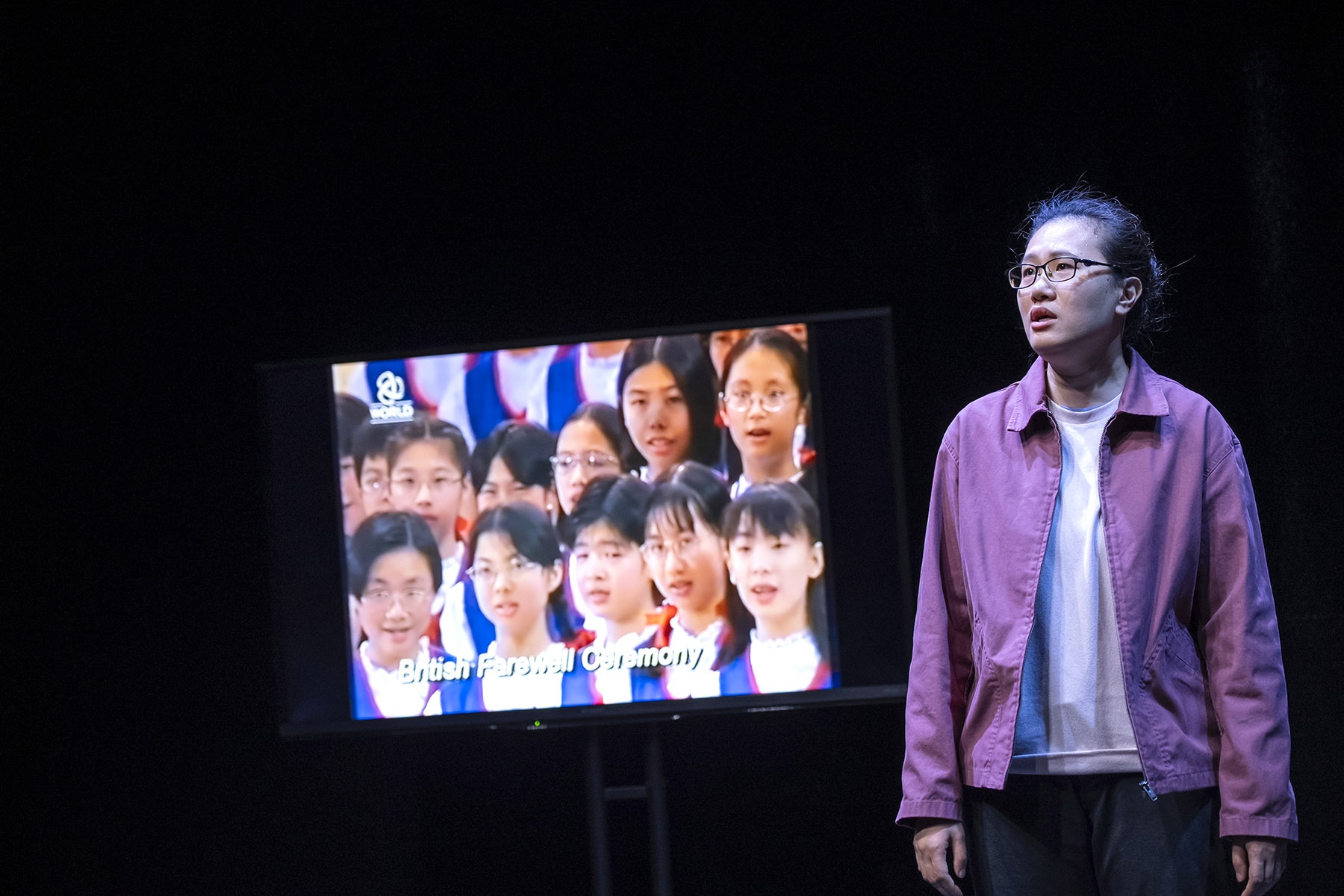
Li’s energetic performance began with a game — inviting the audience to guess the names of popular 1980s and 1990s Cantopop hits. But Karaoke’s crowd-pleasing sing-alongs were just a key to unlock Li’s life story — signposted with memories of the Chinese opera she sang with her mother, and the Karaoke Television bar she met her estranged dad in for the first time in years, among other such memories. The founder of Rooftop Productions, Li relived singing Auld Lang Syne at the ceremony to mark Hong Kong’s return to the motherland in 1997, as a member of the Hong Kong Children’s Choir — an occasion most memorable to the then-12-year-old for the damp sandwich served as refreshment.
Writing this heart-wrenching first solo show was both therapeutic and liberating. “When you get stuck, you’re the only one who can pull yourself out from the trap,” says Li. Having spent years collecting material for her piece, she felt ready to share her story on a public platform only after turning 40 recently.
Leftover but not out
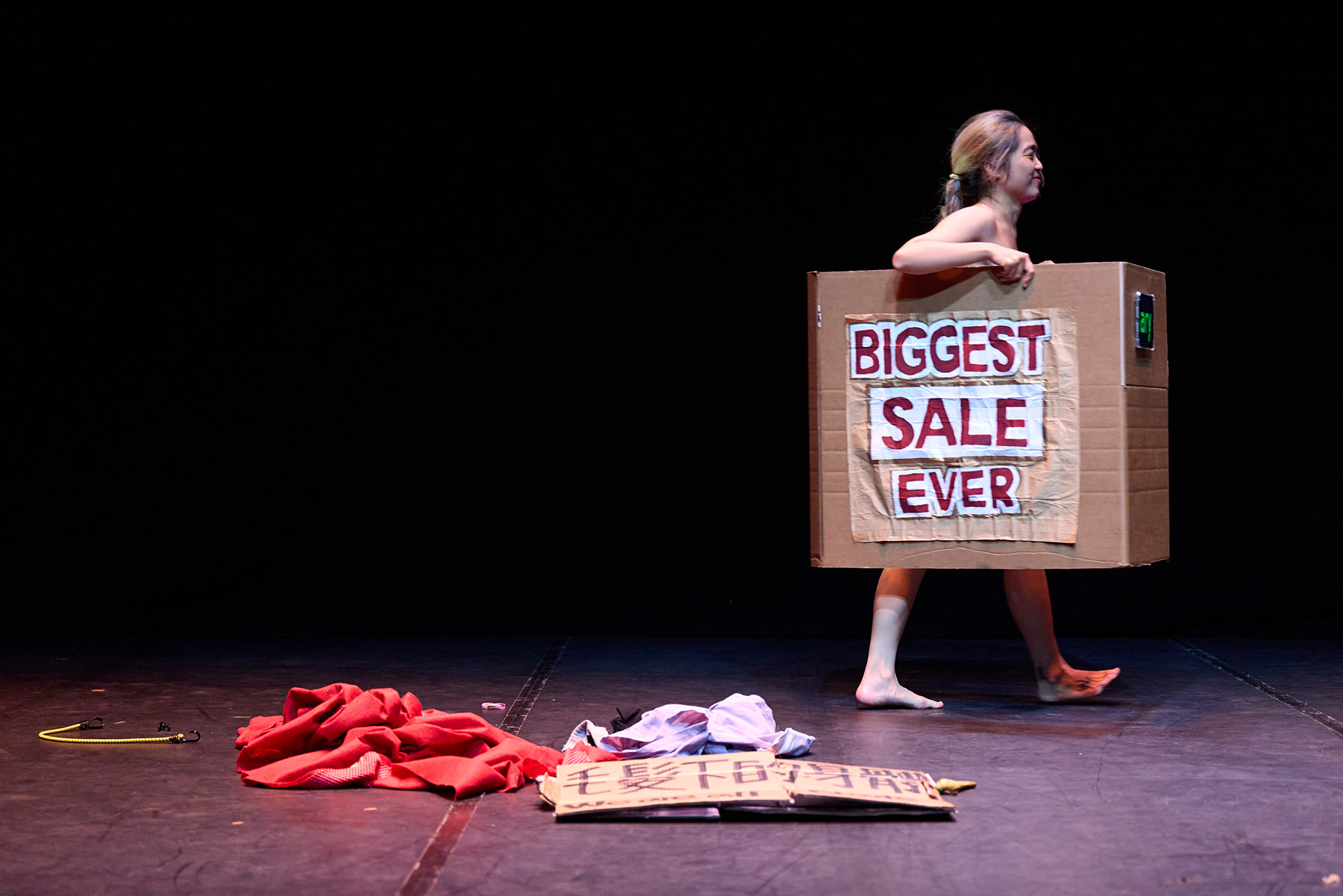
Su Pin-wen, who is from Chiayi City in Taiwan, began the brazenly provocative Leftover Market by dancing awkwardly in a bear suit, and closed it naked, offering “free hugs” to audience members, with just a pair of twinkling fairy lights to protect their modesty. Throughout the show, a small tablet displayed a list of adjectives drawn from personal ads posted on dating apps — “sexy”, “pet lover”, “vegan” — embellishing the narrative about a fictional 40-year-old, 1.73-meter-tall, 88-kilogram “leftover woman”, which is a derogatory term used to refer to women who remain single after 27 in Chinese-speaking cultures.
Audience members were invited to scan a QR code taped to the artist — wrapped in a towel at this point — while a bunch of bananas was provocatively dangled to amusing effect. An extended parody of a seductive dance to Taylor Swift’s The Man expressed this uncompromising artist’s mission of women empowerment.
Dragon lady at play
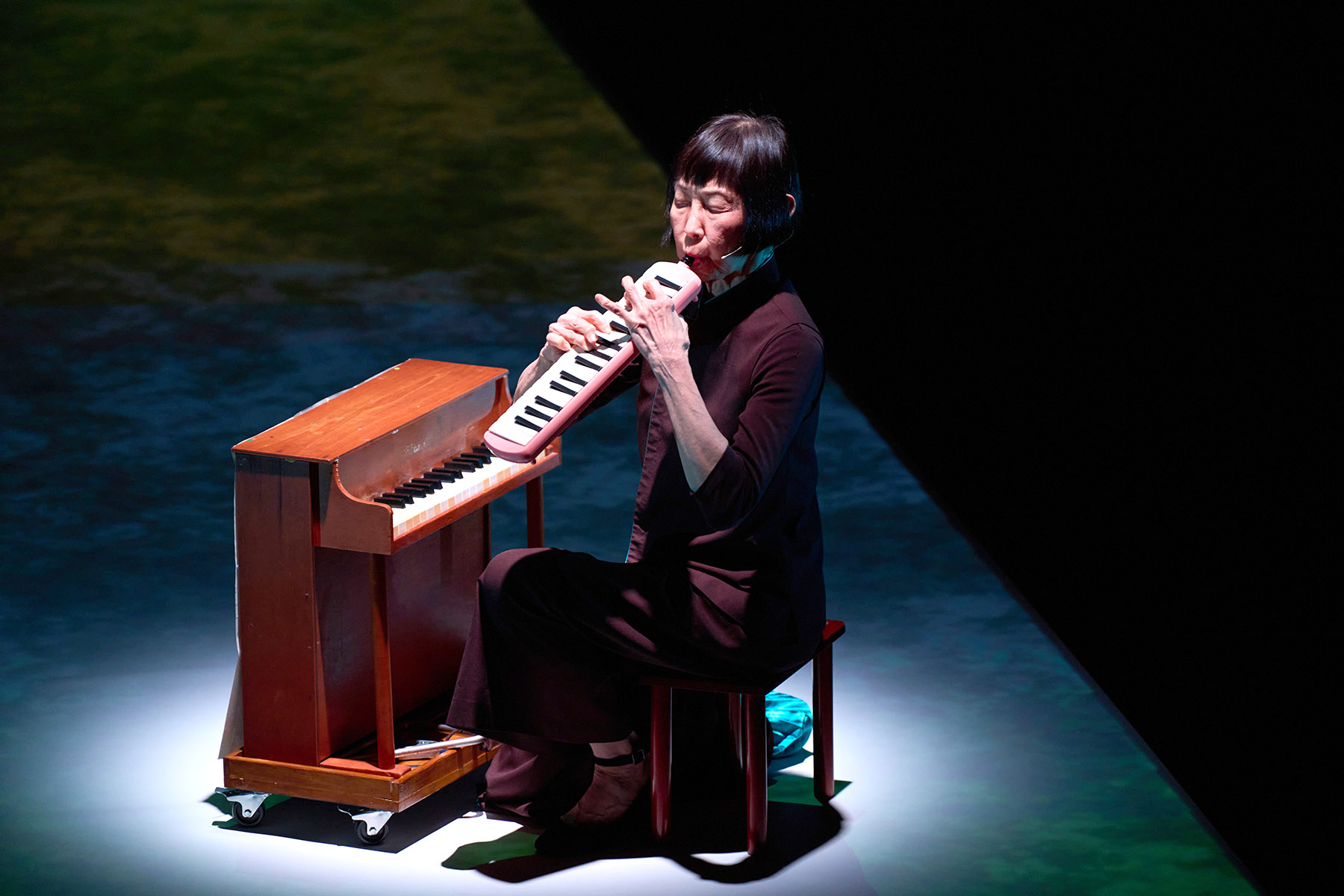
Singaporean avant-garde music legend Margaret Leng Tan, who has spent more than six decades fearlessly holding stages alone, turned out to be the festival’s coup. Dragon Ladies Don’t Weep is a deeply autobiographical piece of theater dedicated to the 80-year-old’s most formative influences: her Cantonese-speaking mother, and John Cage (1912-92) — the iconoclastic American composer who served as a mentor, and whose work accounts for the bulk of her recorded output.
Tan, naturally, is the dragon lady: “It’s very difficult for anybody to penetrate beyond the invincible light shields that I have around me. I have not wept in over 30 years.”
She calls her piece a “public service announcement” in which she bravely confronts her lifelong battle with obsessive-compulsive disorder. Her message is that there is “nothing to be ashamed of in having a mental affliction — and it’s possible to achieve one’s goals and make something of your life and fulfill yourself artistically, in spite of having this handicap”.
Despite the gravity of the subject, Dragon Ladies Don’t Weep — a mix of music, memory and multimedia — is laced with humor. Tan describes herself as a “sit-down comic” and arrives at our interview with some of the children’s toys — a megaphone and a toy mobile phone — she uses on stage. “Do you hold the phone, or does it have you in its grasp?” she growls from the stage, confessing that she finally acquired her first mobile phone just two months ago.
However, her trademark instrument is the toy piano — a crude, 51-centimeter-high children’s instrument she discovered after performing Cage’s 1948 Suite for Toy Piano at the composer’s funeral. Her 1997 album, The Art of the Toy Piano, legitimized the instrument, with many more following her lead.
She performed at WestK’s The Box on a 1960s toy piano she had bought for $45 on eBay. “Nobody said it was a gimmick because I took it seriously,” she says. “Never in 30 years did I have a critic denigrate me or make fun of me — they have taken it even more seriously than I have.”
ALSO READ: Being human
While Dragon Ladies Don’t Weep premiered in 2020, Tan is keen to carry on staging it as long as she lives and perhaps even afterwards via hologram image shows. Her unflagging motivation to continue into her ninth decade remains inspired by Cage’s “conviction that artists should descend from their ivory towers and do some good in the world”.
“This idea of the artist’s functional role in society is very much a part of my thinking,” she adds.
Many in the audience were evidently moved by Tan’s spirited presentation and the postshow Q&A, with one or two audibly wondering if the festival might return with an equally bold programming in 2027.
Lee sounds noncommittal about the prospects of the festival turning into an annual event, though there’s no harm in hoping that it will. “It’s a very good festival to start the year with,” she says. “I hope it can promote the ideas of bravery, being our own selves and supporting each other.”
