

Retrospective of Wei Qimei examines how his realist style was shaped by changing tastes, Lin Qi reports.
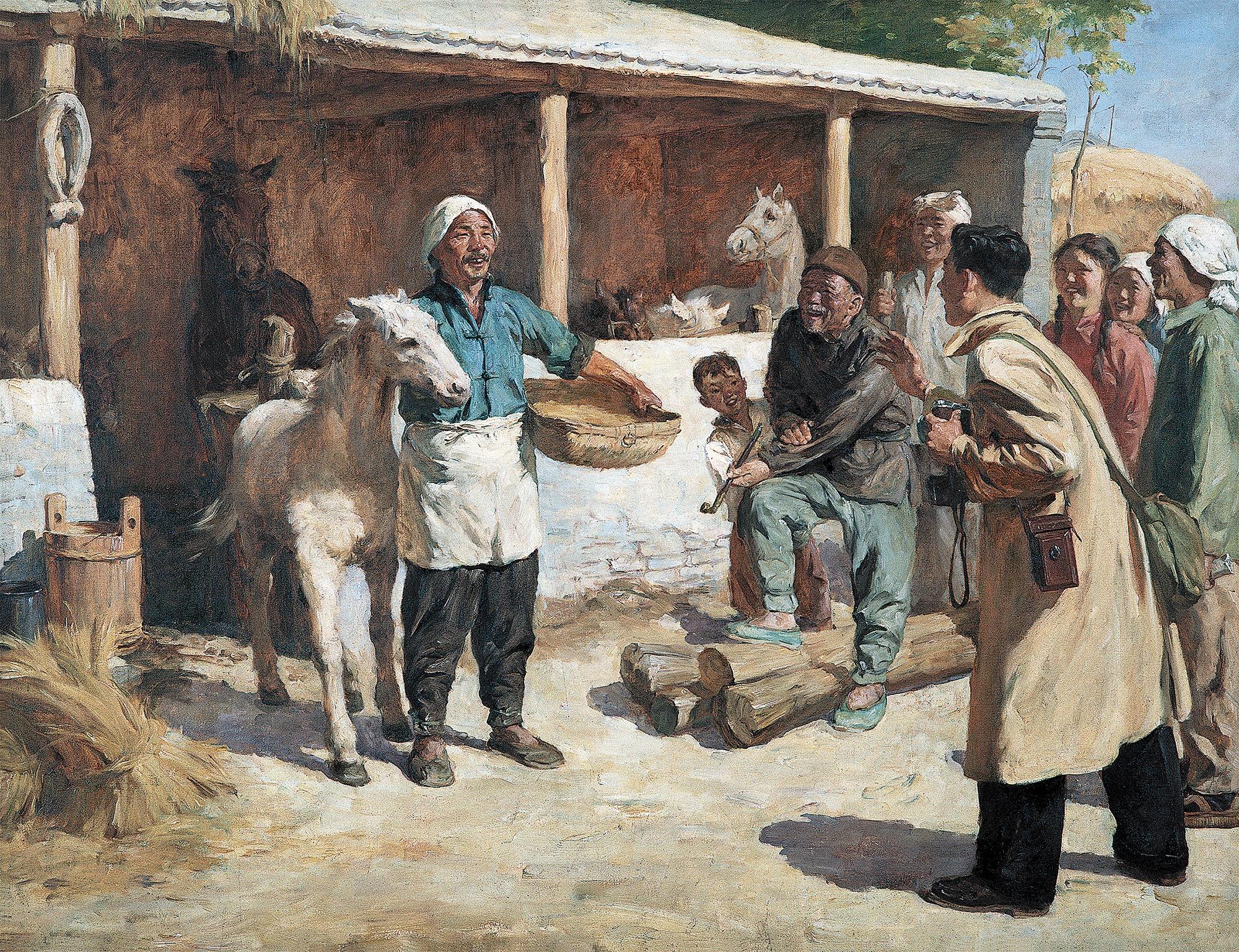 Depicting the Times, running at the Art Museum of the Central Academy of Fine Arts in Beijing, features iconic works by Wei Qimei. Highlights include Model Breeder. (PROVIDED TO CHINA DAILY)
Yu Ding, a professor at the Central Academy of Fine Arts, recalls his first task after enrolling to study art history at the academy decades ago — he was assigned to interview Wei Qimei, an oil painter and professor of prominence at the school.
Entering Wei's home and studio, Yu says he was surprised to find that besides paintings, tools and books about art, the eminent artist also had newspapers and various publications related to other subjects.
While he made oil paintings, he thought about the possibilities to integrate the style with the ink traditions. … He tried to find a connection between the two different languages of art.
Yu Ding, curator, talking about Wei Qimei’s works
"I remembered that he read a journal called Public Health and Well-being, and another one called Science Bulletin," Yu says.
"I asked him why he read so much, and why he was interested in information that seemed totally unrelated to art, to the work he was doing.
"He replied that as an artist, one should at first try to know about the world, to understand what and why the world is going on the way it is, and then he or she is able to show it in their work.
"That was the most important thing I learned from him."
Wei passed away in 2009.Equipped with an intensified understanding of Wei's art and life, Yu has curated two exhibitions in the past decade — one dedicated to Wei's drawing and the other to his comics.
Now Yu has curated a third exhibition to mark the 100th anniversary of Wei's birth this year. Titled Depicting the Times, the show through to Friday at the Art Museum of CAFA is a retrospective of Wei's artistic development over years marked by his commitment, wit and social concerns.
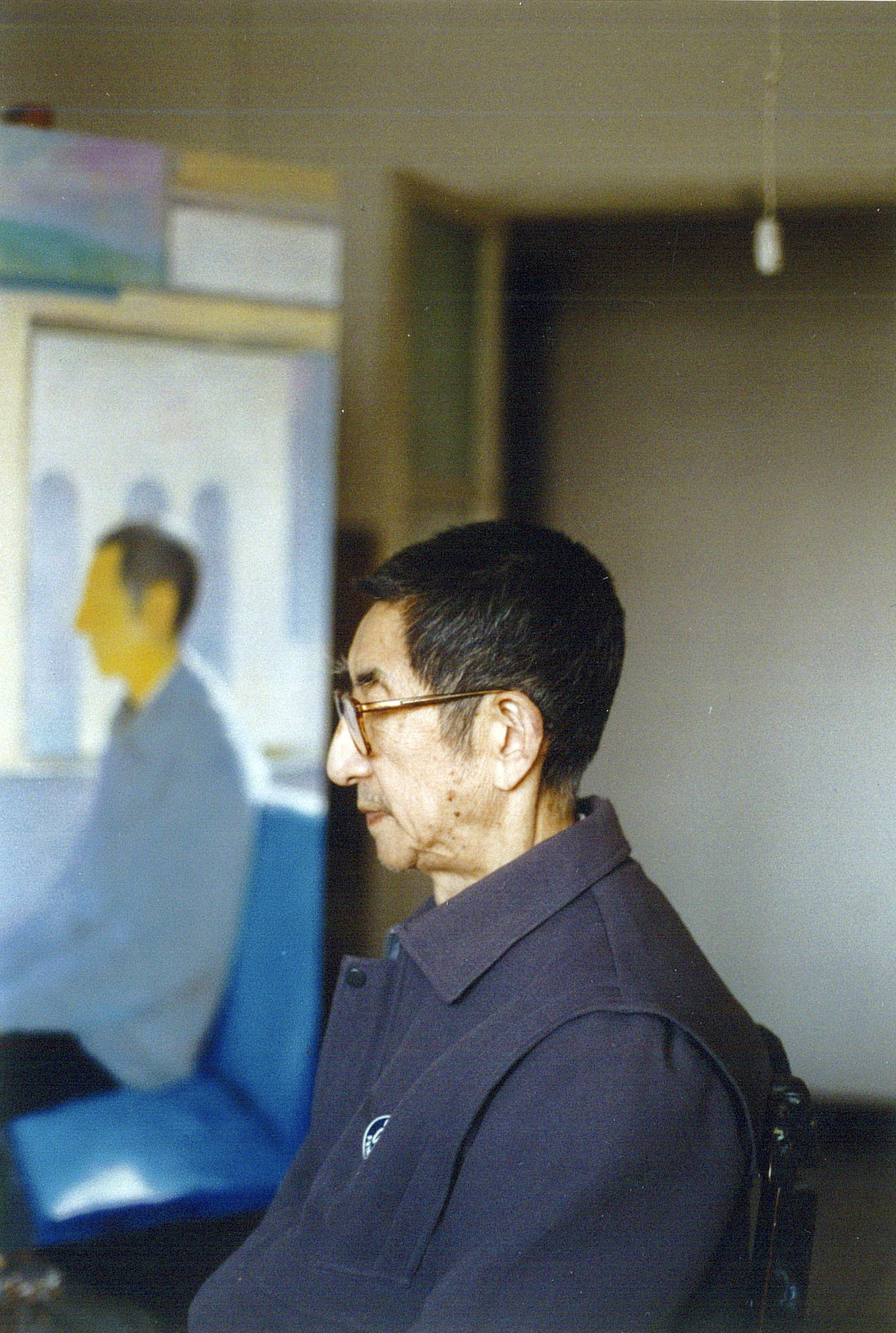 A photo taken in 1998 shows Wei Qimei in the same posture as his self-portrait Departure Station, Streetcar 108. (PROVIDED TO CHINA DAILY)
The title of the exhibition, Yu says, is derived from how Wei used to call himself, "a man who holds painting brushes", which reveals the simple, modest side of him and meanwhile, his firm belief that art should reveal the times and address people's needs.
The exhibition traces Wei's evolution in painting. In the early stage, he focused on a realist approach to depicting socialist construction after the founding of the People's Republic of China and the lives of factory workers and farmers.
His solid training to be a painter attentive to details was the result of strict discipline under Xu Beihong, his mentor, while studying art in Chongqing in the 1940s.
Xu emphasized a realist approach. Wei followed Xu to become a young teacher at CAFA, when Xu became the head of the academy in the early 1950s.
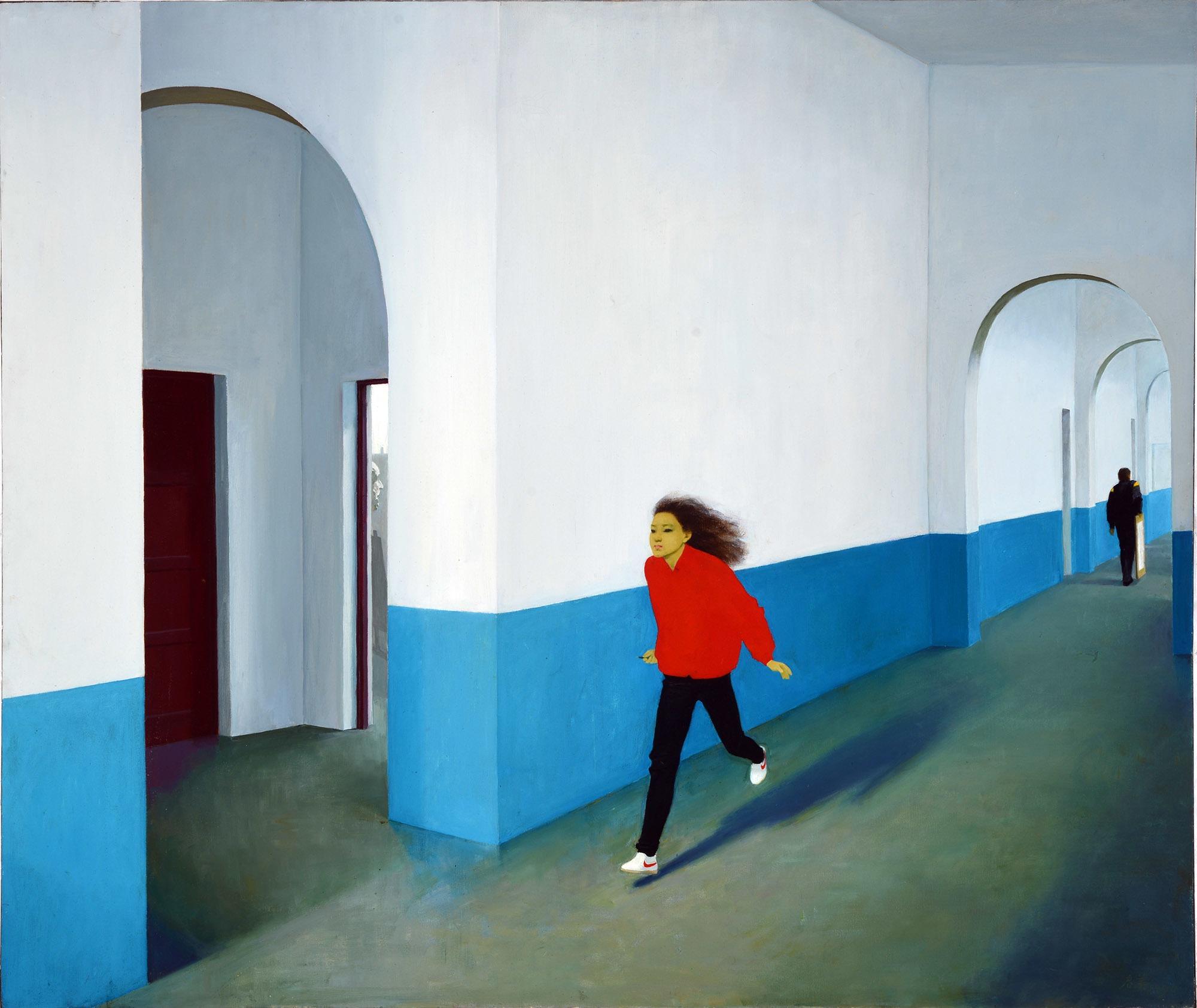 Passageway. (PROVIDED TO CHINA DAILY)
Beginning in the 1980s, Wei was introduced to the different styles of art from the outside, as the country began opening-up. While not turning away from his cultural roots and the social realities of the country, he was inspired to start his own artistic explorations.
Jin Shangyi, a celebrated oil painter, once studied under Wei's mentorship and after graduation, worked with him at CAFA's oil painting department.
"Wei was one of the most productive teacher-artists at CAFA during my school years," Jin says.
"He was astute and kept pace with the needs of time. His experiments with different styles continued for years, through to the later stage of his life when he persisted with changes in his work."
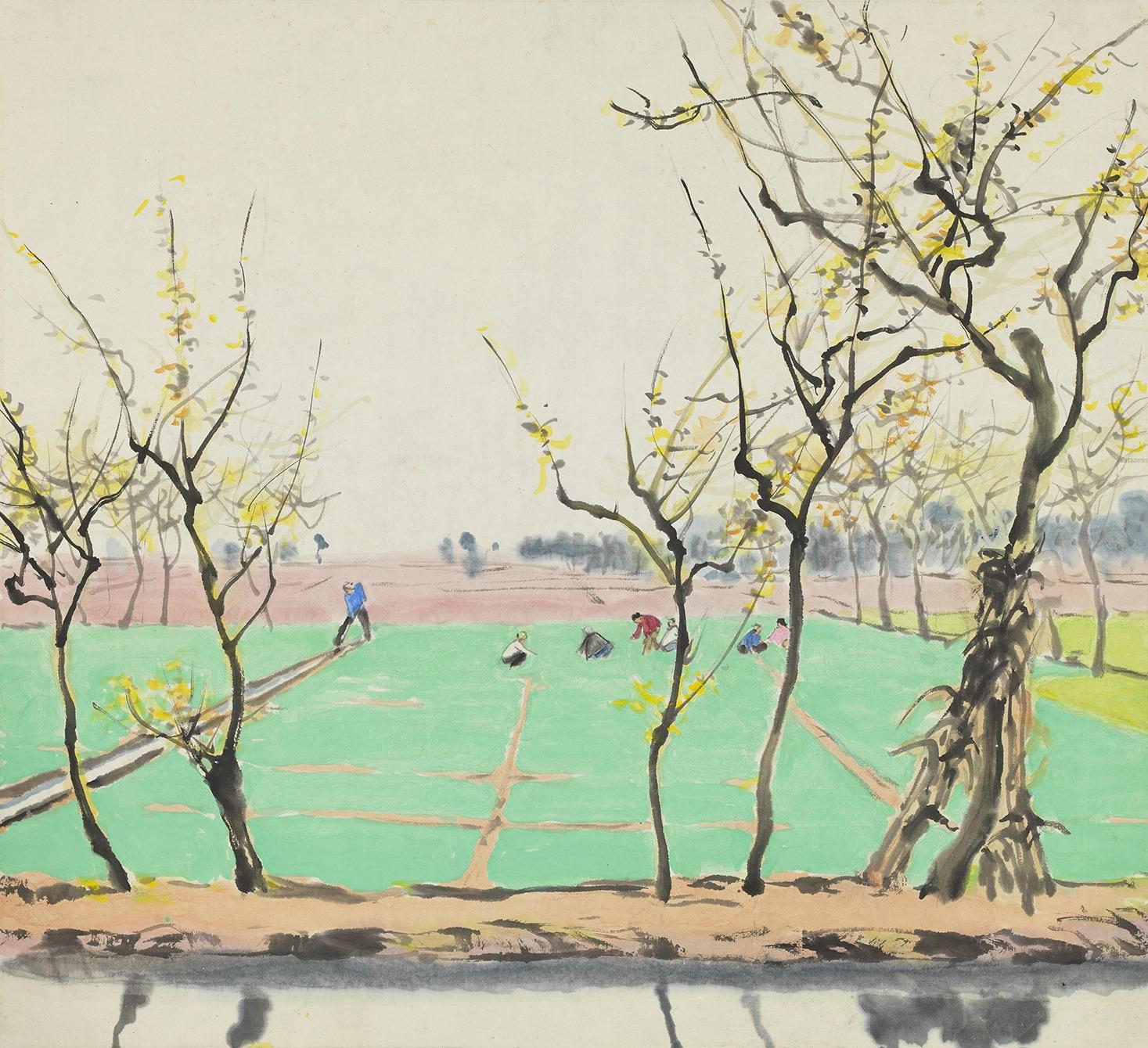 Early Spring. (PROVIDED TO CHINA DAILY)
The exhibition gathers iconic works from different stages of Wei's career, such as Model Breeder, a signature piece of socialist realism from 1956 and a collection of the National Art Museum of China, and Passageway, a 1990 work representative of his experimental embrace of the variations in realism.
Yu says the exhibition also shows Wei's endeavors in traditional ink art, and many of his ink paintings on display are being shown to the public for the first time.
Wei's initial art education was a copy of Jieziyuan Huapu, or the Mustard Seed Garden Manual of Painting, an ancient illustrated guidebook of classic Chinese paintings, which he obtained in childhood for learning.
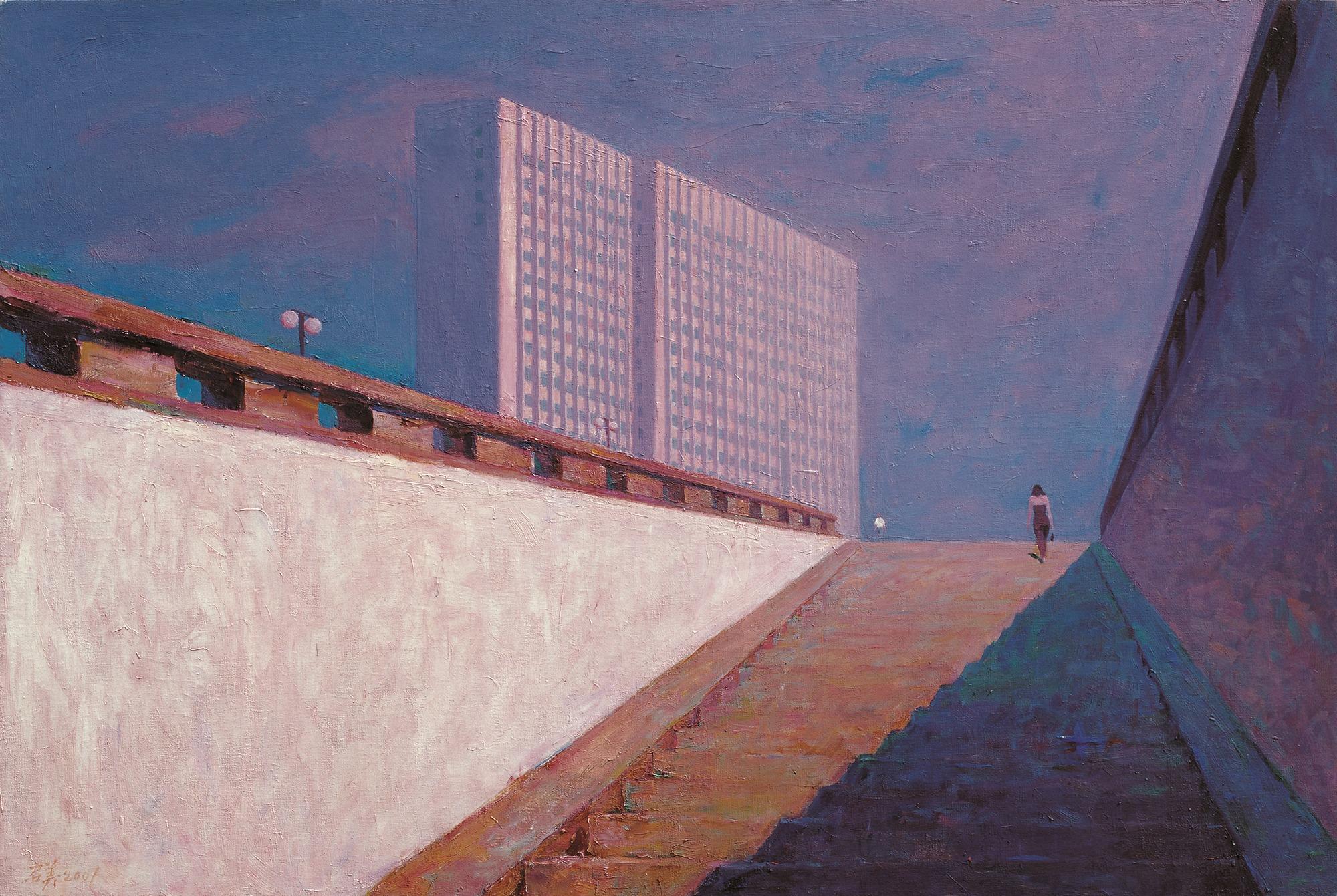 Summertime. (PROVIDED TO CHINA DAILY)
Yu says they have put together Wei's oil and ink paintings on the same themes.
"This will give the audience a clear comparison showing what the artist did to bridge the two cultures," he explains.
"While he made oil paintings, he thought about the possibilities to integrate the style with the ink traditions. His work in the two fields was carried out simultaneously. He tried to find a connection between the two different languages of art, by which he looked to navigate ink art into the modern era."
Wei once compared the persistence of an artist with his or her work to that of a messenger pigeon following its flight route. "It flies through the clouds, the rainstorms, the winds and to a sunny sky. It flies up and down, sometimes turns around, or glides. No matter what, it heads for the set destination, with firmness and courage."
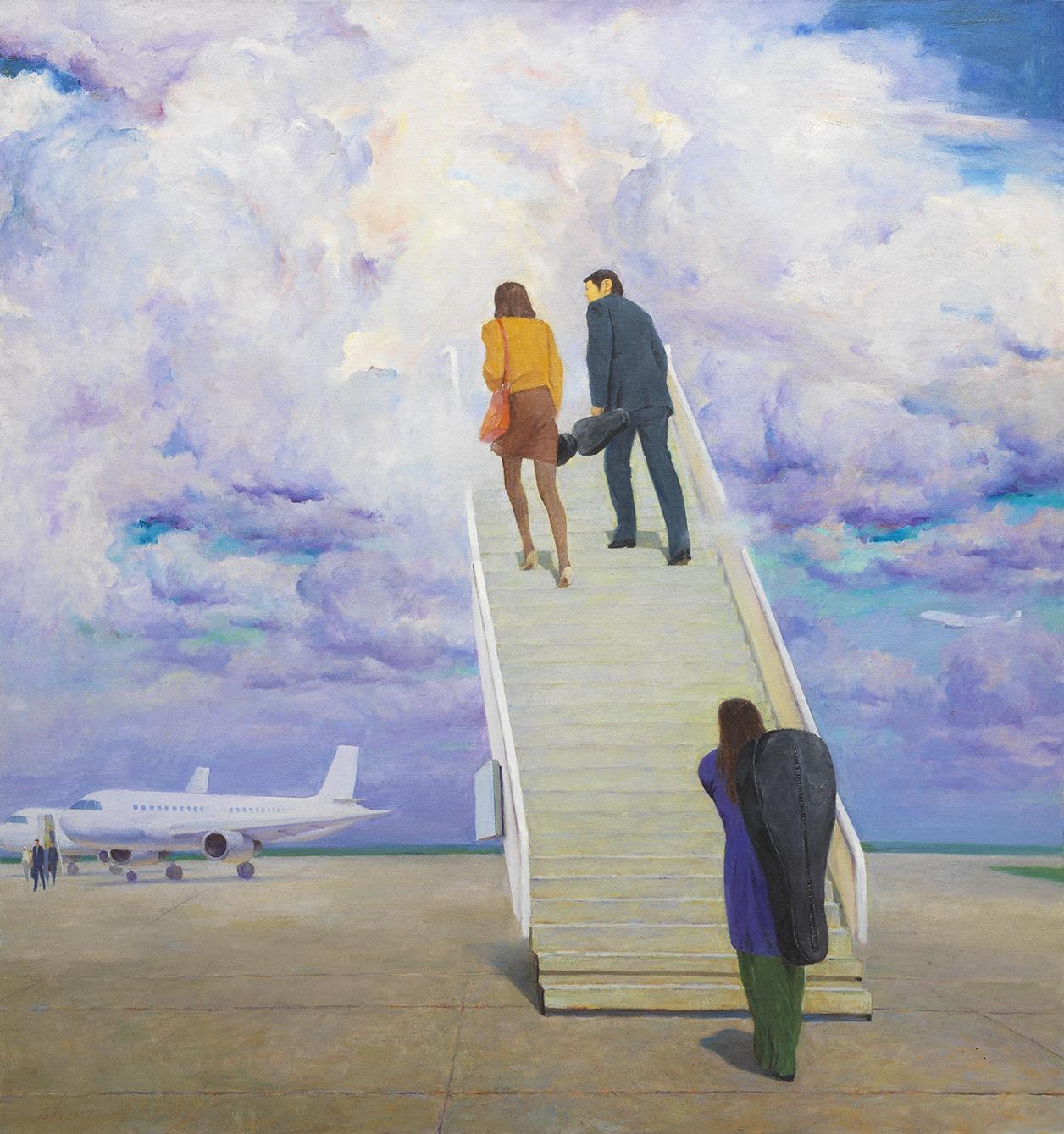 Musician. (PROVIDED TO CHINA DAILY)
Wei's comics are another highlight at the exhibition to show his acumen in addressing social issues. It was grounded on his keen interest in acquiring information of different social sectors, through extensive reading.
In an article in memory of Wei in 2009, Xu Bing, a noted artist who studied and taught at CAFA, remembered that back in the 1980s, he saw a lot of Wei in the school's small reading room, deep in concentration flipping through books and magazines.
"He sat there, and everything around him became quiet, … he was so into reading that it seemed he was invisible to the passersby, and not a thing in the world could disrupt him at that moment," Xu Bing wrote.
"He was never a painter who created works to awe. But always, his work delivers intelligence and a sense of calmness."
Contact the writer at linqi@chinadaily.com.cn
