

Conservation of night skies' darkness challenges planners, tourism operators
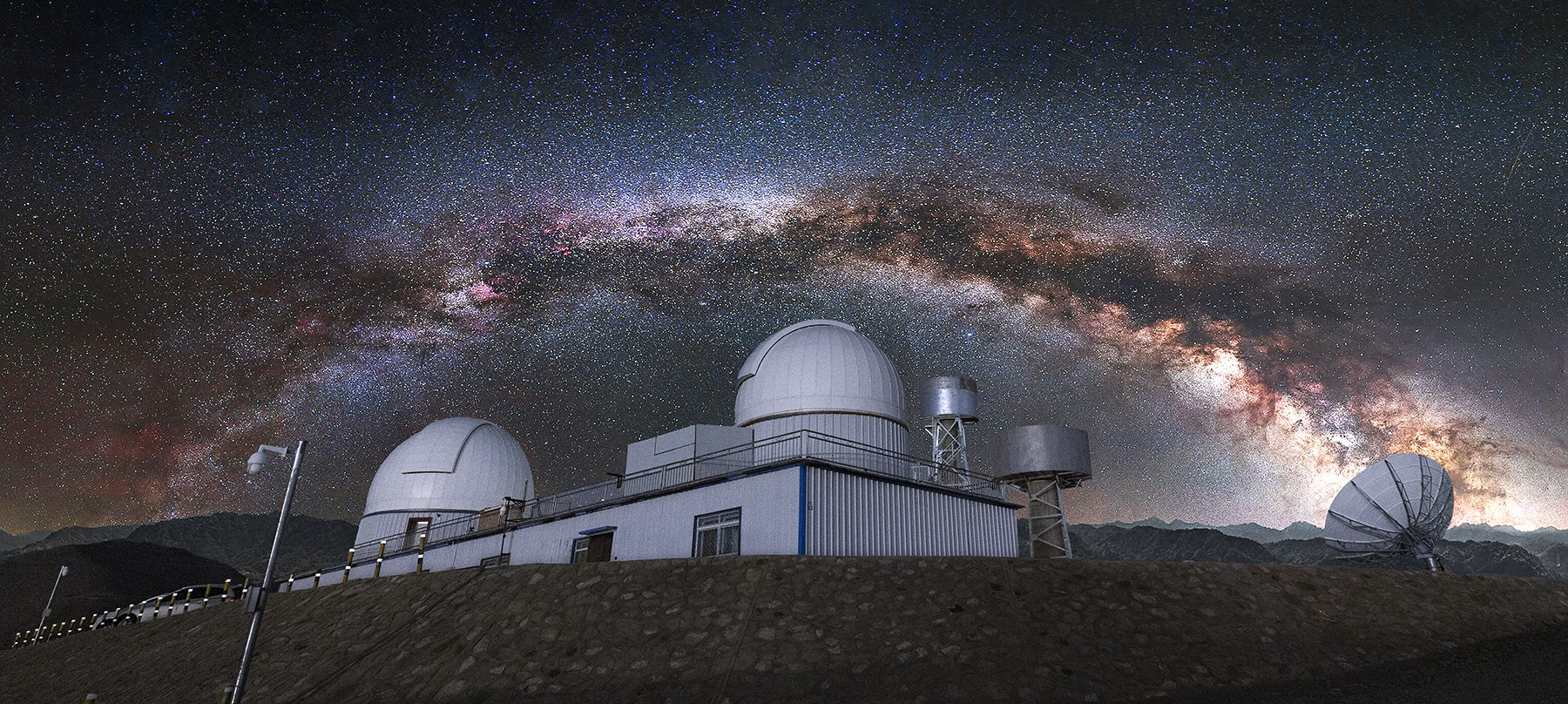
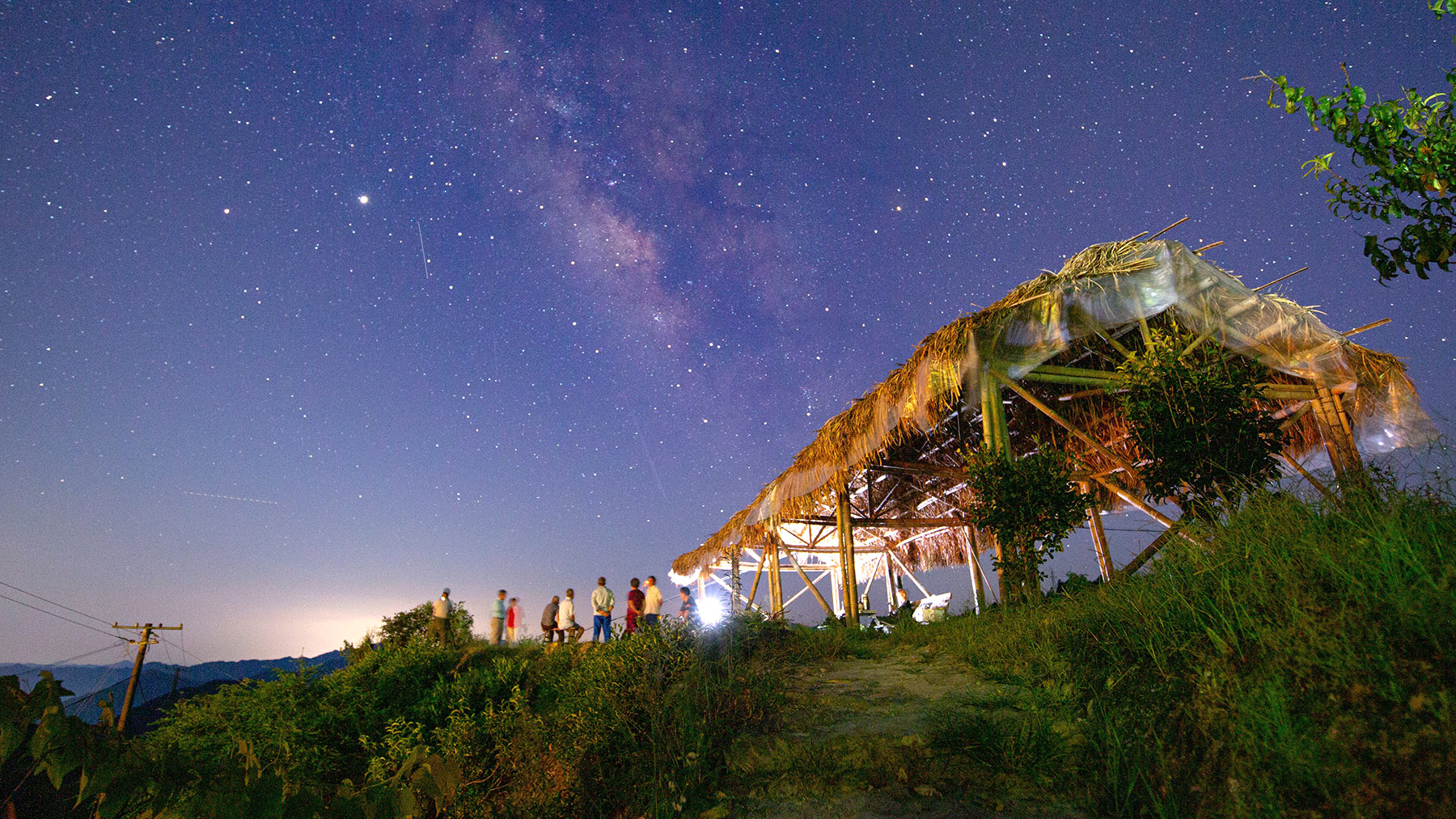
When Ge Yixiao stepped out of her car at Ngari Dark Sky Park, the Milky Way stretched across the night sky above her — a sight she had never witnessed before.
Ge was on a self-driving trip through Southwest China's Xizang autonomous region in August when viewers of her livestream strongly urged her to visit the park in Ngari prefecture. Their enthusiasm convinced her to make the detour.
"The moment I got out of the car, I couldn't stop saying how beautiful it was," she recalled. "I came back again two nights later."
Zhou Zhanglong, a keen stargazer, had visited the park the previous year but missed a clear view of the Milky Way because of bad weather. When he returned this year, he placed stargazing high on his itinerary.
READ MORE: Photos on a star trek
This time, he captured photos of the Milky Way using time-lapse photography on his phone and shared the images with friends.
The two experiences reflect travelers' growing interest in going to places where the stars can still be seen clearly, turning the night sky into a reason to make a journey.
Beyond its value to tourism, however, the natural night sky is essential to astronomical research and wildlife, making dark sky protection an issue of environmental conservation as well as development.
Across China, efforts to preserve this resource are taking different forms, from the remote, high-altitude plateau of Ngari to the astronomical observation hub of Lenghu in Qinghai province and Xichong on the outskirts of Guangdong province's Shenzhen, one of China's largest cities.
Rare natural resource
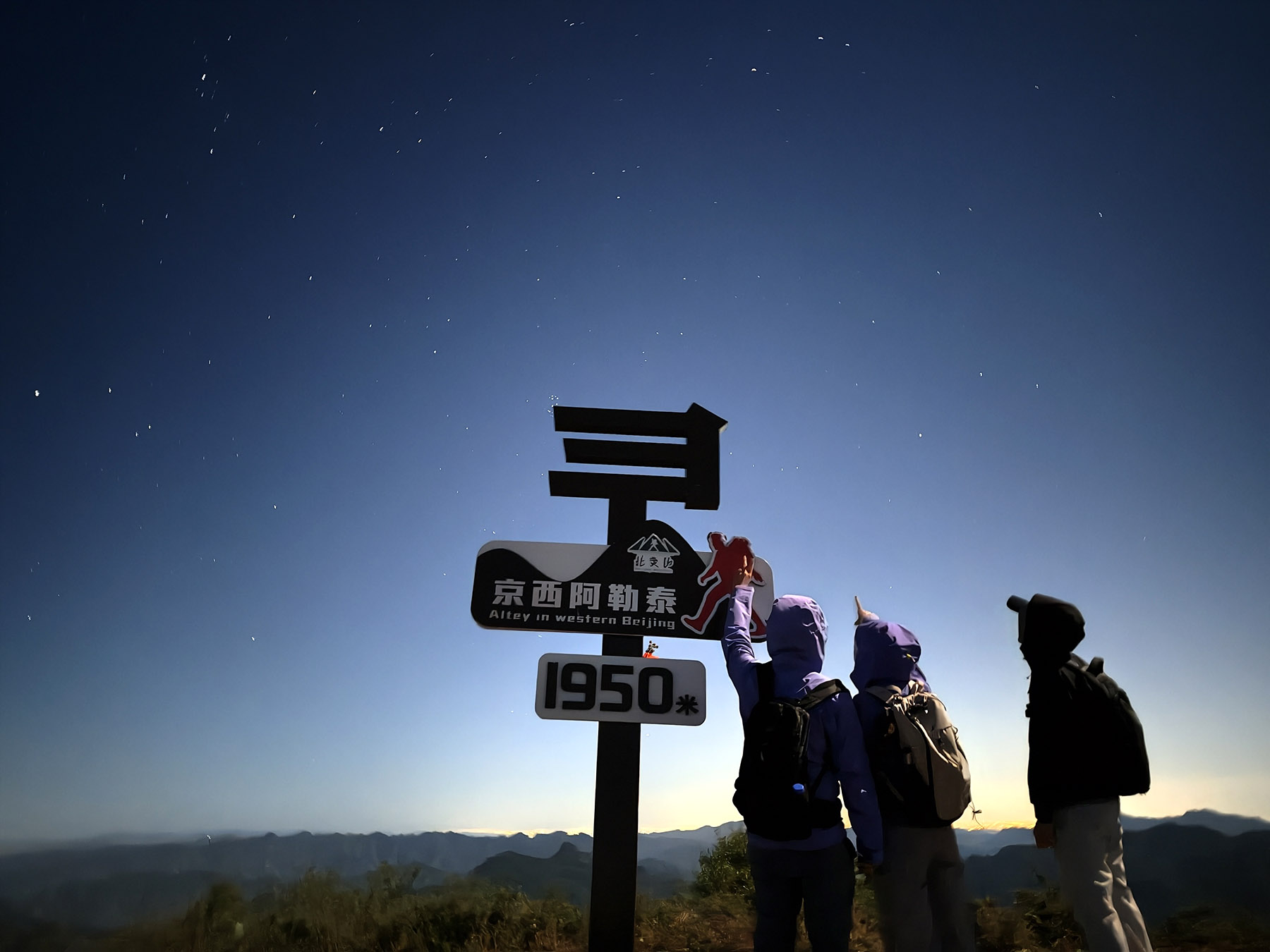
With its high altitude, low water vapor content and minimal light pollution, Ngari is a rare natural resource for astronomical observation, dark sky conservation and science education, said Yu Jiang, deputy director of the Ngari Museum.
The prefecture has an average elevation exceeding 4,500 meters, a sparse population and limited artificial lighting, conditions that help preserve its dark skies, explained Yu.
Opened in 2014, Ngari Dark Sky Park — located about 25 kilometers south of Senge Khabab township — is China's first park dedicated to stargazing, astrophotography and protecting natural night skies.
In 2025, the park received about 6,000 visitors. A visitor surnamed Xu returned to Ngari Dark Sky Park in August for a second time.
"We came here with a photographer during a meteor shower in December 2022 and captured some beautiful time-lapse footage of the stars," he recalled.
"The natural advantage here is the lack of light pollution and the relatively pristine environment, which keep drawing us back to photograph the night sky."
The park is also becoming one of Ngari's tourism attractions. Itineraries now combine daytime visits to the prefecture's mountains, lakes and cultural sites with nighttime stargazing, while astronomy-themed accommodation is provided at some popular destinations.
"During the day, you can see magnificent mountains and grasslands, including the Himalayan and the Gangdise mountains," said Zhou, the keen stargazer. "At night, you see the Milky Way. It's a completely different experience."
Ngari received about 3.51 million tourist visits in 2025, according to regional government figures. Although the dark sky park remains a relatively small part of the prefecture's tourism sector, its development has added another dimension to an area long known for its dramatic high-altitude landscapes.
Dai Jianfeng, an astrophotographer and a member of the Beijing chapter of DarkSky International, said the park's importance extends beyond attracting visitors. "Through Ngari, more and more people have come to understand the significance and value of dark sky conservation," Dai said.
He believes the park's establishment helped introduce the idea that darkness is a natural resource worth protecting, contributing to wider public awareness of dark sky conservation in China.
Blinded by the light
To balance tourism development with ecological protection, the prefecture prioritized resource and environmental conservation from the beginning, said Yu Jiang from Ngari Museum.
"A dark sky conservation area covering around 2,500 square kilometers has been designated around the park, with strict controls on light pollution," Yu said.
Efforts to curb light pollution also extend to urban management. Under Ngari's 2024-28 urban development and management plan, local authorities called for controls on excessive decorative lighting and illuminated outdoor advertising.
In Lenghu, concerns over outdoor lighting led to legal action. Some hotels near its astronomical observation base installed bright outdoor lights that threatened scientific observations, according to a 2023 report by Procuratorial Daily.
The Regulation on the Protection of the Astronomical Observation Environment in Lenghu, Haixi Mongolian and Tibetan autonomous prefecture, which took effect in January 2023, was China's first local regulation dedicated to dark sky protection. It established a core protection zone extending 50 kilometers beyond the observation base and restrictions on outdoor lighting.
In July 2023, local authorities issued six rectification notices requiring hotels to adjust or switch off problematic lights.
Enforcement has continued even as new businesses open.
In August 2025, prosecutors and local authorities ordered lighting adjustments at newly opened hotels and restaurants, according to a Procuratorial Daily report.
Protection requirements have also shaped larger development decisions. Lenghu has placed its entire 17,800-sq-km area under dark sky protection, with restrictions applying to core and buffer zones.
Plans for three new renewable energy projects were revised to move them away from the protected area, Xinhua reported in August 2025.
"Within the core dark sky protection zone, the strictest protection measures must be enforced. If necessary, some infrastructure projects must give way," Tian Cairang, executive deputy director of the Lenghu Science and Technology Innovation Industrial Park administration, told Xinhua.
At Ngari Dark Sky Park, protecting the night sky involves managing even the lights brought in by visitors.
Guo Qiang, a part-time astronomy educator at the park, said vehicle headlights are a major source of visitor-related light pollution.
Xu, the returning photography enthusiast, encouraged visitors to turn off their headlights and park 100 or 200 meters before entering the park, then walk the rest of the way. "There's no need to drive right up to where people are photographing the stars," he said.
Illuminating argument
Dai Jianfeng, who has photographed night skies across China, has followed dark sky conservation efforts in Shenzhen.
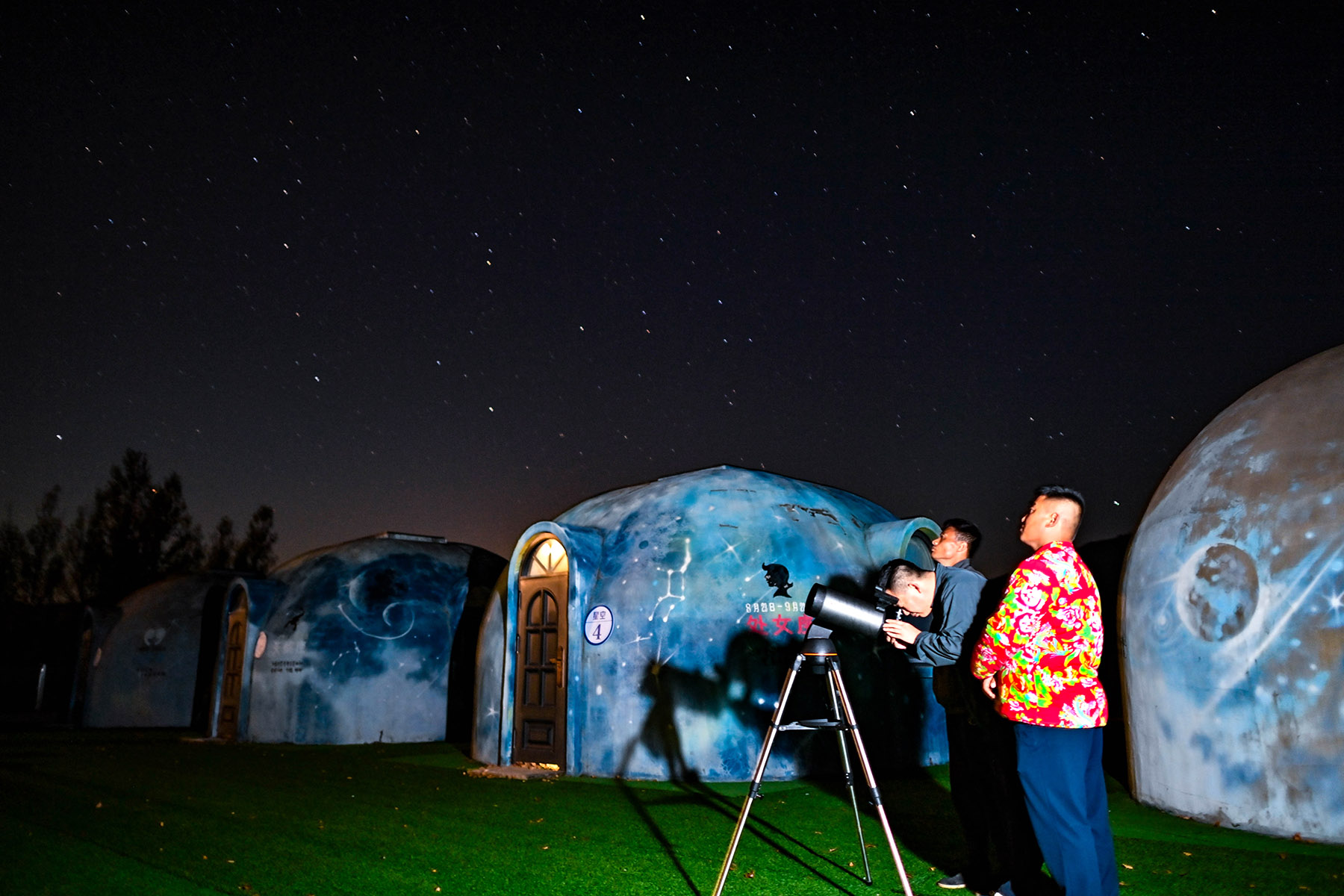
Xichong, a coastal community, lies on the outskirts of Shenzhen, which has more than 18 million residents. Known for its beaches and the Shenzhen Astronomical Observatory, Xichong draws visitors for both seaside recreation and stargazing.
"Xichong and Ngari represent two extremes," Dai said. "Ngari is very remote, but there are also places close to our cities where people can still see the stars, and those places can be protected."
In 2023, Xichong became China's first International Dark Sky Community, certified by the US-based nonprofit DarkSky International. The designation recognizes commitments to managing outdoor lighting and raising public awareness of dark sky conservation.
Dai said while the illuminated skyline around Shenzhen Bay is part of the city's urban identity, places such as its mangrove habitats and Xichong have different environmental needs.
That distinction is reflected in Xichong's lighting rules.
A local regulation introduced in 2024 sets limits on brightness, color temperature, direction and operating hours, aiming to keep roads and public spaces usable without allowing unnecessary light to spill into the sky.
The results can be measured.
On clear, moonless nights, Xichong's recorded sky brightness improved from 18.5 magnitudes per square arcsecond (MPSAS) in 2022 to 19.7 in 2025, according to the Shenzhen municipal government. A higher reading indicates a darker sky.
Jiang Benyan, a researcher at Guangzhou University who studies light pollution and urban planning, sees value in making dark skies accessible to people living in densely populated cities.
"Large cities have dense populations, and more people need opportunities to experience darkness and see the stars," Jiang said. "Establishing dark sky conservation areas near cities is especially important for public education and spreading awareness of their value."
Her research has identified relatively dark areas on the outskirts of Guangdong's capital, Guangzhou, particularly around Conghua and Zengcheng districts.
At the summit of Apoliu Mountain, near Nankun Mountain National Forest Park, the best recorded sky brightness was 21 MPSAS, with the Milky Way able to be seen with the naked eye.
But the mountain is not isolated from surrounding development. Lighting from an expressway, commercial facilities 6 km away, and neighboring towns already affect the nighttime environment. Jiang warned that further tourism development in the area could threaten the existing level of darkness.
The implications extend beyond stargazing. Artificial lighting can disrupt the natural day-night cycles that guide wildlife migration, feeding and reproduction, she said. In an analysis of more than 400 protected natural areas in the Pearl River Delta, Jiang's team found that they were sensitive to artificial lighting within 6 to 8 km.
"Dark sky protection can evolve from a conservation area effort into a matter of community and urban governance," she said.
Striking a balance
At the Xinglong Observatory in Hebei province, researchers have witnessed the impact of man-made lighting on night skies.
"Artificial lighting from surrounding towns has gradually increased the brightness of the night sky, directly reducing the efficiency of telescope observations," said Fan Zhou, a researcher at the National Astronomical Observatories of the Chinese Academy of Sciences.
"Many faint celestial objects and deep-sky survey targets are becoming increasingly difficult to observe."
In March 2025, observatories introduced a standard that classified dark sky environments into five levels based on measured sky brightness. The system provides a common scientific reference for assessing astronomical observation sites, nature reserves and stargazing destinations.
However, Fan cautioned standards are only "scientific tools".
"Dark sky conservation requires coordination among many different parties. Technical standards alone are far from enough," he said.
Fan called for stronger local regulations, long-term monitoring and cooperation among authorities, communities and tourism operators. At Xinglong, researchers regularly monitor sky brightness and communicate with local authorities about changes in surrounding lighting.
Ruskin Hartley, executive director and CEO of DarkSky International, has been following the growing popularity of astrotourism around the world.
ALSO READ: Chinese researchers uncover 'ripple' structures in Milky Way
"We want people to experience dark skies and the wonder and awe they inspire. But as with any tourism, growth needs to happen responsibly or we risk damaging the very thing people are traveling to experience," he said.
The challenge can begin with something as ordinary as a hotel or guesthouse. "Even a single accommodation that does not consider how it lights the night can have a significant impact on the surrounding environment," Hartley said.
In 2024, DarkSky International released its Principles of Responsible Astrotourism to help destinations and tourism businesses incorporate protection of the nighttime environment into their development plans.
Hartley cited the example of Moab, Utah, in the United States, where visitors come for its red rock canyons, natural arches and outdoor recreation. As tourism has expanded, so have hotels, resorts and other facilities.
In 2024, the community received International Dark Sky Community certification and subsequently adopted outdoor lighting standards to protect its night skies.
"The lesson for emerging destinations in China is that protection does not have to come at the expense of tourism or development," Hartley said.
Contact the writers at zhengjinran@chinadaily.com.cn
