

Fashion week witnesses two-way growth as overseas and domestic designers integrate authentic Chinese elements into their creations, He Qi reports in Shanghai.
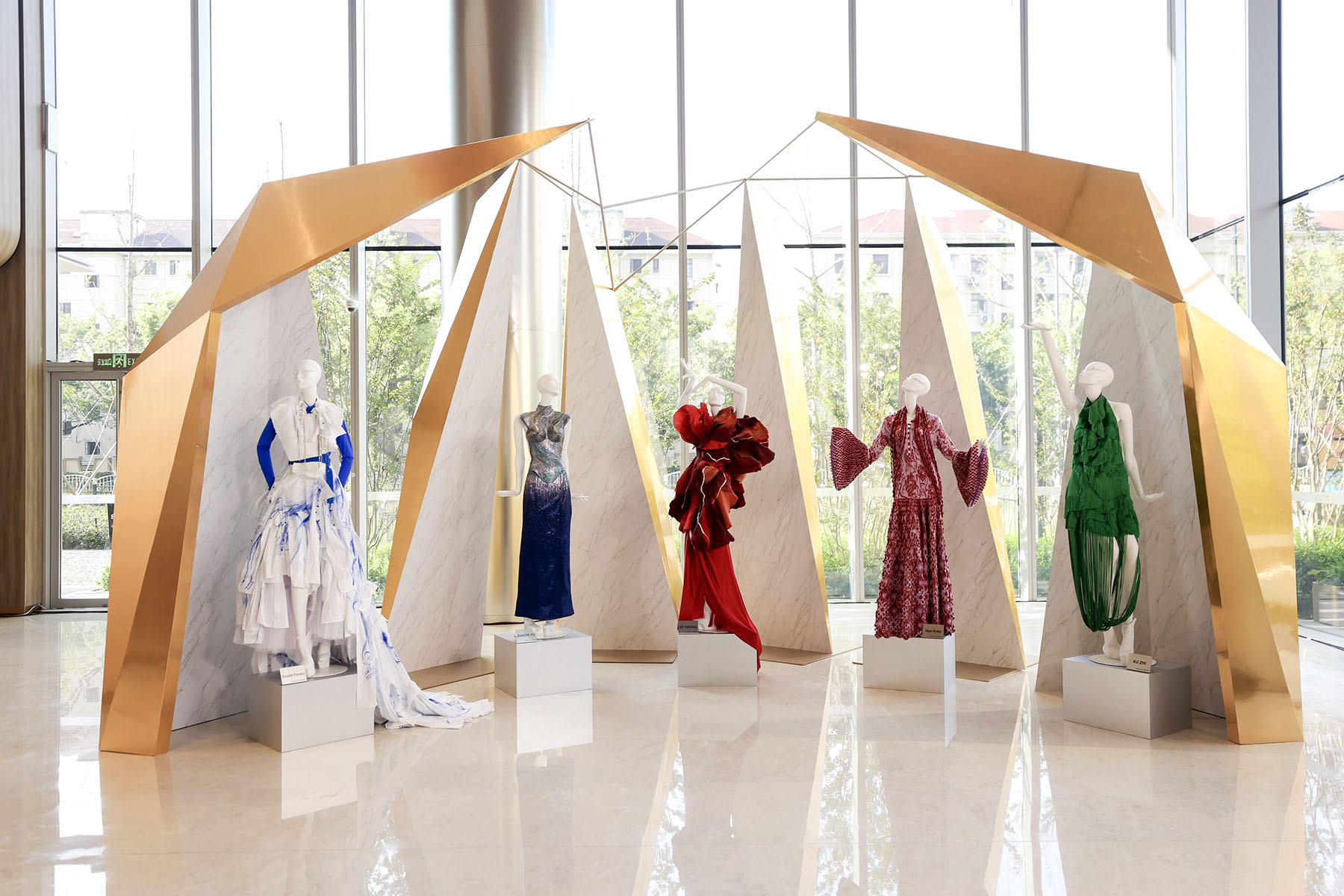
October in Shanghai sees fashion spilling beyond the runway and into the city's tree-lined streets and bustling shopping districts.
As the Renewed Radiance-themed Spring/Summer 2027 Shanghai Fashion Week's core professional schedule draws to a close, the event has grown far beyond a week of runway presentations. It has become fertile ground for local designers to refine their craft and a magnetic gateway for global creative talents to enter the Chinese market, where creativity, commerce and urban life intertwine into a vivid style tapestry.
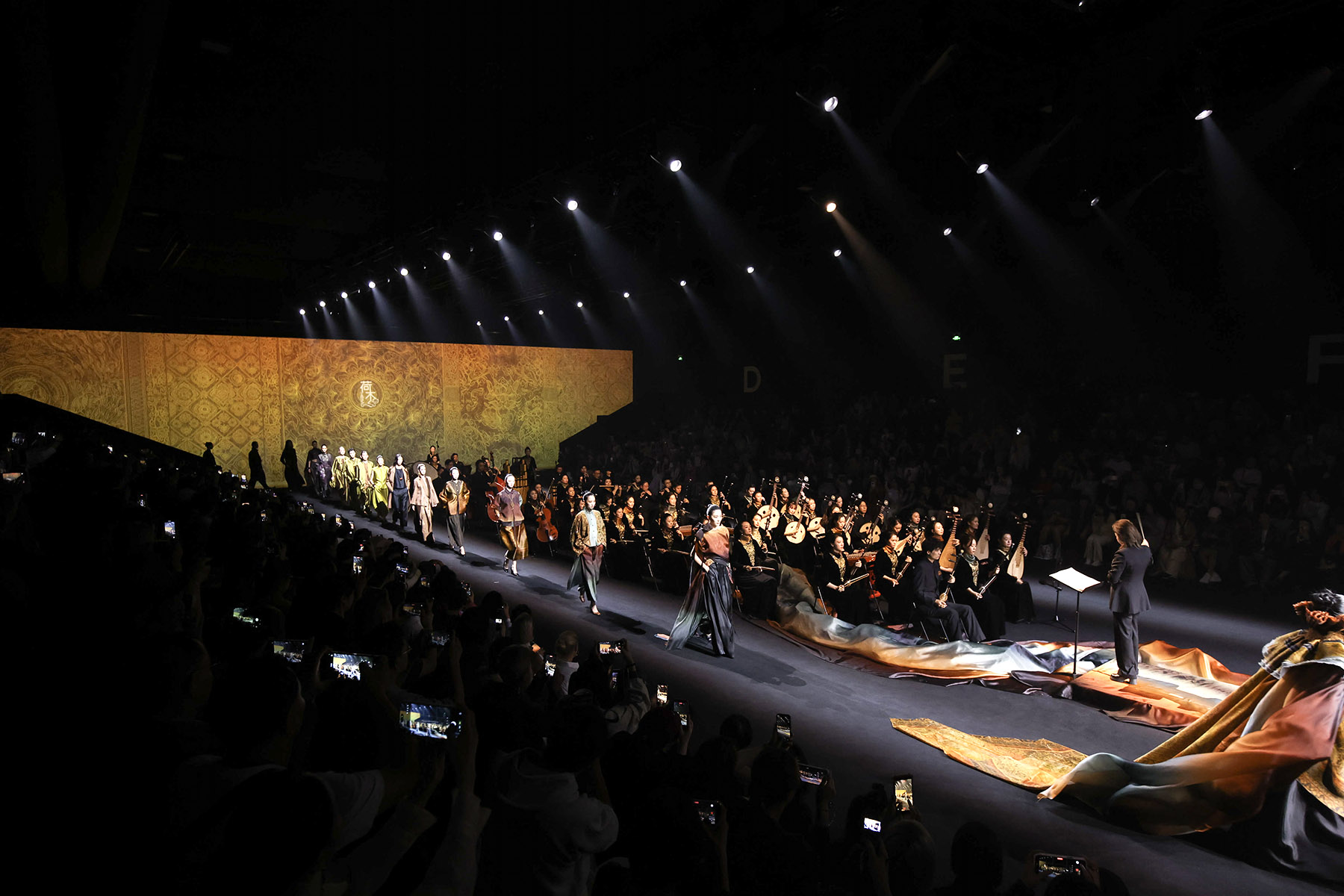
Shanghai-based label HEMU's opening show, themed Silk Road, marked the brand's 15th appearance at the event. Drawing inspiration from Dunhuang, Gansu province, cultural heritage and ancient Silk Road weaving techniques, the collection integrates multiple intangible cultural heritage crafts, including yunjin brocade from Nanjing, Jiangsu province, Song brocade and kesi silk tapestry. It also marks the brand's first collaboration with Jin Wen, a national-level ICH inheritor of yunjin craftsmanship.
READ MORE: Brewing ideas into fashion
"The vitality of intangible cultural heritage lies in being used," says HEMU founder Yang Fengrui, a sentiment echoed across this season's local presentations, where creative concepts are no longer just runway spectacles but translated into daily wearable pieces.
Chinese designer brands are displaying a clear, maturing trajectory.
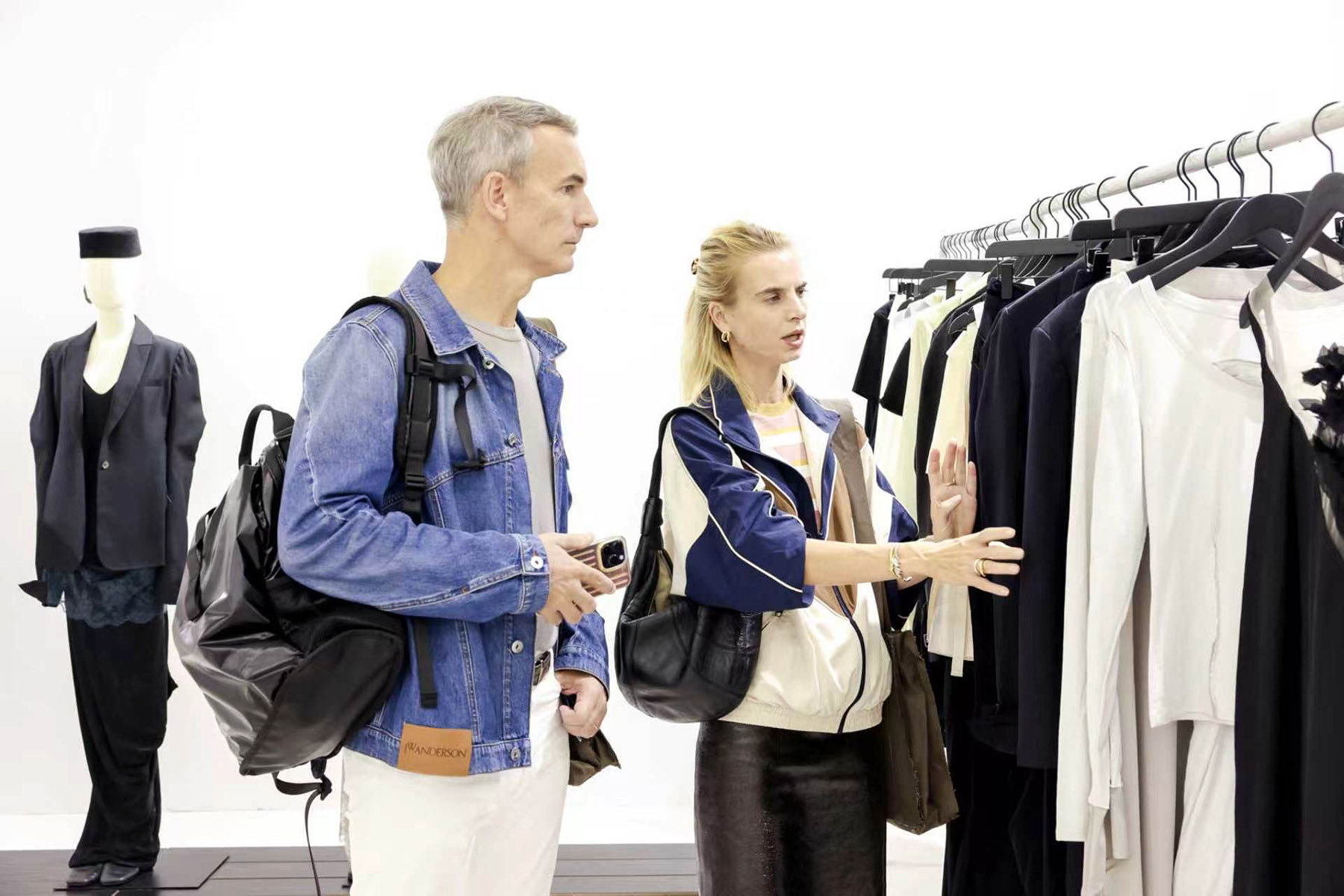
Labels such as Comme Moi and Short Sentence, founded around a decade ago, have moved past chasing single-show exposure to focusing on long-term retail operation and customer loyalty. Emerging local brands, including Shushu/Tong and Markgong, have gained global recognition with distinct design languages. Emerging creators are also exploring cultural expression in innovative forms, moving past superficial cultural elements to form a stable, authentic creative methodology.
This mindset shift was prominent at the M Space co-creation forum held alongside the MODE Shanghai apparel exhibition, where discussions moved from "how to go viral quickly" to "how to sustain long-term growth".
Wang Manxiu, co-founder and general manager of LE FAME, shared the brand's symbiotic partnership model with designers: evolving from short-term capsule collaborations to in-depth co-creation, and eventually new brand joint incubation under a balanced equity structure.
"Business and creativity are not a one-way funding relationship but a mutually empowering symbiotic ecosystem," he notes, adding that a mature business framework allows designers to focus on long-term development without being trapped by short-term traffic pressure.
Three independent designers offered their takes on overcoming industry bottlenecks. Chen Xuzhi, founder of XU ZHI and a creative director at a commercial fashion group, believes the key transition for designers is moving from pure aesthetic expression to balancing brand systems, team efficiency and commercial returns.
"You don't have to chase explosive scale growth. Keeping the brand alive and producing steady collections season after season is success in itself," he says.
Gong Li, founder of 8ON8, emphasizes that authentic life experience underpins good design. He warns that the industry requires years of dedication: "If you don't have genuine passion for this industry, it's hard to grind through eight to 10 years."
While local creativity takes root inward, Shanghai's appeal as a global fashion hub continues to strengthen. Overseas brands make up more than 50 percent of this season's MODE exhibition lineup, and a standout story comes from 14-year-old Russian designer Mikhail Nikolskiy, who chose Shanghai for his brand's international debut.
Nikolskiy began designing at 11 and launched his own label at 13. He presented his first spring-summer collection inspired by Chinese contemporary art. Through independent research, he drew ideas from installation works by Chinese artists Yin Xiuzhen and Song Dong, integrating the concept that "every garment carries time and stories" into deconstructed designs made with recycled fabrics and vintage trims.
"Shanghai is a fashion hub. I've met designers from all over the world here, and everyone is so friendly," says Nikolskiy. Within just half a day of the exhibition opening, he received inquiries from around 20 buyers from China, the Middle East and Europe, seeing his creative ideas quickly enter real market context.
Global professional buyers have also affirmed Shanghai's rising industry status.
Alice Feillard, menswear and footwear buyer director for Galeries Lafayette, said on her first Shanghai Fashion Week visit: "We are here to discover Chinese brands, to understand Chinese brands and the Chinese markets better, and to understand how we can collaborate in the future."
Her search covers ready-to-wear, accessories and footwear, with particular interest in designs showcasing exquisite Chinese craftsmanship.
Moldir Tassygan, a buyer with Kazakhstan-based Viled Group, highlights the core competitiveness of Chinese design: "The designers know their roots, and they already speak the global language."
Tassygan notes that China's strong manufacturing foundation can support bold creative ideas, a unique advantage for the local industry. "Shanghai Fashion Week will be one of the most popular fashion weeks in a couple of years."
Sam Desner, founder and CEO of New York-based boutique 3NY and a regular visitor to Shanghai, still finds inspiration here.
ALSO READ: From 'battle robe' to fashion icon
"Shanghai lives in the future. I'm here to buy stuff that nobody else has," he says, placing orders for more than 10 brands on site. In his view, Chinese designs with clear narratives and distinct aesthetics always resonate with New York consumers.
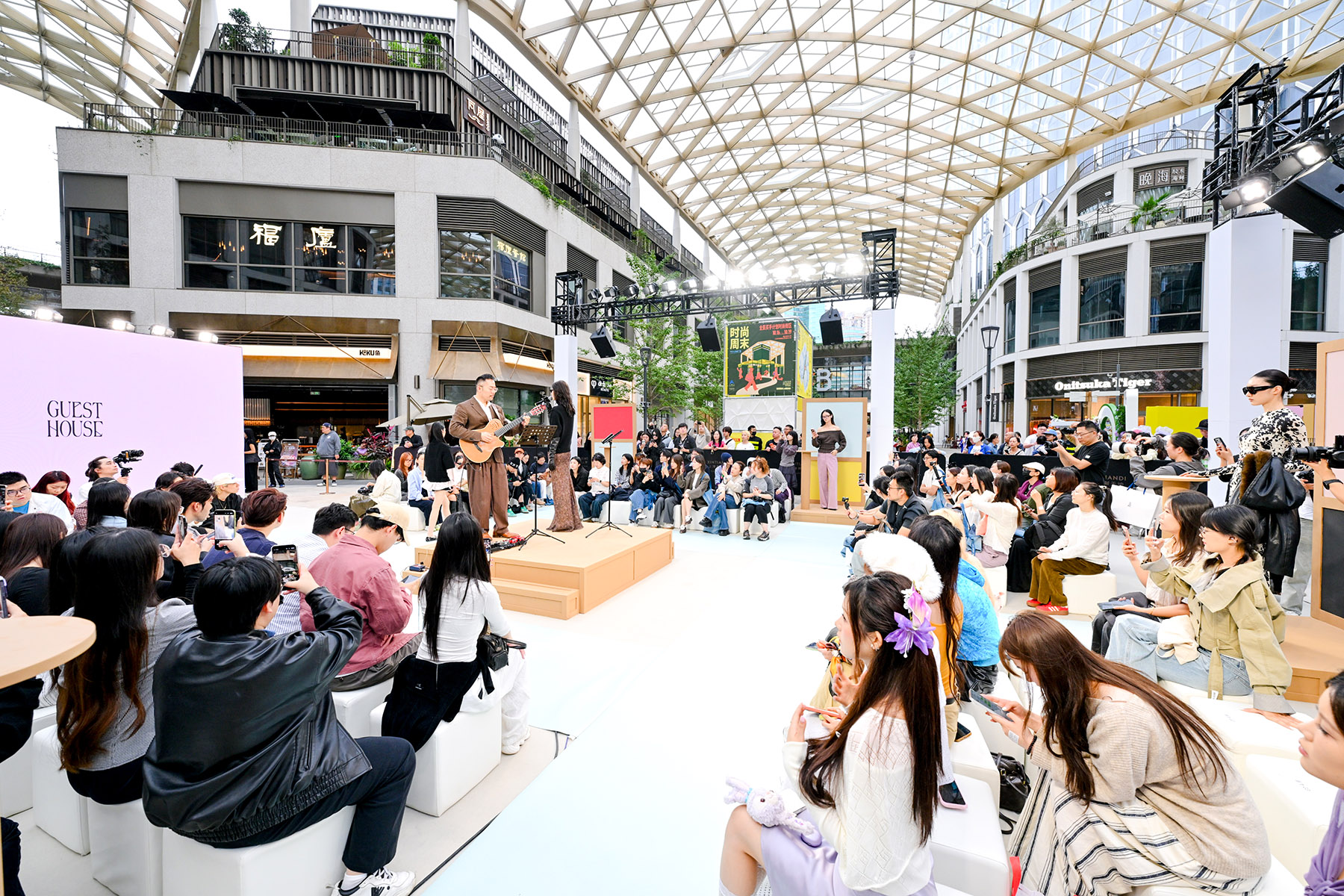
Fashion has also spilled beyond professional venues into daily urban life. The 22nd LABELHOOD Pioneer Fashion & Art Festival brought runways, exhibitions, pop-ups, and workshops to the Yongyuan Road block, allowing passersby to encounter creativity around every corner.
The Shanghai Fashion Weekend linked five major business districts with new launches from 70 brands, clothing markets and see-now-buy-now shows, creating a citywide fashion map. The four-day Dongtaili market drew over 100,000 visitors, and participating brands saw a 35 percent daily sales increase over usual levels.
Though the week of runway lights will fade, the creative growth momentum continues.
Contact the writer at heqi@chinadaily.com.cn
