

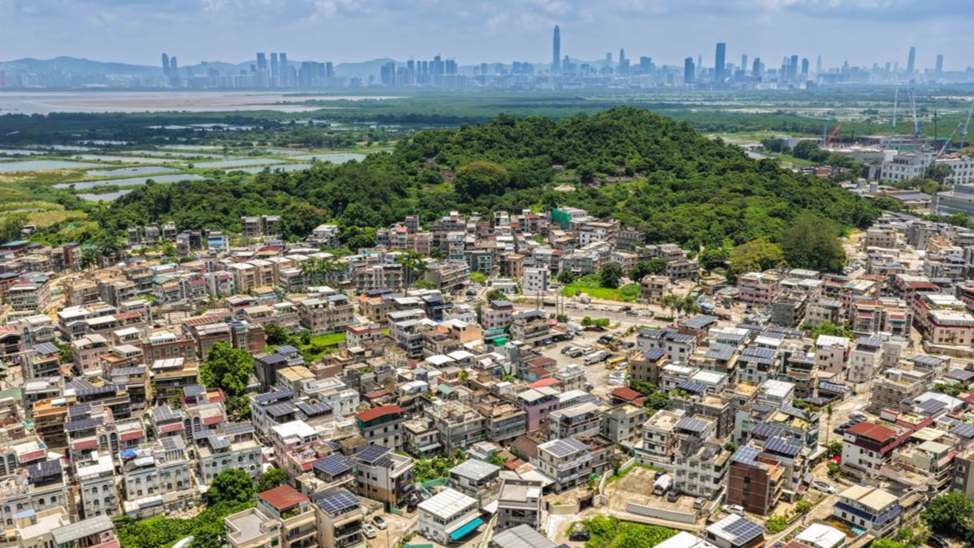
The industrial layout of the Northern Metropolis is gradually taking shape, with its nine new development areas each serving a distinct functional role, the HKSAR government reported to the legislature on Wednesday.
The progress report also revealed that a package of laws and incentives covering tax breaks, streamlined approvals and more will be rolled out by year-end to attract investment to the Northern Metropolis.
The Legislative Council Subcommittee on Matters Relating to the Development of the Northern Metropolis on Wednesday discussed a progress report of the mega project submitted by the government.
The report detailed progress in the new mega-town’s industrial development and efforts to attract enterprises and investment, as well as outlining land planning and allocation for each of the nine new development zones with their distinct industrial positioning.
About 900 hectares of developable land will be released from 2026-27 to 2030-31 under the city's first five-year plan, according to the government. Four hundred ha will be for industrial use — a testament to the authorities’ emphasis on industrial development.
The report said that the government is currently in talks with 45 interested enterprises, both local and from outside the city, about establishing a presence in the emerging township — set to house one-third of the city’s population once mature, spanning education, innovation and technology, industrial manufacturing, tourism, advanced construction, pharmaceuticals and logistics supply chains.
ALSO READ: Northern Metropolis to boost regional economic integration, says IMF
The government will produce about 220 ha of land for innovation uses by 2030-31 at the region’s two major innovation hubs — the Hong Kong Park of the Hetao Shenzhen-Hong Kong Science and Technology Innovation Co-operation Zone and the San Tin Technopole. The supply volume will account for over 70 percent of the new township’s total innovation land.
And to the west, about 32 ha of logistics sites in the Hung Shui Kiu / Ha Tsuen New Development Area, near Shenzhen Bay Port, have been earmarked for building a modern logistics cluster.
Authorities also said that they are actively leveraging market forces through pilot projects using large-scale land disposal model. In Hung Shui Kiu, for example, the winning bidder — HSK New Development Limited — will handle development of three residential sites that can provide about 3,000 flats, a smart modern logistics center, site formation works for a number of other sites, as well as constructing a pedestrian street and a footpath.
To spur industrial growth and draw more investment, lawmakers are calling for new legislation to unlock capital and support incoming enterprises.
Lawmaker Nicholas Chan Hiu-fung, who is also a member of the Bills Committee on the Northern Metropolis Development Bill, said it is the “most suitable time” to legislate to unlock capital.
He noted that the current legislative and policy framework focuses largely on hardware — land resumption, streamlined planning procedures and site formation — but more can be done to channel capital, connect domestic and overseas capital pools, and build institutional flexibility for long-term investment incentives.
He urged the authorities to take action to ease cross-border trade, data flows and tax cooperation through legislation and supporting mechanisms. This, he said, would help Hong Kong attract more leading Chinese mainland tech firms, advanced manufacturers and enterprises to set up their international headquarters or research and development bases in the Northern Metropolis.
As a long-term project, the Northern Metropolis should not rely solely on government finances or traditional bank lending, said Chan. Hong Kong should open more flexible legal and regulatory channels to encourage large domestic and overseas pension funds — long-term patient capital — to invest in infrastructure and major industrial projects there. This would ease upfront fiscal pressures while offering stable long-term returns for pension funds — a win-win situation, according to Chan.
Yiu Ming, a lawmaker representing the New Territories North constituency and another member of the Bills Committee on the Northern Metropolis Development Bill, said he hopes the government’s promised policies and incentives could be rolled out as soon as possible.
More support measures are needed for incoming firms, covering starting businesses in Hong Kong, enterprise operation, professional services and housing for incoming talent, he said.
The goal is to encourage enterprises to move in, then draw on their strength to drive the Northern Metropolis forward, Yiu said.
Lu Wanqing contributed to the story.
