

Record-breaking Shanghai competition highlights growth of user-friendly coding to prioritize focus on ideas
For most children, when summer camp ends, all that remains are photos, journal entries and memories that gradually fade.
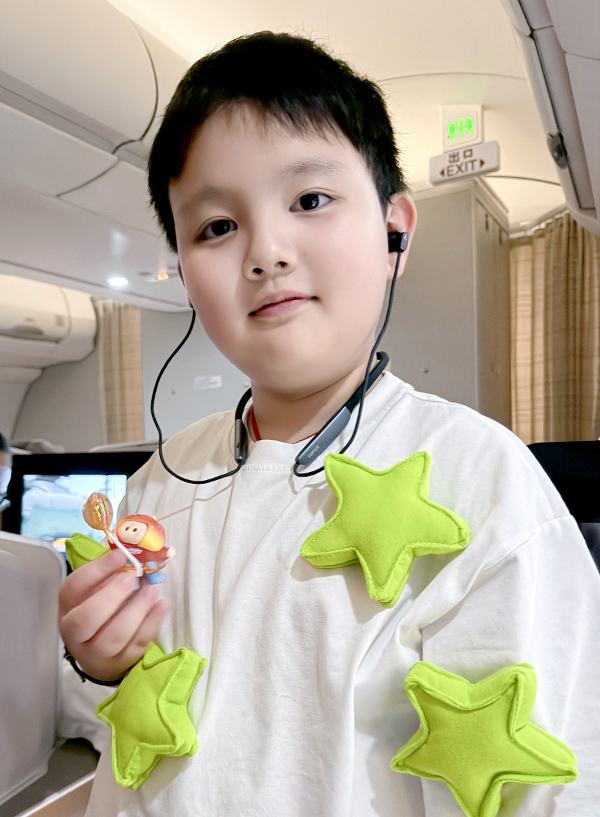
However, 9-year-old Luo Ange turned a seven-day pottery journey into an online "Clay Lab" that can be accessed and shared at any time.
She used an artificial intelligence tool to input natural sentences to help write code and create the online lab, a process known as "vibe coding". Highly praised for its innovative concept, well-thought-out product logic and human touch, the work stood out among over 10,000 competitors to win one of the first prizes at Shanghai's Bund Hackathon AI Coding Competition that ended on Sept 9.
Luo's inspiration came from attending a pottery summer camp in the mountains of Ganzhou, Jiangxi province, during the summer holidays.
READ MORE: China's AI focus shifts to application and regulation
She experienced the entire process of traditional pottery-making, from digging the clay, sifting out impurities, mixing the clay, gathering firewood, loading the kiln, and firing and keeping watch over it.
The details sparked an idea. Luo wanted to turn everything she had made, seen and learned into a digital work that can be preserved and shared.
After learning about the Bund Hackathon competition, she was encouraged by her father to bring her idea to life. With no coding experience and no existing reference work to consult, she turned to AI tools including ChatGPT and Kimi, using conversational communication and precise requests to build the lab's framework and details.
After two days, Luo transformed her concept into an online link. Without the need to download anything or log in, users can simply open their browser to explore the pottery-making experience.
The lab faithfully follows the major steps of the pottery-making process, and features social functions such as visiting friends, sending flowers and saving pottery shards.
Luo wants her lab to be seen by a large number of viewers and also act as a tribute to the work of the summer camp organizers.
She also hopes it will help connect more of her peers. The Clay Lab has no scores, rankings, rewards or punishments, as Luo sees no right or wrong answers in creativity. In her online pottery museum, even pieces that failed to fire properly or are imperfect are on display.
It's not the first time Luo tried to use AI for creative work. Through trial and error she learned about communicating, collaborating and iterating with AI, honing her logical thinking and problem-solving skills.
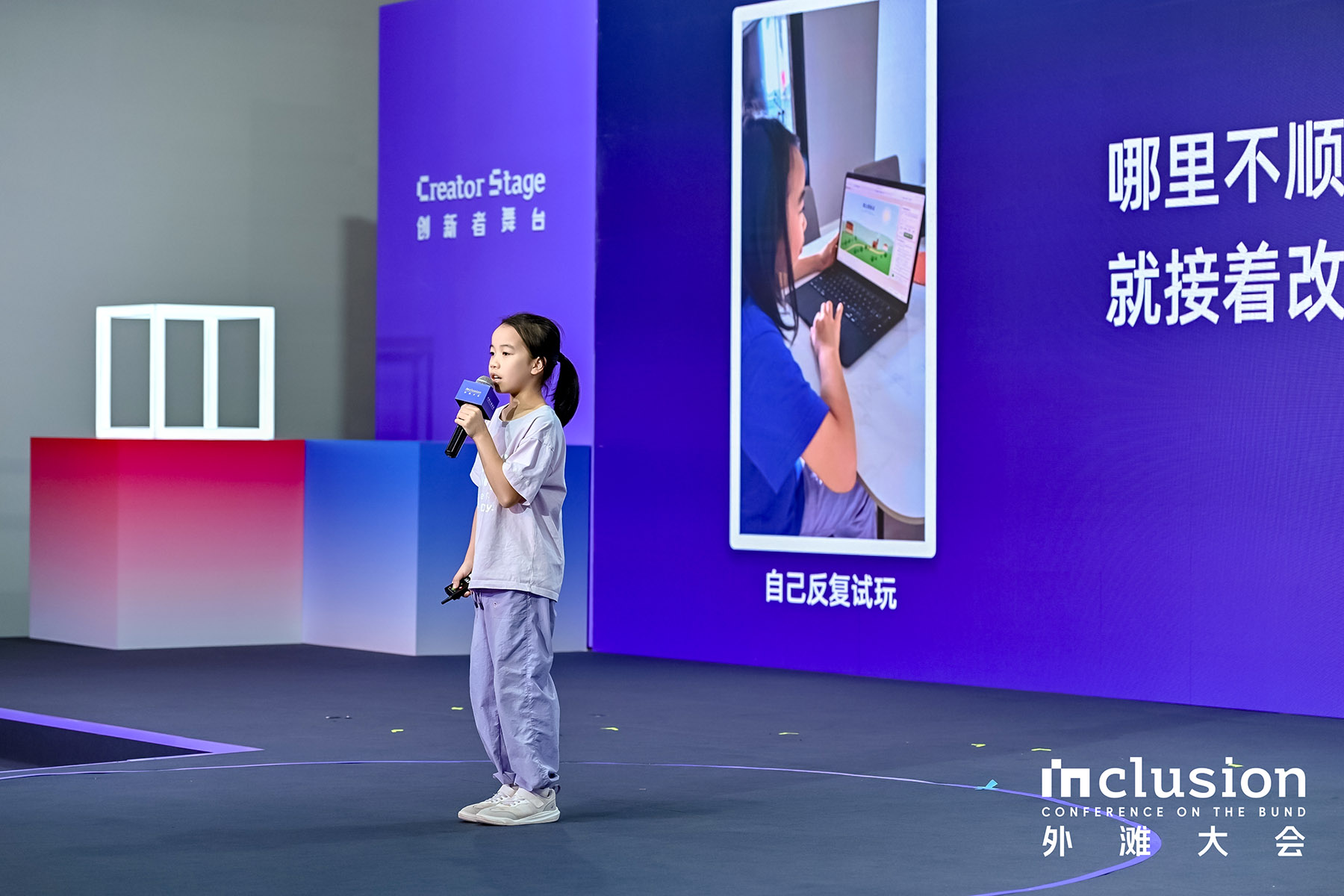
"AI is more like a friend I can communicate with and work with. When the AI produces errors or the content is off, I patiently point out the issues, communicate with it and make adjustment to refine it bit by bit," said Luo.
Youthful embrace
While many may still think that AI-driven creation is the exclusive domain of adults and experts, young children and adolescents are proving this belief wrong. At the Bund Hackathon AI Coding Competition, nearly 70 percent of more than 10,000 participants were aged under 18.
Xu Qianyi, 6, was one of the youngest participants in the competition. She developed an AI-powered, real-life scenario-based literacy tool named Jian Shi.
For many families, their children's transition from preschool to elementary school and helping them develop their literacy skills is a challenge. Working parents don't have the time to read to their kids, and children often forget new characters as quickly as they learn them. To address this challenge, Xu turned to AI tools and worked on developing Jian Shi in July.
The tool's core functions are different from traditional rote learning. When children see a new character, they can simply take a photo of it and link it to real-life situations to help memorize it.
Built-in flashcards help with reviewing characters and can consolidate recall.
Nine-year-old Ge Ruihang also focused on practical learning tools and won a second prize with his Geometry Lab.
The idea stemmed from the challenges Ge faced in his math studies. Many geometric theories and formulas are abstract and difficult to remember, so he built an interactive tool that allows users to test and verify concepts.
The lab, which Ge developed with AI tools in about two weeks, allows students to conduct hands-on experiments and verify results independently, helping them better understand principles of geometry.
The concept of Chen Xiaotong, a 14-year-old student from Shanghai, went beyond the classroom. Using Tencent WorkBuddy, she submitted an AI app for mountain rescues, which attracted the attention of professional rescue teams.
Chen said mountain rescues are a public issue that solve real-world problems and developing the app was "highly meaningful" to her.

Infinite possibilities
A large number of adults in the competition used AI to address unmet needs in real life.
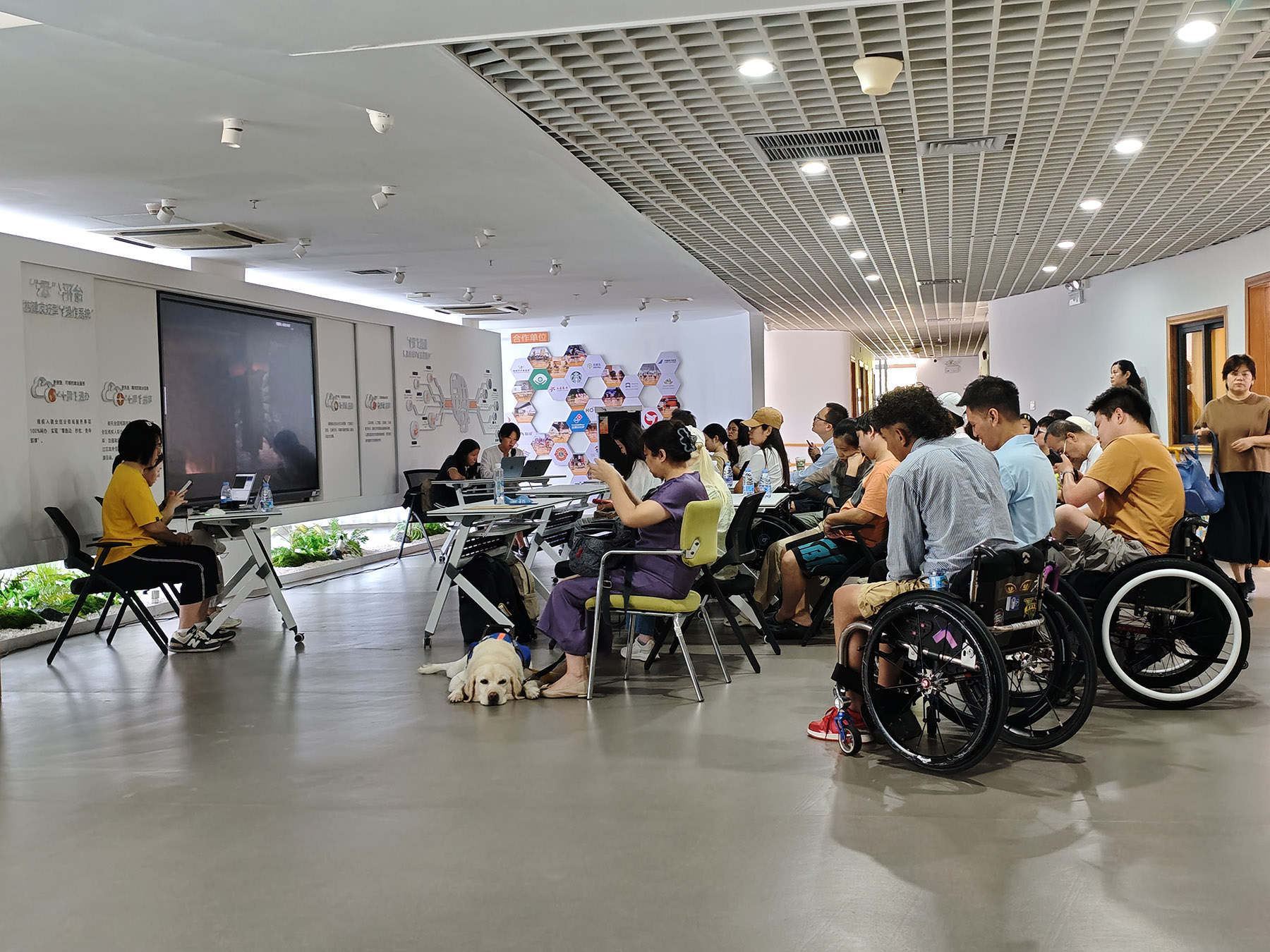
Wang Mengqi, a 32-year-old social entrepreneur with vision impairment, developed the tool ScriptGrid to help those with seeing difficulties better enjoy movies.
"When we provide audio descriptions, or narrate movies for the blind, our biggest concern is that the narration will overlap with the dialogue and the original soundtrack. Not only would that fail to help anyone, but it would cause interference instead," said Wang, who leads an accessibility public service volunteer team.
Working in the accessibility sector for many years, Wang focuses on audio description services for the blind community. Yet, this niche sector has for a long time lacked commercial tools tailored to content creation.
Previously, the creation of audio descriptions relied on human efforts, including timeline management, manuscript organization and proofreading, which are time-consuming, labor-intensive and highly inefficient, he said. It usually takes Wang's volunteer team a month to prepare the audio descriptions for one movie.
About one year ago, Wang turned to AI to begin development of ScriptGrid, which was born in one week.
Continuously updated based on user feedback, the tool supports two-way conversion between spreadsheets and subtitle formats, resolving the issues of format incompatibility and the inability to conduct collaborative reviews.
It also features a unique intelligent timing function for spoken scripts. After importing the full dialogue subtitles from a video, it can automatically identify silent segments and generate a standard timeline and placeholder script. This function can eliminate the need for manual timeline creation, lowering the creative barrier and reducing time costs with improved efficiency.
"I hope that in the future, blind people will be able to walk into any theater instead of having to participate in special charity events to enjoy a movie at their leisure — just like everyone else," said Wang.
Wang Yiting, a 24-year-old strategy product manager at Tencent, tackled parking problems in urban communities. The independent developer's team won a second place prize in the competition with Parking Genie, an AI-driven parking space-sharing solution.
Through surveys and on-site investigations, the team found out that the core issue with urban parking is the mismatch between vehicles in terms of time, space and users.
However, traditional parking apps can only navigate the parking lots, and cannot allocate available parking spaces. With Parking Genie, Wang said she hopes to help build a community that connects car owners, unused parking space providers, and communities seeking to improve governance efficiency.
Yang Peijie, a PhD candidate at Shanghai Jiao Tong University and a dog owner for over 10 years, developed PawPilot for pets and took a third-place prize in the competition.
As an avid user of AI tools, Yang spent three months creating his work, which aims to address the challenges of fragmented pet health data and veterinary care management. PawPilot has been well received by his pet-owner friends, and features functions such as pet-health consultations, data tracking, veterinary clinic searches, pet-friendly travel, and guidance for first-time pet owners.
BitBubble, an AI "social desktop pet" created by 25-year-old independent developer Liu Hongtan, won a second place prize. With a "reserved personality" and keen observational skills, the pet addresses the social needs of young people who "don't want high-intensity, real-time social interaction but still hope to stay connected," Liu said.
The product features cross-device visiting, messaging and interaction functions, allowing the desktop pet to help users break the ice. It has completed testing across multiple scenarios, and is available for installation and use.
Looking back on two years of coding, Liu realized the true value of AI lies in helping break down a "vague idea" into a product structure, technical solution, user interface, and finally a working version.
"I'm amazed by this era, where every single person's idea can evolve into a relatively complete product in a short time," said Liu.
A future together
In recent years, China's AI technologies, such as large language models and intelligent agents, have achieved major breakthroughs in multiple fields.
With continuously improving capabilities, the nation is taking the global lead in AI's practical application across a diverse range of industrial scenarios and people's daily lives, empowering the development of new quality productive forces and accelerating the realization of digital equity.
Ant Group's Agentar 2.0, described as a "commercial AI agent super factory", has already been commercially deployed in the finance, energy and food service sectors. Meituan's AI assistant Xiaotuan now covers 12 lifestyle categories and has responded to over 700 million user requests.
China's average daily token volume surged to nearly 175 trillion in June, firmly maintaining the country's position as the global leader, according to data from the National Data Administration.
Fast-evolving AI technologies and applications are redefining the threshold for creativity, turning ordinary people with no coding background into AI creators.
With 15,577 AI applications created by the more than 10,000 participants, the Bund Hackathon AI Coding Competition received Guinness World Records certification on Sept 9.
It set a new record for "the most applications developed in an online generative AI hackathon", the first event in China to establish an AI coding-themed world record.
Wang Shang, head of product operations at SenseTime's Raccoon Work, said continuously evolving large models and optimized engineering designs have significantly lowered the barrier for ordinary people to use AI tools for creative purposes.
The viral popularity of DeepSeek and Doubao has also allowed numerous people to see, experience and understand AI's value, drawing them to explore AI-driven creativity.
ALSO READ: Making the disabled abled
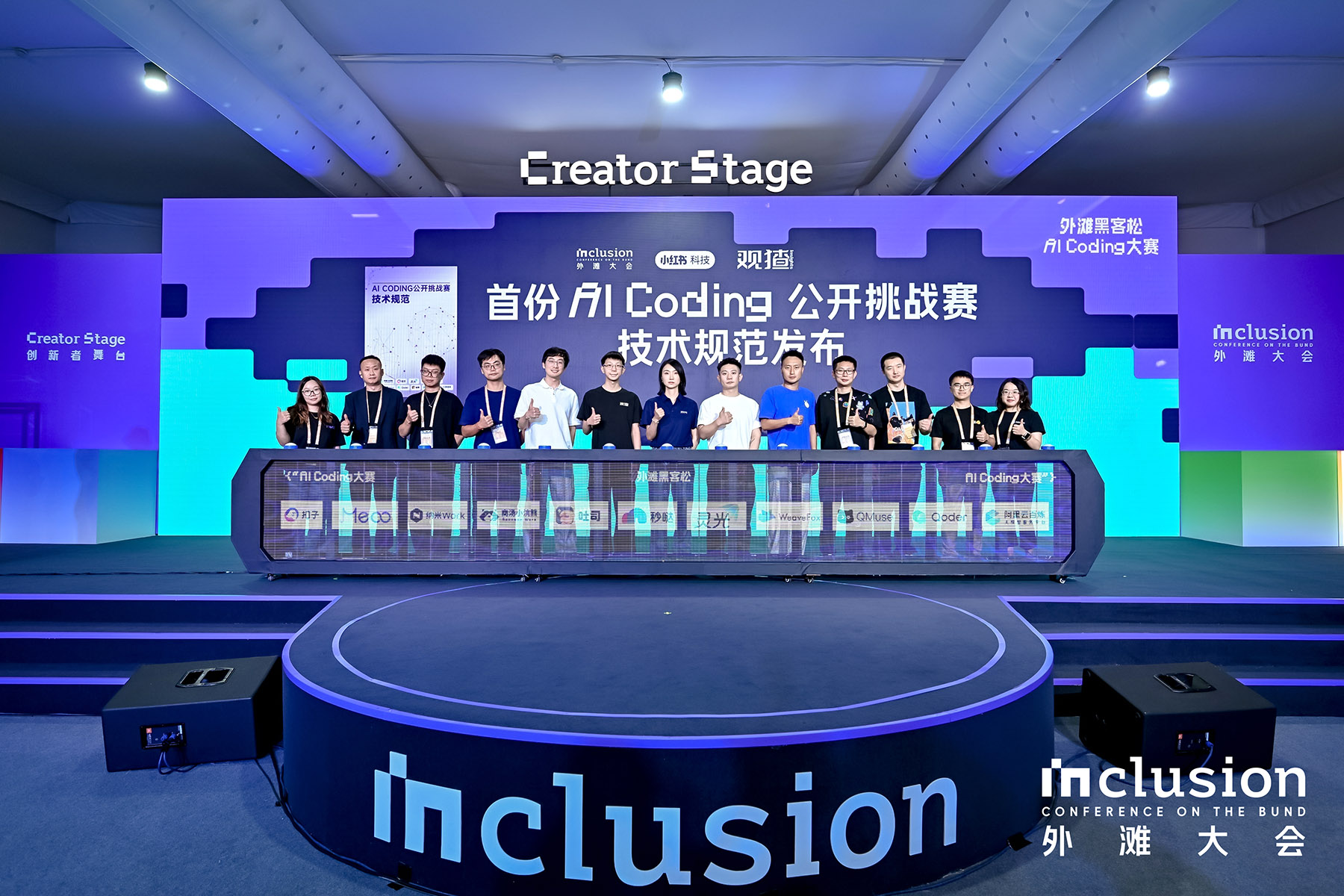
For the first time, China's 11 leading AI coding platforms — including Ant Group's Ling-Guang, Baidu's MeDo, Alibaba's Qoder, Tencent's Toast, SenseTime's Raccoon Work and ByteDance's Coze — came together at the competition. This was a signal that in China AI-assisted coding is shifting from a tool for professional developers to one for mass creation, helping transform ideas into practical digital products.
Experts agreed that the core competency of creators is shifting from coding languages and engineering experience, to the ability to clearly identify problems, and define and describe real-world needs.
AI coding is no longer only about writing code, but making digital creation accessible to a wider audience. This represents a shift from a "technology-first" approach to an "idea-first" one, said Li Xiang, head of operations at Ant Group's LingGuang.
"We're a bit like artists from different schools during the Renaissance. We are currently experiencing the 'Renaissance' of AI coding. We each have our own strength and approach, but collectively we're driving the entire industry toward a new level and boosting productivity," said Zhu Guangxiang, head of Baidu's MeDo.
Contact the writers at wangxin2@chinadaily.com.cn
