

Technology is transforming lives for the physically impaired who once struggled to find jobs on their own. As Zhou Mo writes, AI and related products are opening doors for them.

Editor’s note: Rapid advances in artificial intelligence have fueled call for “tech for good”, such as social equality and public benefits. This three-part series explores how AI can and should serve vulnerable groups, starting with people with disabilities.
Liu Pan had spent more than a year trapped in a career limbo after graduating from college.
With impaired hearing, the 26-year-old from Qingyang, in Northwest China’s Gansu province, repeatedly hit a brick wall trying to get a job, as few employers were willing to lend a hand.
Liu’s fortunes improved when he came across a livestreaming recruitment session tailored to those with disabilities on social media platform Kuaishou. Equipped with an artificial-intelligence‑generated sign‑language avatar feature, the livestream removed communication hurdles for hearing‑impaired job seekers and opened a door long shut to him.
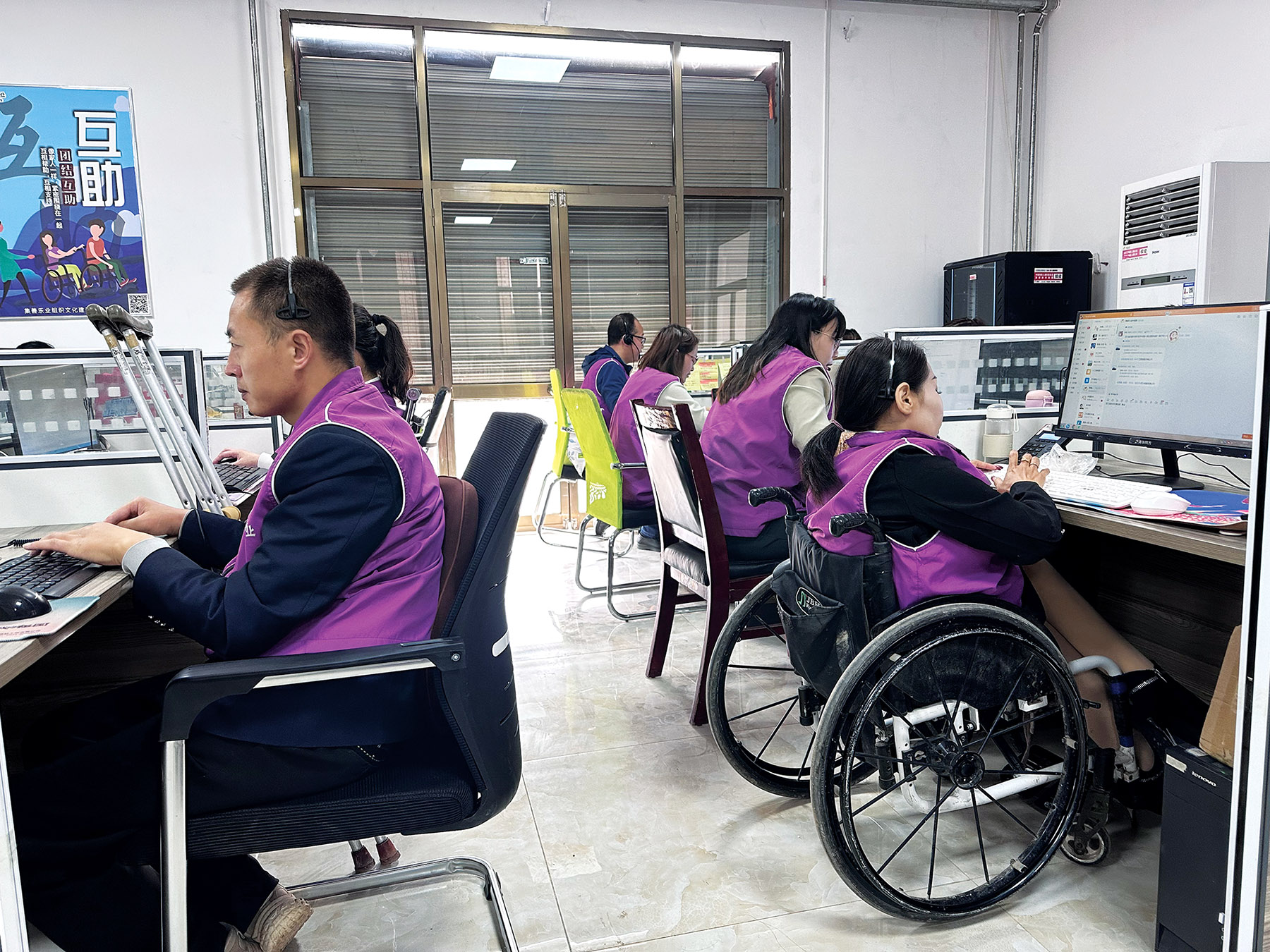
Liu took up an online customer‑service post for STO Express in December, solely relying on typed text communication on computers, removing hurdles created by hearing loss. He now earns an average monthly salary of more than 2,000 yuan ($298), with income exceeding 3,000 yuan on occasion. “Thanks to high technology, I now have a job that would have been totally out of reach for me in the past,” he says.
READ MORE: China uses tech to aid elderly, disabled
Liu is among a growing number of disabled people on the Chinese mainland who have reaped the fruits of AI, as people yearn for advanced technologies to bring tangible benefits to marginalized groups so they aren’t left behind.
According to the China Disabled Persons’ Federation, China has 85 million people with disabilities, including more than 17 million with visual impairments and close to 28 million with hearing problems.
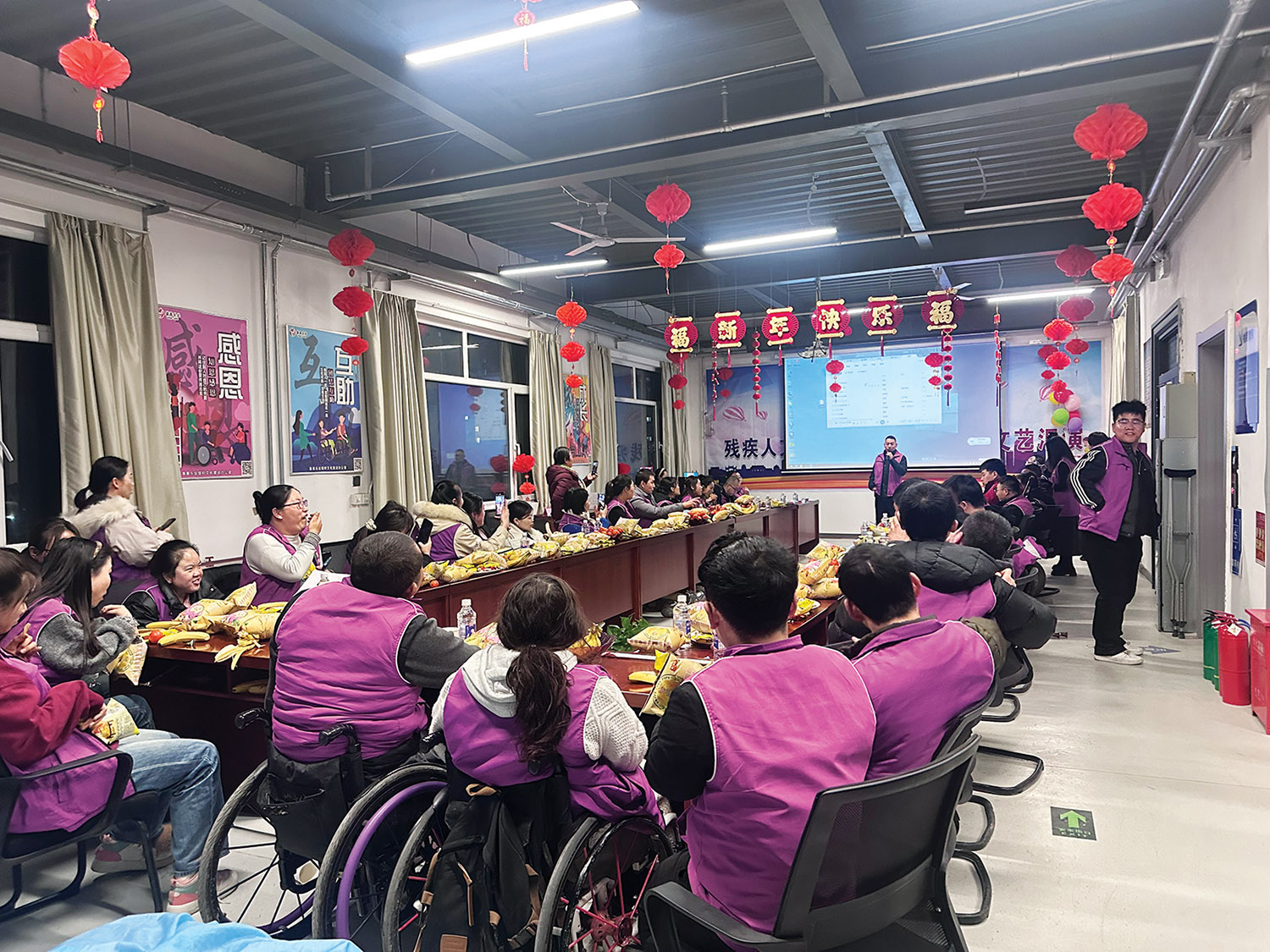
The physically disabled have long faced occupational and social hurdles. Traditional offline recruitment and social scenarios depend heavily on verbal and in-person interaction, putting disabled groups at a disadvantage. The AI boom has changed all that.
In the Guangdong-Hong Kong-Macao Greater Bay Area, some enterprises have developed AI-powered digital tools to help the disabled, breaking down information and communication barriers.
Dongguan-based smartphone-maker Vivo launched its “sign language translator” app that enables two‑way translation between speech and sign language. The digital tool is being applied in livestreaming recruitment sessions initiated by Jishan Leye, a Shenzhen-based social services organization that helps the disabled.
Since the online recruitment sessions began in December, 99 recruitment sessions had been held as of June, attracting over 160,000 views, including about 10,000 people with hearing impairments. Liu is among the beneficiaries.
“Getting a job through livestreaming had been almost impossible for me in the past. I couldn’t hear and understand what was being said in live broadcasts. AI has now turned spoken audio into sign language, so I can get all the information and have the same opportunities as anybody else,” he says.
‘Equal opportunities’
Beyond employment, AI-powered tools are supporting the disabled in other aspects, such as social networking, dating, and rehabilitation. Huizhou — one of the nine cities of Guangdong province in the Greater Bay Area cluster — started its first project integrating civil services with AI in July. More than 50 physically disabled people were provided with intelligent prosthetics that use brain‑computer interfaces and AI technologies to capture users’ limb movement intentions, and respond accordingly to help them restore limb functions.
In Foshan, an AI agent developed by China Mobile Internet is empowering people with hearing impairment to make their own voices heard. Based on users’ pronunciation habits and articulation patterns, the intelligent application generates exclusive speech recognition models for individuals. It converts speech into text and clear audio in real time, enabling smoother communication for the group.
“AI acts as a critical enabler for social equality and empowerment of disadvantaged groups,” Jishan Leye Director Liu Yaheng says.
“Everyone can use AI equally, regardless of his or her physical condition. This gives the disabled equal opportunities in reaping the benefits of technology.”
In traditional working and learning environments, physical limitations often make the disabled less efficient than their nondisabled peers. AI, as a “powerful efficiency amplifier”, narrows the gap, Liu says. “In the AI age, as long as the disabled possess mature thinking and clear ideas, their capabilities can be greatly amplified, enabling them to stand on an equal footing with nondisabled individuals.”
Long road ahead
On the negative side, the rapid iteration of technologies has made it difficult for the disabled to keep up with technological upgrades, Liu says. “AI product developers are advised to take the practical needs of disabled people into consideration in the research and development process to make it easier for them to adapt to the new digital era.”
Efforts are moving in this direction. Jian — a 30-year-old with visual impairment in Guangzhou — recently participated in a project that invited individuals with eyesight problems to test disability-friendly apps from users’ perspectives and share their results with developers to optimize the developers’ tech products.
ALSO READ: Designing dignity into daily life
“Disability-friendly products are mushrooming in the market, but few are mature enough to really meet the needs of the group,” he says. “Some products boast fancy interfaces, but lack identification tags compatible with screen readers, making it impossible for people with visual impairment to use.”
He suggests that tech firms incorporate accessibility features into their mainstream products rather than launching a stand-alone version for the disabled. “This could save resources while extending benefits to a wider pool of people.”
Greater focus should be placed on digital space accessibility, he says. “Much like tactile paving that serves visually impaired pedestrians in physical surroundings, the digital environment should safeguard the visually impaired’s right to independent digital access,” Jian says.
Contact the writer at sally@chinadailyhk.com
