

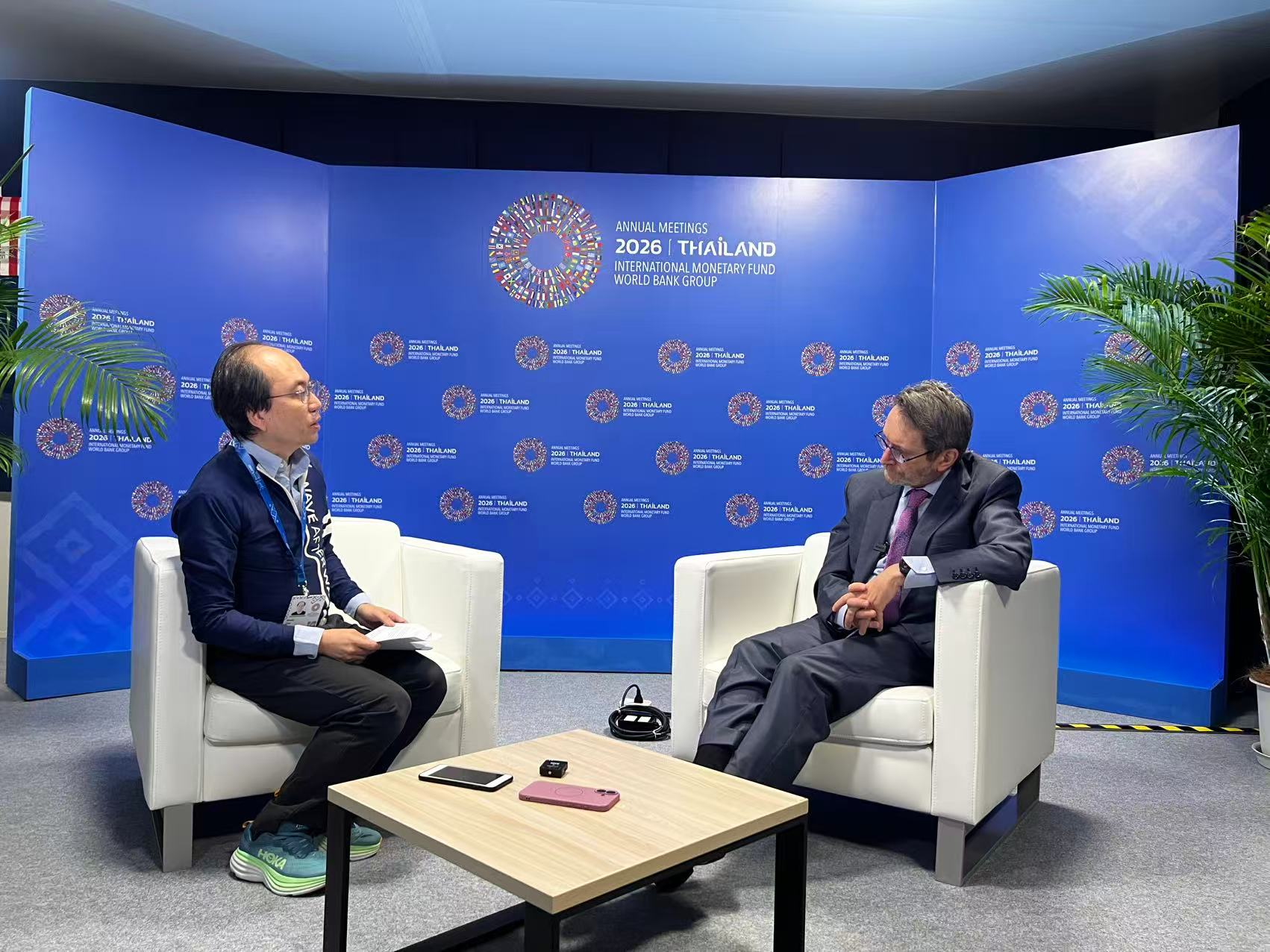
A senior official from the International Monetary Fund said that Hong Kong can maintain sound macroeconomic fundamentals and utilize financial markets to accommodate large-scale projects when the Northern Metropolis project is expected to provide decades-long economic benefits to the special administrative region.
Thomas Helbling, deputy director of the IMF’s Asia-Pacific Department, said the “Northern Metropolis will act as a vehicle that allows the logistics flow of goods and services for the Chinese mainland and Hong Kong economies to contribute their strength and comparative advantages, and strengthen overall economic performance.”
“We have Hong Kong as a trading hub and Guangzhou as a very strong regional economy within the Chinese mainland. If they have further integration, they can capitalize on each other’s strengths,” Helbling told China Daily on the sideline of the IMF and the World Bank Group annual meetings taking place in Thailand from Oct 12 to 18.
Helbling said that as the benefits will materialize over decades, the HKSAR government must secure a sound long-term financing structure for the Norther Metropolis project. “It needs a financing structure that is commensurate with the benefits, opportunities and risks.”
ALSO READ: HK pitches itself as Asia-Pacific's 'harbor' for trade as routes shift
Regarding concerns over the sovereign credit rating of the Hong Kong SAR being affected because of the anticipated high capital investment in the Northern Metropolis project, Helbling said: “Hong Kong will continue to have very good macroeconomic fundamentals and will remain a very strong economy in the region with the right policies. The city also has proven agility in adjusting to changing circumstances of regional supply chains and global trade patterns.”
In the IMF Staff Report on the Hong Kong SAR that was released in May, IMF said that large multiyear projects like the Northern Metropolis could raise long-term growth but entail conservatively estimated annual costs of 0.2 to 0.4 percent of GDP over the medium term. Therefore, a clear long-term financing plan, reduced reliance on one-off transfers, careful sequencing, transparent cost management, and a strengthened medium-term fiscal framework will be essential.
ALSO READ: CE: HK's strengths key to developing new quality productive forces
The Hong Kong SAR is banking on the Northern Metropolis project becoming the city’s primary economic growth and transformation engine for decades to come — aiming to build an integrated zone of a university town, a technology area, an industry area, and a living community area that can act as a main platform for Hong Kong to participate deeply in the development of the Guangdong-Hong Kong-Macao Greater Bay Area.
Hong Kong is also seeking to enter the Regional Comprehensive Economic Partnership. Helbling said that joining RCEP will enable the SAR to benefit from a liberalization of trade rules, diversification of trading partners, and gain access to new markets.
The RCEP has approved the establishment of an Accession Working Group to start the accession process for Hong Kong’s application for entry. RCEP, which is the world’s largest free trade agreement, officially came into effect in January 2022. RCEP covers the 10 member states of the Association of Southeast Asian Nations (ASEAN), along with China, Japan, South Korea, Australia, and New Zealand.
