

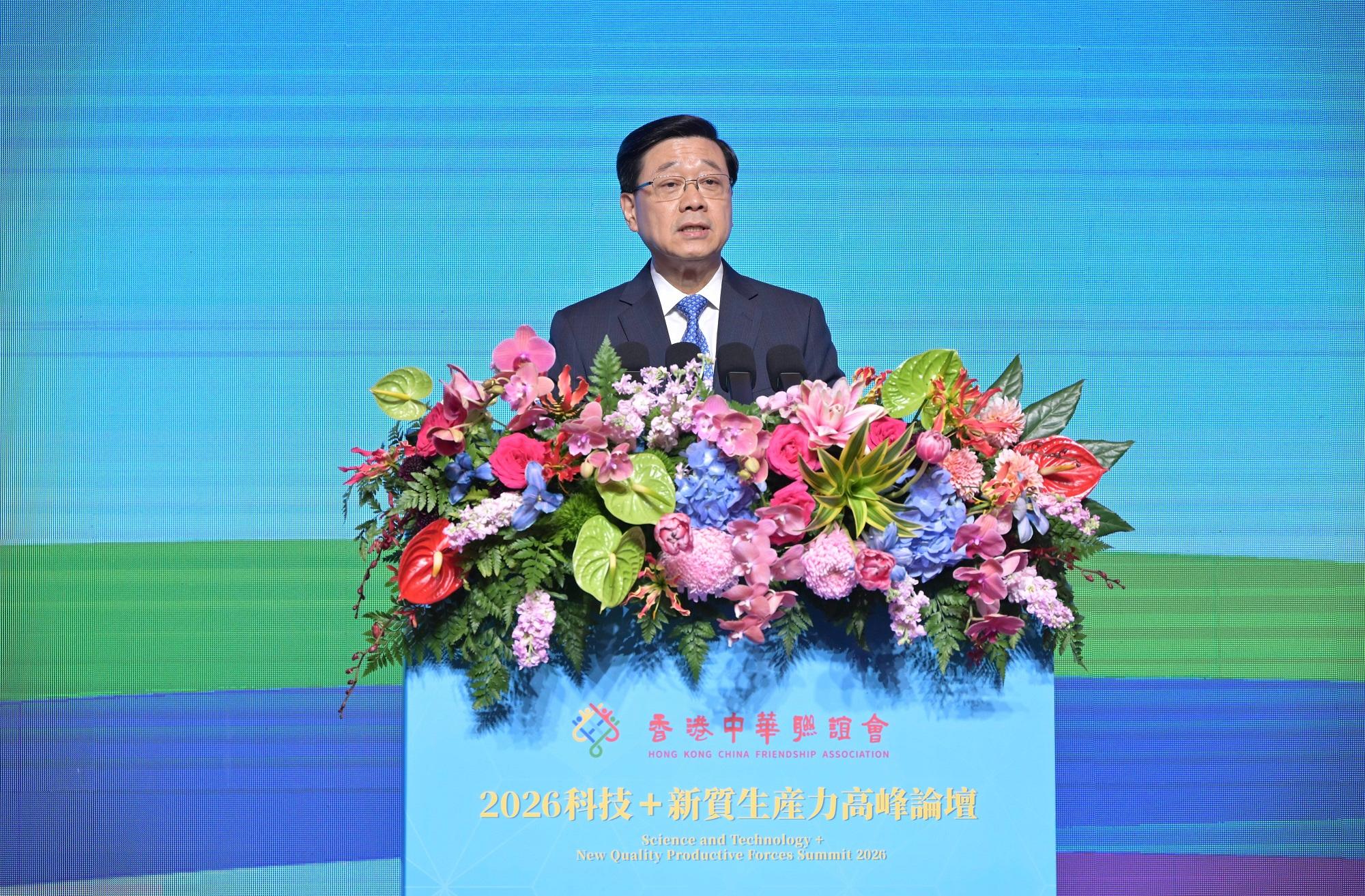
Hong Kong should fully leverage its deep pool of innovative talent, international capital and unique role as a gateway between the Chinese mainland and the rest of the world to turn scientific and technological breakthroughs into new engines of industrial development and economic growth, officials, academics and industry insiders said on Tuesday at a conference.
“As the global technological revolution and industrial transformation accelerate, developing innovative technologies to lead the way in new quality productive forces is no longer an option, but a necessity,” Chief Executive John Lee Ka-chiu said at the Science and Technology + New Quality Productive Forces Summit 2026.
Held by the Hong Kong China Friendship Association, the conference brought together guests from nearly 20 countries and regions, including government officials, business leaders, and researchers, to discuss the cultivation of new quality productive forces and the opportunities arising from the burgeoning artificial intelligence industry.
Lee said the key to developing new quality productive forces in the special administrative region lies in capitalizing on the city’s distinctive strengths, including its world-class professional services and international connections.
READ MORE: HK, Singapore ink renewed MoU to boost energy-related ties
He stressed that Hong Kong should make full use of the global research capabilities concentrated in its universities, while integrating the mainland’s vast market and industrial chains, comprehensively promoting the deep integration of technological advancements, industry transformation and data flow.
Hong Kong will also leverage its status as an international financial center to channel diverse sources of capital into the innovation and technology (I&T) sector, Lee said, adding that the HKSAR government will step up efforts to integrate the development of education, technology, and talent through the mega project of Northern Metropolis.
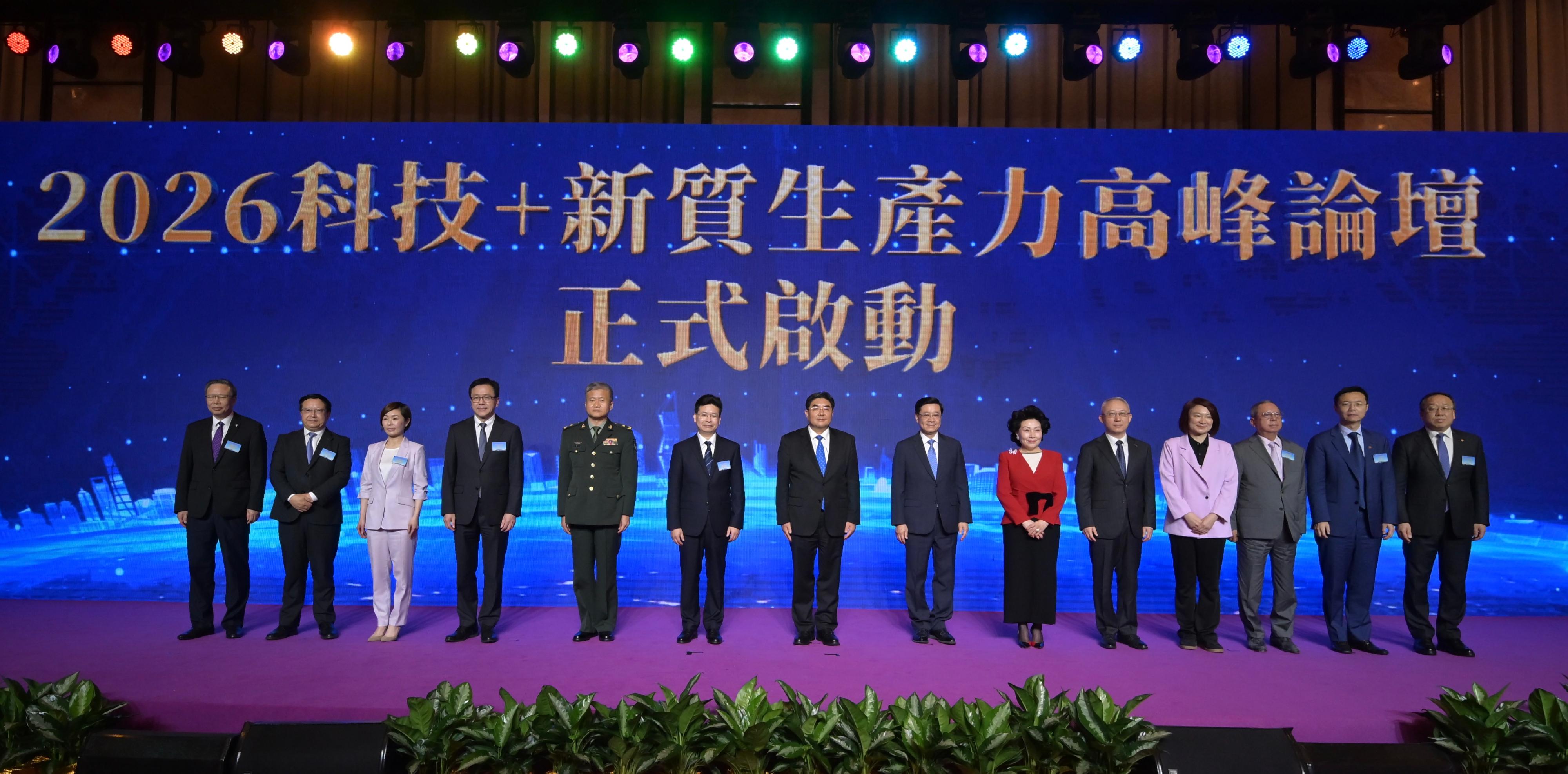
Cheng Cheung-ling, president of the Hong Kong China Friendship Association, said the HKSAR now shoulders a greater mission. The city must not only serve as a superconnector and a super value-adder, but also commit to playing a key role in facilitating the commercialization of scientific achievements.
Noting that the HKSAR’s first five-year plan highlights the targets of integrating AI and industries, Cheng said each of the city’s traditional industries — from finance, trade, logistics to professional services, medical and health — is a natural application area for AI.
“Hong Kong’s internationalization undoubtedly ensures that scientific and technological innovations can be successfully implemented and replicated here,” she added.
ALSO READ: HK eyes bigger role in financing APAC’s green, digital transition
Zhang Yong, deputy director of the Liaison Office of the Central People's Government in the HKSAR, said Hong Kong boasts a favorable environment and conditions for developing new quality productive forces due to the implementation of the “one country, two systems” framework and its connections with the motherland and the world.
Zhang encouraged the I&T sector to continue scaling new heights in cutting-edge fields, while calling on the business community to increase investment and the education sector to strengthen talent cultivation.
The conference also featured keynote speeches and panel discussions covering topics such as global investment, financial innovation, and smart manufacturing.
Contact writer at gabylin@chinadailyhk.com
